








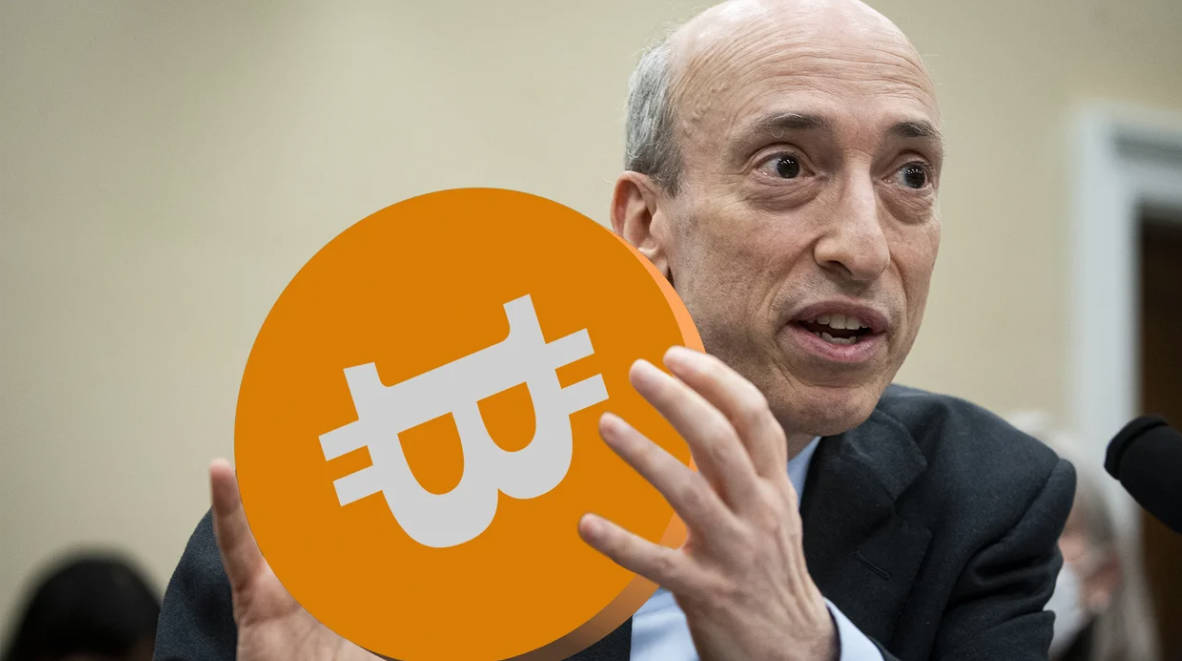
Gary Gensler: From Goldman Sachs to SEC Chair, Enemy or Ally of Cryptocurrency?
TechFlow Selected TechFlow Selected
Gary Gensler: From Goldman Sachs to SEC Chair, Enemy or Ally of Cryptocurrency?
Is Gary Gensler's true mission to kill Ethereum (ETH), or to lay the foundation for crypto and blockchain-based financial services to go mainstream?
 Navigating Web3 tides with focused insights
Author | Finn Miller, Nazar Kuzmyn and Ciaran Lawler
Translation | Huo Huo
SEC Chair Gary Gensler seems to have a personal vendetta against the crypto industry. From digital asset staking to the Ripple (XRP) lawsuit, Gary is applying regulatory pressure on crypto companies.
Most blockchain enthusiasts view him as a villainous enforcer of securities laws. Yet, if handled correctly, his actions could lead to clearer crypto-asset regulations and ultimately benefit the long-term, widespread adoption of digital assets.
So, is Gary Gensler's true mission to kill Ethereum (ETH), or to lay the foundation for crypto and blockchain-based financial services to go mainstream?
Who is Gary Gensler?
Gary Gensler is the acting chairman of the U.S. Securities and Exchange Commission (SEC) under the Biden administration. He is best known in the crypto world for leading the SEC’s lawsuit against the digital payments protocol Ripple, cracking down on staking services offered by crypto exchanges, and attempting to classify all tokens as securities—all under the noble banner of consumer protection.
Education
Gary was born and raised in Baltimore, Maryland, where he was introduced to finance at an early age by his father, Sam Gensler. His father operated cigarette and pinball machines at a local bar and often brought Gary along to count the nickels collected from the machines.
After high school, Gary attended the Wharton School at the University of Pennsylvania, earning an undergraduate degree in economics. This wasn't enough for the ambitious young Gensler—he continued his studies and eventually earned an MBA from Wharton. With his MBA in hand, Gensler enthusiastically launched his career in finance.
Career
In 1979, Gary began working at Goldman Sachs, one of the most prestigious investment banks in the world. Throughout the 1980s, Gensler worked in Goldman’s mergers and acquisitions division, primarily advising media companies—including leading a team that helped the National Football League secure its then-most-lucrative television broadcasting deal, valued at approximately $3.6 billion.
By age 30, Gary had become one of the youngest partners at Goldman Sachs. He later also served as co-head of finance at the firm.
Gensler in Public Service
After 18 years at Goldman, President Bill Clinton nominated Gary to serve as Assistant Secretary of the U.S. Treasury. He was quickly confirmed by the U.S. Senate, marking the beginning of his career in government and public service.
Two years later, Gary moved departments, becoming Undersecretary for Domestic Finance. In this role, Gary took on significant responsibilities, shaping policy and legislation in key areas such as capital markets, public debt management, and fiscal affairs.
In recognition of his achievements and service in these roles, Gary was awarded the Alexander Hamilton Award, the highest honor granted by the U.S. Department of the Treasury. In 2001, Gary became a senior advisor to U.S. Senator Paul Sarbanes and was credited with playing a key role in the passage of the Sarbanes-Oxley Act.
During the Obama administration, Gensler was sworn in as Chairman of the Commodity Futures Trading Commission (CFTC). During this time, he continued to earn respect and admiration from peers, who regarded him as one of the greatest reformers following the global financial crisis.
Securities and Exchange Commission (SEC)
Following the Republican-led Trump administration, President Biden nominated Gary to serve as Chair of the U.S. Securities and Exchange Commission. Thus, Gary leads the SEC’s regulatory efforts targeting crypto from its New York headquarters. (The SEC has five commissioners, each nominated by the president and confirmed by the U.S. Senate; the president then designates one commissioner to serve as chair.)
Meanwhile, Gary is also a digital currency expert. Since 2018, he has taught courses on blockchain technology and crypto assets at MIT’s Sloan School of Management.
Gary Gensler and the Crypto Market
Since becoming SEC Chair, Gary has launched a comprehensive campaign against crypto regulation. Most notably, he led the SEC’s lawsuit against Ripple, a case that has dragged on for years and could shape the future of crypto regulation in the United States.
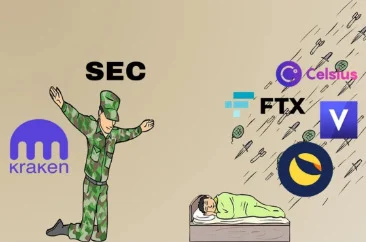
He has also levied multi-million dollar fines against crypto exchanges like Kraken for offering staking services. This has triggered waves of fear, uncertainty, and doubt (FUD) across the crypto industry and raised concerns among other top platforms, including Coinbase and its founders.
According to Gary Gensler, every crypto asset except Bitcoin (BTC) is a security. Gary uses a test as a benchmark, claiming that behind every crypto token is an entrepreneurial team running a business, and investors expect to profit from it.

This extends into the NFT space as well—although NFTs are easily viewed as simple collectibles rather than investment vehicles, this remains a gray area.
Are Gary’s Opinions That Important?
Although Gary Gensler’s position as SEC Chair significantly influences how crypto is regulated in the United States, he himself is not the law. He does not create the laws governing crypto regulation, nor can he unilaterally dictate how they are applied.
In the U.S., these critical decisions are ultimately made by courts and federal judges.
Gary Gensler and SBF
It’s impossible to ignore that during the period when SBF was still the darling of the crypto world, Gensler and SBF collaborated closely. Before the eventual collapse of the FTX exchange, Gary Gensler and SBF held private meetings.
It is speculated that SBF was then contacting Gary in an attempt to build a regulatory moat around FTX and monopolize U.S. crypto trading—if conspiracy theories linking SBF’s political donations to civil servants hold any truth, though none have been proven.
Many crypto investors have also quickly pointed out that Gary appears more interested in pursuing Ripple executives like Brad Garlinghouse than in bringing accused criminals like SBF to justice.
On the other hand, despite some negative press and notoriety within the crypto industry, Gary enjoys a distinguished reputation and a successful career in finance and government. According to Bloomberg, Gary’s estimated net worth is as high as $119 million.
His assigned mission may be to impose stricter regulation on crypto assets; however, if you live outside the United States, you should not experience any direct impact from his actions.
Join TechFlow official community to stay tuned
Telegram:https://t.me/TechFlowDaily
X (Twitter):https://x.com/TechFlowPost
X (Twitter) EN:https://x.com/BlockFlow_News
 白话区块链
白话区块链






