








On Blockchain's Ambitions from Anti-Keynesian, Public Life, and Transhumanist Perspectives
TechFlow Selected TechFlow Selected
On Blockchain's Ambitions from Anti-Keynesian, Public Life, and Transhumanist Perspectives
How does the spirit of blockchain manifest?
 Navigating Web3 tides with focused insights
By Hu Yilin
Member of the Wai Bo Worldview Advisory Group, Associate Professor at the Department of History of Science, Tsinghua University
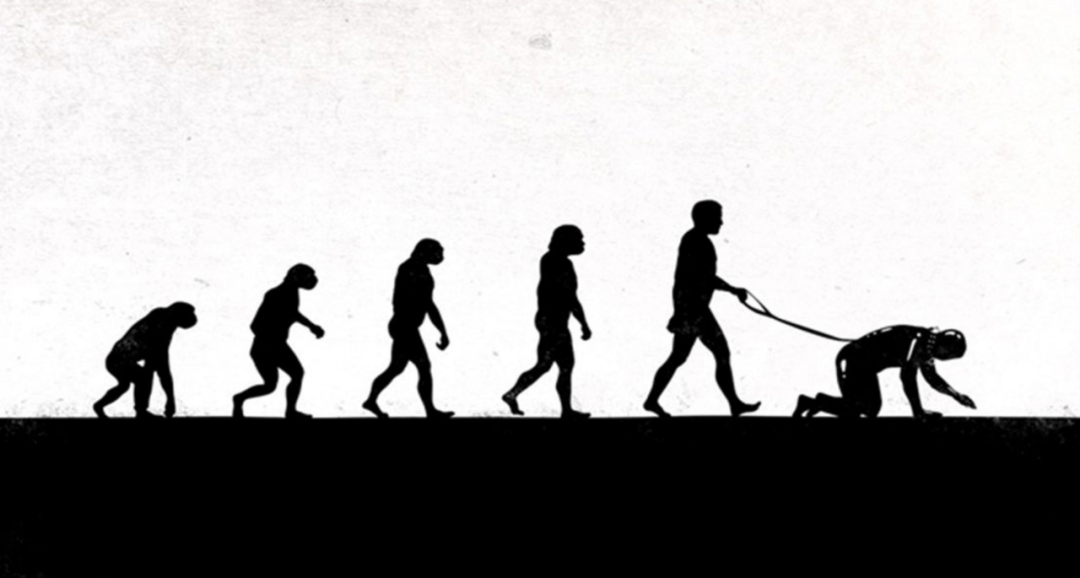
Image source: Shaman_Ledentsov, pinterest
EDCON2023 in Montenegro has concluded. In addition to typical topics within the crypto community, this year's event featured a significant segment dedicated to transhumanism/longevity. The previous discussion titled "A Dialogue on Transhumanism at SeeDAO" served as a prelude to SeeDAO’s activities in Montenegro. During the Montenegro event, I participated in a small gathering hosted by SeeDAO and delivered an online talk titled “The Human Condition in the Digital Age—A Virtual World That Is Real vs. A Real World That Is Unreal,” scheduled under the “Transhumanism” track.
Why does the crypto community care about "transhumanism"? The simplest explanation is "the leader likes it." Vitalik Buterin (affectionately known as "V God"), founder of Ethereum and its undisputed community leader, has long been interested in longevity. He invests in related research institutions and endorses the "parable of the dragon tyrant," arguing that allowing people to age and die without actively striving to eliminate aging and death is immoral.
Of course, Vitalik is not an exception. We can clearly sense that compared to other industries, blockchain pioneers and the crypto community show greater enthusiasm for transhumanism or life extension. This preference traces back to Hal Finney—the so-called "second person" behind Bitcoin—who, as a transhumanist suffering from ALS, chose cryonics upon nearing death, hoping future technology might revive him.
As Kelsie Nabben points out, the first point of convergence between transhumanism and cryptocurrency lies in the idea of "long-termism"—"the immutability of blockchain makes it a perfect long-term infrastructure."
"In the long run we are all dead"
This is Keynes' famous quote. Keynes advocated active economic policies (especially monetary stimulus) to regulate markets and rescue society from crises such as depression or unemployment.
Opponents of Keynes believed in the market's self-regulating capacity, arguing that imbalances like inflation or deflation were temporary, and that "in the long run," markets would heal themselves.
In response to these objections, Keynes made his famous remark: "In the long run we are all dead."
Setting aside the irony or satire, Keynes’ core argument was this: the issue isn't whether the market can self-correct, but rather the timescale involved. Market recovery may take decades to become clear, while severe social problems could arise from intense fluctuations over just three to five years. Therefore, governments should intervene to stabilize the market and smooth out volatility.
After Keynes, using tools like interest rate adjustments, reserve requirements, taxation, and welfare policies to achieve stability targets such as "2% inflation" became standard practice worldwide.
Keynes had a point—he shattered the "God's-eye view" of some free-market absolutists (though he arguably encouraged governments to play God instead).
When discussing AI-induced job displacement, I’ve expressed a similar stance. For example, when facing a group of unemployed workers due to technological disruption, saying lightly, “Don’t worry, new technologies will eventually create new jobs or improve living conditions—this crisis is only temporary…” ignores that this "temporary pain" might last decades. Those currently struggling may never live to enjoy the benefits of new technology. Similarly, heavily indebted workers can't tell their banks: “I’ll repay you in the long run, so let me skip mortgage payments for now.”
The Dilemma of Keynesianism
Keynesianism rose to fame during the Great Depression—a response to urgent market crises. Perhaps it did help at the time—though debated—we’ll assume for now it contributed to resolving the social crisis of that era. The problem is that emergency central control mechanisms and monetary stimuli meant to prevent crises later became normalized.
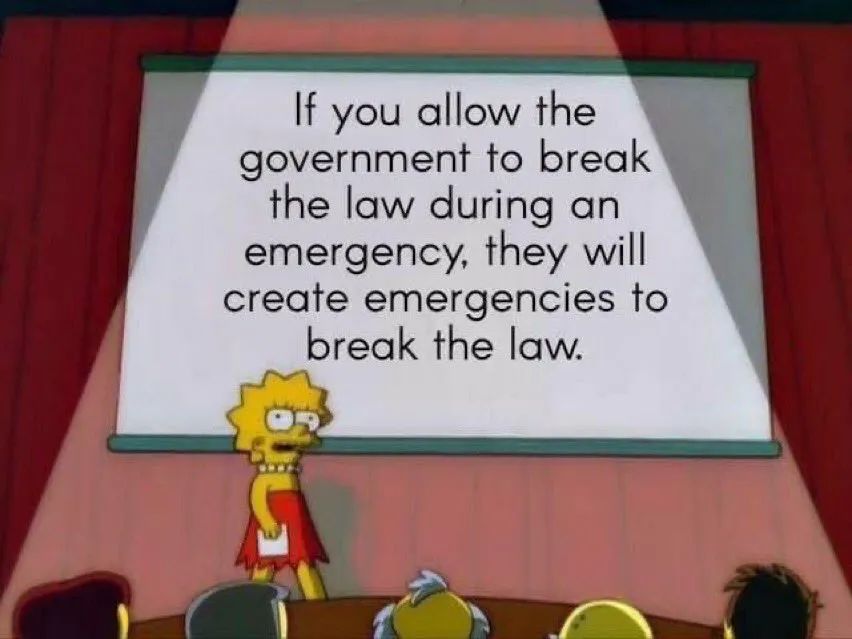
Image source: iFunny
Especially after the collapse of the Bretton Woods system in the 1970s, fiat currency ran wild with unlimited issuance. Although credit money claims to be backed by bonds to prevent over-issuance, in practice, the "debt ceiling" keeps being broken.
Inflation seems to have moved beyond its role as a market incentive. More often, inflation merely masks stagnant real wages through nominal wage increases. Coinciding with this shift since the 1970s, U.S. workers’ real wages have stagnated, and wealth inequality has steadily increased.
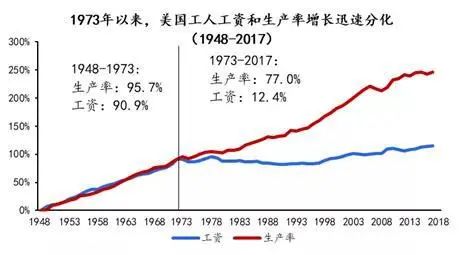
Image source: Economic Policy Institute, Bivens et al. (2014), JD Digital Technology
Thanks to various flashy monetary policies, the U.S. survived the 2008 financial crisis, leading many to continue praising this central bank-controlled monetary system.
But others grow increasingly dissatisfied, arguing that the crises themselves are results of these very policies. Just as withdrawal symptoms can be eased by taking more drugs, treating monetary stimulus as effective market regulation is as absurd as viewing drug use as legitimate therapy.
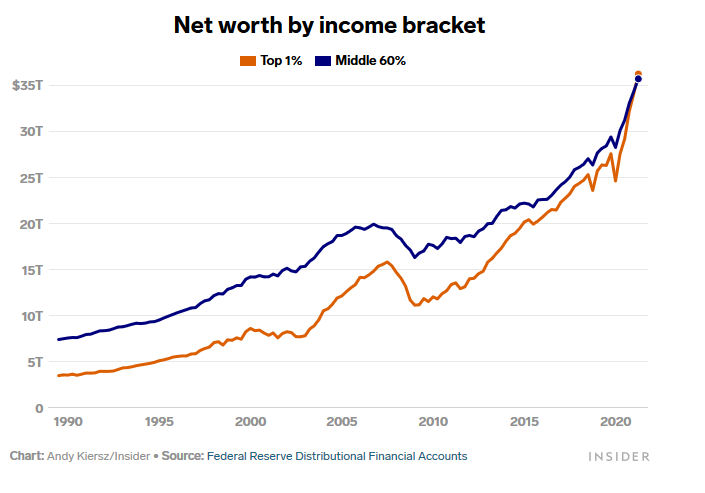
Moreover, central authorities aren't morally flawless. In fact, most so-called relief measures—including welfare policies seemingly beneficial to the poor—end up widening the wealth gap. Most financial elites not only escape punishment during financial crises but profit handsomely. Today, the top 1% of Americans hold more wealth than the entire middle class (60% of the population).
The Legitimacy of Living Beyond One’s Means
In a sense, the dilemma of Keynesianism is inevitable. At its root, the paradox of Keynesianism lies in treating "drawing from the future to save the present" as a natural assumption.
Some harsh critics claim Keynes was gay and childless, thus uninterested in long-termism. Such personal attacks are inappropriate, but considering "future generations" is indeed crucial. When we include descendants, Keynes’ quote becomes: "In the long run we are all dead, but our descendants live on."
Thus, the debate between long-term and short-term perspectives is essentially a conflict between future and current generations. Much of Keynesian relief and stimulus boils down to "living beyond one’s means"—borrowing money to inject immediate market stimulus and maintain current stability.
Literally speaking, "living beyond one’s means" can be entirely justified—if I face starvation today, I’d naturally consume next year’s grain, leaving tomorrow’s problems for tomorrow. If I don’t eat today, there won’t be a tomorrow for me.
However, this justification holds only if both "today" and "tomorrow" refer to the same "me." I borrow from my future self, leaving the burden to my future self—that’s my freedom. But what if "today" and "tomorrow" represent different people?
If Zhang San is starving and eats Li Si’s grain, telling Li Si to figure it out later—is this still acceptable? Sometimes Zhang San doesn’t even starve, just feels unstable, so he grabs Li Si’s food without knowing whether Li Si has enough. Zhang San might argue he only took surplus grain, but does that make his act reasonable? Not necessarily. Taking Li Si’s grain without consent is clearly theft, even tantamount to murder—even if Zhang San later repays generously, the initial act remains unjustified.
Now consider when "today" and "tomorrow" aren’t the same person nor simultaneous individuals, but represent "this generation" and "the next generation" across human society—how should we judge then?
We’re familiar with such conflicts: earlier generations gained rising property values through early consumption, leaving younger generations unable to afford homes; earlier generations enjoy generous pensions funded by taxes from overworked youth; earlier generations expanded wealth by polluting the environment, forcing later generations to clean up the mess…
The practice of "living beyond one’s means" thrived throughout the 20th century due to several factors: first, sustained population growth ensured enough descendants to support prior generations; second, accelerating technological progress gave future generations better tools to fix past damage; third, overall economic and social stability made future conditions reasonably predictable.
For instance, Zhang San can take grain from Li Si and Wang Wu only if their productivity far exceeds his, and their lives remain relatively stable without unforeseen disasters. Under such conditions, Zhang San’s unauthorized borrowing seems harmless. Even Li Si might welcome it—since it’s legal, Li Si could similarly benefit from future generations like Wang Wu or Ma Liu.
But these conditions rapidly changed in the 21st century: first, shrinking populations mean fewer descendants; second, technology’s limits are increasingly evident—even with progress, pollution remediation lags behind pollution creation; third, setbacks in globalization and revolutionary advances in information technology are undermining traditional social structures. In this context, the tension between short-term and long-term concerns has sharpened again.
In ordinary "borrowing," the subject is either an individual or a corporate entity. On one hand, when the same entity borrows and repays, the future obligations are fully known—there’s no "taking without asking." Corporate shareholders or representatives may change, but successors must voluntarily assume responsibility after understanding existing debts.
On the other hand, individuals and companies operate under "limited liability": people die, companies go bankrupt, and unrecoverable bad debts are legitimately written off, preventing infinite harm.
The僭越of Keynesianism lies in transplanting behaviors and mechanisms designed for bounded individuals onto overarching national and societal structures.
The contradiction is this: human individuals are finite and mortal, while "society" is immortal and endless. Keynes conflates individual and collective: when addressing urgent interests, he takes the individual’s side, emphasizing mortality—"in the long run we are all dead"—and calls for swift intervention. Yet when advocating centralized planning and preemptive borrowing, he adopts the standpoint of overall social interest, allowing governments to act on behalf of "society," crossing mortal boundaries and intergenerational lines to extract resources. But "society" can never be satisfied—it can never rise above "urgent needs."
The Original Intent of the Crypto Movement
Regardless, many wish to resist Keynesianism. Their intellectual inspirations may come from Arendt or Marx, but more often they return to traditions like the Austrian School, re-emphasizing spontaneous market forces and opposing government intervention and monetary over-issuance—precisely the stance of early Bitcoin supporters. Indeed, Bitcoin itself might have been born for this purpose.
Satoshi Nakamoto published the Bitcoin whitepaper in 2008 amid the financial crisis and launched the Bitcoin network in early 2009. In Bitcoin’s "genesis block," Nakamoto embedded the headline from that day’s Times: “Chancellor on brink of second bailout for banks,” widely seen as a satirical critique of the traditional central banking system.
“Critique cannot replace material force”—Satoshi said little but built an unprecedentedly powerful weapon: blockchain technology. Blockchain aims to establish a global digital currency system independent of central banks.
Blockchain has two core features: decentralization and immutability. Decentralization opposes top-down manipulation by god-like central banks and emphasizes placing control of assets and identity into each individual’s hands. Immutability has dual meanings: public ledgers as unalterable historical records, and fixed monetary supply and emission rates (anti-intervention, anti-inflation).
We find that blockchain’s core ethos—“self-sovereignty and immortality”—aligns perfectly with transhumanism’s central aspirations. This is no coincidence. To oppose Keynesianism at the conceptual level—not just in terms of tool efficiency—we must confront Keynes’ anti-long-termism: “In the long run we are all dead.”
The Crisis of Nihilism
To counter Keynes’ central argument—"in the long run we are all dead"—let me turn again to Arendt and the philosophical dimension of "the human condition."
“After me, the flood” is a classic nihilistic attitude. People increasingly struggle to find meaning in the "long term"—whether in others or the future—leading to rampant egoism and hedonism. Even those who appear collectivist or altruistic rarely find meaning beyond mere survival.
Nihilism or the crisis of meaning is the fundamental condition of industrial-era humanity. It stems not only from the "death of God"—the decline of religious life—but more importantly from the loss of spaces where people once寄托immortality. In China, I believe this is the demise of "historical culture." In the West, it’s the alienation of the public realm (which Arendt argues has been replaced by mass "society").
One’s words and deeds ripple through the public realm, generating infinite echoes that extend existence beyond individual life. Meanwhile, feedback from the public realm continuously reinforces the authenticity of one’s lived experience.
As Arendt says:
The presence of others guarantees the reality of the world and ourselves, because they see what I see and hear what I hear... Our sense of reality depends entirely on appearance, thus on the existence of a public realm where things emerge from the darkness of hidden being and reveal themselves...
Furthermore, Arendt emphasizes:
The public realm, as a common world, brings us together while preventing us from collapsing into one another. What makes mass society so unbearable is not its large population, but that the world between people has lost the power to bring them together and keep them distinct at once.
According to Arendt, the public realm allows individuals to stand out within the group—each person expressing themselves publicly, pursuing excellence. "Society," by contrast, is a holistic concept where unique individuals are categorized statistically, forming a unified, continuous, objective, mathematical model.
The factory floor epitomizes modern mass society. Modern humans live in uniform concrete jungles, work in orderly factory workshops—spaces that gather people merely as animals, lacking both connection and distinction. Everyone is a "replaceable part," a "corporate beast"—an animal within society.
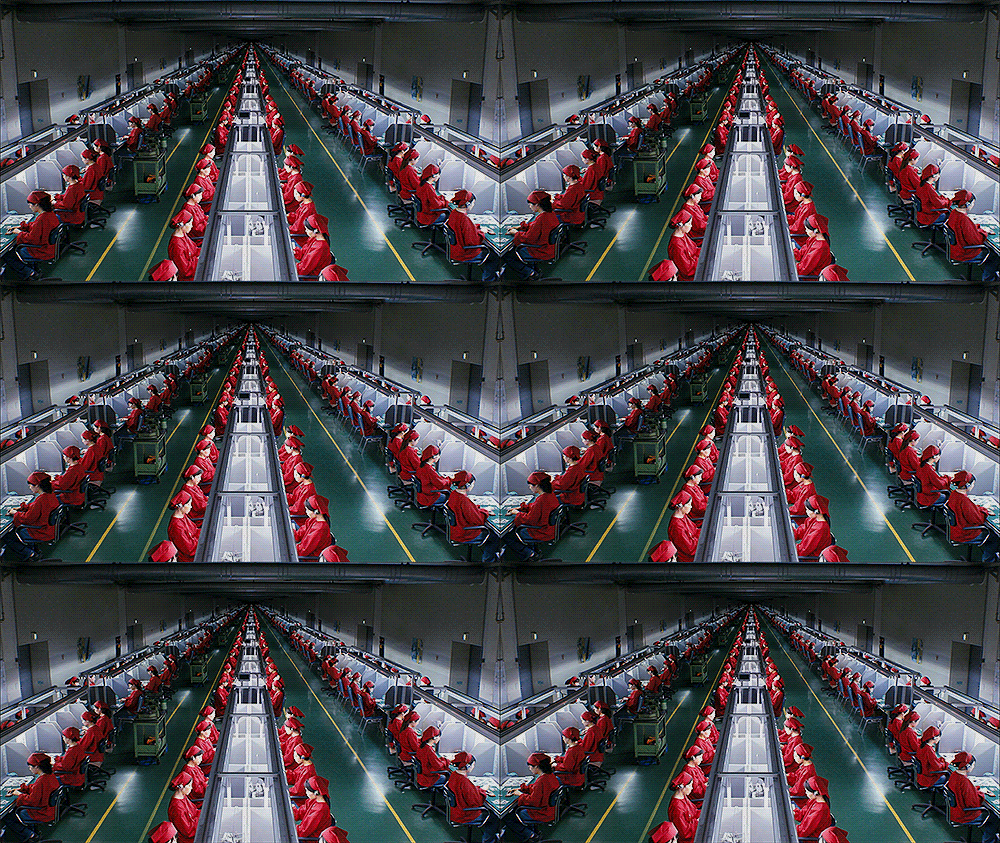
Image source: Supun Muthutantrige, Medium
Resisting Alienation
This modern condition was profoundly critiqued by the young Marx—alienated labor in modern factories exploits not only workers’ bodies but also empties and distorts their spirits.
Marx believed labor should enable self-affirmation in the world. My labor/action leaves a mark in the external world—one bearing my unique imprint—allowing me to directly perceive my own existence. For example, an artist projects skill, experience, taste, and intent into their "work" and sees their "self" reflected in the tangible artwork and its ripple effects on others.
Originally, this projection wasn’t limited to artists. An ordinary craftsman could do the same. But in a modern assembly line factory, workers cannot achieve this—they don’t own their "work." A Foxconn worker assembling iPhones doesn’t see the phone as their creation. Their sweat and effort are converted into neutral labor units paid via wages, leaving nothing uniquely theirs in the product.
As Marx noted, labor becomes alienated:
First, labor is something external to the worker, not belonging to his essential being: thus, in his labor he does not affirm himself but denies himself... The worker feels at home only outside labor, and feels alienated within it... As a result, man (the worker) feels free only in his animal functions—eating, drinking, procreating, at most also in housing, adornment, etc.—while in his human functions he feels himself but an animal. What is animal becomes human, and what is human becomes animal.
This alienation has become the default modern mindset: “the point of working is not to work.” People think this naturally. But when not working, what do they pursue? Merely eating well, drinking well, and enjoying primal sexual thrills. A modern person’s greatest creative act might be decorating their home—but even this luxury disappears for migrant workers with no permanent residence.
Arendt builds on Marx by distinguishing “labor (labour)” from “work (work).” “Labor” addresses human animality—needs like eating, warmth, safety, shelter, reproduction. All animals pursue these, endlessly and unsatisfactorily: feeding today doesn’t eliminate tomorrow’s hunger. These perpetual animal needs cannot allow one to “affirm oneself.”
“Work,” however, is uniquely human—not responding to natural necessity but creating an artificial world beyond nature. Beyond labor and work, “action” (action)—public self-expression—is the true manifestation of humanity. The artificial world created by “work” gains meaning only through sustaining a public realm.
An Authentic Digital World
The artificial world created by “work” and the “public space” sustained by “action” need not be physical. The digital world may provide such space. Especially as industrialization shrinks traditional public spaces, many have found spiritual homes in digital realms.
Even single-player games sometimes offer deeper meaning. In Arendt’s terms, being a corporate drone isn’t “work” but “labor,” while playing games at home might be genuine “work.” Of course, some play only for “leisure,” to relax before returning to drudgery. But many truly “create” in games—where their in-game creations bear more of their personal stamp than factory products, serving as direct projections of will and taste, thus offering greater fulfillment. Beyond solo creation, social games and online platforms thrive—“actions” in cyberspace and their ripples are utterly real.
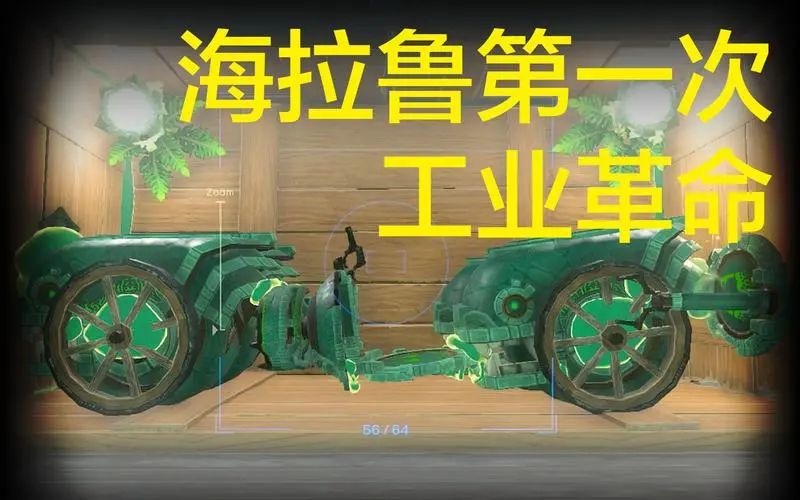
Image source: orrrangesama, bilibili
Before blockchain, digital assets, wealth, and identities depended on specific companies or platforms—data could be altered or erased at any time, giving everything a castle-in-the-air feel. Blockchain strengthens the digital world, restoring to individuals sovereignty over identity and property, and the power to “connect yet distinguish” from others.
Three Forms of Immortality
In sum, the digital world opens possibilities to revive the endangered world of meaning or public space eroded by industrialization. Blockchain offers durability; cryptocurrencies provide stable metrics—encouraging long-term thinking.
Thus, transhumanist pursuit of “longevity” is merely one echo of the broader trend embodied by blockchain—and in my view, a relatively superficial response. They focus “long-termism” narrowly on the animal body.
Yet extending life, like “labor,” is endless—always the “most urgent” issue. At 120, how to reach 150 becomes urgent; at 150, reaching 200 becomes urgent. If life extension always looms as the top priority, such a life merely replicates the ancient notion that “a bad life is better than a good death.”
Of course, I’m not dismissing transhumanist pursuits—I only say it’s a shallow endeavor. The deeper question remains: how can humans transcend inevitable mortality to find meaning?
Throughout history, three forms of immortality coexist: animal, divine, and human. Whether through procreation or bodily continuity, both ultimately amount to living as animals. Hope in an afterlife follows theological paths. Only those who work and act in the public realm—leaving lasting impacts on the world—achieve uniquely human “immortality.” These forms aren’t mutually exclusive—one may simultaneously be a parent, health enthusiast, believer, creator, and actor. Yet when discussing creation and action, the latter dimensions remain supreme.
The following endeavors align with the trend implicit in blockchain:
Opposing Keynesianism in monetary systems and economics;
Pursuing longevity at the individual level;
Rebuilding the public realm at the societal level;
Helping creators achieve immortality through artistic creation;
Reviving historical culture to provide enduring meaning…
These seemingly unrelated fields are interconnected, sharing the same "spirit of the age"—a hallmark of great transformative eras like the Renaissance, Scientific Revolution, and Enlightenment.
[About Wai Bo Worldview]
Wai Bo Worldview is a Chinese-language media outlet producing content via Web3 methods, and a practical experiment in collaborative creator economies. We firmly believe Web3 is the inevitable trend, while also holding that the essence of content—information, insight, aesthetics, and fun—will not change. The gifts of Web3—decentralization, equal power, fair distribution, transparent rules, and mutual models—give us confidence to create value in content, experience, and ideas.
We originated from SIP-79 proposal in SeeDAO, with members mostly from the SeeDAO community—crypto OGs, academics, finance experts, media professionals, office workers, students...
"Wai Bo Worldview" carries two meanings: first, "Wai Bo Three·Perspectives," meaning to go and "observe" Web3—to witness, document, and disseminate everything about Web3. Second, "Wai Bo·Worldview," where "Wai Bo" reflects a punk attitude—serious yet humorous—while "worldview" urges us to focus on foundational ideas, not just noisy surface phenomena.
Glad to meet you here.
Join TechFlow official community to stay tuned
Telegram:https://t.me/TechFlowDaily
X (Twitter):https://x.com/TechFlowPost
X (Twitter) EN:https://x.com/BlockFlow_News






