








Binance and other institutions are rushing in: A roundup of notable projects in the RWA sector
TechFlow Selected TechFlow Selected
Binance and other institutions are rushing in: A roundup of notable projects in the RWA sector
This article will analyze the RWA sector, review notable ecosystem projects, and share potential speculative opportunities with you.
 Navigating Web3 tides with focused insights
The concept of RWA (Real World Assets) has generated increasing discussion in recent months, with major institutions actively positioning themselves in this sector, signaling their entry and expressing long-term optimism. For instance, earlier this year, Goldman Sachs’ digital asset platform officially launched, helping the European Investment Bank issue a 100 million euro two-year digital bond. Subsequently, Siemens, an industrial engineering giant, issued a 60 million euro digital bond on the blockchain for the first time. Binance released a 34-page in-depth research report on RWA in March; Citibank went even further, strongly advocating that almost any valuable asset could be tokenized, stating that the tokenization of finance and real-world assets might become the "killer application" for blockchain breakthroughs, predicting that tokenized digital securities could reach $4–5 trillion by 2030.
Given this, the RWA narrative is undoubtedly one to watch closely this year. This article will analyze the RWA sector, review notable ecosystem projects, and explore potential speculative opportunities.
What is RWA?
RWA refers to the tokenization or NFT-ification of real-world assets, enabling physical assets such as real estate, bonds, and stocks to be brought onto the blockchain. Holding a token represents ownership of the corresponding real-world item, allowing users to conduct lending, leasing, trading, and other transactions on-chain. In fact, successful RWA cases already exist in the crypto space—common stablecoins like USDT and USDC are examples of tokenized fiat currencies (i.e., the U.S. dollar).
Impact and Advantages of RWA + DeFi
-
The core impact of RWA on DeFi is bridging traditional finance and crypto finance: RWA brings off-chain financial assets on-chain, while RWA tokens can be redeemed for physical assets, thus creating a connection between real-world assets and DeFi. This enhances DeFi’s externality and improves liquidity across various asset classes, contributing to the sustainability of crypto finance.
-
Breaking out of closed systems, RWA injects new possibilities into DeFi. Currently, DeFi remains relatively isolated, with yields primarily derived internally—transaction fees, lending interest, staking rewards, and inflationary emissions. With RWA, underlying assets can become more diverse, representing virtually any real-world item, thereby enabling innovative applications to emerge continuously within crypto finance.
-
Expanding DeFi yields and providing sustained incentives for participants: As yields from various DeFi protocols decline and market uncertainty rises, investors increasingly seek diversified portfolios of real-world assets to generate stable returns uncorrelated with cryptocurrencies. For example, U.S. Treasury bonds offer ~5% yield with high credit quality and low risk, making them a preferred investment during last year's bear market. RWA enables investors to access traditional off-chain markets freely and build diversified income streams.
-
The commercial value and potential of RWA tokenization in DeFi are widely recognized, attracting institutional participation and capital inflows. Traditional financial institutions hold vast tangible assets—real estate, equities, bonds—but ownership transfers and trading typically require intermediaries, regulatory compliance, time, and cost. RWA reduces reliance on intermediaries, automates processes, and increases liquidity, delivering greater value, efficiency, and competitiveness for enterprises.
Analysis of RWA Projects
Currently, based on asset type and tokenization methods, RWA can be categorized into stablecoins, private credit, equities and bonds, real estate, carbon credits, precious metals, etc. Below we highlight several highly promising RWA projects:
1. Centrifuge – Private Credit
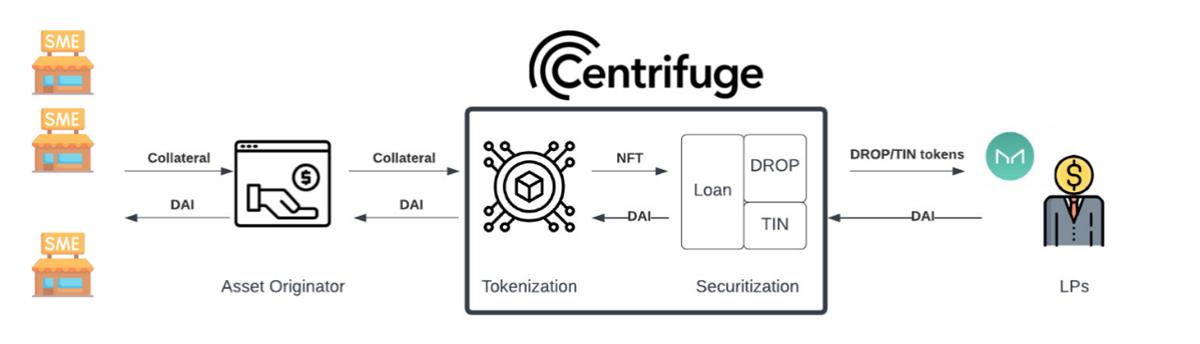
Launched in 2017, Centrifuge was the first project to bring RWA to MakerDAO. It is an on-chain ecosystem focused on structured credit, aiming to securitize and tokenize illiquid debt. Its goal is to lower financing barriers for mid-sized enterprises while enabling investors to earn income from real-world assets.
Centrifuge essentially replicates traditional corporate lending but leverages DeFi and NFTs to eliminate certain intermediaries and streamline off-chain procedures. The financing process works as follows: borrowers package real-world assets off-chain, upload them to generate legally enforceable NFTs as collateral, and receive interest-bearing ERC-20 tokens. Investors can purchase these tokens using DAI. When loans mature, issuers repay and redeem collateral, returning principal plus interest to investors. The pools formed by these interest-bearing ERC-20 tokens are divided into junior and senior tranches—junior investors take higher risk for higher returns, while senior tranches offer lower but safer yields.
According to previously disclosed data, Centrifuge has facilitated over $385 million in financing, with TVL doubling year-on-year. Its tokenized assets have been integrated across DeFi, including $220 million in risk-weighted assets on MakerDAO.
2. Ondo Finance – Public Bonds
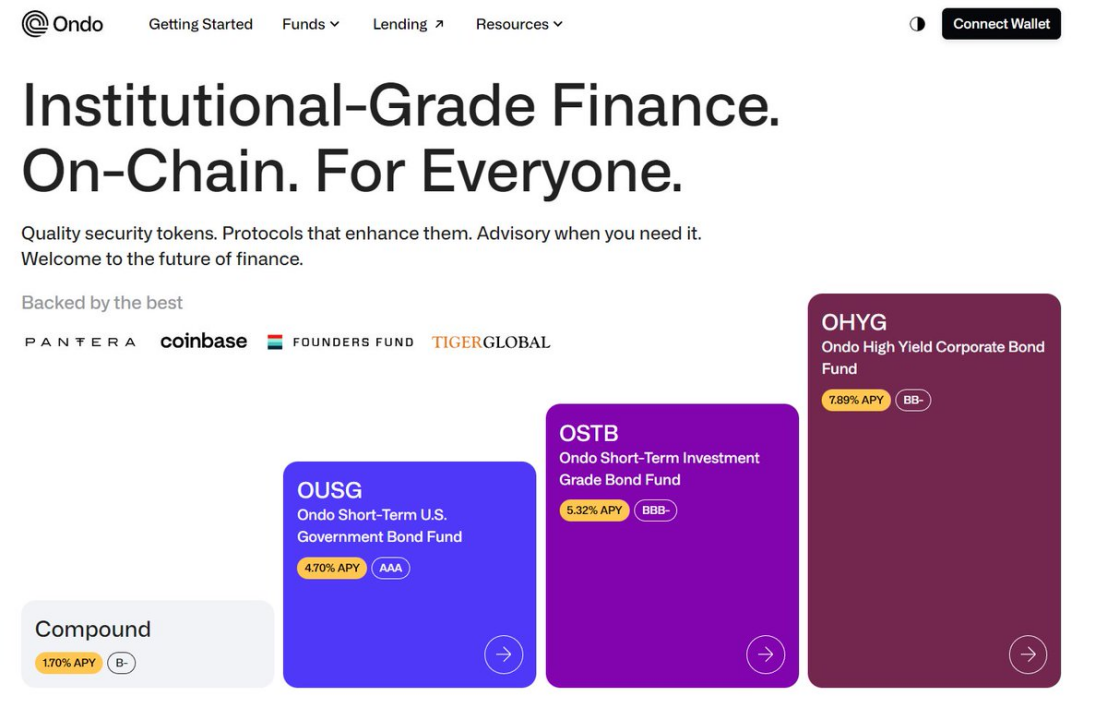
Ondo Finance is a DeFi protocol founded by Nathan Allman, formerly of Goldman Sachs' digital asset team, and Pinku Surana, ex-Vice President of Goldman Sachs’ technology division. The project has raised $34 million from prominent investors including Pantera Capital, Coinbase Ventures, Tiger Global, and Wintermute.
Ondo Finance partners with major asset managers like BlackRock and PIMCO to launch four tokenized funds backed by large, highly liquid ETFs: U.S. Money Market Fund (OMMF), U.S. Treasuries (OUSG), Short-Term Bonds (OSTB), and High-Yield Bonds (OHYG). These funds offer average yields around 6%. For compliance, Ondo employs a whitelist model—investors must pass KYC/AML checks before signing subscription agreements. They can transact fund tokens using stablecoins or USD and use them within permissioned DeFi protocols. Ondo charges an annual management fee of 0.15%.
3. MakerDAO – Bonds & Stablecoins
MakerDAO is an open-source decentralized autonomous organization created on the Ethereum blockchain in 2014. Holders of its MKR token participate in governance. Additionally, MakerDAO issues the DAI stablecoin, whose value is supported and stabilized through mechanisms like dynamic Collateralized Debt Positions (CDPs).
MakerDAO issued the world’s first DeFi-based loan secured by real-world assets, entering the RWA space early. In 2020, it formally made RWA a strategic priority and published guidelines and plans for integrating RWA. Beyond issuing DAI, MakerDAO passed proposals to accept RWA—such as tokenized real estate, invoices, and accounts receivable—as collateral to expand DAI issuance.
In 2022, MakerDAO partnered with BlockTower Credit to launch a $220 million fund financing real-world assets. Its RWA portfolio exceeds $680 million, with $500 million in U.S. Treasuries alone. Notably, Société Générale borrowed $7 million from MakerDAO, backed by €40 million worth of AAA-rated bonds represented as OFH tokens. Reportedly, about 70% of MakerDAO’s revenue in December 2022 came from RWA activities.
MakerDAO is undoubtedly an early mover in RWA. However, initial market reactions were lukewarm. It wasn’t until 2023, when DeFi activity rebounded and traditional giants entered the space, that RWA regained attention. Thanks to its early foundation, extensive partnerships, proven DAI economic model, and successful token issuance experience, MakerDAO is now widely anticipated and viewed favorably by the market.
4. RealT – Real Estate
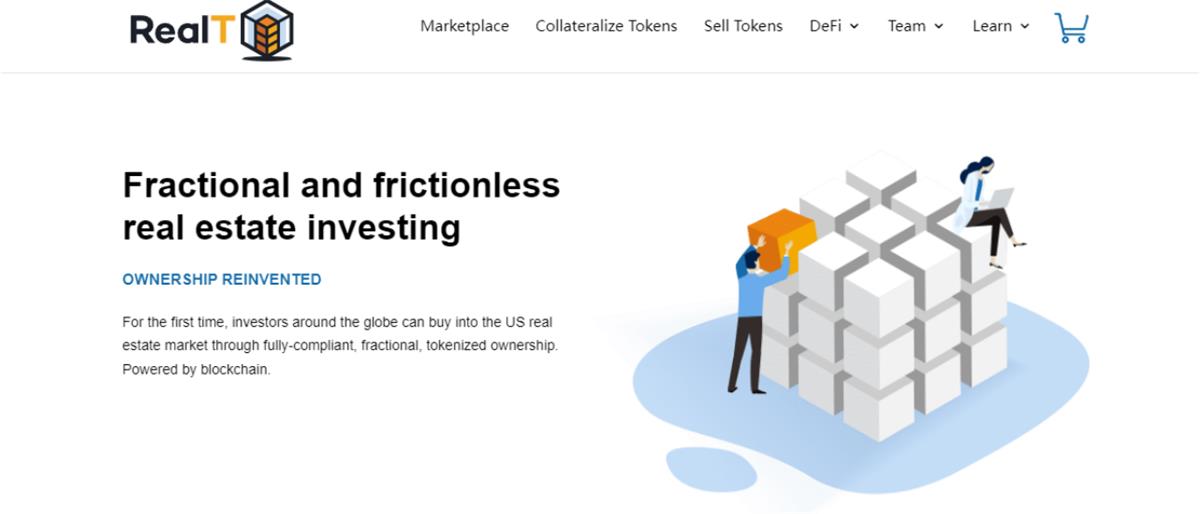
RealT is a company specializing in tokenizing off-chain assets and a pioneer in asset tokenization, primarily focusing on fractionalizing U.S. real estate. By tokenizing properties, RealT addresses key challenges in real estate: illiquidity and high transaction costs. Properties traditionally sold as whole units can now be fragmented, enabling retail investors to own partial shares. This opens U.S. real estate investment to individuals who previously lacked direct access.
When investors buy RealTokens, they effectively invest in a property and receive legal documentation proving ownership. Even if RealT ceases operations, the RealToken remains valid, and holders’ rights are preserved. Thus, the value and enforceability of RealTokens are independent of RealT’s operational status.
RealT uses IPFS to permanently store ownership documents, ensuring they remain immutable and accessible without reliance on third parties. Additional data—property inspections, insurance, tax records—will also be uploaded progressively to IPFS. This creates a transparent, verifiable record of each property’s history and condition, enhancing trust and auditability.
Once ownership and data are securely stored, property valuation comes next. RealT integrates oracles to obtain real-time, market-driven pricing data directly, avoiding intermediary appraisals. This ensures valuations are objective, transparent, and publicly accessible, promoting full price transparency.
With global real estate valued at approximately $360 trillion—an enormous market—we can only anticipate how RWA might unlock innovation and energize DeFi.
5. Galileo Protocol – Open-Source Infrastructure
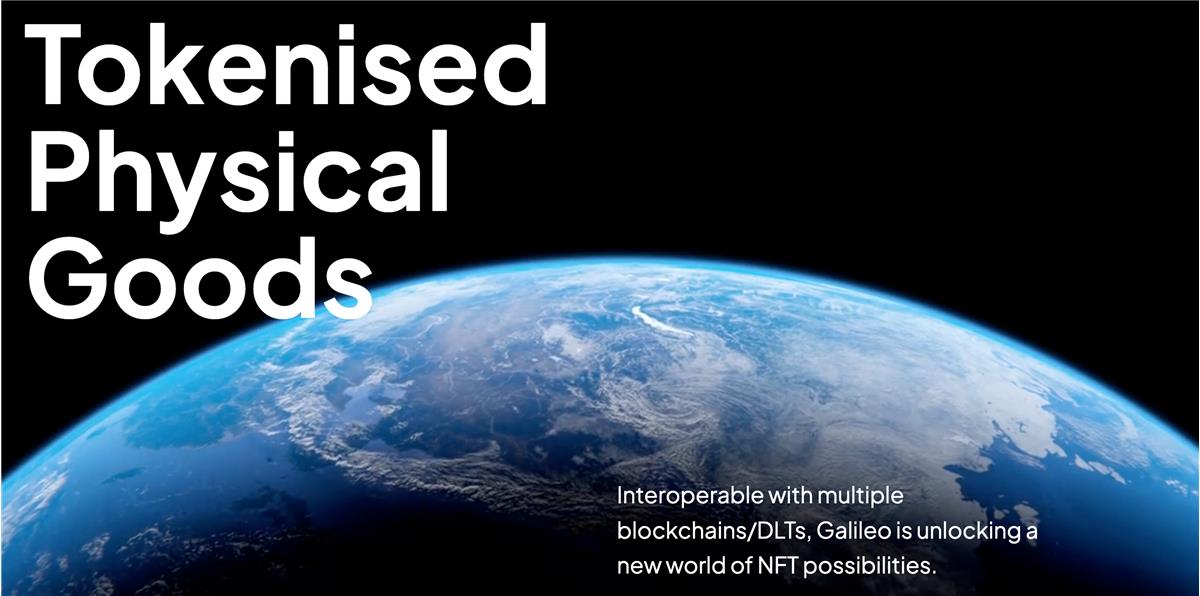
Galileo Protocol is a platform for tokenizing and redeeming physical assets, serving as open-source infrastructure for executing smart contracts. It enables the creation of “pNFTs” representing physical goods, which can be issued across multiple blockchains and interact with any chain.
Through Galileo, users can diversify their crypto portfolios into tangible assets and gain exposure to non-liquid holdings. Moreover, Galileo ensures that pNFTs linked to physical assets are authentic and counterfeit-free. As QRC20-standard tokens, pNFTs achieve cross-chain interoperability, providing secure storage and provenance tracking to prevent fraud.
LEOX is Galileo’s native token, enabling users to assume one of four stakeholder roles: Owner, Buyer, Redeemer, or Fractional Investor.
On Galileo, sellers can mint an NFT proving ownership of a real-world asset. Buyers can directly purchase desired assets; upon completion, the seller transfers the NFT, making the buyer the official owner. Fractional investors may acquire partial ownership—for example, in high-value real estate split into smaller shares. A Redeemer can directly claim and possess the underlying asset.
Can RWA Deliver a Breakthrough?
In 2023, RWA gained renewed attention, with several institutions investing in its development. However, the sector remains in its early stages—small in scale, partially dependent on DeFi protocols (especially oracles, which remain underdeveloped), and facing ongoing regulatory hurdles. Builders in this space continue navigating complex compliance landscapes, striving to connect Web3 with the real world.
Currently, no single RWA project stands clearly as a market leader. Yet, given the massive underlying demand and the growing convergence between on-chain and off-chain finance, this sector warrants close attention—the right moment will come. We believe the projects highlighted here have strong potential to lead the charge, driving innovation across the ecosystem, revitalizing DeFi, and offering investors broader, more diversified opportunities.
Join TechFlow official community to stay tuned
Telegram:https://t.me/TechFlowDaily
X (Twitter):https://x.com/TechFlowPost
X (Twitter) EN:https://x.com/BlockFlow_News
 @TrendX_official






