








4 Stages of NFT Evolution and Future Predictions
TechFlow Selected TechFlow Selected
4 Stages of NFT Evolution and Future Predictions
This article will reference the historical development of the internet to compare the past, present, and future of NFTs, analyze the four stages they have undergone, and provide a brief forecast.
 Navigating Web3 tides with focused insights
Author: Gridded Cat (DAOSquare)
Introduction: Since the birth of NFTs over five years ago, their development has been relatively slow. Currently, both the number of NFT mints and overall network trading volume are declining, indicating that NFTs are in a downturn. To most people, NFTs are nothing more than worthless little pictures. But is that all they can be? This article will draw parallels with the history of the internet to examine the past, present, and future of NFTs, analyze the four stages they have gone through, and offer a brief forecast.
Stage One: Emergence
In October 2017, while people were still celebrating Bitcoin’s impending breakthrough past $20,000, an intriguing on-chain game—CryptoKitties—quietly launched. CryptoKitties was a blockchain-based game where users could buy, breed, sell, and collect virtual cats. Each cat had unique attributes including eye shape, eye color, fur pattern, tail type, belly fur, eyebrows, mouth, chin, whiskers, and expression.
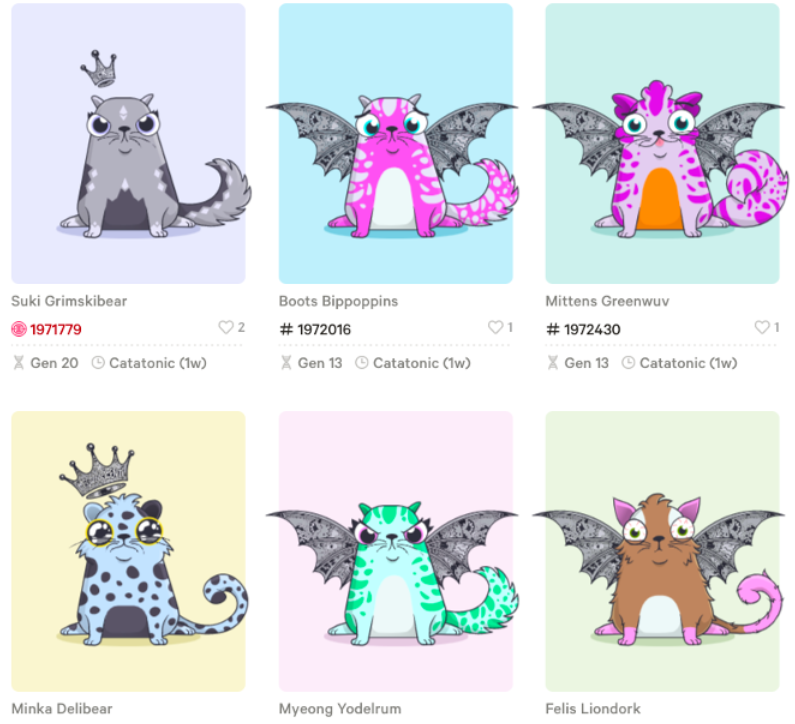
Even more interesting was that the genetic algorithm used to breed these fluffy creatures mirrored principles from biological genetics. Breeding two cats produced offspring whose traits were combinations of their parents’. The lower a cat’s generation, the higher its cost, as first-generation cats were only minted in 2017 and capped at 50,000 in total supply.
By December 2017, the game became so popular it caused congestion on the Ethereum network. At the peak of the hype, CryptoKitties reportedly had 1.5 million users and generated $40 million in transaction volume. The most expensive kitten, “Dragon,” sold for 600 ETH (around $170,000). Meanwhile, major Chinese tech companies rushed into the space: Baidu launched “Lei Ci Dog,” 360 released “Rabbit,” and NetEase introduced “Planet Black Diamond.” However, due to domestic regulatory policies, these Chinese NFT projects eventually became standalone products and faded into obscurity.

At the time, there were no exchanges supporting NFT transactions, nor any decentralized NFT marketplaces. As a result, many newcomers had to rely on trusted group admins or well-known figures to facilitate trades.
However, almost simultaneously with CryptoKitties in December 2017, a platform called "OpenSea" emerged as an NFT marketplace.
This marked the first stage of the NFT industry: NFTs existed simply as digital items without additional functionality. For the industry, OpenSea served primarily to open the market and drive initial growth. By the second half of 2018, interest in NFTs had waned, and OpenSea gradually faded into obscurity.
Stage Two: Return and Collapse
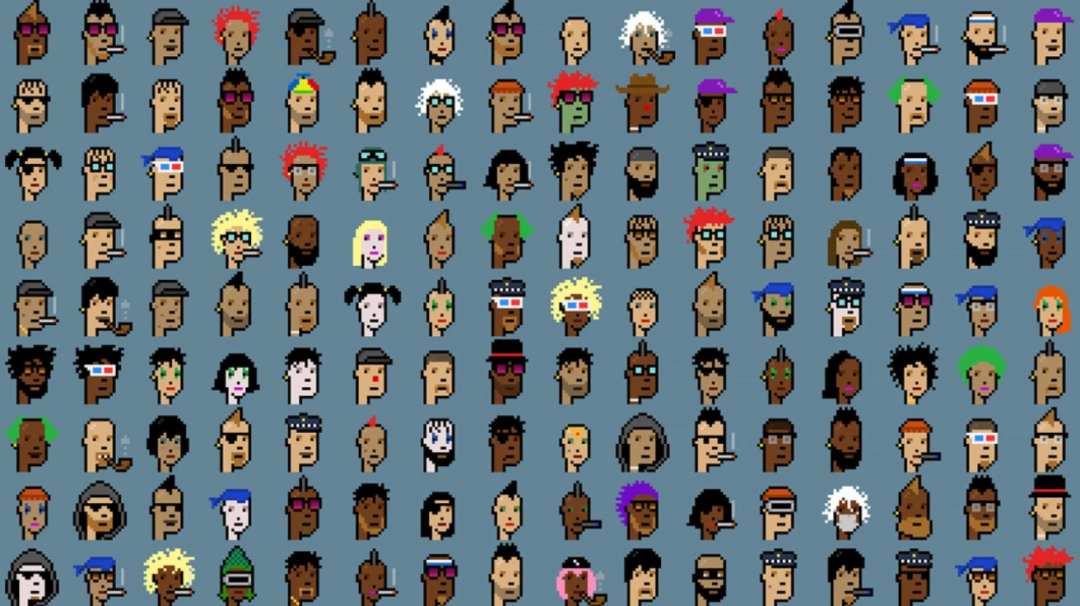
After two years of relative stagnation, 2020 marked a comeback year for the NFT industry. This time, however, the spotlight shifted from CryptoKitties to new types of NFTs such as CryptoPunks and Baby.
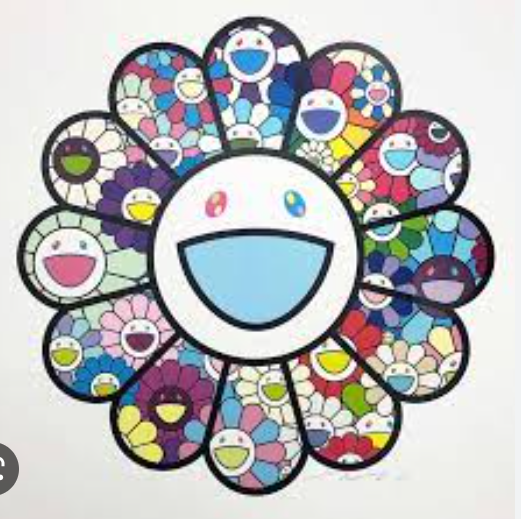
Meanwhile, crypto art was flourishing, drawing many traditional artists into the Web3.0 space. For example, renowned Japanese artist Takashi Murakami released his work “MURAKAMI.FLOWERS 2022,” while famous American DJ 3LAU airdropped his latest album as NFTs to fans, allowing them to earn royalty income. These cases show that more and more artists are recognizing the potential of NFTs as both a creative medium and a business model.
Naturally, Chinese entrepreneurs also launched their own products during this exciting period. Platforms like iBox and Huanhe emerged, introducing a localized term for these NFTs—"digital collectibles."
This localization reflected a deep understanding of Chinese culture and market dynamics, helping promote acceptance and recognition of digital collectibles domestically. These homegrown platforms provided new opportunities for Chinese creators and collectors alike, injecting fresh momentum into the industry.
At the same time, the rise of blockchain gaming and the metaverse fueled various X2E (real-world-to-virtual-world) applications. From running shoes and in-game items to land and housing in virtual worlds, all began serving as carriers for NFTs. OpenSea, as foundational infrastructure for NFT liquidity, saw its trading volume surge accordingly.
People finally began to realize that NFTs were not just small images or audio clips—they should represent programmable assets.
Yet, despite significant progress in product innovation and liquidity during Stage Two, the collapse of projects like Stepn and the cooling of the metaverse caused the value of these NFTs to drop to zero, leaving many disheartened. A simple image might retain some artistic or collectible value, but once an on-chain asset disappears, it truly becomes worthless. By May 2023, overall NFT trading volume hit a new low, plunging the sector into another deep slump.
Stage Three: Gathering Momentum
The bursting of the NFT bubble in Stage Two mirrored the dot-com crash of 2000, and network-wide NFT trading volumes plummeted to near-zero levels. But does this mean NFTs are truly valueless?
After experiencing the 2021 NFT bull run, it became clear that NFTs are essential components for the metaverse, blockchain games, and social applications. Their ability to carry asset value within applications is crucial. To address liquidity issues, various NFT financial innovations (NFTFi) emerged, including leasing, peer-to-peer or pool-based lending, fractionalization, and shared ownership. Today, these foundational protocols are live and relatively mature.
On the other hand, in areas such as asset representation and digital art, current NFT offerings largely meet demand. But in other domains, progress seems to have hit a bottleneck. So what lies ahead for NFTs?
In my view, NFTs are not merely small images, music clips, or artworks. They should be programmable, composable, and capable of representing assets—just like DeFi. So where will the future of NFTs unfold?
It wasn’t until late 2021 that Chainlink unveiled its vision for dynamic NFTs, signaling that there remains ample room for innovation in the NFT space.
Simply put, dynamic NFTs are tokens whose properties change in real-time based on external data—whether on-chain or off-chain. Compared to traditional static NFTs, dynamic NFTs offer far greater potential and broader application scenarios. For instance, imagine using a game item that, although identical in type, varies in attributes and value depending on each player’s in-game activity, experience accumulation, maintenance records, etc.—this would significantly affect its worth.
Web3.0 also represents a revolution in personal data, empowering users to own and monetize their own information. Take personal health data as an example—constantly changing and updating—which requires dynamic NFTs to store and generate value from it.
Dynamic NFTs will showcase immense potential and innovation in the next phase, enabling real-time adjustments based on external data and unlocking new functionalities and use cases.
Stage Four: Explosion
We cannot predict exactly when this stage will arrive, but NFT and dynamic NFT infrastructure and products are already emerging rapidly, which is incredibly exciting.
So what might NFTs look like at that point? Here are some predictions:
-
Liquidity infrastructure—such as lending, leasing, fractionalization, and shared ownership—will further improve, providing greater access for retail participants.
-
Dynamic and static NFT issuance protocols will mature further, significantly lowering the barrier to entry for ordinary users.
-
Dynamic data storage protocols will become robust, greatly reducing the cost of minting and issuing NFTs.
-
More on-chain and off-chain data capture protocols and interfaces will integrate with NFTs.
Overall, as the NFT sector matures, it will inevitably become an indispensable part of the encrypted world—supporting gaming, social interactions, the metaverse, X2E, and beyond—providing both structural support and narrative depth for the evolution of these fields.
Join TechFlow official community to stay tuned
Telegram:https://t.me/TechFlowDaily
X (Twitter):https://x.com/TechFlowPost
X (Twitter) EN:https://x.com/BlockFlow_News
 Dynamic NFT Labs






