Shen Nanpeng in conversation with the founder of Starbucks: I was once rejected by 242 investors
TechFlow Selected TechFlow Selected
Shen Nanpeng in conversation with the founder of Starbucks: I was once rejected by 242 investors
One is a globally renowned investor who has claimed the top spot worldwide, and the other is a business leader celebrated across the globe. The enterprises behind them both have histories exceeding half a century, having successfully navigated through several darkest hours and economic cycles.
 Navigating Web3 tides with focused insights
As expected.
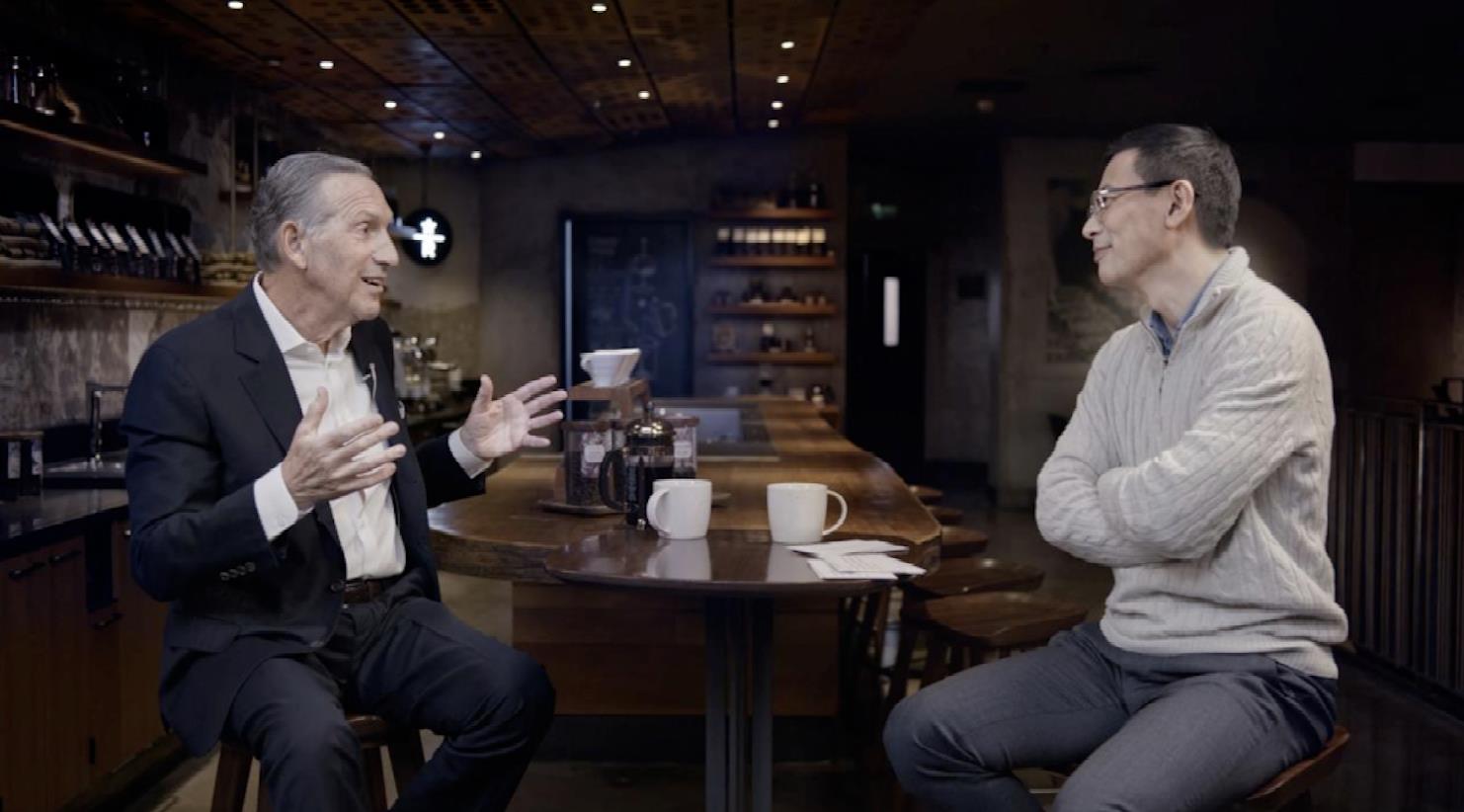
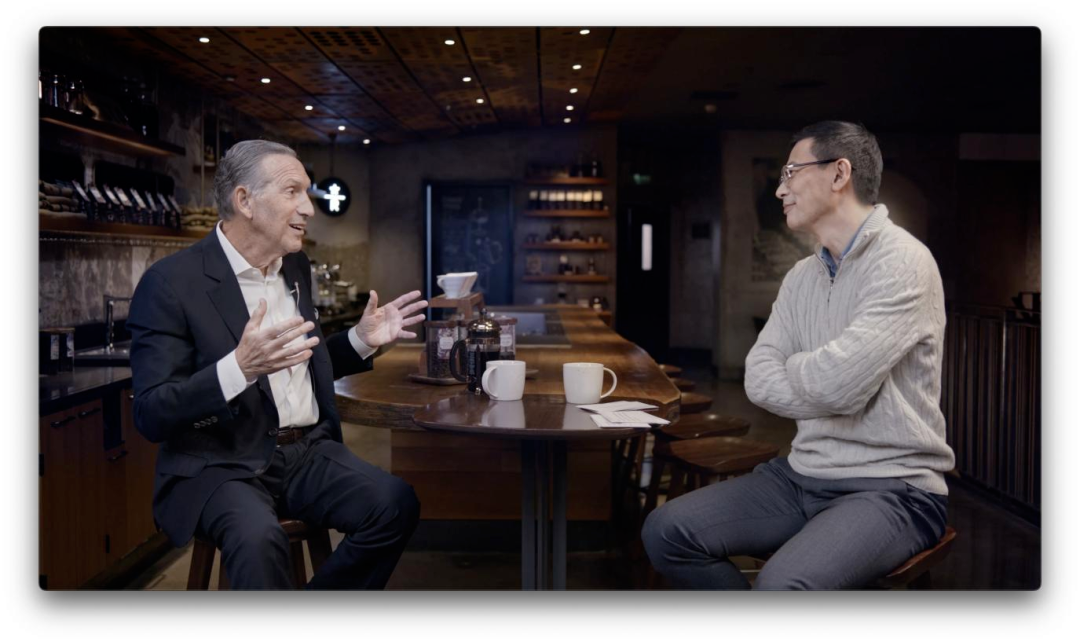
Tonight (May 18), Neil Shen, Sequoia Capital’s Global Executive Partner and Founding & Managing Partner of Sequoia China, sat down for an intimate fireside chat with Howard Schultz, founder of Starbucks.
This was a rare moment: one of the world’s top investors meeting one of the most celebrated business leaders globally—two individuals whose companies have each spanned over half a century and successfully navigated multiple dark periods and economic cycles.
Over the course of nearly an hour, Neil Shen and Howard Schultz shared their latest reflections on innovation and entrepreneurship—thoughtful insights delivered with warmth and authenticity.
There were many memorable quotes throughout the evening. Here are some highlights:
Howard Schultz:
• It's easy to be a leader in good times. But real leaders must make tough decisions during adversity.
• A company’s culture, values, and code of conduct form the foundation of its success. Stay true to your values, hold firm to your core purpose, and protect the初心 of your venture. Don’t do anything that undermines this foundation.
• Every company should place care and conscience at its center. We cannot treat employees as “labor machines,” just as we cannot view customers as “sales orders.”
• The thread running through Starbucks’ success is humanity. People everywhere want the same things—respect, dignity—and to be treated not as targets for profit, but as valued guests. The feeling isn’t “this store wants to take my money,” but “they want to share something with me.” That’s how Starbucks has succeeded.
• Starbucks has never been a marketing-driven company—we are a culture-driven company.
• To build a great, enduring brand, you must continuously nurture trust across every dimension—trust with your partners (employees), trust with your customers, trust with your suppliers.
• Brand success easily breeds arrogance and complacency. When you start taking your success for granted, a cancer-like disease slowly infiltrates the company.
• When evaluating outstanding CEOs and managers, I focus on three traits: IQ (intelligence quotient), EQ (emotional quotient), and CQ (curiosity quotient). Among these, curiosity is the most critical.
• My advice to young entrepreneurs: Start by working for a few years at a company whose values align with yours. Discover your passion, then go all-in.
• In developing young talent, what matters most is finding people who share your values—values rooted in empathy and compassion, and a genuine desire to create opportunities for others.
Neil Shen:
• Entrepreneurs build companies not merely to make money or achieve market capitalization, but to fulfill real, unmet human needs. This is the fundamental vision that enables long-term sustainability.
• What is true competitive advantage? Many CEOs and founders like to cite technology or products as their edge, but often overlook the most important point: Only by winning the hearts of your employees can you truly win the hearts of your customers. That is the real differentiator.
• For entrepreneurs, being “passionate” and being “prepared” are both essential—you need both.
• In venture investing, there are many founders who weren’t initially favored but eventually succeeded. They may lack elite educational backgrounds or standout early-career achievements, yet they persevere because they remain faithful to their values and keep trying.
• Market-leading companies should never play defense. Never assume you’re safe—nothing is guaranteed.
• Entrepreneurs must stay sensitive to new trends and unafraid of making mistakes in order to continuously innovate.
• Employees must be placed on equal footing with users in business decision-making—they should be central to strategic considerations. In the long run, this determines whether a company can endure.
Below is the full transcript of the conversation, verbatim:
An Entrepreneurial Journey: 242 Investors Said No
Neil Shen: Today, Starbucks is one of the most admired and beloved consumer brands in the world. We know that when you first started out, Starbucks was just a small shop in Seattle selling roasted whole-bean coffee. Now it’s one of the most iconic brands globally, with countless loyal customers. Could you tell us the origin story—what made you choose coffee as your life’s passion?
Howard Schultz: I grew up in New York City. After getting married in 1982, my wife and I moved to Seattle, Washington. At the time, there was already a Starbucks at Pike Place Market—it only sold packaged roasted coffee beans, no brewed drinks.
In 1983, I traveled to Italy for the first time—my first trip to Europe. I walked through the streets of Milan, took a train to Verona, and became captivated by Italian cafés. Across Italy, there were hundreds of thousands of coffee bars—almost one per block. When I stepped into them and had an espresso, I was deeply moved by the romantic charm and strong sense of community.
So I returned to the U.S. with a vision: to transform Starbucks from a seller of whole-bean coffee into a company that introduced and served lattes, cappuccinos, and other espresso-based beverages to American consumers. But I had no money. I needed to convince investors to fund this expansion. 242 investors and venture firms turned me down. They said no one would pay $2–3 for an Italian-sounding coffee they couldn’t even pronounce.
Beyond coffee, I had another idea: growing up in extreme poverty without health insurance, I wanted to build a company that provided healthcare and equity to all its partners (employees). So I told investors not only would they invest in the company, but I would also give part of the equity to our partners and provide them with health benefits. In a way, this would “dilute” their stake—but I didn’t see it as dilution. I saw it as value-enhancing investment.
I believed it would help reduce turnover, improve performance, and foster a sense of ownership. Eventually, I secured some funding. By 1987, we had 11 stores and 100 partners—and a dream: to build a different kind of company—one that could be profitable while also socially responsible, guided by conscience, and creating value for the communities we served. That became the foundation. The entrepreneurial journey began.
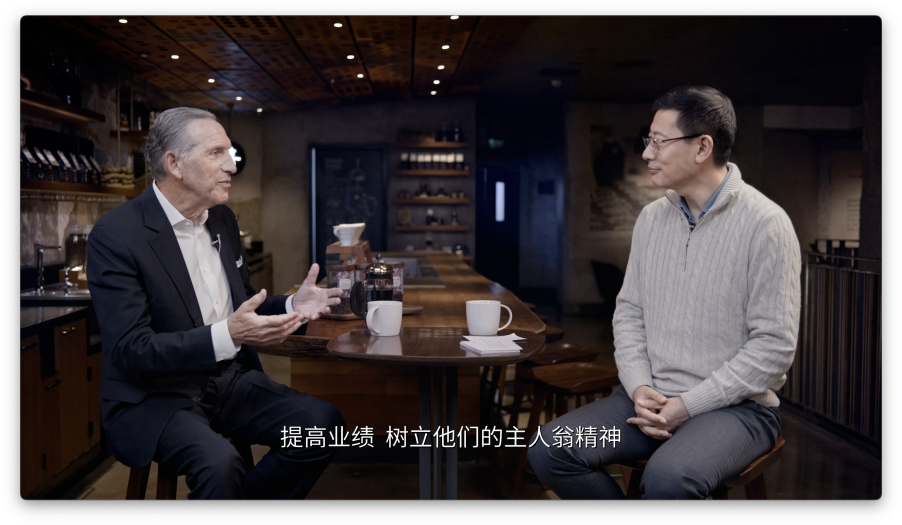
Neil Shen: Let’s talk about the early days. What was the biggest challenge you faced at your first store in Seattle?
Howard Schultz: During the 2008 financial crisis, Starbucks was in extremely difficult shape. For the first time in our history, we had to close stores and lay off people. I called an all-hands meeting and cried—because I knew we had to make this hard decision for the future of Starbucks, even though it would negatively impact so many lives.
It was a tragic moment. Other things happened too—the crisis was catastrophic, and we fell into financial distress like many other companies. At the time, we were already public.
One institutional shareholder called me—we knew each other well—and said, “Howard, now is the perfect time to cut partner healthcare.” But Starbucks’ culture, values, and conduct were the bedrock of our success. Cutting healthcare would destroy the foundation of trust we’d built with our people—the principle of treating others with integrity. So I refused.
He replied: “When next quarter’s market cap report comes out, you’ll see we’ve slashed our investment to nearly zero—because you won’t cut partner healthcare.”
And indeed, in the following quarter, almost half our shareholder value evaporated. But I believe I made the right decision. It was incredibly difficult, but we could not cut healthcare. This is just one example: stay true to your values, stick to your core mission, protect your entrepreneurial初心. Profitability isn’t our sole objective—though it reflects the value of our values and growth.
Neil Shen: Making that decision in the darkest hour wasn’t easy.
Howard Schultz: It wasn’t. And at the time, I felt utterly alone. It’s easy to lead in good times. But real leaders must make tough calls in adversity.
Howard Schultz: You’re a highly respected investor in both China and the U.S. When you evaluate founders, what personal qualities matter most to you?
Neil Shen: Honestly, I’ve reflected on this a lot—learning from both successes and failures. As you said, founders need deep passion for their work. But they also need to be fully prepared.
Let me give an example: one of our portfolio company founders is a Chinese entrepreneur based in Australia. He opened a few small coffee shops there, but quickly identified a pressing issue: his customers came from all over the world and used different payment methods—cash, credit cards, debit cards from various countries. So he decided to stop running coffee shops and instead build a modern payment system to solve this problem. He developed a huge passion for it. Though he’d never worked in financial services, his background in IT at Morgan Stanley and his computer science training allowed him to quickly get up to speed. So if you’re passionate about something, you also need to be ready for it.
This also shows that starting a company isn’t just about making money or achieving valuation. It’s about fulfilling real, unmet human needs—that’s the foundational vision for long-term endurance.
Starbucks’ Secret: Never Play Defense
Neil Shen: Let’s talk about China. You entered the Chinese market in 1999. China has a deep-rooted tea culture, but back then, there was virtually no coffee culture. What gave you the confidence to launch such an ambitious venture in China, and to create a lifestyle people would love, just as you did elsewhere?
Howard Schultz: Today, Starbucks operates in 85 countries and regions around the world. We speak different languages, have different histories, religions, cultures, and political systems. But what transcends all these differences? What we’ve learned—and the answer to your question—is that beneath it all, what matters most is our shared humanity, our universal human values.
When we ask young people in China, “What do you hope for? What do you want?”—it’s been 30 years since my first visit to China. Whether it’s partners working at Starbucks or others I’ve met, they say: “I want to create opportunities for myself. I want to make my parents, grandparents, and family proud. I want to work at a company where I can go home at night feeling fulfilled, accomplished, and proud of what I do.” This is exactly the same answer I hear everywhere in the world.
When I thought about Chinese customers—who initially knew little about coffee—our strategy was to be pioneers, introducing coffee knowledge and culture to the market. But the real opportunity was creating a store experience where we exceeded our partners’ expectations, so they could exceed customer expectations in turn.
Even in 1999, when Chinese customers knew almost nothing about coffee, they still sensed: “This is somewhere I want to return to. I want to share this experience with friends. It brings me joy, warmth, and kindness.” From day one, we created the Starbucks Experience—a place to taste coffee, feel a sense of community, and enjoy a third space beyond home and work. Later, our stores became extensions of customers’ homes and offices. Then we began sharing other ideas—initiatives that succeeded globally. This wasn’t marketing or PR. We proved the coffee was delicious. And we offered localized customizations for local tastes.
Today, we operate over 6,000 stores across 240 cities in China. When I first arrived in China in 1999, just like when I tried raising funds in 1987, no one—neither in the U.S. nor in China—believed we could achieve such success here. The thread running through this success is humanity. People everywhere want the same things—respect, dignity, to be cared for. The feeling isn’t “this store wants to take my money,” but “they want to share something with me.” That’s how we succeed.
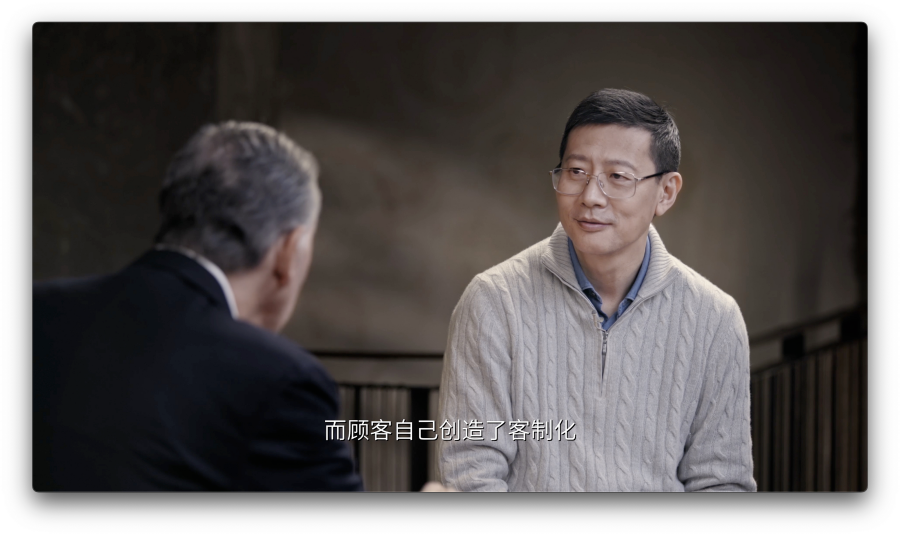
Neil Shen: Starbucks has long enjoyed global acclaim. When we talk about investing, we often seek companies with long-term, enduring mindsets—Starbucks is a classic example. Over the past three to four decades, how have you continuously strengthened brand recognition and ensured lasting relevance? I know you returned as CEO during the pandemic—how much did your involvement contribute to Starbucks’ success?
Howard Schultz: Let me use a metaphor. Imagine two reservoirs, both full. One reservoir constantly loses water; the other keeps filling. The key to building a great, enduring brand is continuously “filling” your brand equity.
People often think Starbucks is a great marketing company. But we don’t advertise. We’ve never been marketing-driven. Our secret? We’re a culture-driven company. In fact, we build the brand from the inside out—through the eyes, minds, and care of our green-apron partners.
To build a great, enduring brand, you must cultivate trust across every dimension—trust with your partners, trust with customers, trust with suppliers, and so on. But sometimes, like in 2008, we had to close stores and lay off people. That was terrible—we depleted our brand equity.
So the next question is: How do you replenish lost brand equity? I constantly reflect on values, guiding principles, and brand culture. How do we continue empowering our brand culture? But worst of all, I’ve seen it many times: brand success breeds arrogance and complacency.
No one achieves success effortlessly. Success must be earned, day after day. Starbucks is a growth company. But if you start thinking you’re exceptional, that your success is inevitable, a cancer-like disease slowly spreads through the organization.
I call this disease “arrogance.” When arrogance enters, the “reservoir” slowly empties. Suddenly, you lose touch with what matters most. In Starbucks’ 52-year history, there have been moments when growth and success were taken for granted. A leader’s role isn’t just to build the company, but to remain acutely aware of what’s happening inside. Leaders must constantly visit stores, talk to everyone. In my worldview, I want us today to still feel as hungry and driven as we did in 1987—before we succeeded, before 242 rejections—as if we’re still fighting for survival.
I remind new Starbucks partners: Over 52 years, 5 million people have worked here. We stand on their shoulders. We owe it to those who built this company to keep doing the right thing. Beyond earning success every day, we must preserve Starbucks’ entrepreneurial DNA.
Now Starbucks is successful. When you succeed, you tend to become cautious—like playing defense in a game. Suddenly, you’re no longer moving forward, but retreating. I want to step forward. I want to challenge the status quo. I accept failure—I don’t want to repeat it, but I want to encourage experimentation.
We must keep pushing innovation, never settle, never grow complacent. I don’t want to just look at stock price or P&L statements—that doesn’t represent our true success.
Neil Shen: I think you’ve highlighted two crucial points: First, maintain sensitivity to emerging trends and relentlessly pursue innovation—don’t fear mistakes. And if you’re a market leader, don’t play defense. Never assume safety—nothing is guaranteed. Second, place employees on equal footing with customers. This must be central to business decisions. Often, shareholders—whether private or public—forget this. They forget that, as a CEO, your most important stakeholders are customers and employees. From a long-term perspective, this single factor determines whether a company can endure.
Howard Schultz: Yes, you’re absolutely right. You mentioned innovation—let me share my view. When I hear “innovation,” the first thing I think of is disruptive innovation—changing the market. Often, people consider product line extensions, new flavors, or even a new cup size as major innovations, especially if customers respond positively. But that’s not innovation—that’s responsibility. I want to disrupt the market. Like our Oleato olive oil beverage—that’s true disruptive innovation.
About customers and partners: We’re a 100% consumer-facing company. Our employees are called partners because they own equity. We serve customers, but we can’t ignore our partners. So while innovating for customers, we must equally innovate for partners.
In U.S. history, Starbucks offered healthcare to partners 25 years before the U.S. government provided it to citizens. We were the first U.S. company to offer health benefits to all partners. A few years ago, Belinda Wong (Wang Jingying, Chairwoman and CEO of Starbucks China) told me she admired our U.S. partner benefits and wanted to do something similar in China—become the first company to offer critical illness insurance for partners’ parents. Great idea. She found an insurer, and together we approached relevant government departments to discuss it. Suddenly, we had powerful allies: Starbucks, an insurance company, and government agencies—all collaborating on something inspiring. This is an investment in our partners, reflecting Starbucks’ care and business conscience. This is innovation—not just for customers, but for people.
Humanism: Employees Are the Ultimate Competitive Advantage
Neil Shen: It’s also a localization initiative rooted in Chinese family and cultural values. You used a phrase: “from the heart.” Clearly, you’ve built Starbucks with passion and care. Can you share an example—when launching a product or making a decision—where the process wasn’t mathematical or financial, but intuitive? Where your heart told you the right choice?
Howard Schultz: For many people, adult life—both personal and professional—is deeply connected to their upbringing. I grew up in federally subsidized public housing. My parents never owned a home. My father held many terrible jobs. I witnessed the breakdown of an American family because we had nothing.
If I hadn’t been a talented athlete, I wouldn’t have gone to college. Ten years ago, young Americans struggled to afford university—tuition was too high, many dropped out due to debt. Even today, many carry heavy burdens they can barely repay.
So again, we asked ourselves: What can we do with care and intention? What truly matters to our partners? We conducted a survey asking U.S. partners: “What benefit would mean the most to you?” The answer: “Free college tuition.” “Free college tuition?” Such a beautiful yet expensive idea.
What did we do? We issued a request for proposals to partner with U.S. universities to offer free college education to our partners. We spoke with Ivy League schools, world-renowned institutions. Arizona State University—the largest in the U.S., with 100,000 students—had a visionary president. He approached us and revealed a secret: universities spend heavily on marketing, funded by student tuition, competing for top applicants just like corporations. So we said: “We’ll remove that line item from your income statement. It will disappear.” Meanwhile, U.S. federal aid helps cover student costs. Once again, government, Arizona State, and Starbucks came together. We became the first company in America to offer free college tuition to all partners.
Neil Shen: Taking concrete action to deliver services and benefits that directly help employees.
Howard Schultz: We talk about building a long-term, enduring company—this spirit of generosity runs through Starbucks’ history. We’ll continue this program indefinitely. Today, 25,000 partners enroll in college annually. Any company should place care and conscience at its core. We cannot treat employees as “labor machines,” just as we cannot treat customers as “sales orders.”
Neil Shen: I remember when I managed a public company, analysts would ask: “What’s your competitive advantage?” Traditionally, people say better technology or better products. But sometimes they forget the real advantage: only by winning your employees’ hearts can you win your customers’ hearts. That’s the true differentiator.
Last week, I discussed with colleagues: “How much time do you spend in different places—at home, in the office, elsewhere?” They mentioned Starbucks. It’s become their third space beyond home and office. Obviously, we’d prefer they stay in the office longer—especially post-pandemic, when people crave face-to-face interaction. But the concept of the third space plays a vital role in daily life. How do you view post-pandemic development, especially given the accelerated pace of digitalization globally, including in China?
Howard Schultz: This is one of the hidden truths of today’s global society—not just in the U.S. or China—people feel profoundly lonely. In many ways, social media isn’t helping; it’s making human connections shallower. But people need spaces to interact and connect. We’re in the business of human connection. Coffee brings people together. It’s a warm beverage. People meet over coffee. So in many ways, our partners, coffee, and store design are assets of the company. Physically, stores build community—and this will remain a crucial part of our future. We must find new ways to ensure technology and digitization don’t strip away the authentic experience of the third space.
Neil Shen: You’ve spoken often about employees. Can we talk about customer experience? I think this is another reason you’ve become such a special company. What unique things have you done to create a distinctive customer experience?
Howard Schultz: We think about it from the customer journey. First: What happens when a customer walks into a Starbucks store? What nonverbal signals do they receive? Our store design creates atmosphere. The music we play, the aroma of coffee—it’s all pleasurable. So we deliver visual, olfactory, and physical environments with a sense of community. A huge benefit: we offer beverages for global customers, but customers themselves create customization. Every day, thousands come to Starbucks and invent drinks not on our menu—customizing to their taste. And our partners respond instantly, crafting something uniquely theirs. You can’t get that at home—it’s personalized for you.
Clearly, Starbucks has become—well, I don’t want to say a status symbol; I dislike that term. But it does bring customers great respect. People enjoy carrying a Starbucks cup. Back in 1999, people told me Chinese customers would never walk down the street holding a Starbucks cup. They’d never do it. I think that behavior simply didn’t exist yet.
Neil Shen: You created that behavior.
Howard Schultz: I suppose so. Another thing: Starbucks has appeared in many films over the years, but we’ve never paid for product placement. In fact, we’ve declined many offers because the scripts didn’t align with our values. With so many celebrities drinking Starbucks, this organic recognition has benefited us greatly.
Neil Shen: Great. Let’s talk about the coffee industry. Coffee evolves rapidly. If instant coffee was Coffee 1.0, and specialty coffee was 2.0, what is Coffee 3.0? Starbucks is always at the forefront of innovation—what exciting new coffee product should we expect next?
Howard Schultz: Excellent question. Our innovative beverage has already launched in the U.S. and Japan. Soon we’ll bring it to China, the U.K., and the Middle East. It’s called Oleato.
Neil Shen: Oleato means olive oil + coffee?
Howard Schultz: Yes. Oleato is Italian for “oil.” Let me briefly share the backstory. Last summer, in Sicily, I met someone whose family has grown olives for 100 years—highest quality. Every morning, I saw him drink a shot of olive oil. On the third day, I asked: “What’s the benefit? Why do you do this?” He said Romans, Greeks, and Italians have consumed olive oil for thousands of years. People in this region of Sicily live longer—largely thanks to this.
Neil Shen: Just curious—do they taste good?
Howard Schultz: Delicious. Olive oil and coffee—magical combination. I think it’s a brilliant idea. It will become a global product line.
Finally, a Few Parting Thoughts
Neil Shen: You’ve recently stepped down again as CEO. You’ve talked about your vision and value system. Now that you’re no longer involved in daily operations, how do you ensure Starbucks continues to uphold this vision and these values?
Howard Schultz: I love Starbucks—it’s in my blood. I’m deeply engaged and care deeply about our partners. Can I hire someone from outside and expect them to love the company as I do? I must be realistic—they’re not the founder.
But I spent six months with our new CEO, imprinting the company’s values and conscience into his mindset. Over the past year, I’ve spent significant time with Starbucks’ leadership team, discussing the very things we’ve talked about today. I’ll remain actively engaged. The company’s future is bright—I’m very optimistic. But as I’ve said, it’s not guaranteed. It must be continually earned. I don’t want to be the new CEO’s shadow, but I’ll be there to help when needed.
Neil Shen: In your view, what defines an excellent CEO or executive?
Howard Schultz: Three traits: Third is IQ (intelligence), second is EQ (emotional intelligence), first is CQ (curiosity quotient).
No matter your field, you can’t excel if you’re narrowly focused. You must broaden your horizons, open your mind to the world. I want people who are curious about everything, brave enough to say: “I discovered something new—we should try something different.” IQ matters, but it’s not the most important. EQ and CQ are what I seek. I want people with all three.
Neil Shen: Audience question: Is it better to start a business right after graduation, or gain work experience first?
Howard Schultz: After college, I worked at Xerox for three years. After that, I felt it wasn’t right for me. But those three years were invaluable training—I learned organizational structure, how companies operate, how to balance profitability and culture…things you can’t grasp at the beginning.
I don’t think there’s a right or wrong answer. But I benefited greatly from working at a company. My advice to young people: Work for a few years at a company whose values align with yours. Find your passion, then go all-in.
Neil Shen: How do you view Starbucks’ success—can it be replicated? If someone today wanted to build a similar company—say in coffee or tea—what lessons from your experience should they learn to succeed?
Howard Schultz: Early on, we made a crucial decision: not to franchise Starbucks. We wanted full control—to build a unified system where company culture itself became a valuable, proprietary asset.
Today, with so many funding opportunities, if we started now, we might not have time to build our own system—we’d likely be defeated dozens of times over.
If you’re starting a company today with ambitions for scale, you may need partnerships along the way. The challenge is: How do you co-create a shared culture with partners, where they’re fully invested in your mission? How do you do that? So I believe building a Starbucks-like enterprise today is far harder than when we started.
Neil Shen: Because the industry is already filled with strong brands.
Howard Schultz: Exactly. But if you find something truly unique and absent from the market—go for it. New ideas keep emerging. The challenge today is that brick-and-mortar retail without e-commerce or delivery is extremely difficult.
Neil Shen: What about young people joining Starbucks today? As a leader, which traits do you value most—indicating potential, worth investing time in training?
Howard Schultz: Most importantly, I look for people who share our values. At year-end evaluations, I don’t just ask: “What did you achieve?” I ask: “What did you do for the people you work with? How many people grew under your leadership?” I don’t prioritize academic credentials. I value lived experience. Maybe it’s my bias—given my own background—but I admire those from tough beginnings, who overcame personal challenges to get here. Nothing was handed to them. They earned everything.
Neil Shen: Yes, in venture investing, we’ve seen many founders initially overlooked. They may lack elite education or early career highlights. But they keep trying, grounded in strong values.
Thank you. This conversation has been wonderful. I think we’re about out of time. I look forward to seeing you again—whether in Seattle or your next trip to Beijing.
Howard Schultz: Thank you for inviting me. You’re a renowned investor in the U.S., respected for both your character and investment philosophy. I’m grateful for this opportunity.
Join TechFlow official community to stay tuned
Telegram:https://t.me/TechFlowDaily
X (Twitter):https://x.com/TechFlowPost
X (Twitter) EN:https://x.com/BlockFlow_News