Exploring the Economic Model of Blockchain Games: How to Maintain Gameplay Without Adding Tokens?
TechFlow Selected TechFlow Selected
Exploring the Economic Model of Blockchain Games: How to Maintain Gameplay Without Adding Tokens?
I believe that after the process of natural selection, the no-Token economic model will be adopted by more high-quality game development teams.
 Navigating Web3 tides with focused insights
Recently, some game teams that W Labs has engaged with have raised a specific request regarding economic model design: Is it possible to build the model without incorporating a Token?
At first, our team thought this would essentially remove the most exciting and dynamic aspect of blockchain games. However, after gaining a deeper understanding of the background behind this demand, we realized there's genuine value in exploring such solutions. In this article, we aim to spark discussion by examining how a blockchain game economy could still function effectively—even thrive—without including a Token.
I. Why are projects opting out of Tokens in their blockchain game economies?
Based on feedback from several project teams, we’ve summarized the main reasons:
First: Regulatory restrictions in certain countries or regions. For example, in the United States, if a project’s Token is classified as an equity asset, it falls under the jurisdiction of the U.S. Securities and Exchange Commission (SEC), which creates significant complications for the project. On March 16, SEC Chair Gary Gensler told reporters that proof-of-stake Token holders earn returns through staking, meaning such Tokens should be considered securities and registered under U.S. law, thus subject to SEC oversight. New York’s Attorney General has even claimed Ethereum qualifies as an unregistered security, alleging that Vitalik Buterin and other Ethereum founders violated U.S. securities laws.
Which project founder wants to face legal action just as things are going well? Unless you reach Binance-level scale—where enduring such risks might be worth it, even if it means never setting foot in the U.S.—most teams targeting North American markets claim their Tokens are utility-based rather than equity-based. However, there remains no definitive legal classification for Tokens. To avoid trouble, teams must prepare substantial legal and PR resources upfront. Therefore, some blockchain game teams choose to sidestep the issue entirely by removing Tokens from their economic models—a completely understandable decision.
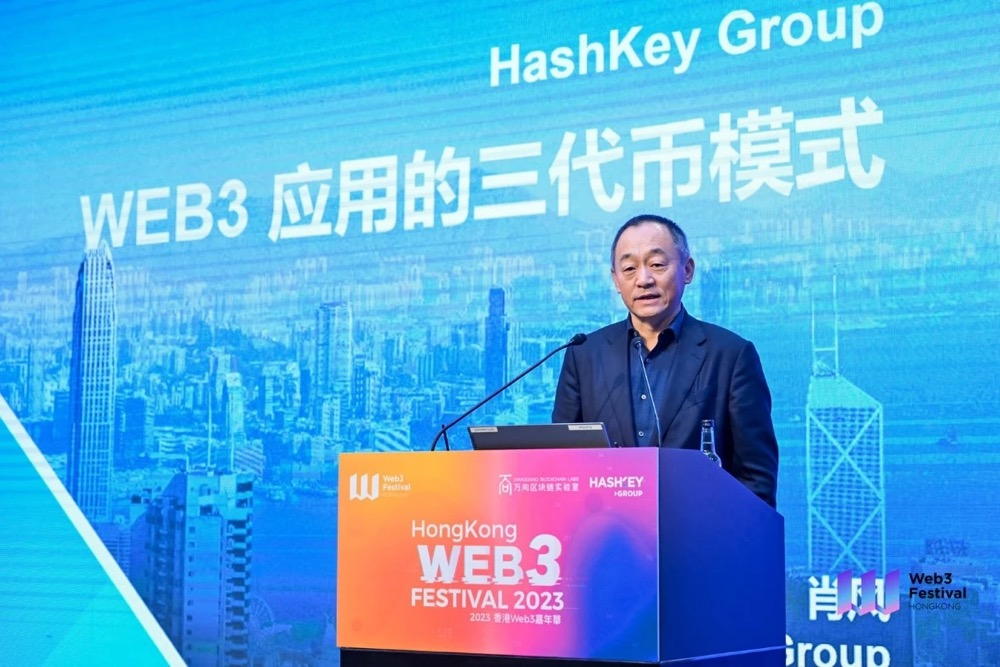
In addition, in certain Eastern countries, regulators are still gradually coming to terms with the crypto industry. Projects without Tokens appear safer from a compliance standpoint. At the recent Hong Kong summit, Dr. Xiao Feng from Wanxiang Blockchain delivered a keynote on the "three-generation token" model—something that surprised me at first. I had expected Hashkey to focus on broader macro narratives, yet they chose instead to spotlight a three-tiered token model we’d already discussed last year. Upon reflection, perhaps my initial assessment was too shallow. Could this be a deliberate signal to Web3 practitioners—not to fear discussing Tokens? If Hashkey dares to openly explore Token model designs at public events, does this suggest regulatory attitudes may gradually soften?
Second: A widely shared belief among many teams avoiding Tokens—the Token itself is the root cause of death spirals in blockchain games. Without a Token, users cannot easily farm and cash out, thereby preventing sell-offs. W Labs holds a reserved view on this argument. It’s akin to a newly established economy choosing barter over issuing currency simply because it fears future inflation—an approach that throws the baby out with the bathwater. We’ve written tens of thousands of words in research reports striving to design more rational, project-specific economic models. Many games spiral quickly not because Tokens are inherently flawed, but because insufficient effort is made in tailoring both model design and operations to fit the game’s unique context. When the early settlers arrived in North America aboard the Mayflower, they didn’t merely copy Britain’s successful “constitutional monarchy” and “parliamentary system.” Instead, they forged their own path with “separation of powers.”
That said, we do agree that during a project’s early stages, external liquidity of Tokens should be partially restricted. Some may argue this isn't truly “Web3,” but from a long-term development perspective, such caution makes perfect sense. Just like a new nation typically imposes foreign exchange controls when establishing its economy, failing to set any barriers would leave it vulnerable to predatory hedge funds lurking like wolves.
Third: For projects primarily focused on attracting Web2 users, having an in-game Token significantly increases the difficulty of getting listed on Apple’s App Store or Google Play.
II. How to design a blockchain game economy without a Token?
Alright, regardless of whether the above arguments are fully justified, let’s treat this as a given premise and proceed with the discussion.
First and foremost: Without a Token, you still need a medium linking the internal and external economies of the game. NFTs can fulfill this role—so the core of a Token-less economy must revolve around NFTs. In fact, even in economic models featuring multiple Tokens, we consistently emphasize channeling liquidity toward NFTs. Why? Compared to easily tradable Tokens, NFTs offer greater friction in trading, stronger emotional attachment, and better value retention—making it harder for players inclined to “mine, dump, and run” to liquidate quickly. This reduces selling pressure and extends the game’s lifespan.
In practice, a common approach is allowing soft in-game currencies—such as diamonds, gold coins, or crystals—to directly or indirectly upgrade NFTs. For instance, a Web3 gold farmer starts with a base NFT worth 100 U, then upgrades it to level 10 through gameplay. Because level 10 NFTs unlock advantages in high-tier game content, their market value rises to 200 U on NFT marketplaces. The player sells it and pockets a 100 U profit. This mechanism satisfies players seeking earnings—without needing a Token, they can still monetize by increasing the value of their NFT assets.
Additionally, NFTs solve the problem famously seen between Blizzard and NetEase: decentralized storage ensures that even if centralized servers go offline, all in-game assets remain tied to NFTs, which players can safely withdraw into their wallets.
Second: Design the economy around win-to-earn rather than traditional play-to-earn mechanics. Of course, this depends on the game genre. Games involving Texas Hold’em, MOBA, CS:GO-style shooters, or COC-like competitive gameplay naturally lend themselves to win-to-earn models. For mining or farming games, incentivize participation via PvP leaderboards and reward structures centered on rankings.
The key difference between win-to-earn and play-to-earn is this: Win-to-earn operates like a casino—revenue comes from rake, rewarding beginners while top players profit from others’ losses. Play-to-earn, however, relies on the project subsidizing rewards, enabling players to profit—at the project’s expense. But why should a project fund endless player profits? If players keep profiting, won’t the project bleed dry? Ultimately, the project gives you 1 U today only to target the 10 U sitting in your wallet tomorrow.
In a win-to-earn blockchain game without a Token, skilled players continuously upgrade their NFTs to gain higher win rates in PvP battles, earning more NFT enhancement resources to further strengthen them. Crucially, winners profit from losers’ invested NFT assets—not from newly inflated Tokens—eliminating visible tokenomic inflation issues.
Third: Enhance NFTs’ chained value capture to encourage true play-to-own experiences. In reality, even the most engaging Web2 games eventually lose players’ interest—let alone current blockchain games, whose gameplay often remains underdeveloped. Even with optimized strategic and tactical designs, game engagement will eventually wane. Herein lies the advantage of NFTs as decentralized assets: if the project launches a follow-up blockchain game, it can announce that previous game NFTs qualify for new NFT airdrops in the sequel. This gives players strong incentive not to hastily sell their NFTs at floor price—holding onto them may unlock enhanced utility in the next game. Why sell at a 30% loss when future upside awaits?
This concept is already being applied in “platform + multiple blockchain games” ecosystems, often combined with a “platform points” system. Yes—no Token needed. A robust points system paired with NFTs capable of capturing chained value suffices.
III. Real-world examples of blockchain games without Tokens
Let’s now apply these principles through concrete case studies.
Big Time
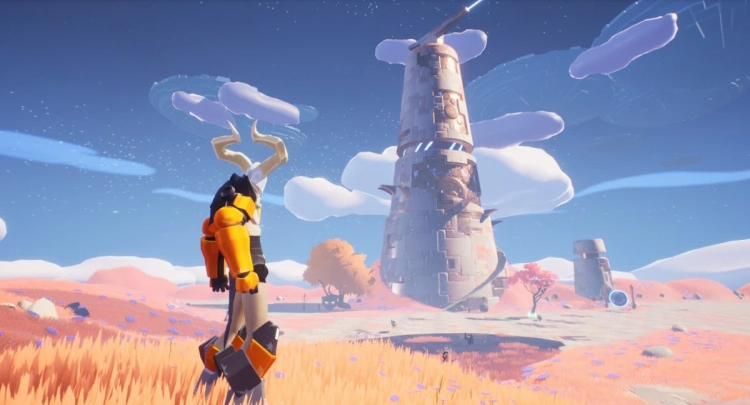
Big Time is a well-known name among blockchain gamers—one of the few AAA titles launched in 2021 that continues active development and evolution. That alone deserves recognition.
To briefly introduce: Big Time is an MMORPG blockchain game integrating NFTs. Players familiar with World of Warcraft will immediately recognize similarities in visuals and gameplay. The team behind Big Time is impressive—CEO Ari Meilich is a co-founder of Decentraland, and the development team includes veterans recruited from Epic Games, Blizzard, EA, and Riot. Funding has also been strong: raising $21 million across two rounds before 2021, backed by prominent investors like FBG, North Island, Digital Currency Group, OKEx, and Alameda. Over the past two years, revenue from selling Passcards and virtual land (“Spaces”) has further strengthened its financial reserves.
Big Time has long operated without a Token and sustained itself for two years—only recently announcing plans to launch the TIME Token at an appropriate time. Still, the overall economy remains centered on various in-game NFTs. Most TIME Tokens will be generated in-game through equipment called Time Hourglasses and won’t be tradable within the in-game marketplace.
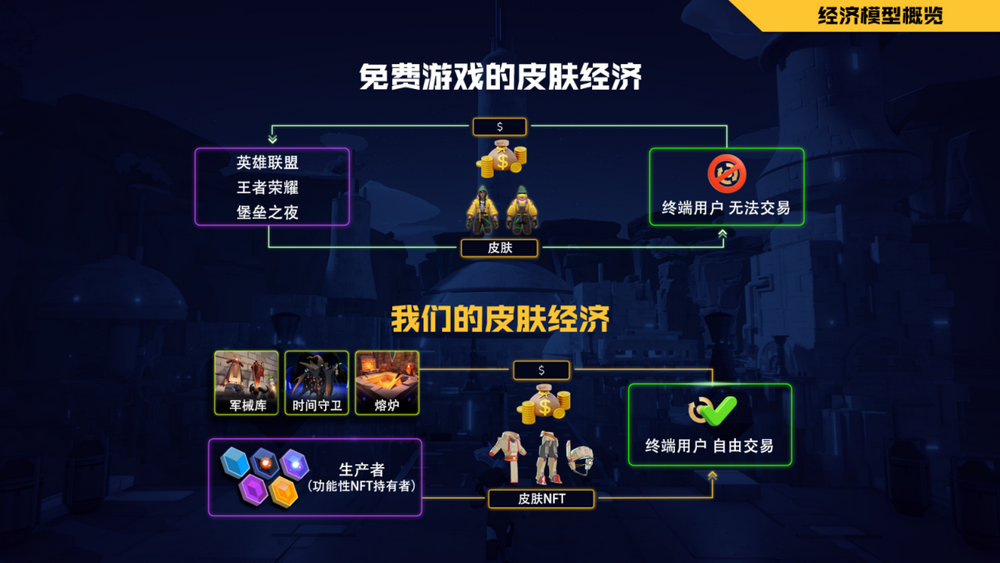
Big Time’s defining feature is making skin NFTs the cornerstone of its economy. These skin NFTs serve multiple purposes: beyond showcasing status and uniqueness in-game, they grant access to exclusive zones or special dungeons, enable on-chain asset ownership, and support free trading. Each skin series has a fixed, limited supply. Crafting rare skins requires owning virtual land (“Space”) and functional NFTs (e.g., furnaces, armories, time guardians).
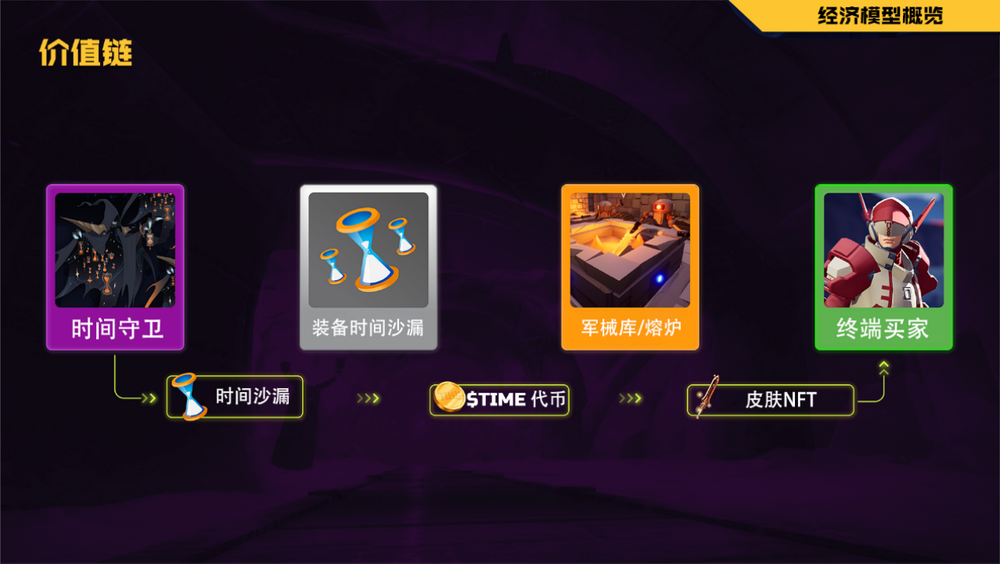
TIME serves as the primary in-game currency. Players generate TIME via Time Guardians, use functional NFTs to craft skin NFTs, and ultimately deliver these NFTs to end buyers—completing a closed-loop production and trading cycle. The total supply of TIME is capped at 100 billion, minted by equipping Time Hourglasses and completing tasks or dungeons, or imported from external wallets. Its uses include refining, upgrading, crafting, accelerating processes, and accessing special in-game areas.
This design—centered on NFTs with TIME as a supporting utility—helps anchor overall game value within NFTs, promoting “fair competition” and shifting focus from DeFi-style financialization toward gear progression and gameplay experience. This aligns precisely with our earlier point: using NFTs as the bridge between in-game and external economies, reducing liquidity velocity and real-time sell pressure. Limited-supply, functionally distinct skin NFTs foster a stronger sense of ownership and emotional connection—offering something more meaningful than cold, impersonal Token numbers.
Legend – Flame Judgment Digital Collectible Edition
Launched in December last year, *Legend – Flame Judgment* Digital Collectible Edition represents a unique category of Token-less blockchain games: a Web2 game augmented with digital collectibles, where owning collectible gear enables players to obtain valuable in-game items for resale. We studied this game extensively last year. While it didn’t gain traction in Web3 circles, it became quite popular within China’s digital collectibles community.
The game leverages the *Legend* IP and holds an official publishing license. No introduction is needed for *Legend*: since its 1999 release, it has remained popular for over two decades, generating billions in annual revenue and maintaining a user base in the tens of millions.
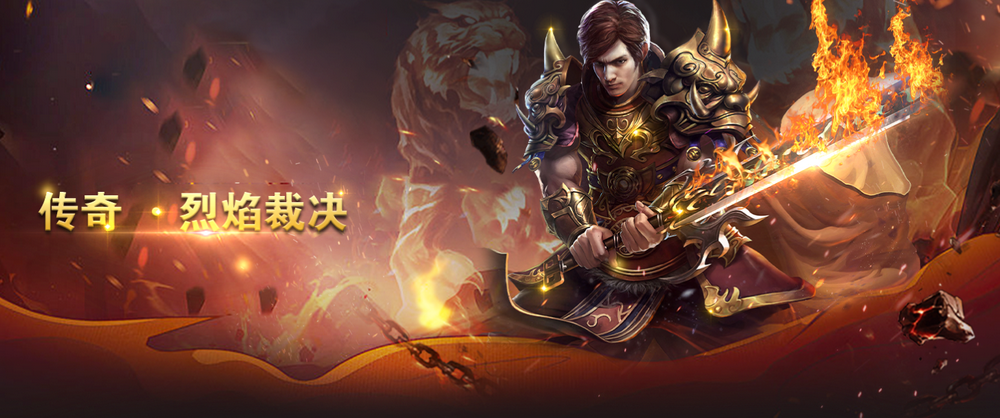
Compared to traditional Web2 players grinding for gear, the digital collectible version offers clear advantages: players achieve cross-server interoperability via digital collectibles authenticated on a domestic blockchain. Their assets are freely tradable while complying with regulations. By adopting China-specific licensed consortium chains, the project avoids sensitive terms like “public chain” or “NFT,” helping navigate regulatory gray areas.
Gameplay closely mirrors *Legend – Ice & Snow*, with minimal changes to core mechanics. There is no Token system. Players top up RMB to purchase “Lingfu” (spirit talismans), the primary premium in-game currency, which can be exchanged for元宝 (Yuanbao) used to buy equipment, unlock abilities, etc.—though Yuanbao cannot be converted back to RMB.
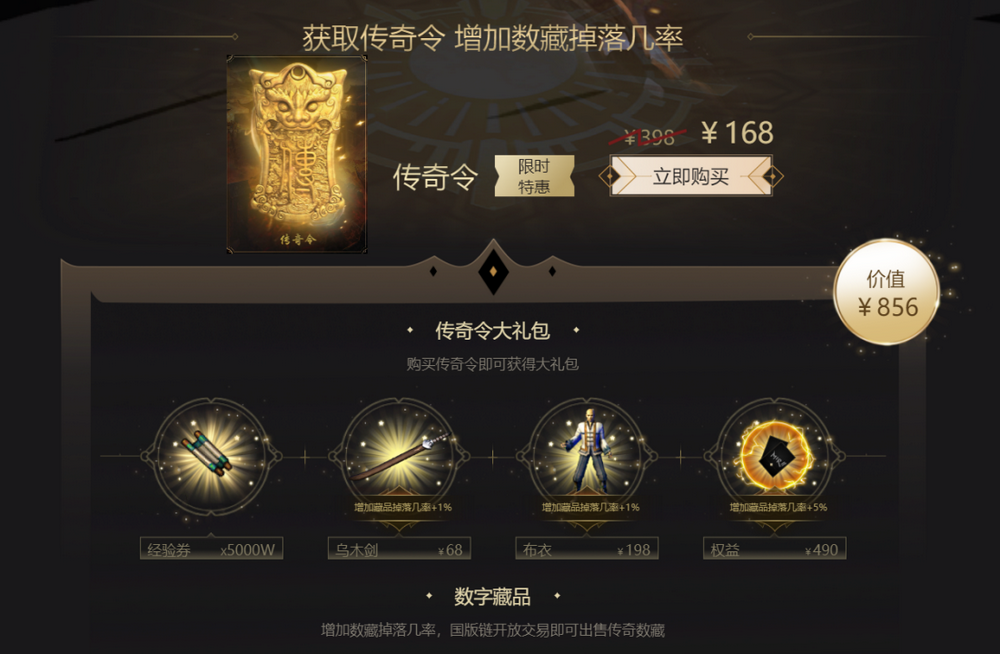
Digital collectible functionality centers on the “Legendary Order” item. Possessing a Legendary Order greatly increases the drop rate of equipment and boosts chances of obtaining pieces usable to synthesize digital collectible NFTs. To access full on-chain and trading features, players must hold a Legendary Order. Think of it as a Web3 pass card—only those holding it can extract and trade their digital collectible “NFTs.”
Looking back months after launch, *Legend – Flame Judgment* hasn’t made much impact in the broader Web3 gaming space. In-game, nearly all players belong to guilds named “China Digital Collectibles,” with numerical suffixes reaching into the dozens—indicating dominance by digital collectibles enthusiasts. Meanwhile, discussions about the game within Web3 communities remain scarce.
Its lack of traction in Web3 isn’t due to its economic model, but rather the fundamental disconnect between the digital collectibles and Web3 ecosystems. Moreover, the *Legend* IP—long criticized as repetitive—offers little appeal to Web3 players who prioritize novelty and innovation over gameplay depth. Combined with outdated graphics and mechanics, the game struggles to attract mainstream Web3 audiences.
BitstarWar
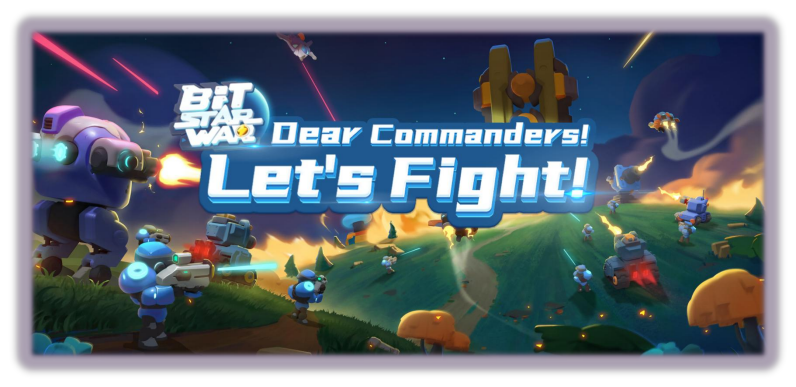
Currently in private testing within the Guatian community, BitstarWar is a COClike game (inspired by SuperCell’s classic *Clash of Clans*). We previously analyzed COClike blockchain games—SLG mechanics that deeply engage hardcore players but demand exceptional balance in numeric design and gameplay strategy. Among all COClike blockchain games we’ve seen, BitstarWar stands out with the highest completion level and strongest gameplay—its art style is excellent, and testers report becoming highly addicted, genuinely unable to stop playing. Importantly, this isn’t a Web2 game retrofitted with blockchain; according to the team, it’s been under development for nearly three years. Its core narrative revolves around mining, with the main base functioning like a mining pool equipped with various rigs producing in-game Star Coins. The team is currently running promotional campaigns ahead of a blind box sale at the end of April—interested players should stay tuned for the official release date.
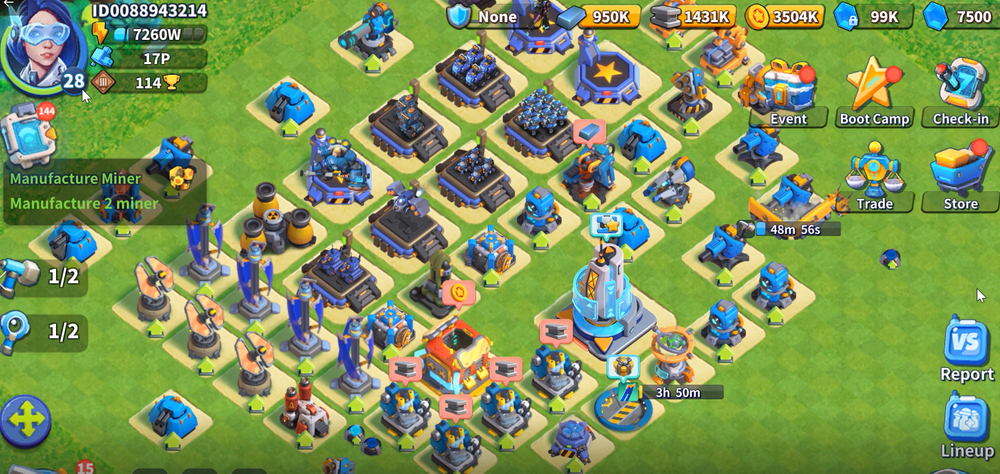
Developed by Eastern Fantasy Verse, a studio with years of Web2 game development experience, the game opened internal testing on April 17. The current playable loop involves gathering resources, building bases, training troops, and attacking others’ bases in a PvP cycle, earning trophies to climb league rankings. The test version also includes Guild vs. Guild (GVG) battles—the social backbone of any COClike title. PVE content will be added later.
We’ve encountered many COC-style games—most notably last year’s hyped *Heroes of Mavia* (still not playable, painfully slow) and the recently launched *Galaxy Blitz*. What sets BitstarWar apart is that it operates without a Token.
Without a Token, how do players earn and cash out? For most blockchain gamers, “Can I make money, and how do I secure it?” remains paramount. Based on the whitepaper and team communications, here’s how the flow works:
-
Currently, players must download APKs or iOS packages directly from the website, so purchases (blind boxes or in-game items) are made using USDT. This targets existing Web3 players. In the next phase, the game will launch on overseas App Stores and Google Play, enabling Web2 players to participate via standard in-app purchases;
-
Two types of transactions occur in the in-game marketplace: NFT trades use USDT; while equipment, mining rigs, collectibles, and other items use Diamonds (the in-game premium currency). Converting Diamonds back to USDT is handled organically by player-run market makers—the project does not set prices;
-
Once players obtain USDT, they can withdraw it to their on-chain wallets.
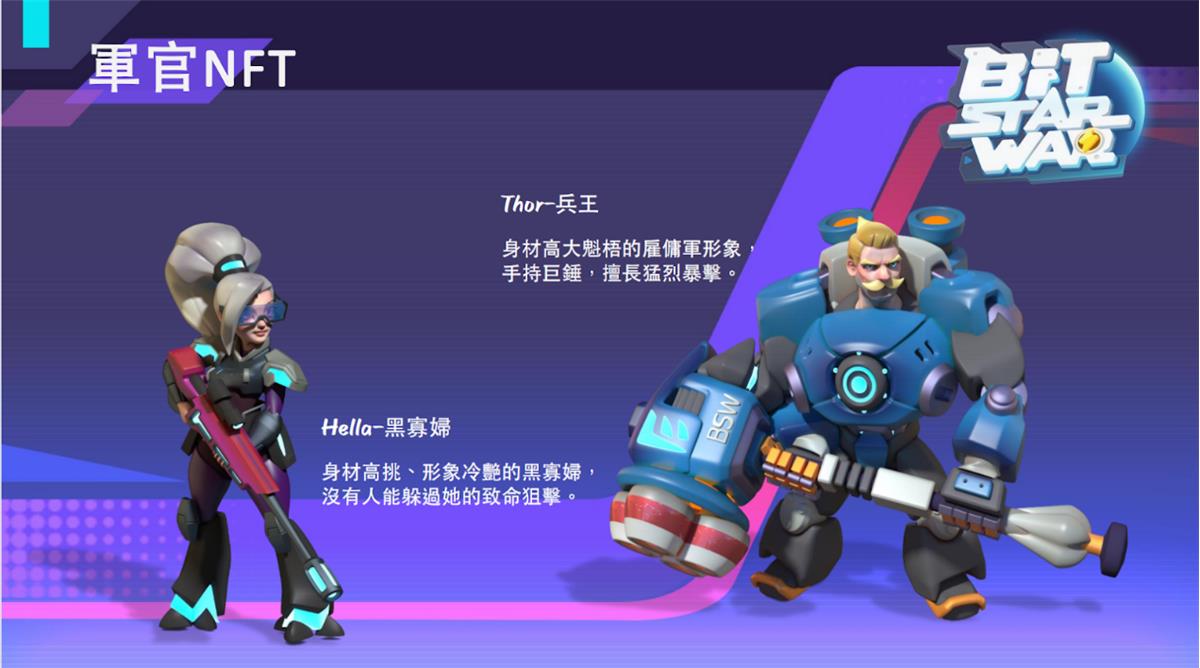
Without a Token, the entire economic model hinges on NFTs. BitstarWar builds its NFT framework around Officer NFTs, distributed officially via blind boxes. Players must purchase and possess at least one Officer NFT to enter the game. Officers wield powerful combat skills critical to battle outcomes and carry unique hidden traits that confer social status. They’re freely tradable on the platform’s built-in marketplace. Beyond Officers, cosmetic skins, mining rigs, and collectible NFTs are also tradable.
A second economic pillar supports in-game purchases. During testing, upgrading buildings, researching tech, leveling heroes, and buying items require large amounts of Star Coins and Metal. Early on, Star Coins are more crucial than Metal and can be obtained through three channels: mining rig output, purchasing bundles with Diamonds, or raiding other players.
These two intertwined systems form BitstarWar’s complete economic ecosystem—simple, direct, retaining Web3 elements via NFTs while avoiding complex tokenomics, and preserving in-game monetization paths. Through continuous progression, value accumulates within various NFTs and is ultimately realized through marketplace trading, forming a relatively stable internal economic loop.
This Token-less model resembles *Dream Westward Journey*’s Treasure Pavilion, where dedicated market makers facilitate item circulation through arbitrage—except here, it’s NFTs instead of items. The biggest challenge with such models is sustainability: if the player base isn’t large enough, market makers won’t see profit and will abandon the role. Given BitstarWar’s demonstrated quality—among the best in the blockchain gaming space—we hope it can leverage this strength to attract and retain a solid Web3 player base.
IV. Summary: Can Token-less blockchain game economies succeed?
From analyzing these three cases, it’s clear that Token-less models aren’t a niche choice. On the contrary, numerous game teams are actively voting with their feet by adopting them. All three cases center NFTs (or digital collectibles) as primary value carriers, provide open trading and monetization pathways, and use soft in-game currencies as supplementary tools to lubricate internal economic activities.
Reflecting on this, doesn’t this closely mirror the foundational economic model of Web2 games? Pay-to-play currencies bought with real money, used to acquire gear and upgrade characters, followed by in-game or secondary-market monetization of accounts and items. The only difference in these Web3 examples is the added benefit of NFTs being securely on-chain—making asset monetization safer and more convenient.
By removing common Web3 complexities like staking, liquidity provision, and intricate tokenomics, this model offers relief for both players and developers—a simpler, more direct approach that refocuses on the essence: “This is a game—let’s play.” It delivers the authentic soul of gaming.
In such Token-less systems, players naturally focus more on gameplay quality and immerse themselves in the fun the game offers.
We believe this hybrid Web2.5 model—bridging Web2 and Web3—will gain wider adoption over time, especially among high-quality development teams, particularly those transitioning from Web2 to Web3.
Join TechFlow official community to stay tuned
Telegram:https://t.me/TechFlowDaily
X (Twitter):https://x.com/TechFlowPost
X (Twitter) EN:https://x.com/BlockFlow_News
 瓜田实验室W Labs