From Trading to Payments, Tokenized Gold Is Gaining More On-Chain Use Cases
TechFlow Selected TechFlow Selected
From Trading to Payments, Tokenized Gold Is Gaining More On-Chain Use Cases
When asset on-chainization becomes consensus, the new competition begins to shift to how assets truly participate in the on-chain economy.
 Navigating Web3 tides with focused insights
Trading, payments... new scenarios revolving around Real World Assets are continuously emerging.
After experiencing the wave of rapid asset tokenization development in the past few years, the focus of the RWA industry is changing. Compared to simply focusing on asset scale and issuance volume, the market is starting to pay more attention to one question: Can these Real World Assets that have already been on-chain truly participate in trading, liquidity, and value exchange? The trading, liquidity, and application infrastructure formed around Real World Assets is also gradually becoming richer.
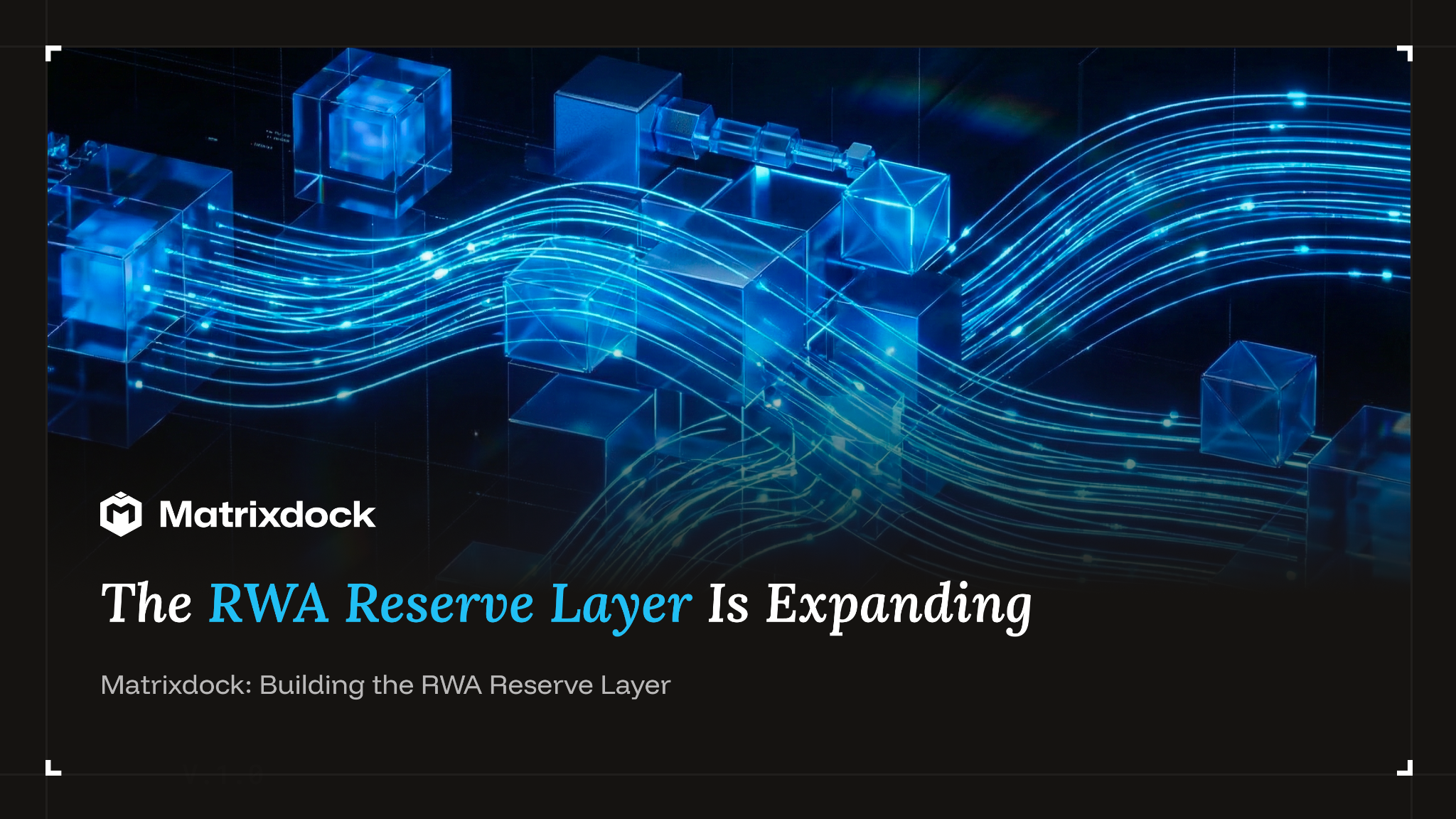
Recently, two public developments by Matrixdock, the RWA platform under BIT (formerly Matrixport), may reflect this trend. On one hand, tokenized gold XAUm and tokenized silver XAGm have been listed on the Sui ecosystem trading platform Deeptrade; on the other hand, XAUm now supports privacy payments via AnomaPay built based on Anoma technology. As scenarios such as trading and payments gradually emerge, the on-chain application scope of tokenized gold is also continuously expanding.
Tokenized Gold Begins to Enter On-Chain Trading Scenarios
For Real World Assets, asset issuance is just the first step; whether they can obtain liquidity support and enter the trading network determines whether the assets can further participate in on-chain financial activities.
According to information disclosed by Matrixdock officially, XAUm and XAGm have been listed on Deeptrade and accessed the Sui native order book supported by DeepBook. Currently, XAUM/USDC and XAGM/USDC trading pairs are open for trading, with relevant liquidity provided by Lotus Finance. Matrixdock stated on its official X platform that tokenized gold and silver have begun to enter the market structure of the Sui ecosystem.
In the traditional financial system, gold has long been regarded as a store of value tool, while in the on-chain environment, in addition to needing value attributes, assets' liquidity, tradability, and composability are also becoming important characteristics. As more and more infrastructure begins to support Real World Assets, tokenized precious metals are also beginning to gain more opportunities to participate in on-chain trading scenarios. At the same time, whether assets can obtain liquidity support, enter the trading network, and participate in broader financial activities is also becoming an important direction of market focus.
Payment Scenarios Begin to Become a New Attempt for Tokenized Gold
Besides trading, payments are also beginning to become a new application direction for tokenized gold.
According to information publicly disclosed by Matrixdock and Anoma officially, XAUm now supports holding, transferring, and paying via AnomaPay on BNB Chain. When using XAUm, users can hold, transfer, and pay while protecting transaction privacy, without needing to fully disclose relevant transaction information.
Anoma emphasized in public information that it supports a more private digital asset payment experience through privacy protection technology; while Matrixdock stated that XAUm is designed to be able to access the evolving digital financial network, and every new integration helps expand the application scenarios of tokenized gold.
For gold, the emergence of payment functions means that its on-chain usage is gradually extending from simple holding and trading to more scenarios such as value exchange. From a store of value tool to a digital asset capable of participating in more on-chain application scenarios, the usage boundaries of tokenized gold are continuously expanding. For traditional reserve assets like gold, the emergence of payment scenarios also means that its on-chain application scenarios are being further enriched.
From Asset Onboarding to Asset Usability, RWA Begins to Enter a New Stage
In the past few years, discussions in the RWA industry revolved more around asset issuance scale and tokenization volume. But as more and more Real World Assets enter on-chain, the market is starting to pay more attention to another question: After assets are on-chain, can they truly participate in trading, liquidity, and broader application scenarios?
Whether it is trading infrastructure, payment networks, or more on-chain applications that may appear in the future, whether assets can integrate into these scenarios is becoming an important factor in measuring their long-term value. For reserve assets like gold, stability and transparency remain the foundation, while the liquidity and application scenarios formed around the assets determine their further development space in the digital financial system.
From trading to payments, the application scenarios formed around tokenized gold are continuously increasing. For traditional reserve assets like gold, their value attributes have not changed, but their role in the digital financial system is becoming richer.
For the entire RWA industry, asset onboarding may be just the first step. As more and more Real World Assets enter on-chain, the market focus is gradually shifting from "whether assets can be on-chain" to "whether assets can be used". How to make assets truly participate in trading, liquidity, and value exchange may become an important direction for the next stage of Real World Assets development.
Join TechFlow official community to stay tuned
Telegram:https://t.me/TechFlowDaily
X (Twitter):https://x.com/TechFlowPost
X (Twitter) EN:https://x.com/BlockFlow_News