Permissionless consortium enterprises: Off-chain NFTs drive innovation in events and sports
TechFlow Selected TechFlow Selected
Permissionless consortium enterprises: Off-chain NFTs drive innovation in events and sports
We offer a truly Web3 solution, where users have real ownership and self-custody.
 Navigating Web3 tides with focused insights
Co-founder and CEO of Smart Token Labs - Victor Zhang shares an innovative partner system built on NFTs that enables seamless integration.
Victor Zhang: Good afternoon, everyone! Thank you so much for joining this session. Today I’ll be talking about permissionless collaboration—how to integrate partner ecosystems using off-chain NFTs—and then walk through some real-world use cases in sports, events, and customer loyalty programs.
Before diving into the topic, let me briefly introduce myself. I’m Victor Zhang, CEO and co-founder of Smart Token Labs. We focus on the future of tokenization and have been building in this space for six years. Our work spans two main areas: First, we’ve created two fully open-source projects—AlphaWallet and TokenScript.
AlphaWallet is currently the most forked EVM mobile wallet, and TokenScript is a technical framework for tokenization that we use extensively when working with brands on tokenized initiatives. Second, our company operates as a tokenization studio serving enterprise and brand clients, developing various tokenization projects since 2018.
For example, our first tokenization project was an exclusive ticket attestation system developed with the official FIFA Russia team in 2018. During that World Cup, we tokenized 50 tickets on Ethereum via smart contracts, issuing NFTs to represent match access. Over 20 non-crypto-native users successfully used these NFTs to enter games seamlessly.
With six years of experience helping enterprises implement tokenization and deep consulting partnerships across multiple industries, we believe the NFT space has evolved through three distinct phases:
Phase One involved early experiments like our collaborations with FIFA and Karma Cars—projects not designed for mass market adoption but rather to test new technologies and explore what’s possible. Brands wanted to understand the future without committing to large-scale rollouts.
Phase Two began about two and a half years ago, marked by the explosion of IP-based NFTs. Many brands saw the NFT trend emerge and began treating them as novel digital assets—either selling them directly to consumers or offering them as low-cost giveaways. A segment of their audience embraced these as valuable collectibles. Most holders during this phase were either crypto-natives or “pseudo” NFT collectors who didn’t control decentralized wallets (e.g., Ticketmaster or Starbucks NFT users).
Just three weeks ago, we held in-depth discussions with ten major traditional brands—including Adidas, Sony, and Mercedes—as well as four Web3 agencies specializing in brand services. We explored whether they’re interested in tokenization and NFT issuance, what challenges they see, what goals they aim to achieve, and how they view Web3 technology overall.
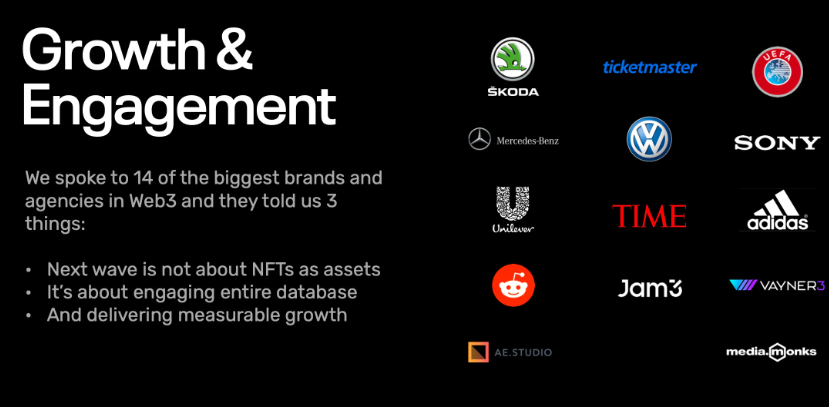
The feedback was fascinating and can be summarized in three key points:
First, they agree the next step isn’t treating NFTs merely as tradable assets, but rather embedding greater utility into them.
Second, they want to drive mass adoption—not just target crypto users with niche drops. They aim to distribute NFTs to hundreds of millions of existing customers and build meaningful engagement at scale.
Third, they seek measurable increases in real user participation and growth metrics enabled by NFTs and Web3 technology.
This response is incredibly encouraging. It validates six years of our work and shows growing demand for Web3 solutions that genuinely empower real-world economies. Our tools and infrastructure are well-positioned to meet these needs.
Today, I’ll present a Web3 solution developed by our team, along with three practical case studies. We offer a truly Web3-native approach where users have real ownership and self-custody, yet enjoy a seamless experience—interacting with tokens through familiar channels like email or SMS, without needing a crypto wallet, while achieving stronger privacy and security.
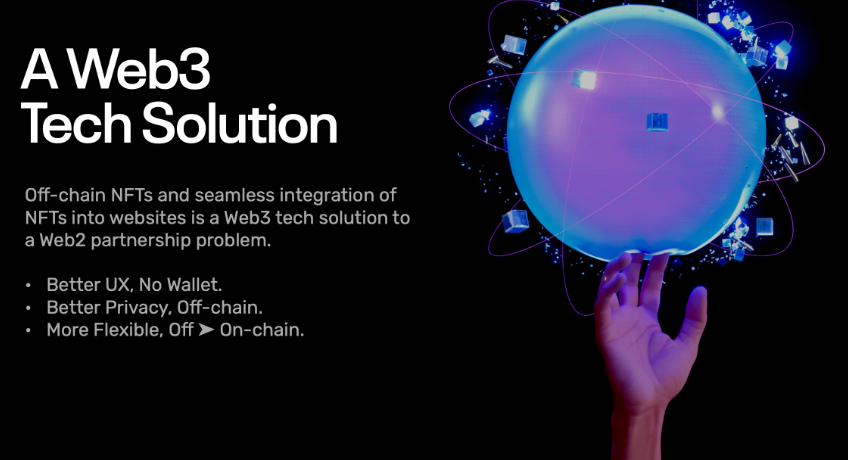
Some brands remain cautious about issuing NFTs representing user rights due to concerns over PII (Personally Identifiable Information) exposure. Our solution uses off-chain NFTs to ensure better privacy, while remaining highly flexible—these can be converted to on-chain NFTs anytime. It sounds almost magical, but I’ll explain shortly.
At a higher level, this represents a paradigm shift in integration. Traditionally, integrations happen between brands and platforms—essentially, token transfers between brands or between a brand and a platform. In our model, we bring the user into the integration loop—tokens flow directly between the brand and the user. This realizes the concept of “user-side integration” we introduced back in 2018. This method avoids PII data sharing, drastically reduces integration costs, and scales efficiently—the more participants involved, the greater the benefit. Marketing, management, and customer teams across departments can adopt it easily, even without developer involvement, which they love.
The core technologies enabling this are Attestation and a suite of tools called Smart Layer. Attestation powers off-chain NFTs—it’s a cryptographic proof signed by the issuer. Users can present it to access products or services from the brand or any third party.
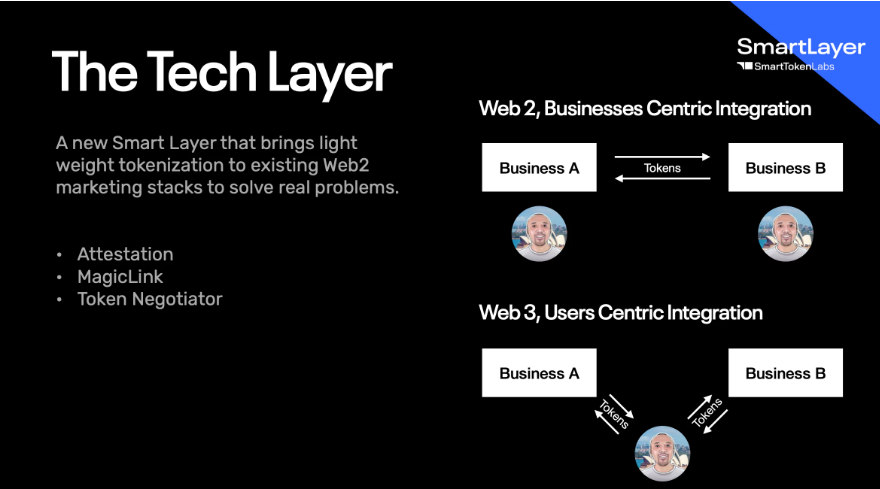
We encode attestations as URLs—what we call Magic Links. These aren’t just representations of off-chain NFTs; they can also act as deep links to trigger (d)Apps or open partner service websites, enabling efficient user interaction. Partner websites and apps only need to install Brand Connector to easily verify NFTs and deliver services.
Now let’s look at real implementations. The first is in the events industry. Last year, we collaborated with the Ethereum Foundation’s Devcon team to develop Devcon VI Ticket Attestation (off-chain NFT) and Permissionless Perks. Devcon is the largest annual developer gathering in the Ethereum community, attracting around 6,000 attendees each year.
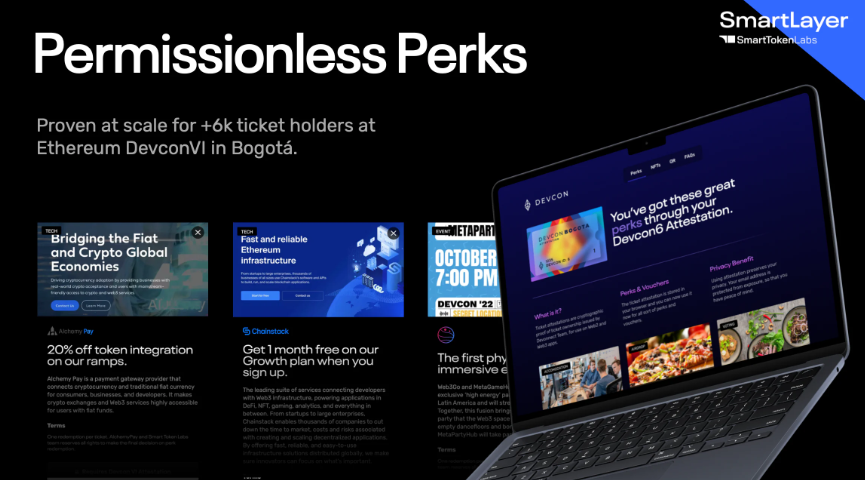
How did it work? All Devcon VI ticket holders received an attestation via email, encoded as a URL. Clicking the link directed them to a Permissionless Perks web page featuring benefits from third-party partners and service providers. The experience was smooth: users simply clicked the link, loaded their off-chain NFT into the browser, and could then claim perks across different partner sites by verifying their NFT.
The results were remarkable: among over 6,000 ticket holders, 80% claimed the off-chain NFT, and 20% redeemed at least one promotional offer from partner websites. A total of 25 companies participated in this “permissionless” campaign.
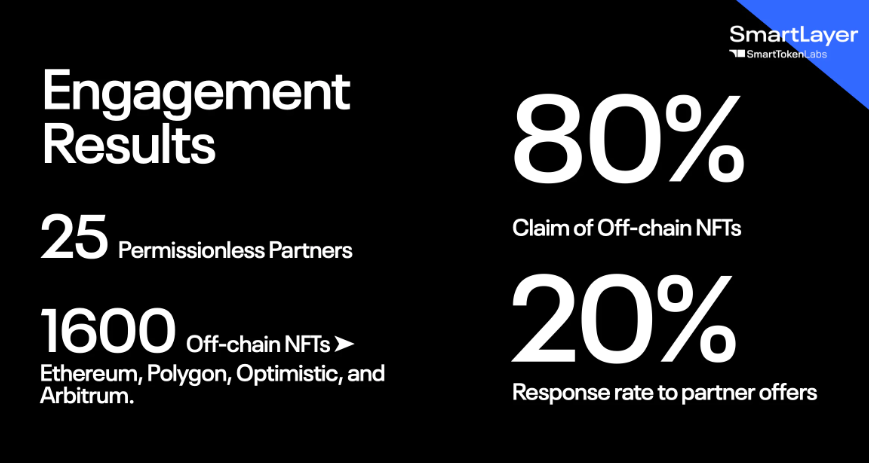
As mentioned earlier, the system is both convenient and flexible—off-chain NFTs can be instantly upgraded to on-chain NFTs. In this event, over 1,600 off-chain NFTs were migrated to on-chain versions on Ethereum, Polygon, Optimism, or Arbitrum. These numbers far surpass any existing Web2 or Web3 solution.
Next, let’s examine a use case in sports. For years, sports organizations have struggled to accurately measure sponsor ROI—the current methods are vague and indirect. With NFTs, we can now quantify actual impact and calculate true return on investment. Previously difficult to assess, we demonstrated precise measurement through the CATCHMAX NFT project, successfully tracking and validating real ROI.
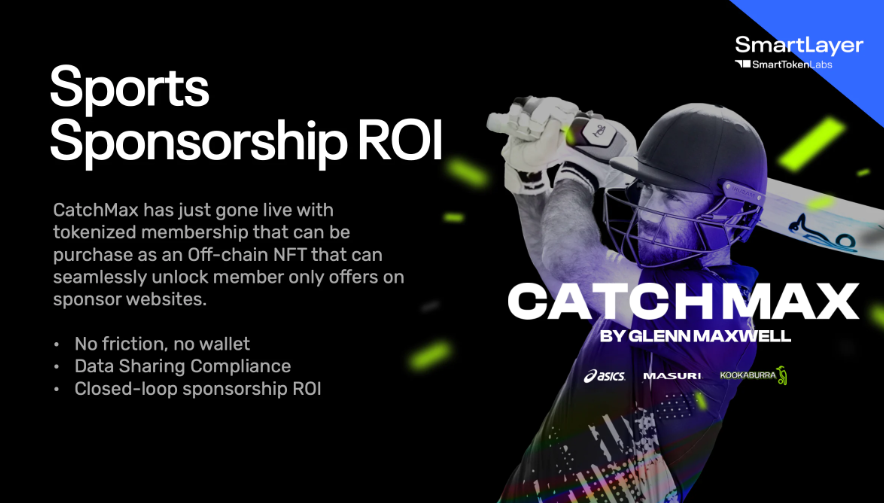
This project features world-class cricketer Glenn Maxwell, who has 7 million followers and serves as an ambassador for several brands. The NFT is already live. Using Web3 technology, it implements a paid membership model: fans pay $5 to join and gain access to various线上线下 experiences.
More importantly, members can use their NFT membership cards within sponsor platforms. Sponsors gain accurate insights into conversion rates, retention, and cross-purchase behavior among members. This integration between the membership system and sponsors is powered by off-chain NFTs, eliminating PII data exchange risks while delivering low-cost, frictionless user experiences—and most importantly, enabling precise validation of sponsorship ROI. Join Discord.
The final example is a POC currently underway—a Web3-powered customer loyalty program being built with a globally recognized consumer brand. We can’t disclose the name yet, as the product hasn’t launched. But in this project, we combine on-chain tokens with off-chain credentials, using different types of tokens to represent various user entitlements (e.g., platinum, gold membership tiers). These rights remain off-chain unless needed for trading. Benefits tied to status levels stay as off-chain NFTs, while tradable privileges are issued as on-chain NFTs. Through our tech, members manage and use their entitlements directly on mobile devices via Apple Wallet, Google Wallet, and other Real World Wallets (RWW), enjoying simple, intuitive interfaces. Early consumer testing shows excellent feedback.

This user-controlled, verifiable loyalty system introduces Open Loyalty—the idea that users decide who can verify their information and provide services, opening up the entire service ecosystem.
In summary, our solution integrates effortlessly into existing Martech stacks—it doesn’t replace legacy systems. For instance, we’re working with Salesforce, ensuring all data flows back into their CRM. With Shopify, our solution embeds smoothly into e-commerce sites.
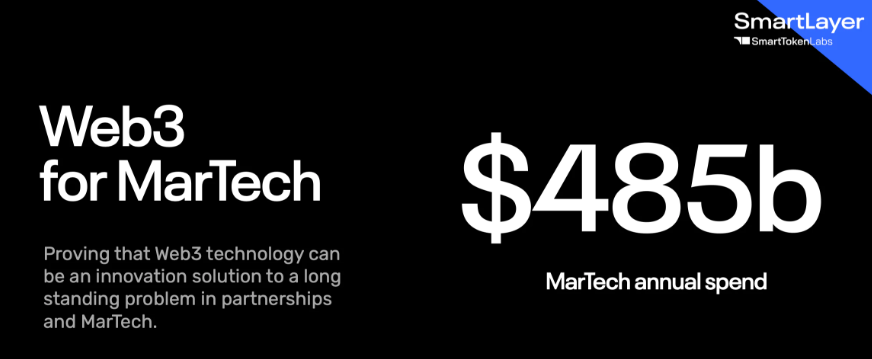
We believe solutions like ours—leveraging off-chain NFTs and Smart Layer—will accelerate mainstream Web3 adoption, serve broader audiences, generate tangible value for the real economy, and foster genuine growth and engagement.
Join TechFlow official community to stay tuned
Telegram:https://t.me/TechFlowDaily
X (Twitter):https://x.com/TechFlowPost
X (Twitter) EN:https://x.com/BlockFlow_News
 Smart Token Labs 中文爱好者