Why AI Is Eating the Web3 Creator Economy
TechFlow Selected TechFlow Selected
Why AI Is Eating the Web3 Creator Economy
Software might be eating the world, but AI is rapidly devouring the creator economy.
 Navigating Web3 tides with focused insights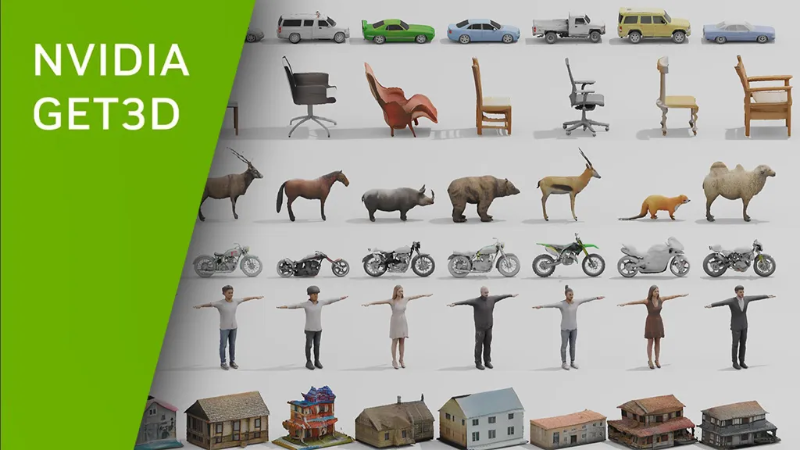
Author: Theo Priestley, author of "The Future Starts Now"
Translation: TechFlow
On August 20, 2011, Marc Andreessen, co-founder of a16z, published a seminal article in The Wall Street Journal titled "Why Software Is Eating the World."
*Note: This article was written on September 26, 2022. Below is the main text.
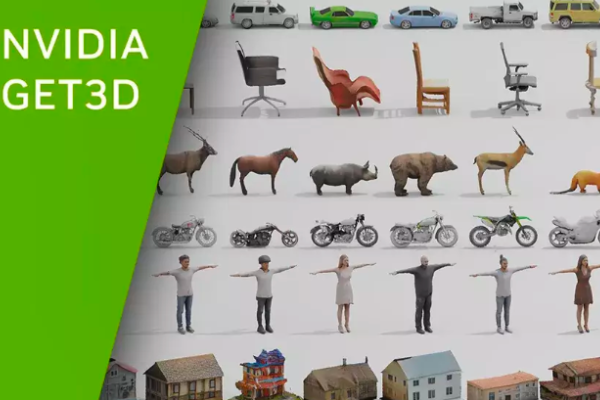
You see, it all stems from advances in machines and deep learning, which have exploded with DALL-E, MidJourney, Stable Diffusion, and most recently NVIDIA's release of Get3D.
NVIDIA’s new technology, the GET3D AI tool, will impact many startups striving to develop object-scanning tools and applications for populating the metaverse.
“Remarkably, NVIDIA GET3D only requires training on 2D images yet can generate textured 3D shapes with high fidelity and complex geometric details. The generated 3D objects use formats compatible with popular graphics software applications, so users can immediately import them into 3D renderers and game engines for further editing.”
According to NVIDIA, approximately one million images were fed into GET3D using A100 Tensor Core GPUs over just two days. This means it will disrupt other manual object-scanning tools at unimaginable speed and scale.
The ability brought by AI to instantly generate textured 3D shapes will be a game-changer for game developers, helping them rapidly populate virtual worlds with diverse and interesting objects.
With the help of another NVIDIA AI tool, StyleGAN-NADA, developers can also apply various styles to objects via text prompts—such as creating dilapidated buildings or 4x4 vehicles covered in mud.
These generated models will ultimately exist in Universal Scene Description (USD) file format, which NVIDIA and others are working to promote as an interoperability standard for digital assets.
This means the promise of a democratized creator economy—where people could earn money on platforms like Sketchfab by uploading their own images—is effectively already over.
For example, Quixel’s Megascans library can now be absorbed and utilized by these new enterprise-grade tools.
Between MidJourney, DALL-E, and now Stable Diffusion, we’ll soon be able to input text prompts and have AI generate entire metaverses.
Fully realized 3D and immersive environments aren’t far off. I’d wager that within less than two years, we’ll have plugins for Unity or Unreal Engine capable of auto-generating full virtual worlds from just a few phrases or keywords.
While some tools already shorten the design process, the final step in this journey will simply be telling the AI what result you want—with almost nothing else involved.
Then, users can tweak the shape or leave it as-is. We’re already seeing signs of “prompt engineers”—those who know how to craft phrases to get optimal initial results—who will emerge and hold an advantage, at least in the short term.
But they aren’t true creators, and while AI dominates the industry, these individuals will be left behind.
Fabian Stelzer has already created a set of 100% AI-generated sci-fi shorts using community-driven narratives and these tools. This is exciting because it shows how AI can democratize creativity—but it simultaneously eliminates many traditional creators who would normally participate in such projects.
The experience of being able to “improvise a trailer” while exploring the world is incredibly exciting—it’s a glimpse into the future.
As these tools are trained on more real-world data, their ability to achieve this faster will only increase.
But opposition has already emerged.
Image media group and popular stock image and editorial photography provider Getty announced this week that it will ban AI-generated artworks, citing copyright concerns.
“Issues around the outputs of these models, image metadata, and individual rights embedded in images remain unresolved, leading to genuine copyright concerns. We are taking active measures to benefit our customers.”
Getty is a massive image library used by media companies worldwide. It contains images and original photographs that subscribers can license for use in articles—for a fee.
Getty has announced it will strengthen oversight of AI-generated images on its platform and stated that any images created using programs such as Stable Diffusion, DALL-E, and Midjourney will be prohibited.
So now a divide has emerged—the war between creators and those using AI to create. This will trigger ripple effects across the entire industry. Software may be eating the world, but AI is rapidly devouring the creator economy—even before it has had a chance to fully form.
Join TechFlow official community to stay tuned
Telegram:https://t.me/TechFlowDaily
X (Twitter):https://x.com/TechFlowPost
X (Twitter) EN:https://x.com/BlockFlow_News