








dappOS: The Web3 Operating System Virtualizing Public Blockchains
TechFlow Selected TechFlow Selected
dappOS: The Web3 Operating System Virtualizing Public Blockchains
A Web3 operating system creates a unified platform that connects technologies across different blockchains, delivering an improved experience for developers and users in the Web3 world.
 Navigating Web3 tides with focused insights
Author: michaeljin.eth, R3PO
"A Web3 operating system creates a universal platform to connect technologies across different blockchains, delivering a better experience for developers and users in the Web3 world." — Coinbase, Michael Li
Ecological Insights from Internet Operating Systems
Web2 took 36 years to reach one billion users—how long will it take Web3? During this journey, Web3 must attract an increasing number of mainstream users, making secure, reliable solutions and superior user experiences more important than ever.
In the early days of the internet, both users and developers struggled with compatibility due to the lack of a unified operating system, leading to limited user adoption and increased development complexity. Later, during the mobile internet era, the rise of Android created a seamless user experience: users could easily access applications, while app developers benefited from a standardized ecosystem offering rich services and content. This established a positive feedback loop among users, developers, and the Android platform, enabling healthy ecosystem growth.
Similarly, Web3.0 faces challenges akin to those of Web2.0, such as ecosystem incompatibility. Application developers must build separate versions for different systems, and users need multiple accounts across chains for cross-chain asset transfers. Following Web2.0’s trajectory, when will a Web3-era operating system emerge, and what transformative impact will it bring to all participants?
Web3 Interaction Gateway: From MetaMask to Operating System
Reviewing the evolution of current Web3 wallet gateways, we observe that each generation has become increasingly convenient and intelligent.
First-generation wallets like MetaMask popularized basic functions such as click-to-connect and approval;
Second-generation wallets like Phantom made significant strides in UI/UX, added NFT viewing capabilities within wallets, and fueled millions of NFT enthusiasts during bull markets.
The author believes that the future mainstream Web3 gateway tool will no longer be just a wallet, but rather a multi-chain-aggregating operating system capable of significantly lowering on-chain interaction barriers and enabling mass user adoption.
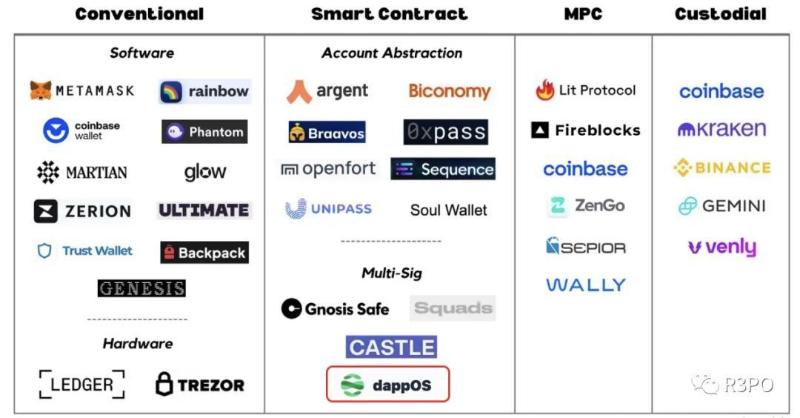
2023 Tech Trend: Chain Abstraction Built on Account Abstraction
ERC-4337, also known as Account Abstraction (AA), is already the hottest topic at the recent Ethereum Denver conference. AA is a proposed wallet technology for Ethereum that Vitalik Buterin first conceptualized nine years ago. Its ultimate vision is to merge the features of externally owned accounts (EOAs) and contract accounts (CAs) into a single primary account type via multi-chain aggregation protocols based on AA, replacing EOAs entirely. Beyond CA programmability, it enables users to initiate transactions independently without relying on EOAs. Thus, account abstraction allows users to perform account authorization effortlessly without mastering complex blockchain terminology or handling intricate contracts, while also ensuring account security.
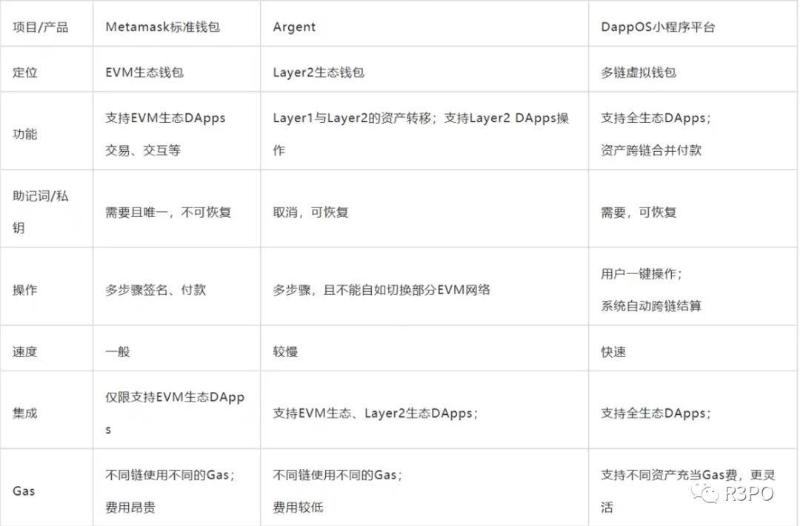
Compared to other wallet abstraction implementations, dappOS goes further by achieving public chain abstraction, using auxiliary networks to encapsulate and integrate fragmented multi-chain environments, giving users a CEX-like interaction experience. For instance, in the latest GMX integration, the balance displayed in the dApp represents the total balance across the entire dappOS system—even though assets may actually be distributed across different chains. Like on centralized exchanges, users don’t need to manage these details; this aggregated balance can be used instantly in any dApp supporting dappOS, with all underlying operations automated by dappOS.
Account abstraction may become an indispensable theme in the crypto world in 2023, and dappOS's multi-chain aggregating operating system is ahead of the curve in this direction.
dappOS: A Web3 Operating System That Virtualizes Public Chains
Recently, the author discovered dappOS—a participant in Binance Labs’ fifth incubation program—focused on delivering Web2-level smoothness to Dapps by virtualizing public chains and building a multi-chain-aggregating operating system for Web3.0, elevating the concept of "smart contract wallets" to that of an "operating system."
Enhancing End-User On-Chain Interaction Experience
Unified Account: By abstracting public chains, dappOS provides users with a single account applicable across all dApps on every supported chain. Account balances can be used instantly in any dappOS-enabled application.
Automated Payments: Complex interactions between the unified account and various blockchains are automatically handled by dappOS, freeing users from technical details.
The dappOS Account virtual wallet can be reset even if the user forgets their recovery phrase.
The virtual wallet allows users to log in to DappOS with one click, eliminating the burden of managing seed phrases.
The virtual wallet is extensible and solves the issue of needing gas upfront before using a wallet.
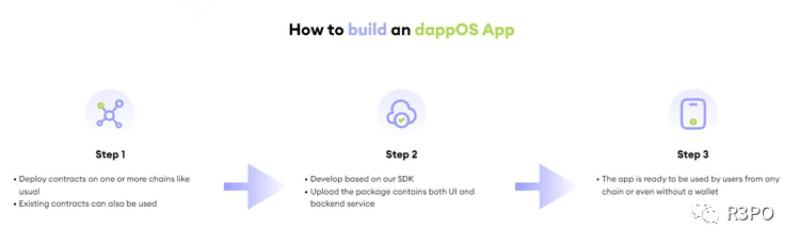
To reduce barriers in interacting with crypto infrastructure, dappOS has built an intermediary layer between users and the underlying infrastructure. Users only interact with dappOS, which relays their instructions to the crypto infrastructure and automatically executes workflows. Developers can also easily integrate dappOS into their applications.
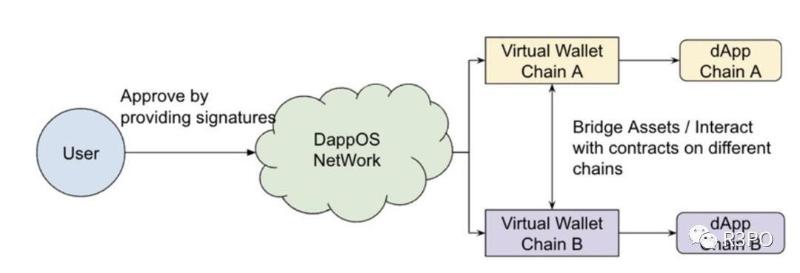
In a context where most users are reluctant to register new public chain wallets or frequently transfer assets across chains, dappOS seizes the opportunity to deliver better usability. It successfully enables “mesh-style” vertical, horizontal, and circular calls of task-processing logic across protocol, infrastructure, and application layers—unlocking greater composability between layers and enabling more user-facing functionalities based on complex logic.
L2 and LSD Boom Fuels Exponential User Growth for Top Protocols
As the market matures, increasingly sophisticated Web3 users are adopting derivatives like options. Financial derivatives are essential tools in mature markets and typically surpass other instruments in trading volume. BNB Chain’s DeFi Outlook explicitly highlights optimism around derivatives trading volume growth, signaling greater opportunities for projects participating in this sector.
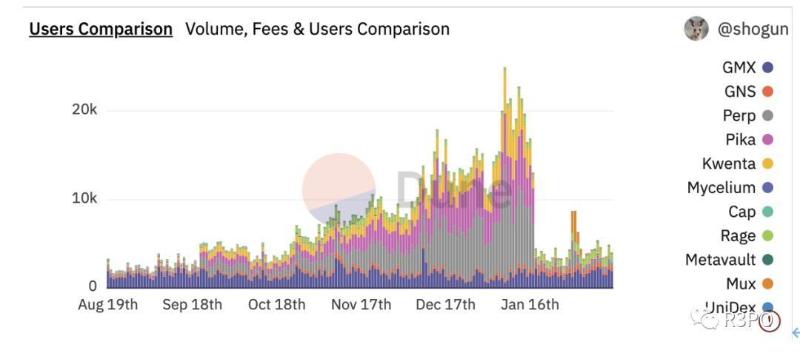
User evolution across major Perpetuals protocols (Source: Dune @shogun)
Recently, trading volumes on GMX, GNS, and other protocols have continued to grow, attracting increasing attention from teams and users alike. However, it's undeniable that using on-chain derivatives protocols involves certain complexity and expertise. Simplified operational solutions for derivatives protocols will drive exponential user growth for dApps.
The collaboration between dappOS, GMX, and Perpetuals turns aspirations into reality. The preview version of the GMX platform integrated with dappOS SDK has officially launched, allowing users to seamlessly access GMX features directly from their BSC wallets.
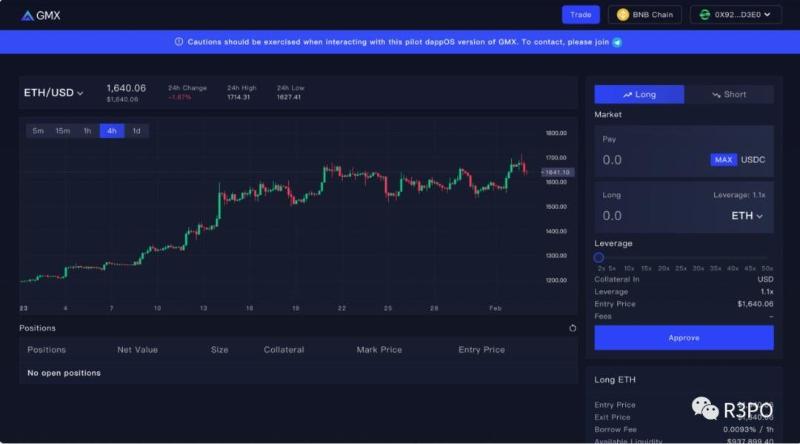
Thus, dappOS demonstrates highly diversified positioning, offering frontend SDKs that reduce interaction costs with public chains. DApp developers can leverage dappOS’s service system to build additional application services.
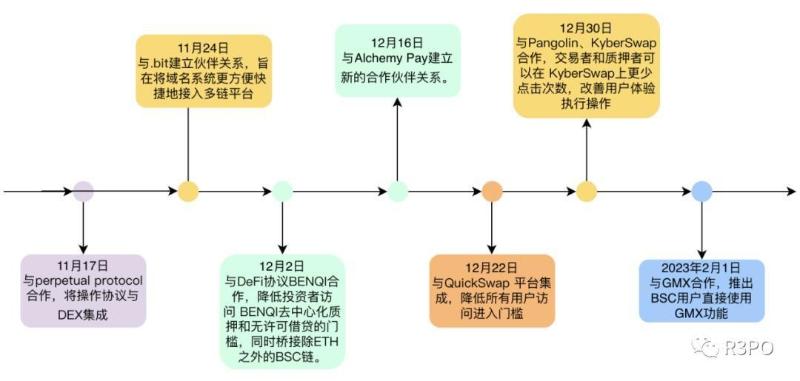
Current Progress and Partnerships
dappOS focuses on current industry pain points. dappOS has already partnered with multiple leading projects in the derivatives and LSD sectors to jointly explore solutions that lower user barriers and enhance user experience.
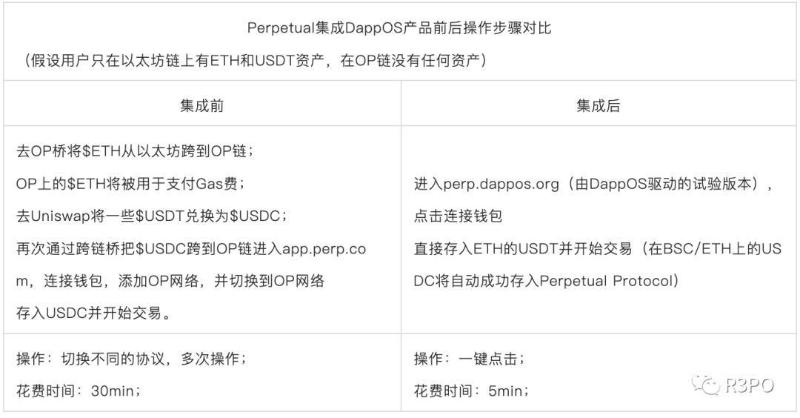
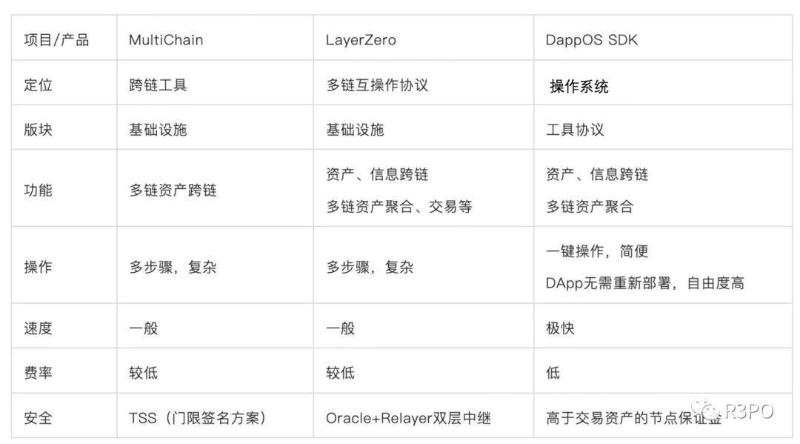
To better understand dappOS’s role in empowering partner projects, let’s compare user experience before and after integration using Perpetual as an example:
Addressing Multi-Chain Liquidity Fragmentation Challenges, Unlocking Billion-User Potential for dApps
For single-chain-deployed DApps, acquiring users from other public chains becomes difficult.
Multi-chain-dependent DApps like Perpetual must not only complete multi-chain deployments but also invest heavily in boosting and maintaining liquidity across each chain to attract incremental users;in contrast, dappOS offers greater advantages in free DApp integration, unrestricted by specific chain ecosystems, making it more developer-friendly. At the user level, it ensures simplicity without compromising security—making it highly user-friendly. Regarding security, dappOS employs a margin-based mechanism. In case of issues during transactions, users are guaranteed effective compensation.
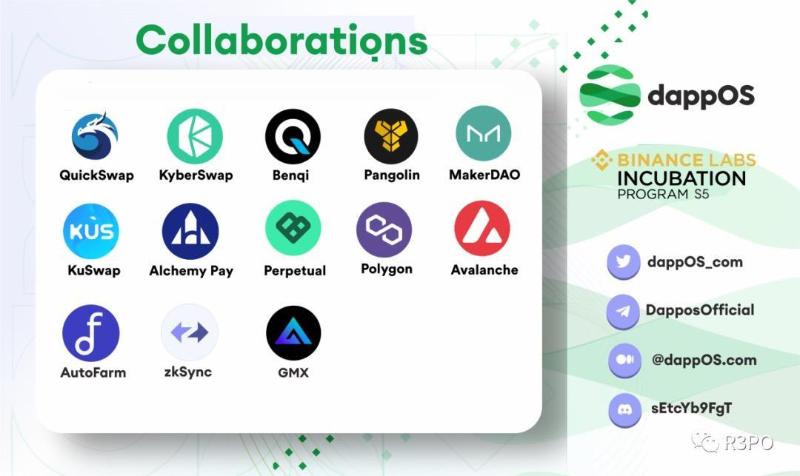
To encourage users to experience multi-chain integration technology, dappOS has deeply collaborated with GMX, BENQI, MakerDAO, AVAX, KyberSwap, zkSync, and others. The preview version of the GMX platform integrated with dappOS SDK has officially launched, enabling users to seamlessly use GMX functions directly from BSC, OP, and Polygon wallets. Users interacting with this version of GMX will receive $20,000 in airdrop rewards, enjoy up to 3x staking yields, and earn referral commissions.
Participation link: https://gmx.dappos.finance/buy/glp?ref=0xSatoshi
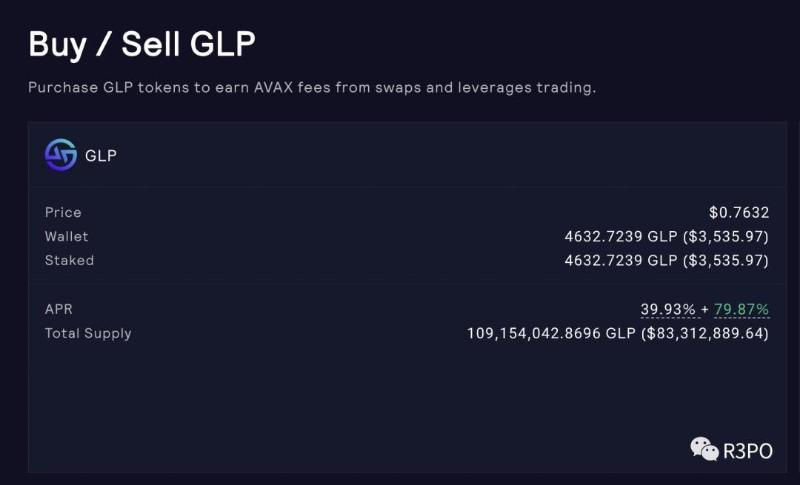
Therefore, the author believes that given dappOS’s integrations with top-tier projects in trending sectors and potential backing from Binance’s investment and incubation, the likelihood of future interaction-based airdrops for users should not be underestimated.
The Chasm Will Eventually Be Crossed—The Future of the Next-Gen Internet Operating System Is Bright
We will eventually bridge the chasm, but this will take considerable time and require substantial improvements in infrastructure.
In the coming decades, we are bound to witness a generational shift in mindset. Self-custody of assets and participation in decentralized finance will become the norm. Today, nearly anyone regardless of age or technical proficiency can pull out a smartphone, access the internet and app stores, and interact with mobile technology, cloud computing, email, and more. This transformation took the internet 36 years. Likewise, Web3 will ultimately reach a singularity point where anyone can directly interact with blockchains.
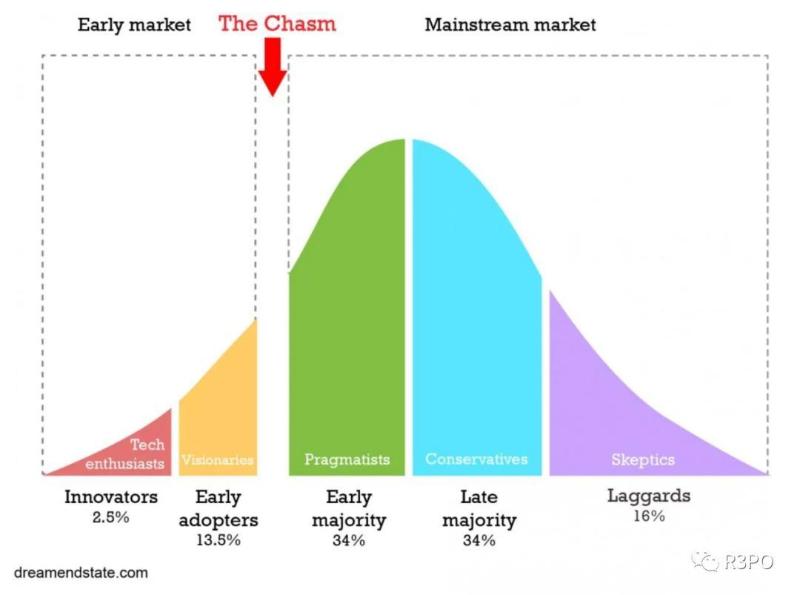
However, before the Web3 singularity arrives, the introduction of operating systems will be a gradual process. Yet pioneers already exist: dappOS, through its contributions to developer ecosystems (B2B) and support for end-users (B2C), will significantly lower the barrier to entry for Web3 and greatly enhance user experience. Therefore, we believe dappOS holds immense potential worthy of close attention.
Join TechFlow official community to stay tuned
Telegram:https://t.me/TechFlowDaily
X (Twitter):https://x.com/TechFlowPost
X (Twitter) EN:https://x.com/BlockFlow_News
 R3PO
R3PO






