How to "Effectively Operate" a Public Blockchain? Reviewing Operational Differentiation Behind Leading Blockchains
TechFlow Selected TechFlow Selected
How to "Effectively Operate" a Public Blockchain? Reviewing Operational Differentiation Behind Leading Blockchains
While expanding the market, they are also competing for existing users.
 Navigating Web3 tides with focused insights
Author:
Zolo, TechFlow
linda Zheng, Co-Founder of SuiWorld
Recently, several popular charts have been circulating, showcasing metrics such as the number of developers and daily active users across various blockchains, giving us a clear visual comparison of data disparities between different chains and projects.
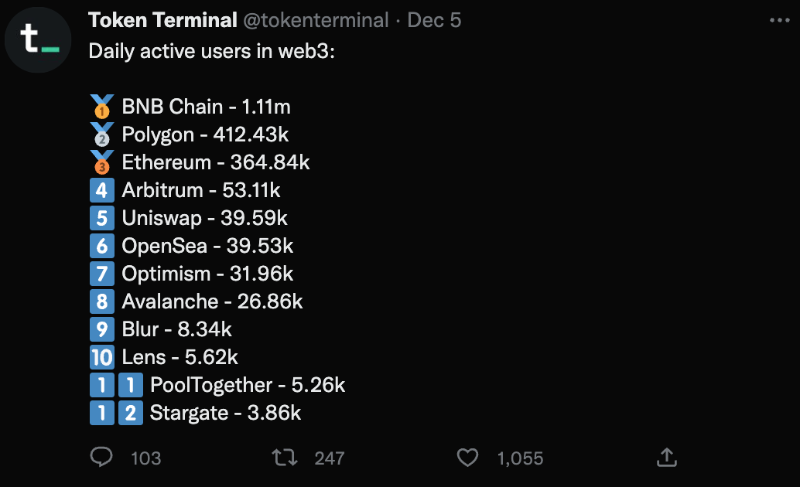
There are many reasons behind these differences. Beyond the inherent appeal of their protocols, we’ve also identified significant variations from an operational perspective. The success or failure of a blockchain stems from both internal and external factors.
External factors include events like FTX's collapse impacting Solana; Binance redirecting traffic to boost BNB Chain; or high-profile founding teams and investors giving Aptos early visibility. However, this article does not focus on external influences. Instead, it examines key differences in official websites, social media presence, and community operations—highlighting internal strategies that other blockchain projects can learn from.
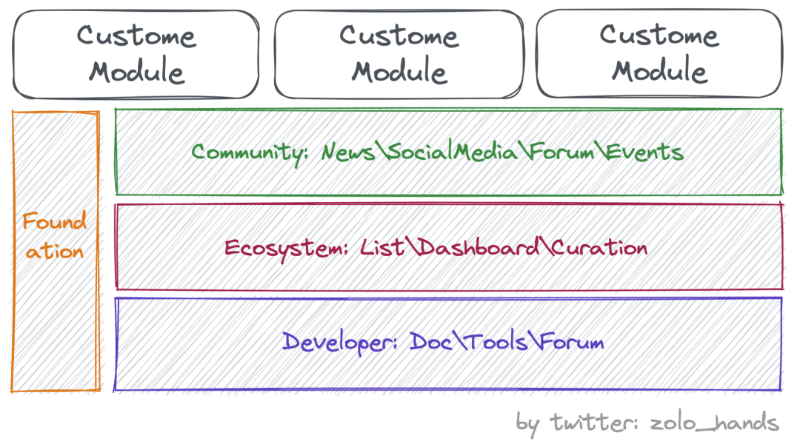
Three Pillars of Blockchain Operations: Developer, Ecosystem, Community
We first reviewed the website structures of several prominent blockchains and summarized them as follows:
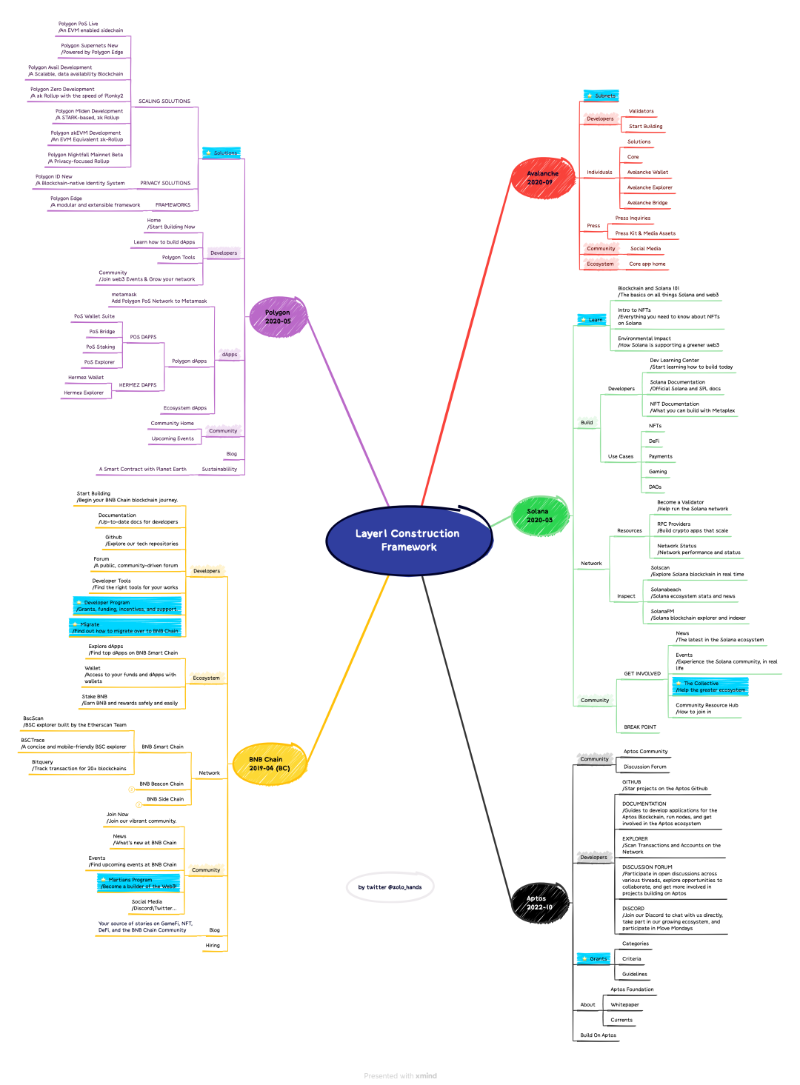
Common elements are marked in gray. Although naming conventions differ, essentially every major blockchain covers three core areas: Developer, Ecosystem, and Community, each occupying substantial space on their platforms. Here, “Ecosystem” refers specifically to project ecosystems—showcasing dApps built on the chain and supporting their promotion. “Community,” by contrast, emphasizes user communities rather than developer groups.
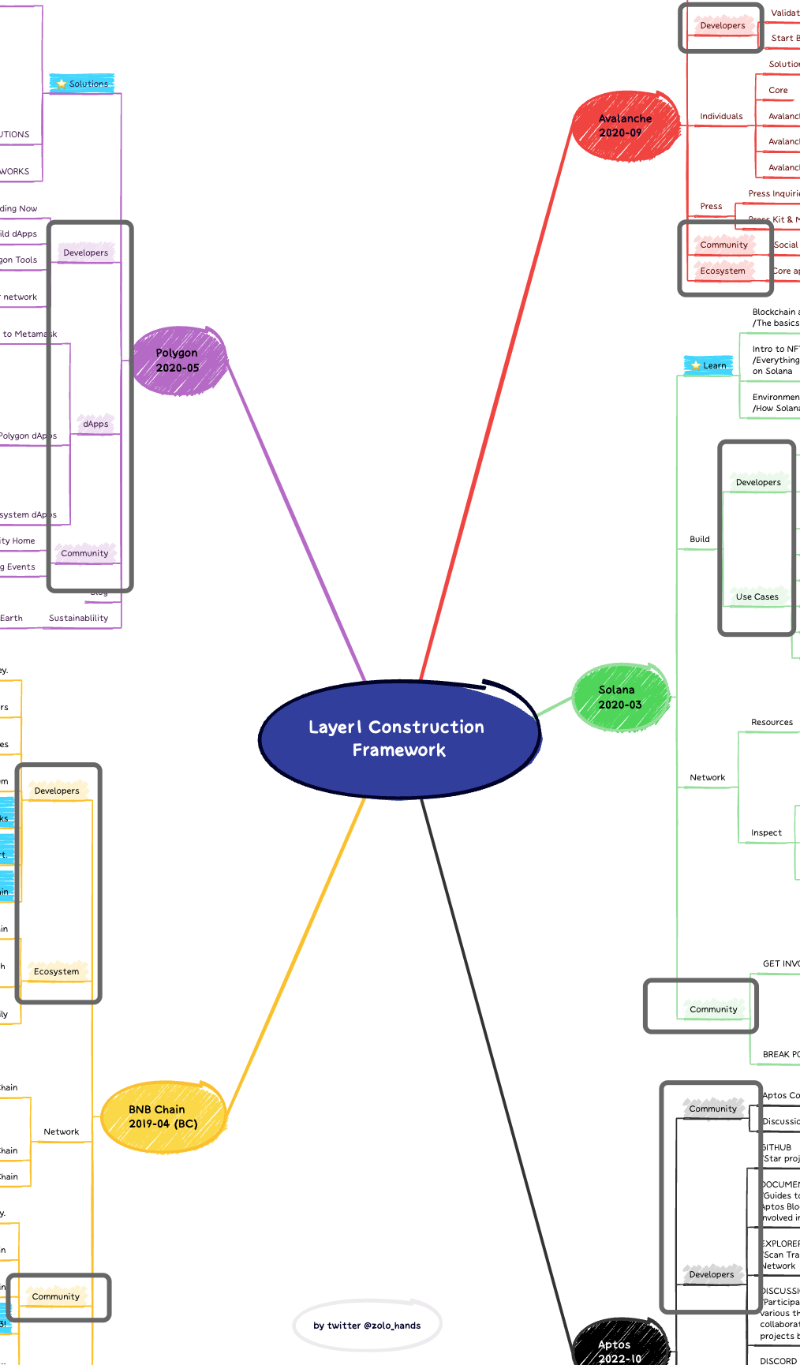
From a strategic standpoint, the typical path is: attract developers through unique technical narratives → foster a thriving ecosystem with those developers → attract mass users via compelling applications.
Developer: Win Developers, Win the Game
Whether Layer 1 or privacy-focused blockchains, all emphasize technological leadership or differentiation. Each chain showcases its strengths—Solana promoted PoH for "Super Fast" performance; Avalanche highlights novel consensus mechanisms and Subnets enabling “one-click customized chain deployment.”
Beyond technical storytelling, effectively onboarding developers requires robust support infrastructure. Key components include:
1. Comprehensive documentation and code repositories (e.g., GitHub);
2. Developer-friendly tools and implementation guidance;
3. Technical forums for knowledge sharing and troubleshooting;
4. Developer engagement programs such as hackathons and roadshows.
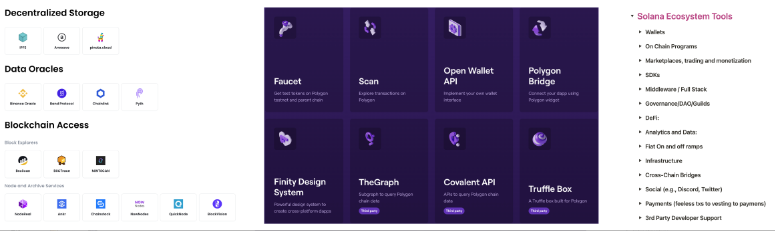
In addition, BNB Chain, Polygon, and Solana clearly categorize and present the wide range of development tools available on their networks.
Ecosystem: Application Layer Drives Mainstream Adoption
This section primarily serves to showcase ecosystem strength. Common practices include organizing projects into categories and providing entry points for new DApp builders.
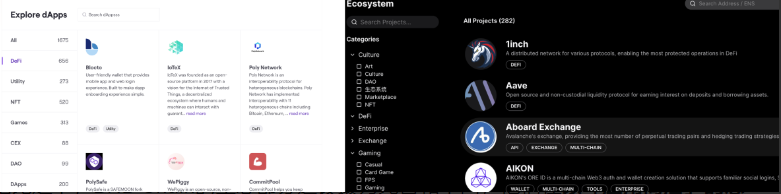
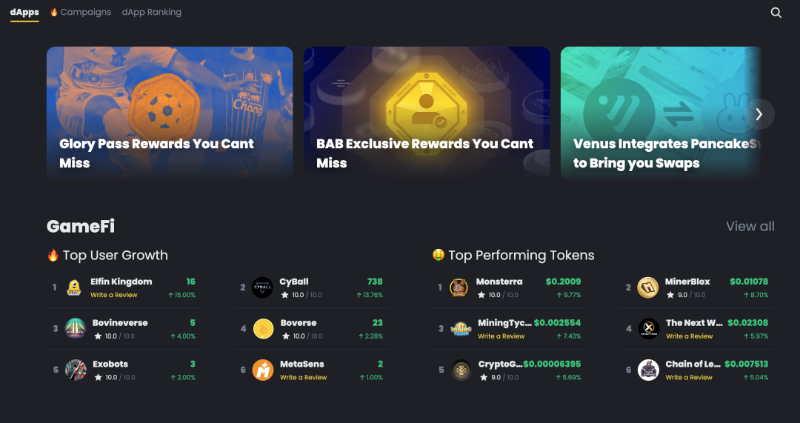
Among these, BNB Chain stands out with the most advanced and distinctive ecosystem design—structured like an app store. Think of it as a DappRadar enhanced with news and user reviews. It doesn’t just list projects—it displays performance data, user feedback, and even includes Alert features for risky projects. In terms of ecosystem operations, BNB Chain has pulled far ahead of competitors.
Community: Turn Users Into Evangelists
Community building is critical for any Web3 project. It goes beyond creating social groups or hosting weekly town halls. Based on leading blockchain examples, effective community operations should minimally include:
1. Community News – Official updates
2. Social Media Engagement – Cross-platform interaction
3. Community Forum – Feedback and discussion hub
4. Events – Virtual and in-person gatherings
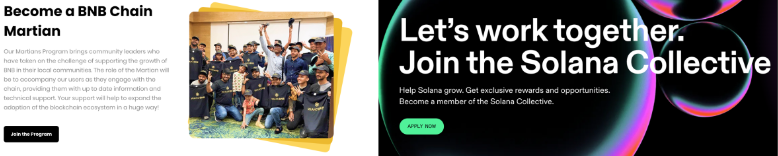
To further energize communities and turn users into advocates, many chains run ambassador programs offering both recognition and incentives. BNB Chain and Solana launched Martians Program and The Collective respectively, combining spiritual and material rewards.
Beyond evangelism, strong communities create a “family-like” environment for teams and investors, yielding several benefits:
1. Helps early-stage projects find quality early adopters—accelerating product-market fit;
2. Supports Web3 developers and nurtures innovative DApp creators;
3. Incubates Web3 entrepreneurs, collaboratively refining tokenomics, improving products, and building crypto-native communities;
4. Enables investors to more easily discover promising new teams.
Thus, a well-run blockchain community functions as an incubation and acceleration “resource pool,” bringing together like-minded individuals committed to mutual growth. This shared ethos strengthens cohesion, boosts ecosystem vitality and attractiveness, and naturally increases developer and team loyalty toward the chain.
The above outlines common operational modules and best practices among leading blockchains. Another shared trait is the establishment of Foundations, which play a crucial role in funding and resourcing ecosystem growth. We’ll explore some foundation-related cases next.
Key Tool for Ecosystem Growth: Foundation, Grants, and Treasury – Fueling Development Through Funding and Resources
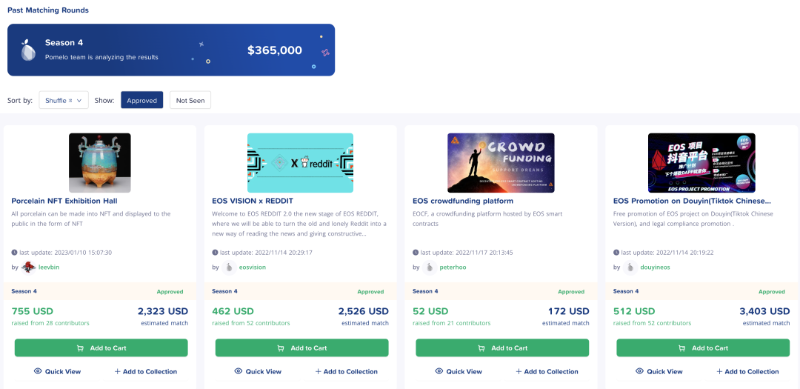
Nearly every blockchain offers grant programs targeting developers and early-stage projects. Selected open-source projects typically receive modest funding along with technical support for mainnet development, marketing, PR exposure, and regional community incubation—effectively accompanying projects through growth stages. Most grant decisions are made by the chain’s foundation. An exception is EOS, which created Pomelo—a二次 crowdfunding platform using DAO governance where community members vote to select funded projects, enhancing decentralization.
However, grant programs face recurring challenges:
1. Well-funded projects don’t need grants;
2. Grant applicants often submit highly similar, undifferentiated projects;
3. Some teams lack loyalty, hopping across chains to collect multiple grants before disappearing.
To address this, blockchains can launch developer cultivation programs to nurture loyal contributors within their own communities.
Beyond foundation-led grants, Polkadot introduced an innovative treasury model. A portion of transaction fees, inflation from suboptimal staking ratios, parachain auction proceeds, and slashed penalties are pooled into a treasury used to fund Polkadot’s ecosystem development. Compared to traditional models relying solely on fundraising rounds, this approach offers greater sustainability. Polkadot’s treasury mechanism may serve as a valuable reference for other chains.
While Polkadot’s popularity had external drivers, here we’re focusing strictly on the innovation of its treasury system.
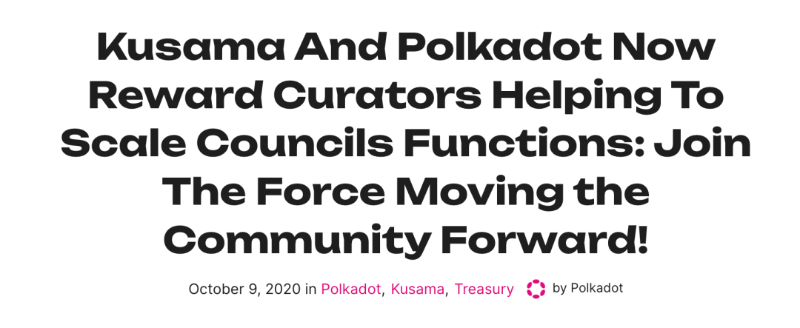
Given the dominance of mature blockchains like Ethereum, newer chains often resort to spending heavily to bootstrap ecosystems. However, ecosystem building is a long-term endeavor—relying solely on seed capital from private token sales is unsustainable. The treasury model offers a fresh perspective: allocate a portion of normal blockchain revenue and governance funds into a dedicated treasury, governed by a council to finance ecosystem-enhancing proposals. Successful funding leads to stronger chain development, increased usage, and continuous treasury accumulation—creating a virtuous cycle. This model addresses funding needs while enabling governance-controlled inflation management, potentially operating as a DAO to reduce centralization. It’s a multi-benefit framework worth considering.
Of course, at the granular level of module-specific operations and development phases, each blockchain adopts unique approaches. Below, we highlight notable differentiators.
Operational Differentiation Across Blockchains
The sections highlighted in blue represent key operational distinctions observed across chains.
Although BNB Chain excels in many areas, a deeper look reveals that it rarely discusses its own technical breakthroughs. In contrast, Polygon, Solana, and Avalanche actively highlight technological innovations. Solana, due to its unique programming language, even developed Blockchain and Solana 101 courses to better onboard developers. As one of the youngest chains, Aptos places exceptional emphasis on its Grant program, outlining clear rules and priorities.
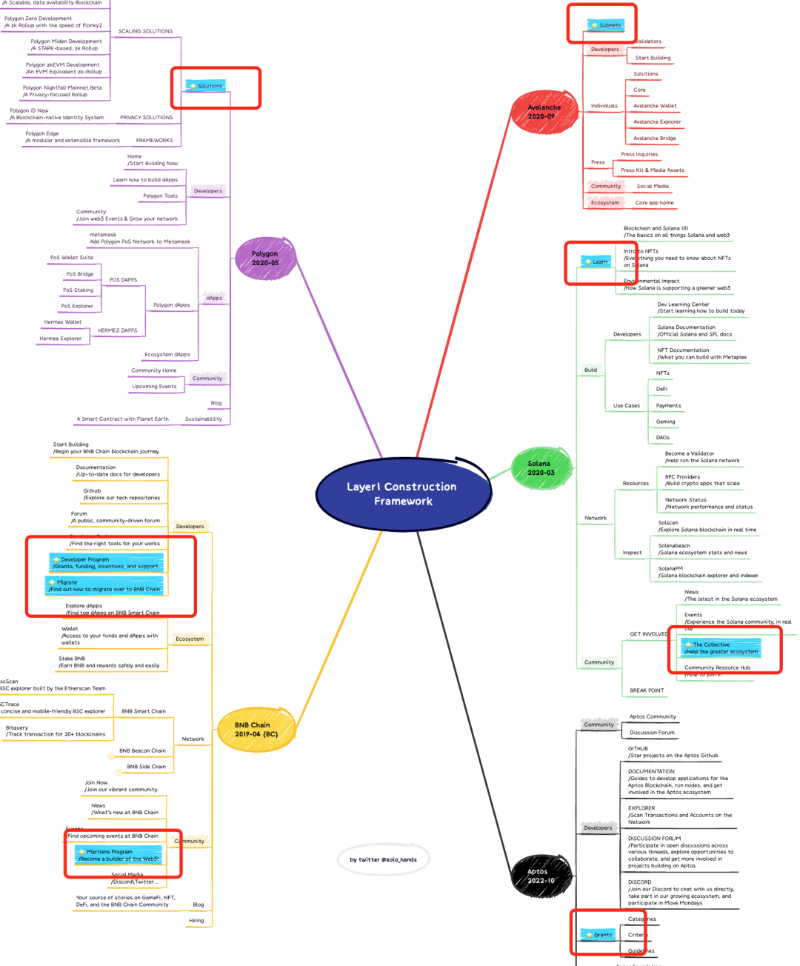
Despite downplaying technical innovation, BNB Chain is widely recognized for initiatives like MVB and incubation programs. These fall under Developer Programs offering targeted support, including monthly grants exclusively for developers. To attract more projects to deploy on BNB Chain, the official site added a dedicated Migrate (migration) section to guide transitions.
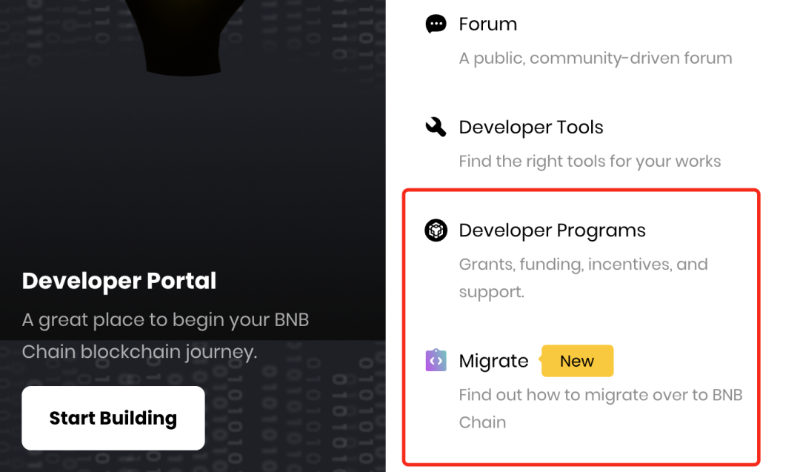
The introduction of the Migrate module is particularly insightful. In Web3, there are few developers and even fewer loyal users. Developers frequently participate in hackathons across multiple chains, and users tend to follow apps or yields—not blockchains.
Therefore, while the industry talks about growing the pie, competition for existing users remains fierce.
The Migrate initiative isn't aimed at new projects but targets established ones, encouraging migration. Upon entering the module, visitors are shown evidence of strong developer support, high user activity, and impressive TVL metrics. Success stories reinforce expectations of similar outcomes post-migration, culminating in a clear call-to-action: Build on BNB Chain.
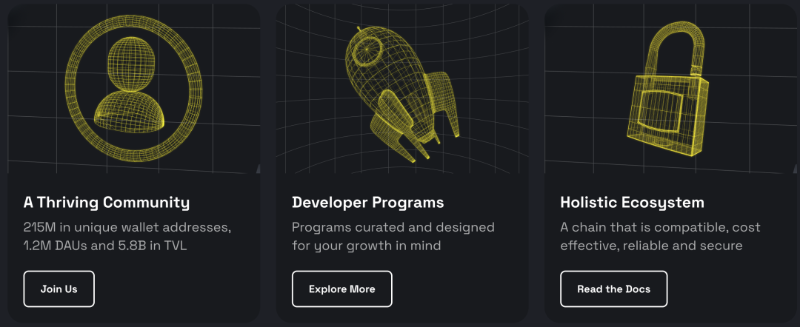
In B2B marketing terms, BNB Chain demonstrates deep understanding of the project team’s customer journey—its operations stand out. More blockchains might consider implementing a dedicated “Migrate” section.
Polygon has executed numerous technical integrations, hence maintaining a separate Solution module to showcase diverse technical offerings. But what many remember most is Polygon’s appeal to traditional brands—partnerships with Nike, Starbucks, and others. A simple explanation was previously offered:
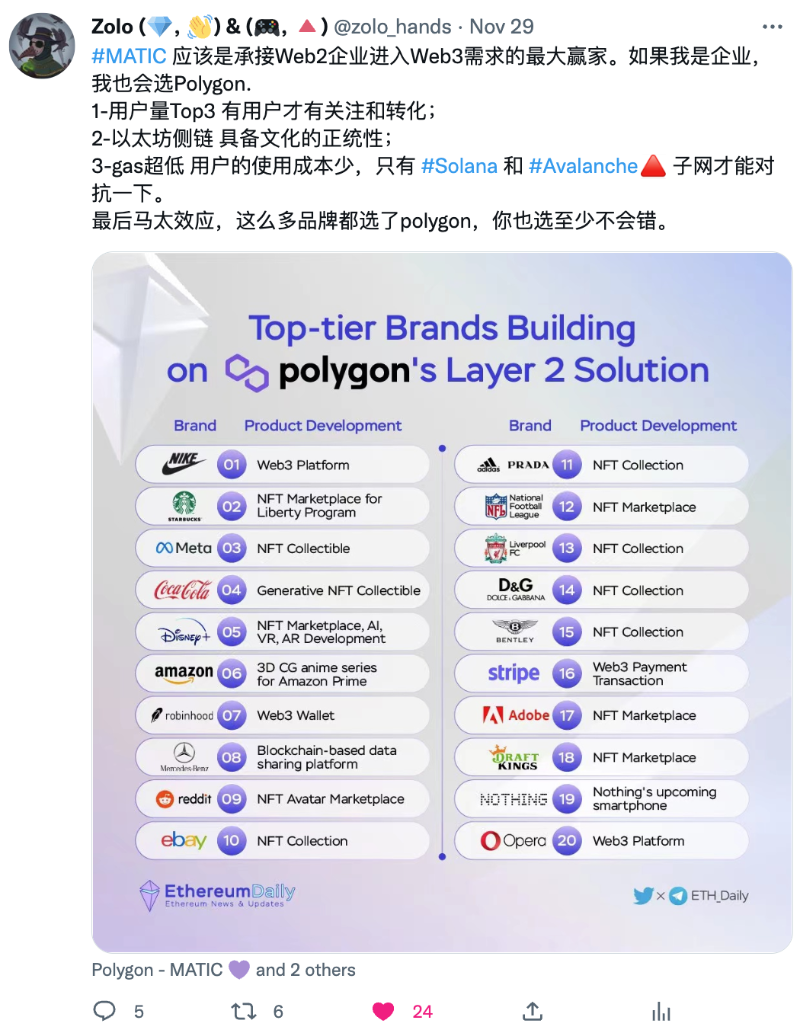
Given this unique advantage, Polygon could leverage a “Partner Wall + Case Studies” section to attract more brand collaborations—serving as a high-end BD resource library, akin to an upgraded version of Avalanche’s Subnet case studies.
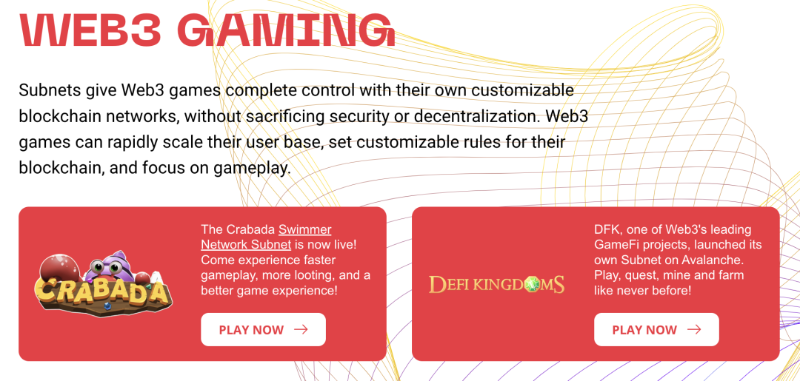
Traditional brands bring massive user bases. More such partnerships mean broader adoption for Polygon, similar to Reddit’s impact. From a detailed content strategy perspective, given that Aptos and Sui are relatively new and easier to evaluate, we’ll use Aptos as a case study to examine its operational focus since its February announcement.
Deep Dive: Aptos and Sui as Case Studies
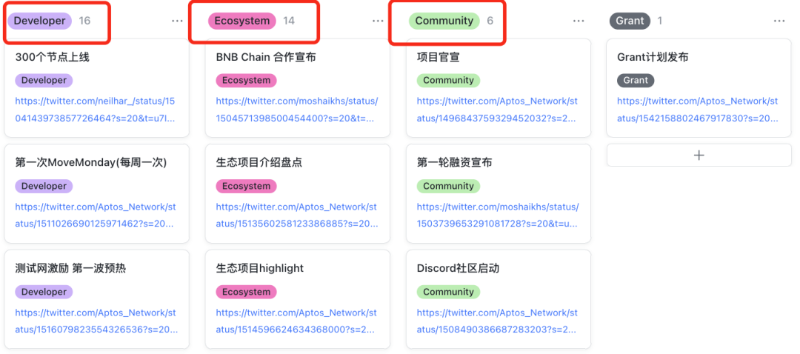
Reviewing Aptos’ Twitter, Medium, and Discord channels, we found that tweets summarize content from all other platforms. Thus, we mapped its Twitter activity and extracted key themes.
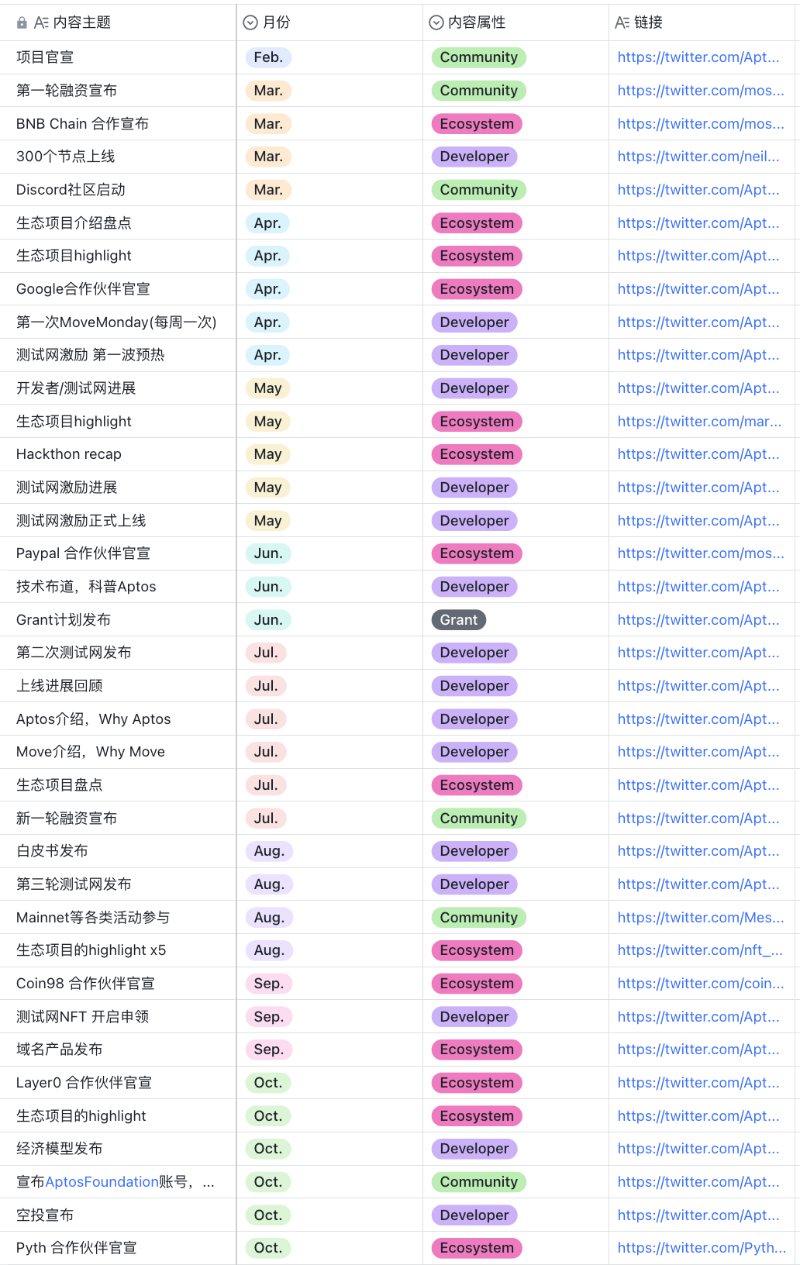
For Developers, the team focuses on testnet progress, weekly MoveMonday sessions, and occasional Aptos/Move educational content;
For Ecosystem, beyond partner announcements, they launched a recurring series called "Aptos Ecosystem Highlight" to spotlight emerging projects on Aptos;
As for Community, efforts remain limited so far.
Notably, early on, Aptos founders were highly visible, speaking at various events. After mainnet launch, however, official activity shifted away from developer-centric updates toward more general community and event content.
In volume, as mentioned earlier, although Developer, Ecosystem, and Community are all priorities, the sequence appears to be Developer > Ecosystem > Community—reflected in Aptos’ content distribution. Also noted earlier: newer chains prioritize Grants early on. While Aptos elevated Grants on its website, social media visibility remains insufficient.
In contrast, Sui hosts weekly AMAs on Discord covering technical updates and Move language education. Offline, the team organizes Happy Hour meetups in the U.S., Portugal, South Korea, Vietnam, and Taiwan. For ecosystem promotion, Sui emphasizes GameFi support—partly due to ecosystem lead Koh Kim’s gaming background—though projects span other domains too.
Although Sui began social outreach months before Aptos, its online热度 remains notably lower. Comparing their official Twitter histories reveals a clear divergence: Aptos emphasizes ecosystem project milestones, while Sui focuses on technical documentation and Sui Move education. Given that developers constitute a small fraction of overall crypto users compared to retail investors, this likely explains Sui’s relatively lukewarm social traction.
Overall, after reviewing BNB Chain, Polygon, Solana, Avalanche, and Aptos, we conclude that successful blockchain operations require solid foundations in three areas: Developer, Ecosystem, and Community. A well-structured foundation can act as a powerful catalyst. Beyond that, tailored strategies based on stage and differentiation—such as strengthening Grants or community growth—are essential.
Regarding BNB Chain’s large user base, beyond Binance’s inherent traffic advantage, it’s evident that BNB Chain leads in developer, ecosystem, and community development. Avalanche continues promoting innovations in consensus and Subnets, yet struggles to grow user numbers and ecosystem activity—an operational gap that may partly explain its stagnation.
Of course, the scope of blockchains extends beyond the Layer 1s discussed here—including specialized chains like Aleo and Mina, or broader projects requiring developer ecosystems. Given the long development cycles of blockchain projects, this article aims to extract practical methodologies by analyzing top-tier operational frameworks and highlighting exemplary cases—offering actionable insights for sustainable project building. Feel free to DM @zolo_hands or @linda_guagua on Twitter to continue the conversation.
Join TechFlow official community to stay tuned
Telegram:https://t.me/TechFlowDaily
X (Twitter):https://x.com/TechFlowPost
X (Twitter) EN:https://x.com/BlockFlow_News