









The Terrifying 48 Hours: What Exactly Happened to FTX?
TechFlow Selected TechFlow Selected
The Terrifying 48 Hours: What Exactly Happened to FTX?
There are many events to pay attention to; please ensure your asset security.
 Navigating Web3 tides with focused insights
Written by: jonwu.eth, cryptopragmatist
Translated by: TechFlow
The past 48 hours have been insane for cryptocurrency.
FTX is the world's third-largest cryptocurrency exchange. Now, it’s reportedly insolvent and being acquired by Binance.
Here’s everything you need to know about Alameda Research and FTX:
It all started with a bank run on FTX, the second-largest crypto exchange. Over the past few days, approximately $1 billion has flowed out of the platform.

Less than a week ago, on November 2, CoinDesk reported that it had obtained Alameda Research’s balance sheet. It revealed early signs of trouble between hedge fund Alameda and exchange FTX.

The accuracy of the balance sheet was later confirmed by Alameda CEO Caroline Ellison. So how did this lead to one billionaire acquiring another’s company—and send the entire crypto market into free fall?
Alameda was the first venture of FTX founder and billionaire Sam Bankman-Fried (SBF), established as a highly successful crypto hedge fund after he began arbitraging Japan’s Bitcoin premium.

After arbitrage opportunities dried up, Alameda shifted to market-making, using quantitative strategies to generate massive profits. It earned a reputation for stellar returns, but also for quietly dumping positions onto retail investors.

In fact, FTX was founded after Alameda as a “by traders, for traders” platform. By its own metrics, FTX ranks as the third or fourth largest exchange globally.
Since its inception, there has been rampant speculation about the relationship between the two entities.
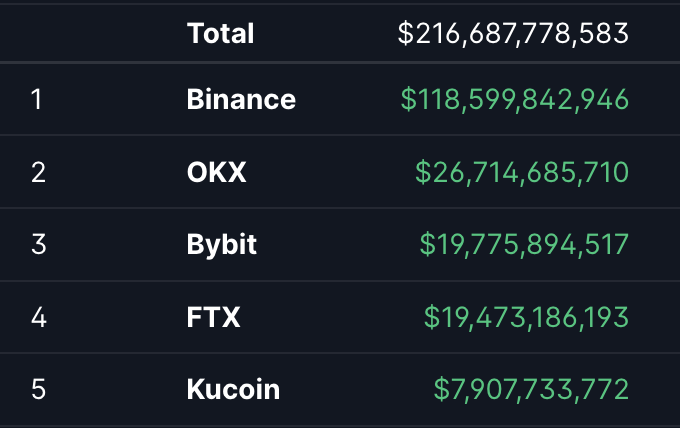
Early on, Alameda served as FTX’s first market maker, providing the liquidity needed to launch the exchange—understandable, but now central to the crisis. The FTX-Alameda relationship is widely interpreted as follows:
-
FTX granted Alameda preferential order flow, enabling its sister hedge fund to front-run other traders.
-
With the benefits from being tied to the third-largest exchange, Alameda was expected to be a perpetual money machine.
But FTX wasn’t just Alameda’s data source—it was Alameda’s piggy bank. SBF used the high-margin exchange as a capital source for aggressive trading operations. FTX existed to solve funding shortfalls.
Let’s return to Alameda’s balance sheet:
CoinDesk revealed that most of Alameda’s assets ($5.8 billion of a reported $14.6 billion) consisted of FTX’s own exchange token, $FTT, with the rest largely in tokens from the Solana ecosystem.

Alameda and FTX more or less ignored the fact that these tokens had extremely poor liquidity. Relative to their holdings, the circulating supply of $FTT was very low. In other words: even if Alameda wanted to sell its $5.8 billion in $FTT, there wouldn’t be enough buyers. Alameda’s holdings were 2–3 times the total circulating supply of $FTT!
Therefore, when Alameda and FTX faced a liquidity crunch over the past few days and lenders came calling, they couldn’t sell the tokens to repay debts. This wasn’t only true for $FTT—Alameda’s holdings in Solana ecosystem tokens faced the same issue.
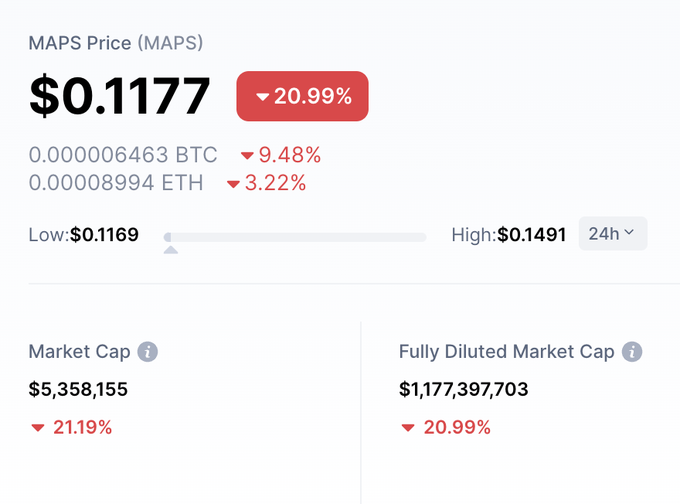
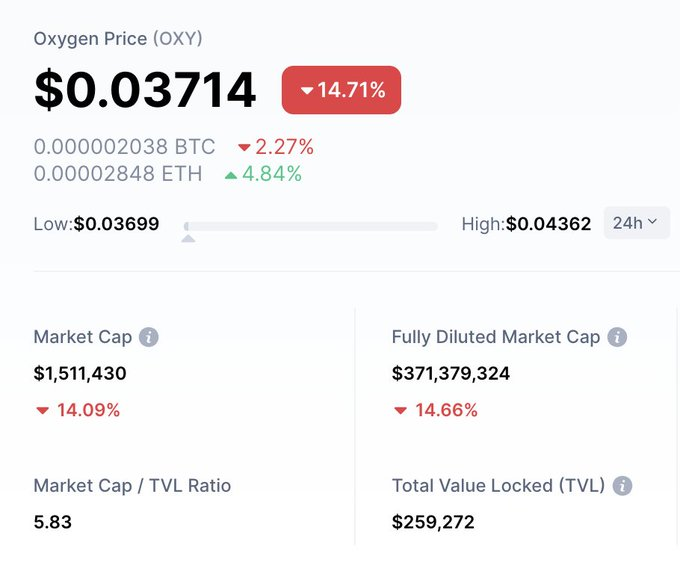
Before things unraveled, Alameda and FTX created a positive flywheel around $FTT:
-
FTX created $FTT
-
Alameda bought or pre-purchased $FTT at deeply discounted prices
-
FTX boosted the price of $FTT
-
Alameda used $FTT as collateral to borrow “real” assets from customer deposits on FTX
However, because $FTT had such low circulation, an external force capable of pushing down $FTT’s price could break this flywheel.
CZ saw this opening.
As one of FTX’s earliest investors, Binance publicly announced it would sell its $2.1 billion in $FTT holdings following the balance sheet leak.

As CZ prepared to dump billions in $FTT onto the market, Alameda and FTX’s situation deteriorated rapidly. Rumors of a bank run peaked, creating further issues for the exchange. They now had to seek loans against the collapsing $FTT and transfer stablecoins to their exchange to meet customer withdrawals. On-chain panic confirmed the desperation—Alameda exited positions at heavy losses, seemingly to cover customer redemptions.
Last night, FTX appeared to halt services for customer deposits. The liquidity crisis turned into clear insolvency:
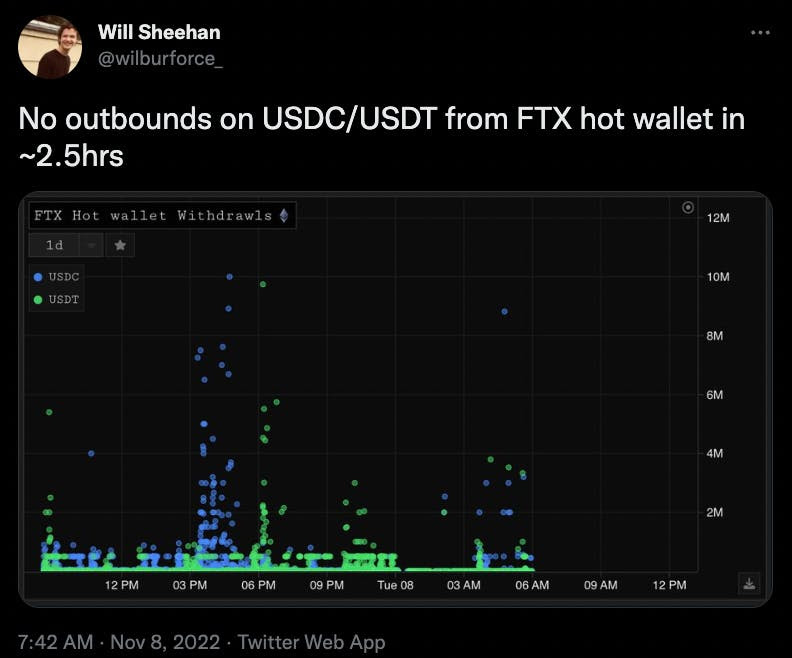
The FTX team remained completely silent. Social media descended into chaos—until the bombshell: Binance and CZ decided to acquire FTX.

Given FTX’s dire state, the acquisition price could be as low as $1.
SBF was a major political donor and one of the world’s youngest billionaires (no longer)—just weeks after appearing on the cover of Fortune magazine. The news is absolutely shocking. FTX was once seen as an impenetrable fortress, the new elite of crypto. But now, crypto has crowned a new king.
Amid a turbulent year, the past 24 hours represent one of the worst events ever in the crypto space.
It reaffirms the need for transparent, over-collateralized systems capable of orderly deleveraging. Ironically, it underscores the necessity of cryptocurrency itself.
This event isn’t over. Many critical questions remain unanswered:
-
Will the acquisition go smoothly?
-
What will happen to the $FTT token?
-
What will become of FTX?
-
How will governments respond to industry consolidation?
-
What impact will this massive shock have on the crypto market?
In short, there are many developments to watch. Stay vigilant and protect your assets.
Join TechFlow official community to stay tuned
Telegram:https://t.me/TechFlowDaily
X (Twitter):https://x.com/TechFlowPost
X (Twitter) EN:https://x.com/BlockFlow_News
 @cryptoprag






