Delphi Digital: The State of Web3 Gaming Guilds in a Bear Market and Future Growth Directions
TechFlow Selected TechFlow Selected
Delphi Digital: The State of Web3 Gaming Guilds in a Bear Market and Future Growth Directions
In the absence of hyper-growth P2E games, do crypto gaming guilds have product-market fit?
 Navigating Web3 tides with focused insights
Author: Jayden Andrew, Analyst at Delphi Digital
Translation: DeFi Dao
I. Introduction
For crypto investors, holding gaming guild tokens in 2022 has been a painful experience.
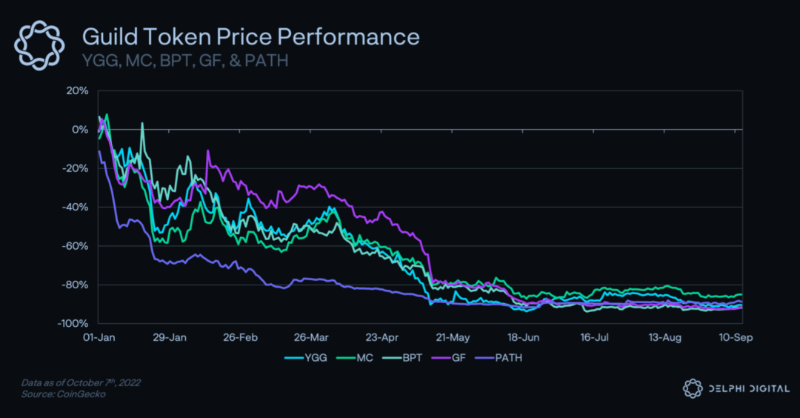
Every token compared in this report has declined by over 80% year-to-date. Of course, many crypto sub-sectors have taken heavy hits recently, but game-related tokens have felt the full fury of the relentless bear market.
This raises the question: do crypto gaming guilds have product-market fit in the absence of hyper-growth P2E games?
If we define guilds narrowly as "P2E scholarship providers," the answer may be no. However, despite tight finances and challenging market conditions, many guilds still retain tens of thousands of members with varying levels of loyalty. For those lucky enough to find themselves in this position, talk of profitability and the prevailing bearish sentiment does not mean game over. It does mean, however, that surviving guilds must demonstrate a "pivot"—or at least a directional shift—if they truly want to play the long game in crypto gaming.
In this report, we cover six gaming guilds, highlighting their performance in the market this year, their financial health, and how they are adapting to the evolving crypto gaming landscape.
II. Comprehensive Data Comparison
The table below outlines head-to-head comparisons among gaming guilds in terms of shared features and distinguishing characteristics.
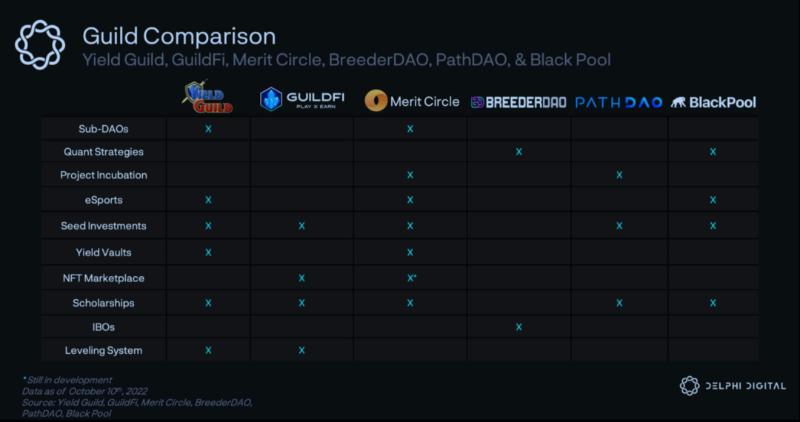
These guilds share some fundamental traits. In practical terms, a guild is a group of individuals united around common interests, values, and goals to achieve mutual benefits for its members.
In the crypto gaming industry, games are clearly their focus. Where they differ is in specific features and strategies adopted—some of which are listed in the table above.
The most common feature is the scholarship program, offered by all mentioned gaming guilds except BreederDAO.
This makes sense, as crypto gaming guilds have historically focused on P2E and the scholarship model.
However, this is slowly changing, and we are likely to see a gradual shift in these offerings. Another commonly adopted strategy among most guilds is seed investing. Interestingly, gaming guilds are increasingly becoming pseudo-venture capital (VC) firms, investing in early-stage game projects to support the industry and, of course, generate profits.
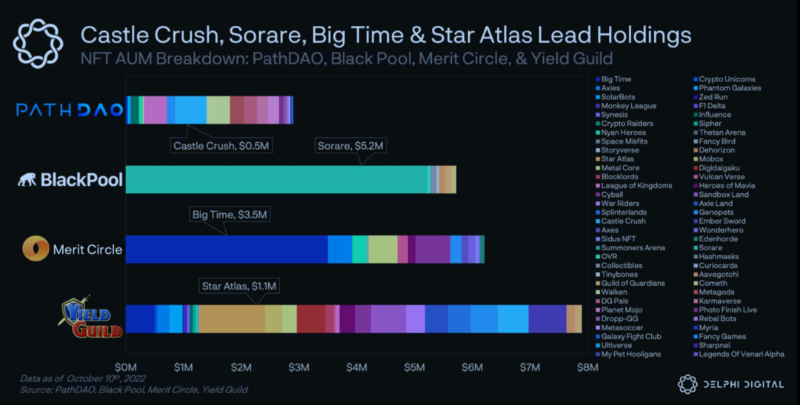
Comparing current guild NFT AUM (above) with figures from nearly a year ago (below), we can draw several interesting observations.
The two most apparent cases are BlackPool and Yield Guild—frankly, both are in poor shape.
Since our last observation, both guilds' NFT portfolios have taken a hit.
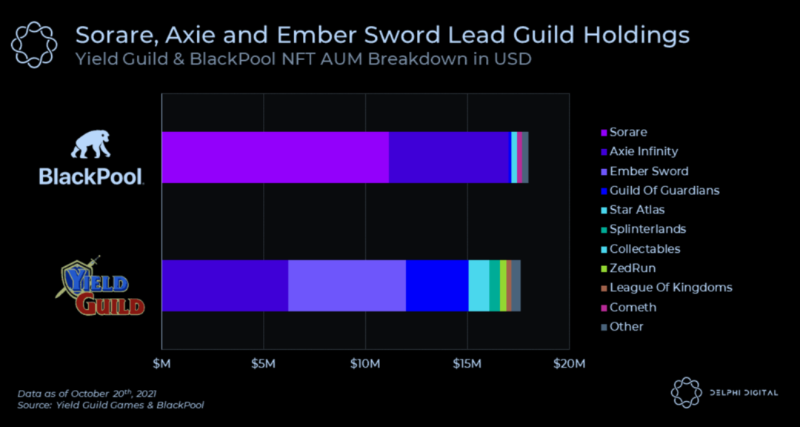
Given the state of the NFT market and the broader macro environment this year, this is unsurprising.
There has been a shift in portfolio weights for both guilds. Most notably, compared to last year, Axie Infinity's share in both guilds’ portfolios has significantly decreased.
Although not entirely absent, Axie has shifted from being BlackPool’s second-largest holding and Yield Guild’s largest holding to a relatively insignificant position.
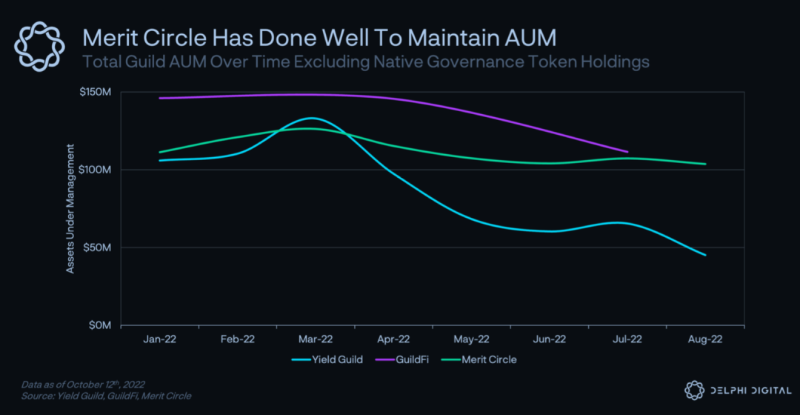
Total AUM across gaming guilds has generally been hit hard this year, with Yield Guild, GuildFi, and Merit Circle down 57.3%, 23.6%, and 7.5% respectively.
Despite unfavorable market conditions, Merit Circle has maintained an impressive level of AUM.
It’s worth noting that Yield Guild is the only crypto gaming guild whose AUM exceeds the amount raised during initial funding (although it has experienced the largest percentage drawdown year-to-date).
See the chart below for more fundraising details.
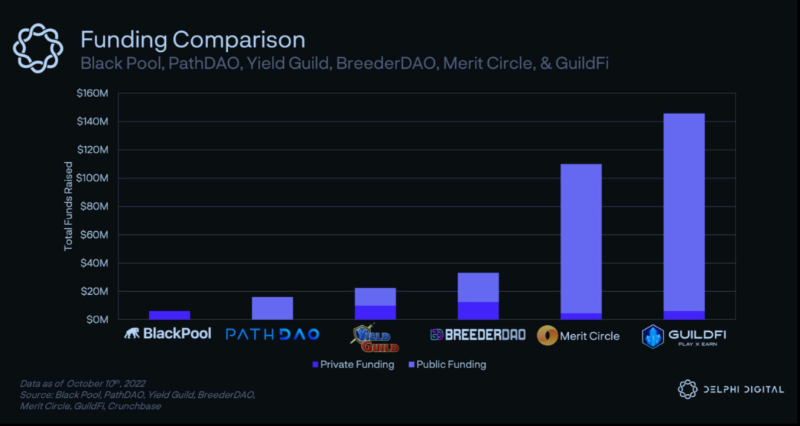
As you can see in the table above, there is a clear divergence in private vs. public fundraising among gaming guilds in this comparison.
BreederDAO raised the most in private funding, while GuildFi raised the most publicly. One subtle point to remember is that these guilds raised funds on different dates (i.e., at various stages of the bull cycle). This means significant differences in funding amounts reflect more about market temperature at the time of fundraising than any real insight into quality differences between guilds.
Nevertheless, it does indicate which gaming guilds should have substantial treasury funds, unless fund management was severely mishandled. Those fortunate enough to meet this well-funded description should have sufficient cash reserves to weather tough times, and if they’ve placed their bets correctly, emerge stronger on the other side.
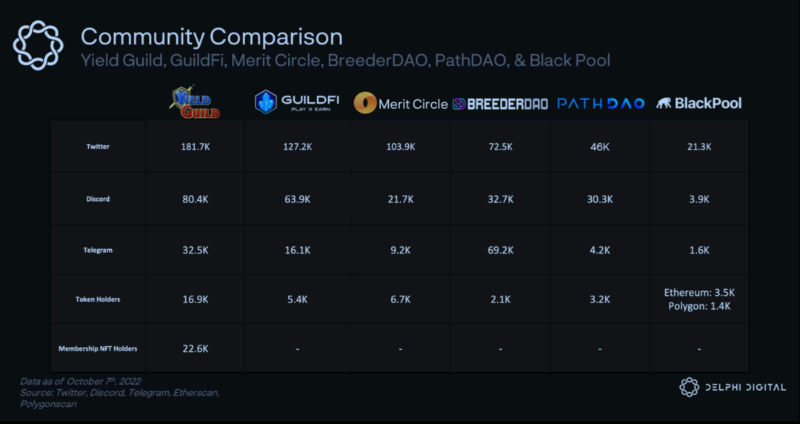
Notably, despite raising relatively little, Yield Guild boasts impressive community metrics (shown below). Having first-mover advantage undoubtedly helped achieve this.
During the recent bull run, the term “community” became somewhat of a buzzword. In less generous contexts, “community members” have also become synonymous with “bagholders.”
However, community is more than just a buzzword or a joke about portfolio losses. Over time, it has become increasingly clear that communities can be powerful entities capable of achieving tangible results through collective action. Their potential remains untapped, and when unified and focused on a specific goal, they become the literal embodiment of the cliché “strength in numbers.”
Player liquidity—the concept of a guild concentrating part of its community members onto new games—has the potential to prove this. The idea is that this gives players an early edge in new games and provides valuable early users to help games grow. In practice, it remains unclear how effective this truly is beyond the hyper-growth P2E game model. At the very least, early games benefit from attention from gaming guild communities.
A non-crypto example of this capability is fitness influencers launching supplements. By leveraging their fanbase, influencers can drive consumer-facing businesses with massive advantages over ordinary individuals lacking such followings.
So which gaming guild has the strongest community? That’s a good question. In the table above, you can see data on Twitter followers, Discord members, Telegram, token holders, and NFT holders for each guild. As mentioned in the fundraising section, Yield Guild has some impressive community statistics. It leads in every category except Telegram.
-
Lower engagement—becoming a Twitter follower
-
Higher engagement—becoming a Discord/Telegram member
-
Higher engagement—becoming an active Discord member/DAO participant
-
Highest engagement—purchasing tokens/NFTs
Another consideration is where and how members engage with the guild. Arguably, different platforms foster varying degrees of engagement.
What does this mean? Think of it this way: if you've worked in crypto for a while, you'll notice a stark difference in your experience of a project’s community when crossing the chasm from Twitter to Discord.
Discord tends to have less noise, more focused discussions, and usually more direct access to founders. Moreover, joining a Discord server is harder than following a project on Twitter—you typically need to read a brief list of server rules and click through several options. Of course, it's not extremely difficult, but it's more effort than clicking a Twitter follow button. These seemingly trivial factors may contribute to experiential differences in member engagement across platforms.
III. Yield Guild
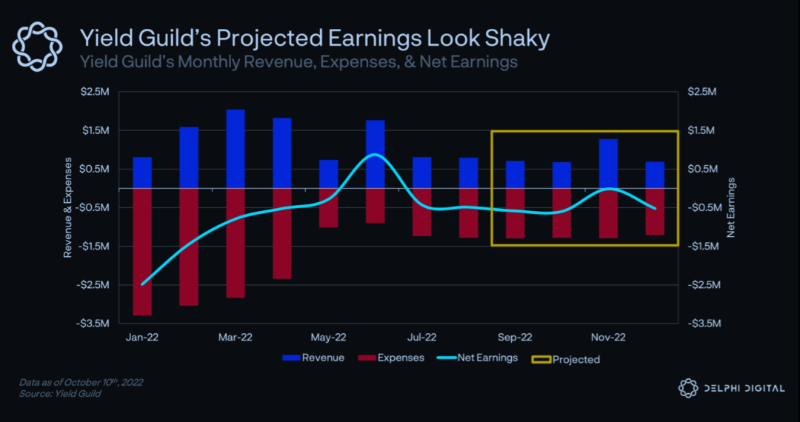
Although Yield Guild improved its net profitability throughout the first half of 2022, its current earnings do not paint a picture of health and prosperity. Aside from June 2022, no other month this year has been net profitable for the guild. Forward-looking revenue projections for the remainder of the year offer little relief either. At best, this could be interpreted as an economic slowdown causing stagnant net profit margins. At worst, the guild may see continued profit declines into the new year. This inevitably calls into question the viability of Yield Guild’s current strategy.
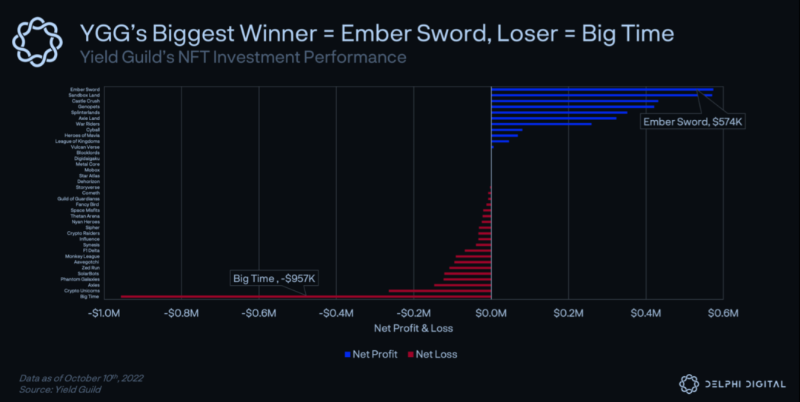
Yield Guild’s currently best-performing NFT investment is Ember Sword. In contrast to Merit Circle, Big Time is actually Yield Guild’s worst-performing NFT investment.
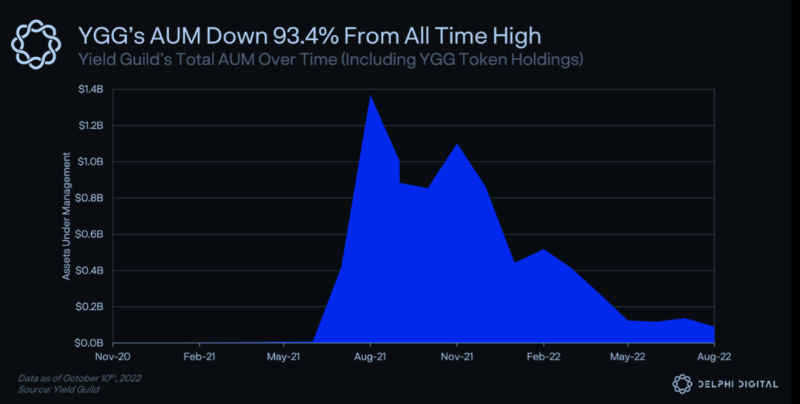
As shown in the chart above, the total value of assets managed by Yield Guild saw a significant boost due to the YGG token launch in July 2021.
Of course, this coincided with YGG substantially appreciating post-launch. However, the positive impact on total AUM during the rise proportionally becomes a negative during the downturn.
With the YGG token down 96.9% from its all-time high, Yield Guild’s total AUM has also declined 93.4% from its peak—unsurprisingly.
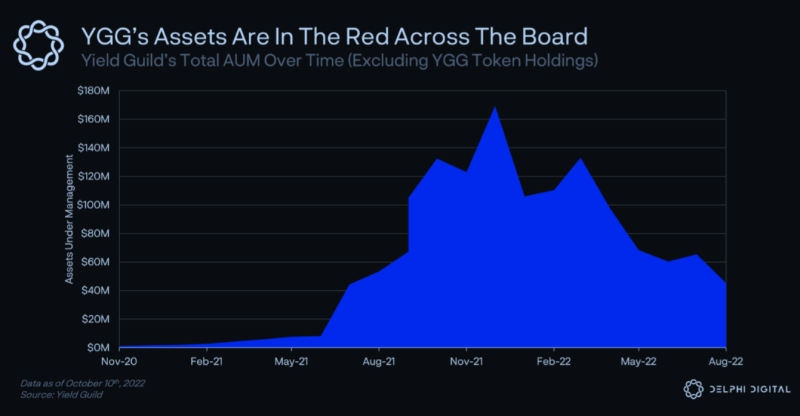
In the chart above, we show Yield Guild’s total AUM over time excluding YGG tokens held in its treasury.
As expected, the total value is noticeably lower than when including token holdings. Interestingly, valuation remains significantly down compared to the $169 million all-time high reached in December last year.
Currently, Yield Guild’s total AUM stands at approximately $45 million, a 73.3% decline. This means not only did Yield Guild’s held YGG tokens suffer massive losses, but so did their NFT and other token investments.
By contrast, Mercit Circle maintains a considerably robust AUM, as further emphasized later in this report.
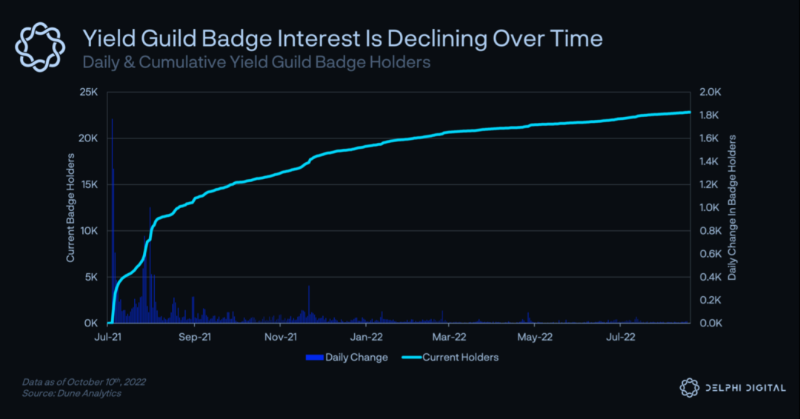
We previously outlined the value of community. While snapshot data offers some insight into guild community size, assessing trends over time adds helpful context. With that in mind, the chart above shows Yield Guild’s token holders over time.
On the positive side, the total number of holders has increased over time, meaning more members at this level of community engagement (investing their own money) have joined the guild.
On the downside, the rate of new holder additions has greatly slowed, showing minimal growth—which isn’t ideal. This means the growth of financially invested community members has actually decelerated over time. It suggests significantly reduced overall interest in joining the guild, especially as financially committed participants.
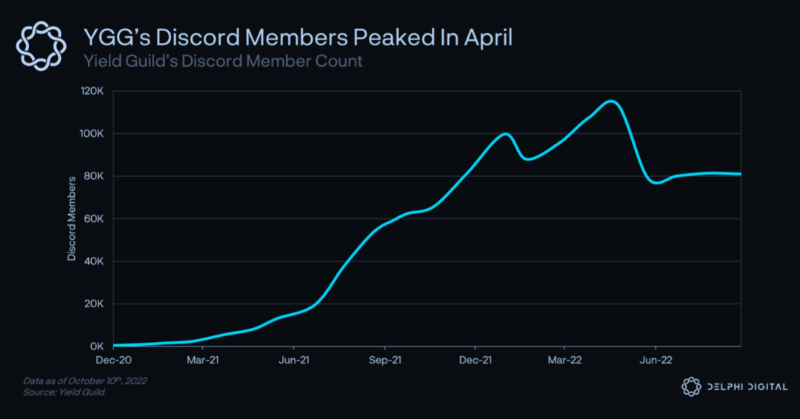
Yield Guild’s Discord membership has declined from its rapid upward trend in 2021. After peaking at 113,800 members in April, it dropped to 81,000 by August. Several factors may have contributed to this attrition.
In January, Yield Guild’s Discord server was hacked, potentially kicking out many users. Throughout 2022, Axie Infinity made multiple changes to its in-game economy, some of which directly reduced players’ SLP income potential. Beyond economic design changes reducing income, SLP was also ravaged by the bear market. The token is down 99.2% from its all-time high of $0.39 in July 2021.
Above all, guilds like Yield Guild are increasingly moving away from the "P2E" scholarship model, shifting focus toward esports gaming. When considering this combination of factors, the decline in Yield Guild’s Discord membership becomes less mysterious.
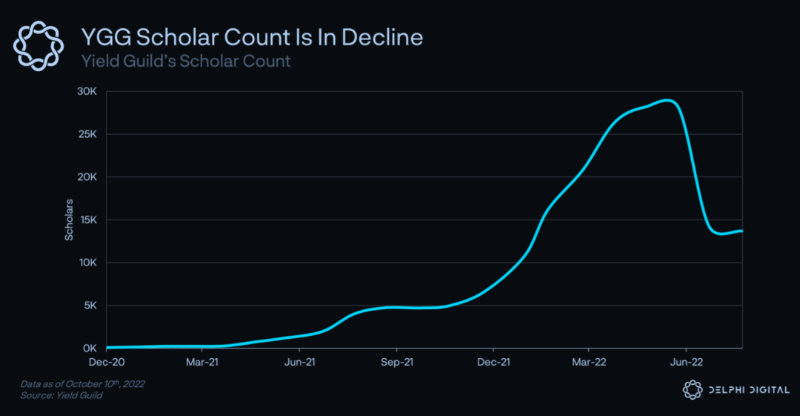
The chart above shows the number of scholars in Yield Guild over time.
As you can see, the number of scholars dropped sharply between May and July, supporting the theories outlined above.
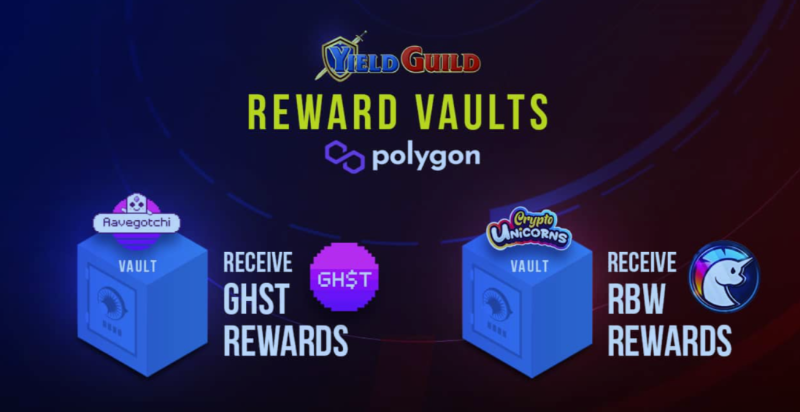
YGG holders with a YGG Guild badge can stake their tokens (up to 90 days) in either of two YGG reward vaults on Polygon to receive corresponding rewards in the form of P2E tokens. Yield Guild chose to launch reward vaults on Polygon to lower participation barriers and allow participants to retain more rewards instead of paying gas fees.
Task: Unlock Achievement > Mindless Participation
-
Yield Guild is launching Season 2 of its Guild Advancement Program (GAP), an achievement-driven community token distribution protocol that rewards YGG members for providing value to the guild through high-quality contributions.
-
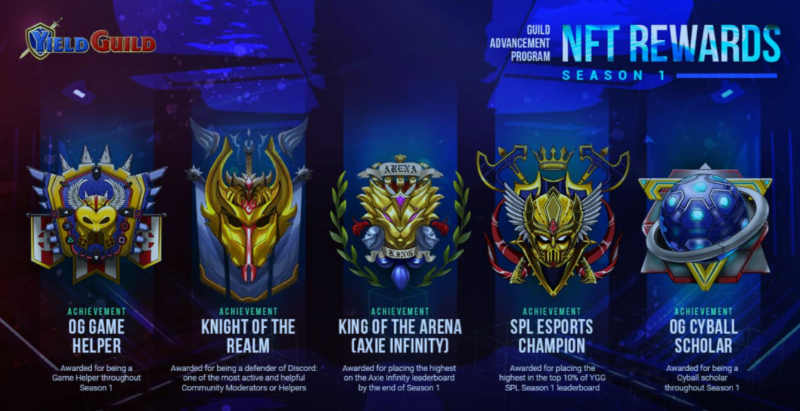
GAP Season 1 consisted of 45 achievements designed to incentivize behaviors that help grow the guild. Additionally, it allows members to build their metaverse resume. It achieves this by rewarding participants with NFTs and YGG tokens for completing specific tasks, both recognizing effort and distinguishing standout contributors within the guild, opening up more opportunities in the future.
-
Yield Guild describes GAP as a return to the basic concept of medieval guilds, where skilled artisans used their skills to improve local environments and enhance the guild’s reputation.
Igniting the Competitive Spirit
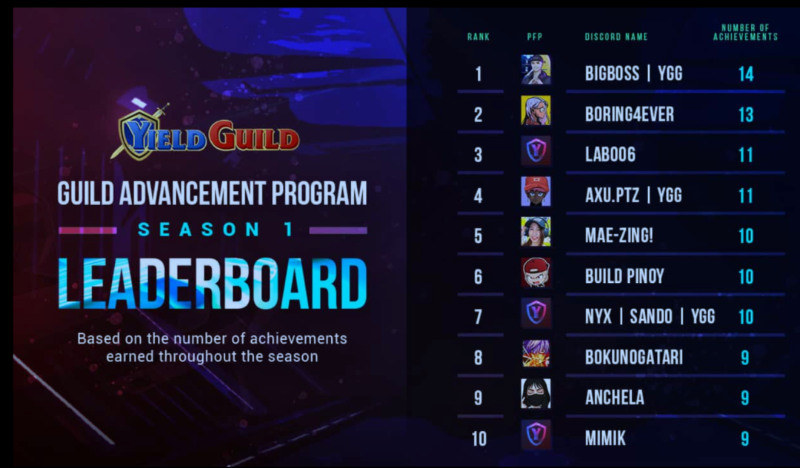
Yield Guild is one of several guilds moving toward esports gaming. The leaderboard shown below highlights high-achieving guild members to encourage healthy internal competition.
IV. GuildFi
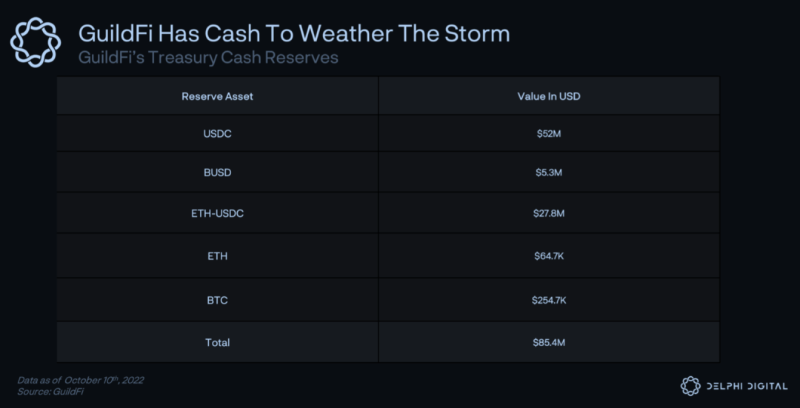
GuildFi’s treasury holds the largest cash position among all guilds in this report.
Excluding other token holdings, seed investments, and NFTs, the total cash value in its treasury is approximately $85.4 million.
Given the current bear market, such a substantial sum is clearly a tangible advantage for the guild.
GuildFi ID
GuildFi describes its GuildFi ID as a metaverse passport. The idea is that it links all your gaming accounts so your achievements are recognized across the metaverse. Like a regular passport, it grants access to places and experiences otherwise inaccessible—such as products within the GuildFi ecosystem.
How players register for a GuildFi ID:
-
Visit the GuildFi website;
-
Create an account using email;
-
Link their account to Discord and Metamask;
Proof-of-Play (PoP)
Proof-of-Play (PoP) is where players earn GXP as experience points from participation and activities in games on GuildFi. Any player who registers a GuildFi ID is eligible to receive these GXP. Players can earn GXP by participating in games and tasks offered on GuildFi, unlocking numerous benefits ranging from token rewards to NFT Metadrop allocations. GXP will also aid in the upgrade system and determine player rankings.
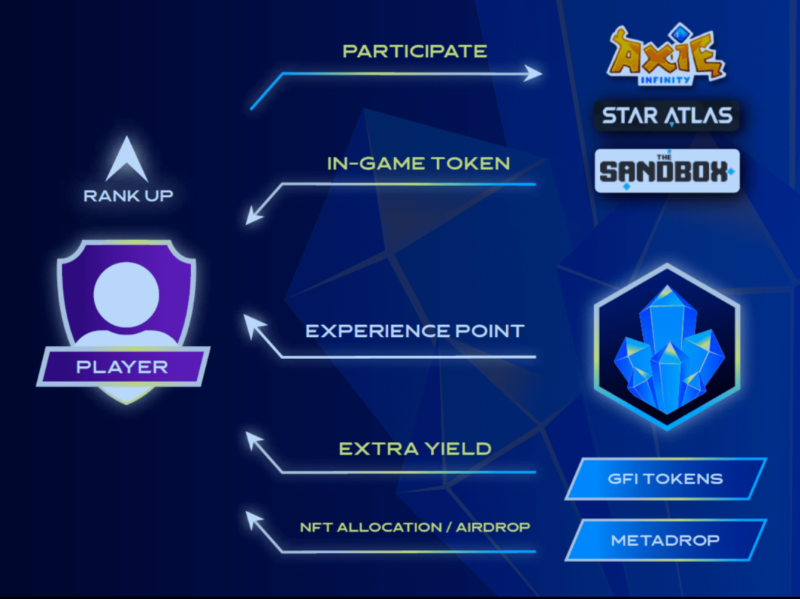
Players can earn GXP by completing tasks, playing partner games, participating in GuildFi’s scholarship programs, and using GuildFi features. GXP benefits them by allocating NFT airdrops from Metadrop launchpad events, other free NFT drops, early game access, and potentially GuildFi rewards.
Metadrop Launchpad
GuildFi offers special NFTs and early token investment opportunities from its partners. Allocations depend on players’ participation in the metaverse. The idea is that games can reward suitable players upon launch. Asset allocation is based on their GXP/participation in games (Proof-of-Play)/held GF.
V. Merit Circle
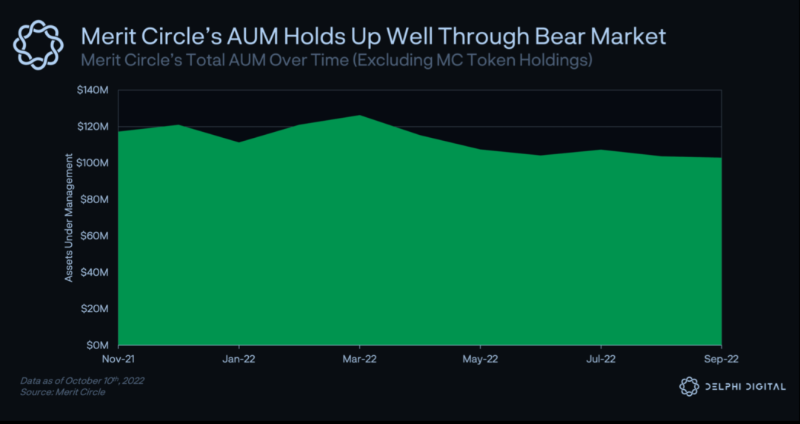
Over time, Merit Circle’s total AUM has remained strong, particularly given the prolonged bear market. This reflects Merit Circle’s effective treasury fund management, which positively impacts its guild. Compared to underfunded guilds, this gives Merit Circle a significant financial advantage.
This is especially true as market sentiment inevitably shifts toward more favorable financial conditions. Until then, it provides Merit Circle with ample funds to weather the current storm.
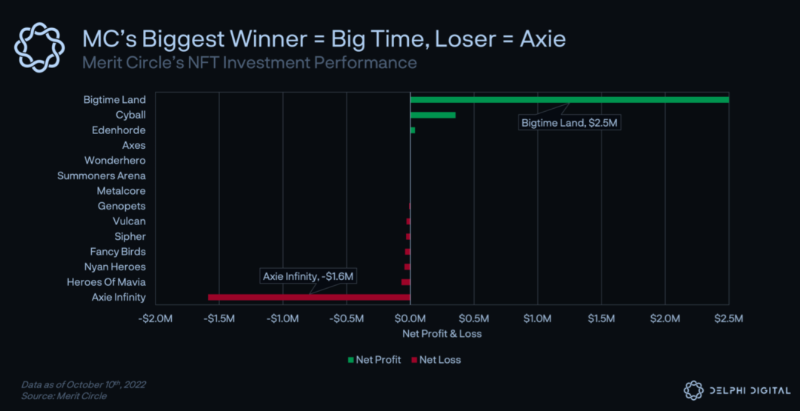
Visually, Merit Circle’s NFT investment performance appears to embody the Pareto principle. Most of the total profit and loss can be attributed to a small number of investments.
In this case, Merit Circle’s biggest winner is Big Time land.
Likewise, most of Merit Circle’s losses stem from a few investments. Here, the culprit is Axie Infinity.
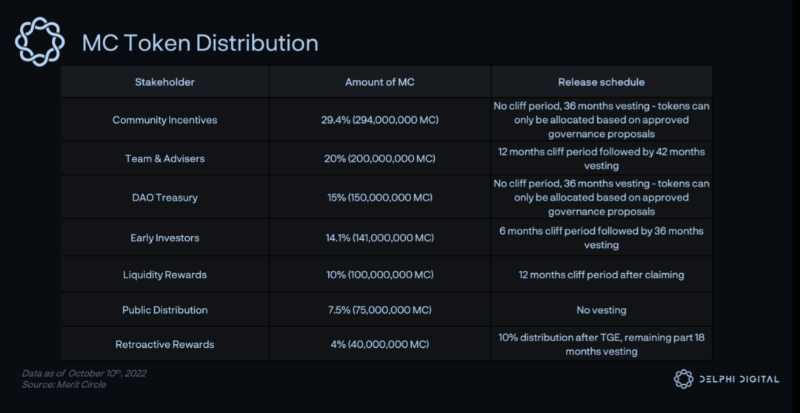
MIP-7: Burning Tokens
-
MIP-7 is a proposal presented to the Merit Circle DAO regarding the operations, structure, and strategy of Merit Circle investments.
-
Proposed by Sad Cat Capital, MIP-7 was voted on and implemented in December 2021. Through MIP-2, the DAO began formally establishing a framework to invest substantial resources from its treasury into tokens, NFTs, stablecoins, and yield farming ventures.
-
MIP-6 advanced this further by setting parameters that allow the DAO to reduce investment risk. This required a multifaceted approach, balancing returning profits to the DAO with maintaining productive asset levels used in P2E revenue generation alongside partner games.
-
MIP-7 expands on previous initiatives by aligning Merit Circle’s investment framework with a sustainable vision for the Merit Circle DAO’s future. It serves a dual purpose—enhancing MC value while promoting the growth of the DAO itself.
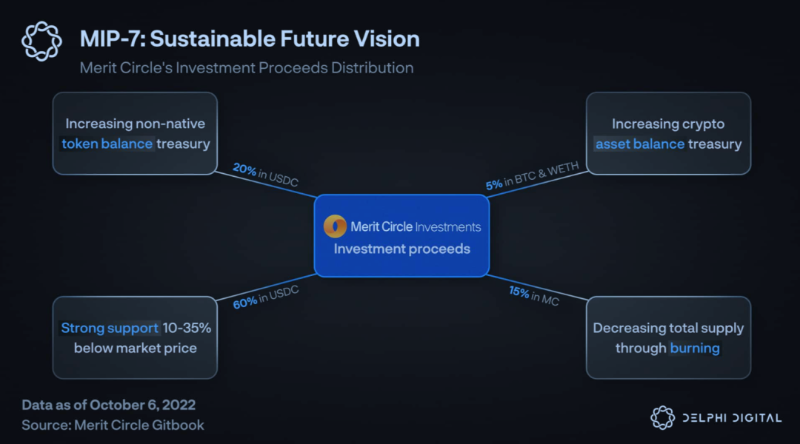
The goal of this initiative is to create a more transparent and structured method for allocating the DAO’s realized gains, including:
-
20% of gains returned to the treasury in USDC;
-
5% of gains returned to the treasury in crypto assets (primarily ETH and WBTC);
-
60% of gains used to support MC prices 10%-35% below market rates;
-
15% of gains used to repurchase MC and send it to 0x000000 (burned);
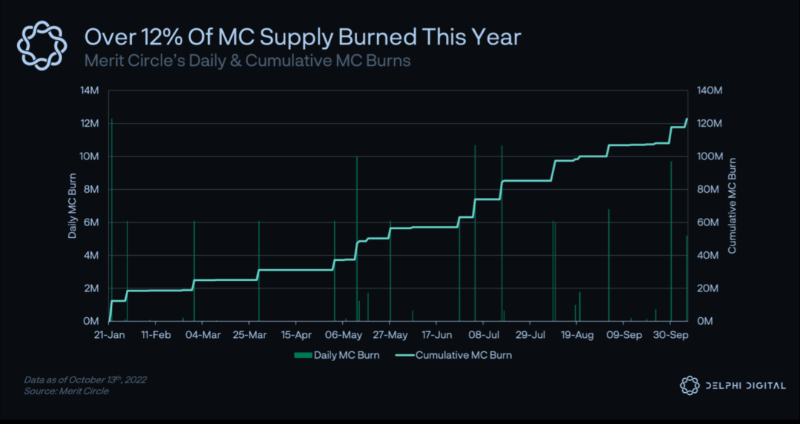
How much MC token has been repurchased and burned so far? Let’s examine the chart below.
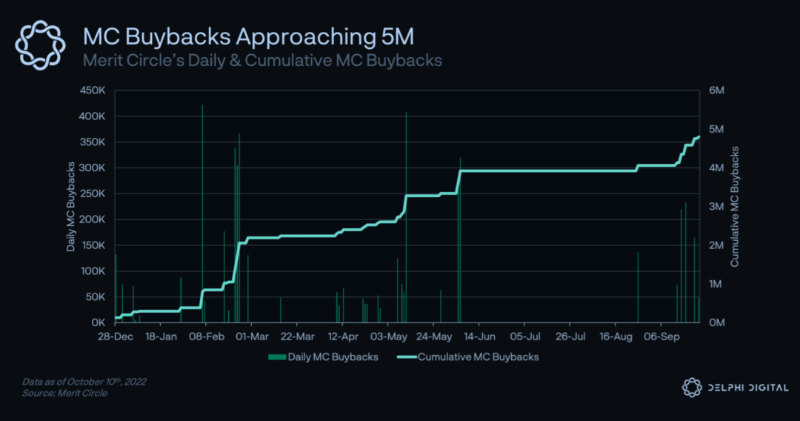
As seen in both charts, repurchase and burn volumes have been sporadic, but they have begun reducing MC supply. Total MC tokens repurchased (top chart) are approaching 5 million.
Total MC burned (bottom chart) is nearing 120 million. This equates to 12.5% of the fully diluted supply purchased or burned to date. Although this is a tangible amount, net circulating supply has increased over the same period.
Unless Merit Circle sees a significant increase in revenue leading to more buybacks and burns, MC will remain inflationary in the foreseeable future.
Sphere is Merit Circle’s dedicated NFT marketplace for gaming assets. Their goal is to build a marketplace best suited for gaming NFTs, competing with products like OpenSea, which they believe lacks specificity for gaming assets. With markets like OpenSea processing billions in transaction volume monthly, Merit Circle is positioning Sphere to enter a large market. MC will play a key role in this marketplace, especially in fees. Sellers pay a 2.5% fee per transaction in ETH. Collected ETH is used to repurchase MC from the secondary market and then refunded to sellers. This mechanism reduces seller costs, as 50% of the total fee paid is reimbursed in liquid MC. This model creates continuous buying pressure on MC while incentivizing Sphere’s use over other marketplaces. Sphere is still under development, but Merit Circle has indicated it was largely ready by July, making it something to watch in the near future.
VI. BreederDAO
Metaverse (P2E) Factory
BreederDAO is quite unique compared to other guilds in this report because its business model has never directly offered a P2E scholarship program. Instead, they largely position themselves as suppliers of gaming NFTs. They provide in-game assets—such as characters with specific favorable traits—to guilds like Yield Guild.

Playcore
Playcore is a crypto gaming-focused data dashboard developed by BreederDAO. It provides real-time data on metrics such as in-game token minting, burning, and net supply changes, along with market statistics like average floor price, sale price, and trading volume. It also offers granular player data, such as the number of new, returning, active, and dormant players over time.
For deeper insights, check our previous research report on BreederDAO.
VII. PathDAO
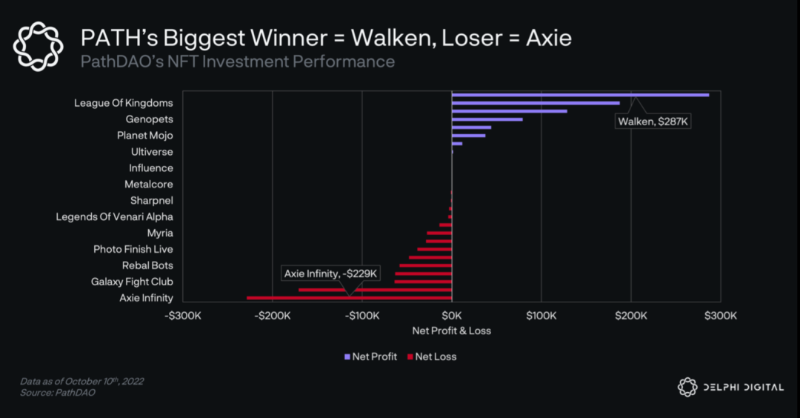
PathDAO’s best-performing NFT investment is League of Kingdoms. Like Merit Circle, their worst-performing NFT investment is Axie Infinity.
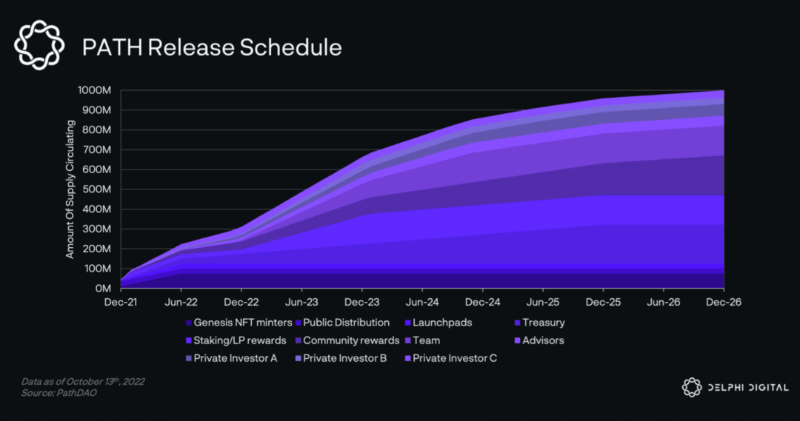
PIP-6B: PATH Buyback
Similar to Merit Circle, PathDAO introduced a buyback system based on guild earnings. According to PIP-6B, realized gains will be allocated to PATH buybacks and ETH procurement as follows:
-
20% of gains returned to treasury in USDC;
-
5% of gains returned to treasury in crypto assets (primarily ETH and WBTC);
-
15% of gains used for market buybacks of PATH;
-
60% of gains used for strong support of PATH tokens priced 10%-35% below market value;
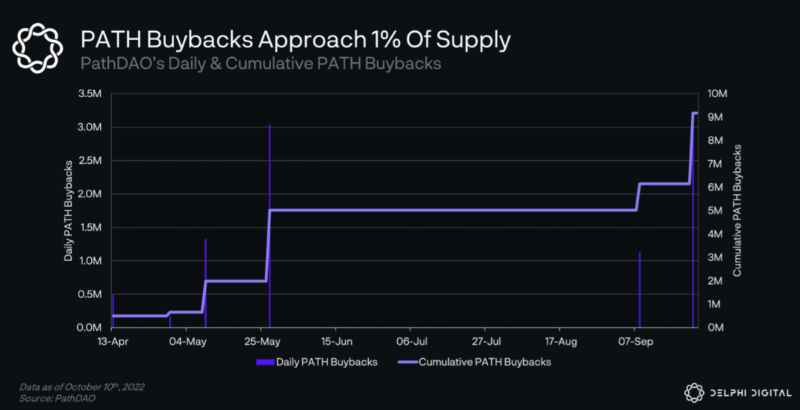
To date, although PathDAO’s buyback figures are not as impressive as Merit Circle’s MC buyback and burn data, it has successfully repurchased nearly 1% of the total PATH supply.
VIII. BlackPool
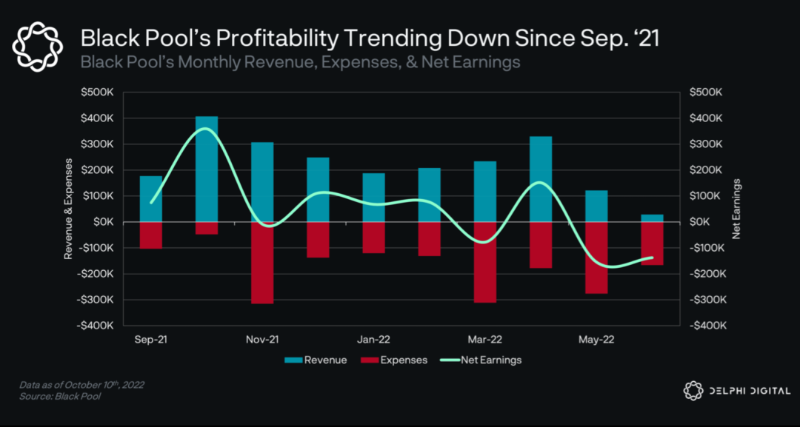
Similar to Yield Guild, BlackPool’s earnings look grim. Since October 2021, the guild’s monthly net income has been on a downward trend.
Most notably, the final month of Q2 was BlackPool’s worst net earnings month ever.
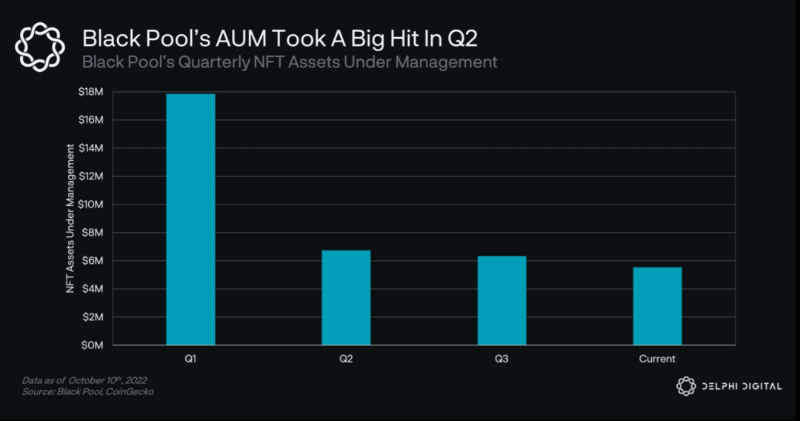
According to data, BlackPool seems to have underperformed on multiple fronts over the past few years. As previously noted in our community comparison table, despite being one of the oldest crypto gaming guilds, it ranks last in most categories. As seen in the previous chart, BlackPool’s earnings have been trending in the wrong direction since September 2021. Now, looking at the chart above, it’s clear that BlackPool’s NFT portfolio has performed poorly throughout this year.
IX. Final Thoughts
Crypto gaming guilds are at a crossroads, facing the challenge of how to move forward after the "P2E" model has become outdated. Guilds with substantial treasury balances are in a favorable position, giving them much-needed runway to determine their next investments.
Yield Guild has just launched Season 2 of its GAP, shifting its focus toward esports.
In contrast, GuildFi is king of cash, with an impressive $85.4 million in treasury reserves, providing ample fuel for further development of its gamer dashboard.
Mercit Circle is developing its game NFT marketplace Sphere, aiming to compete with platforms like OpenSea.
One thing is certain: in this report, every guild has been hit hard by the bear market. Token prices and total AUM have declined, and earnings haven’t improved.
It remains uncertain which gaming guilds will survive on the other side of this difficult period. That depends on the direction they choose to take and ultimately how much capital they need to sustain it.
Join TechFlow official community to stay tuned
Telegram:https://t.me/TechFlowDaily
X (Twitter):https://x.com/TechFlowPost
X (Twitter) EN:https://x.com/BlockFlow_News
 Delphi Digital