








LD Capital: Investment Focus Series – What Is the Appeal of the Metaverse?
TechFlow Selected TechFlow Selected
LD Capital: Investment Focus Series – What Is the Appeal of the Metaverse?
Some say the metaverse is just a story, another outbreak of the internet's restless mentality. But I firmly believe the metaverse represents a testing ground filled with high hopes for dramatically enhancing user experience.
 Navigating Web3 tides with focused insights
Produced by: LD Capital Research
Author: Jill
Preface
Recently, pop sensation G.E.M. Deng returned with her new metaverse-themed album "Revelation." The album’s music videos take the form of a musical drama series centered on metaverse concepts, constructing three distinct worlds—Utopia, Wasteland, and the Real World. G.E.M. transforms into a virtual avatar named Gloria, traversing these realms: “Here, you can meet anyone you want, go anywhere you desire, and do whatever you wish.”
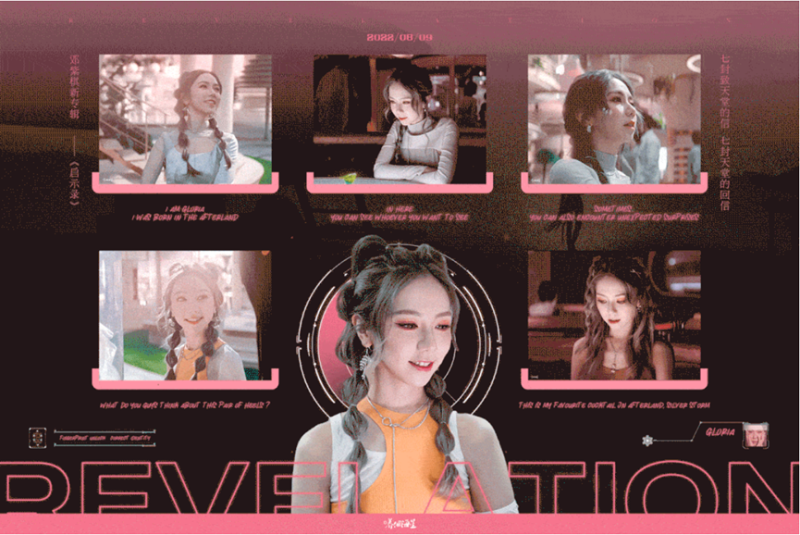
Image from the internet
However, G.E.M. is not the first artist to explore the metaverse. Prior to her, artists like Vincent Fang and Hu Yanbin had already ventured into this space, making the entertainment industry's move into the metaverse a growing trend. Major brands are also leveraging metaverse technologies and concepts for commercial marketing: Gucci partnered with Roblox to launch an experiential game called Gucci Garden Archetype; Nike built NIKELAND on Roblox; McDonald's, Nayuki Tea, and Mixue Ice Cream have all rushed into the metaverse. For brands, this allows them to tell their brand stories in more interactive ways, offering every user personalized engagement experiences. Through metaverse marketing, brands naturally attract massive attention.
What Is the Metaverse?
The metaverse is a new type of internet application and social form integrating multiple advanced technologies, blending virtual and physical realities. It provides immersive experiences via extended reality (XR) technologies, creates digital twins of the real world using digital twin technology, and builds economic systems based on blockchain. The metaverse closely integrates virtual and physical worlds across economic, social, and identity systems, allowing each user to create and edit content.
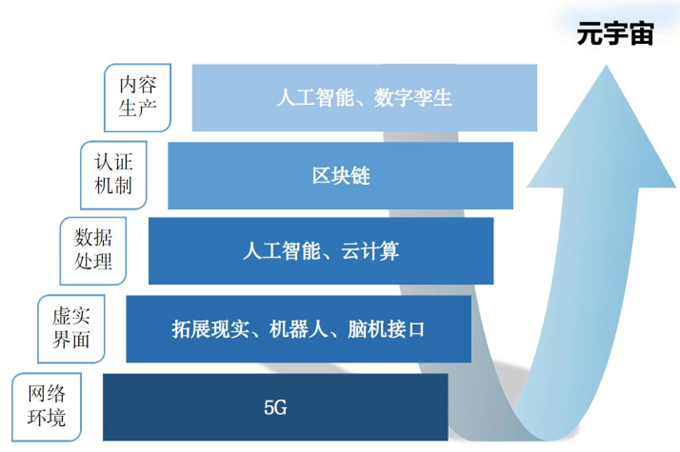
Image source: New Media Research Center, Tsinghua University
The metaverse is a platform hosting virtual activities, emphasizing ecosystem completeness and user agency. Users within the metaverse are not passive participants but can engage in socializing, entertainment, creation, and other activities much like in real life. The metaverse offers users rich content consumption, fair creative platforms, reliable economic systems, and immersive interactive experiences. It can also carry human emotions, giving users psychological belonging and enabling them to make friends in the digital world.
In summary, key elements of the metaverse include:
Greater Immersion: Enhanced visual and sensory experiences that blur the boundary between virtual and physical worlds—what we commonly refer to as “being there.”
Greater Interactivity: Human relationships and communities remain at the core of the metaverse. People work, play, and interact here, transcending physical spatial limitations and bringing people closer together through the metaverse.
Greater Convenience: Achieving the above two aspects requires hardware devices and network access to be extremely user-friendly and accessible.
Greater Fairness: Economics underpins society. As a virtual societal form, the metaverse relies on blockchain to enable a fairer economic system.
Metaverse Industry Chain
Supported by multiple technologies, the metaverse industry chain can be divided into:
1) Underlying Technology Layer: Includes network infrastructure and computing;
2) Middle Technology Layer: Includes AI and machine learning;
3) Virtual World Entry Points: Includes smart wearable devices;
4) Virtual World Infrastructure: Digital identities and digital assets carried on blockchain;
5) Virtual World Experience Platforms: Gaming as the entry point, delivering social, audiovisual, and other applications.
The first three layers consist of physical-world products that support the implementation of metaverse use cases.
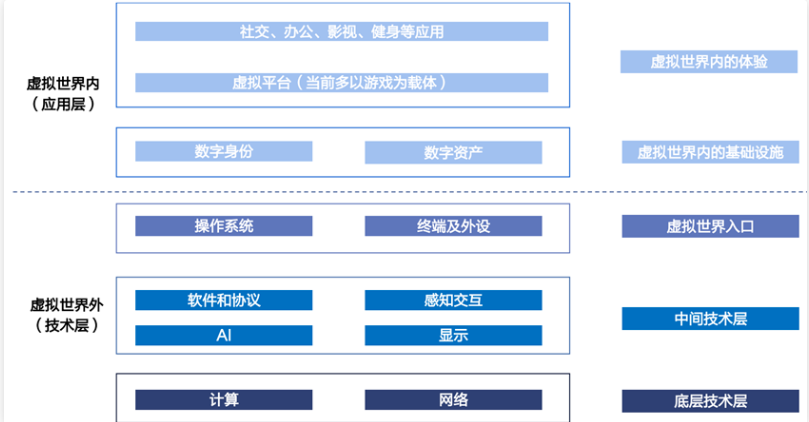
Image source: Guohai Securities
Global tech giants have also announced their entry into the metaverse wave. In October 2021, Facebook rebranded itself as Meta Platforms, signaling its all-in commitment to the metaverse, and began trading under the new stock ticker "MVRS" on December 1, 2021. Facebook CEO Mark Zuckerberg stated his goal of transforming Facebook into a metaverse company within about five years and established a dedicated team focused on metaverse development.
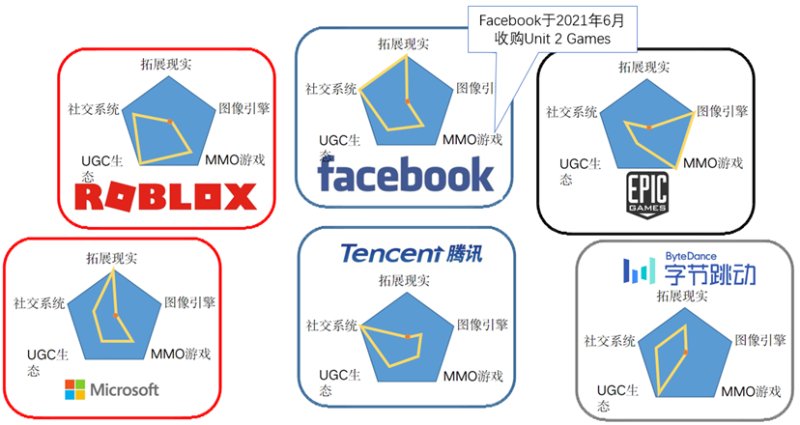
Image source: New Media Research Center, Tsinghua University
LD Capital’s Metaverse Portfolio
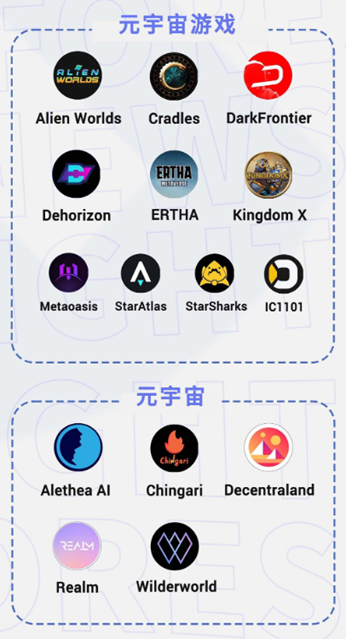
Founded in 2016, LD Capital manages nearly $1 billion in assets and has invested in over 300 companies, with more than 160 cumulative projects spanning NFT, GameFi, DeFi, public blockchains, and infrastructure. Currently, the metaverse and GameFi are new investment priorities. This issue presents some of LD Capital’s metaverse investments.
LD Capital official website
Cradles
Cradles is an RPG (role-playing game) where players control main characters, progressing through combat challenges or advancing along the main storyline to achieve victory. A key feature of such games is that character strength and abilities grow over time, and players can plan their character’s development path.
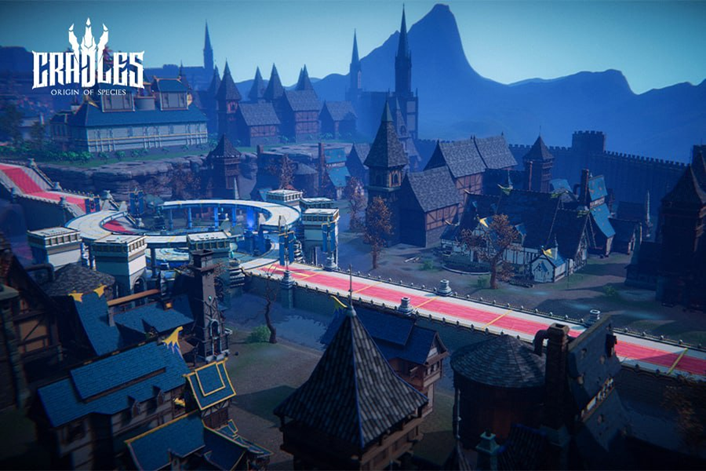
Image source: Cradles
Product
EIP-3664
EIP-3664 is an NFT attribute extension protocol proposed by the DRepublic team. Building upon ERC-721 and ERC-1155 standards, it supports custom attributes attached to NFTs during minting, allowing an NFT to attach unlimited attributes.
EIP-3664 attributes include several basic fields: ID, Name, Symbol, URI, Balance—meaning NFT attributes are tokenized, with each attribute being its own NFT, effectively providing infinite variability for NFTs.
Currently, EIP-3664 supports six core attribute operations: upgradeable, modifiable, addable, removable, splittable, and combinable.
In other words, EIP-3664 gives NFTs splitable and combinable characteristics, enabling free assembly among all NFTs. Initial creations can be composite objects made from multiple components—like LEGO sets—where each component can be separated and sold as a complete NFT asset on secondary markets.
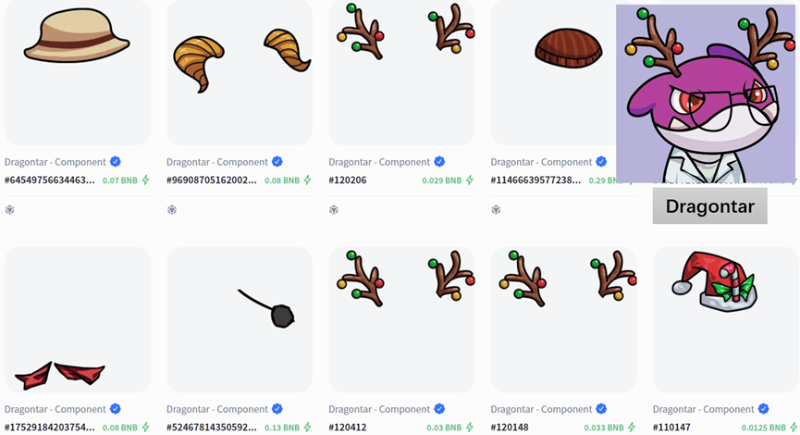
In-game assets (source: Tofunft website)
MetaCore
MetaCore is an all-in-one NFT platform built on the EIP-3664 technical framework, integrating identity systems, infinite docking, infinite combination, and mutable attributes (such as weapon attack power and health values). It enables users and projects to create their own splitable and combinable NFTs—akin to assembling LEGO bricks—and attach them to the MetaCore identity system.
Additionally, MetaCore allows businesses and individuals to create modular, combinable NFTs and link them with MetaCore identity attributes.
Currently, MetaCore’s product offerings are relatively simple, supporting only Dragonstar (the little dinosaur) display (MVP version).
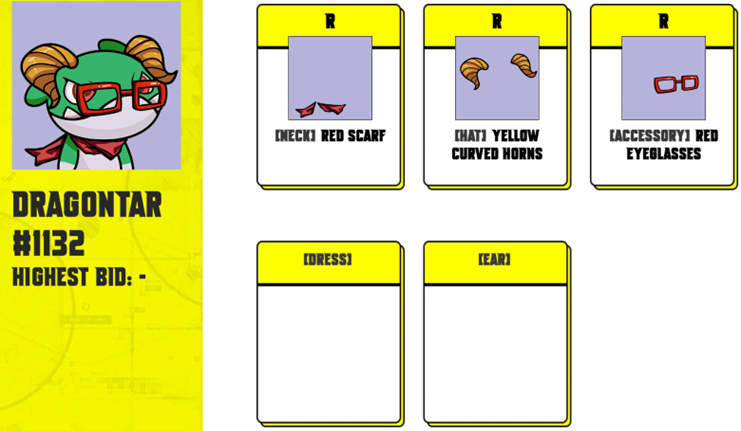
MetaCore official website
Dragonstar (the little dinosaur) is the core in-game character and the first implementation of EIP-3664. Base attributes of different dinosaurs vary slightly but can be enhanced by equipping rare components.

Image source: Cradles
Gameplay
Set in a prehistoric environment, Cradles introduces the concepts of time and entropy increase. The game timeline simulates real-world time, with in-game ecosystems evolving over time. NPCs have growth and recovery periods, enhancing exploration and fun. In this entropic world, players face no rules or constraints—but if they damage the ecosystem beyond its limits, the world will forcibly shut down, and offenders will be punished.
Cradles features both PVE and PVP modes. Players can assume roles like firefighters, police officers, or bank clerks, mastering survival and hunting skills to complete quests and earn Crystal—the in-game currency.
Crystals come in three tiers: Energy Crystal, Super Crystal, and Legendary Crystal. Lower-tier crystals can be combined into higher-tier ones. Energy Crystals are minted using the DRPC platform token and can be used to purchase items, accelerate world time, stake, or pay gas fees. Higher-tier crystals unlock additional uses such as enhancing gear or exchanging with NPCs for unique NFTs.
Moreover, Cradles introduces Mod Slots (instance modules): any individual or organization can develop their own mods—ranging from survival gameplay to gambling mini-games—but must gain community approval before integration. Once launched, players can purchase and experience these mods. Each mod forms a narrative chain, requiring developers to rent slots from Cradles over time. After expiration, mods automatically detach. Players can thus enjoy diverse fantastical storylines without disrupting the core gameplay of Cradles.
Economic System
Subscription Model: Players must purchase a monthly pass to enter the game, similar to traditional subscription-based gaming.
0% Transaction Fee: All items are player-created and freely tradable without transaction fees. The team charges only minimal taxes on trades involving rare, high-value items.
NFT Staking Enhancement: Players can stake tokens to boost NFT attributes. For example, if upgrading a weapon requires staking many tokens, players can invite others to co-stake, sharing loot rewards from defeated enemies.
IC1101 World
Named after the largest known galaxy in the universe, IC1101 collaborates with ICP to build a decentralized metaverse ecosystem, aiming for eternal preservation of human information. Dfinity aims to replace traditional IT stacks and eliminate intermediaries dominated by big tech companies through its Internet Computer Protocol (ICP), creating a public blockchain network hosted by independent data centers worldwide. Built on ICP, IC1101 uses token economics as its core management model, supported by blockchain, AI, and VR technologies, with social interaction at its heart. It enables players to joyfully live in a vast, surreal, dreamlike metaverse, fully immersing themselves in hyper-realistic experiences of gaming, travel, shopping, exhibitions, and concerts. Players will see NFT avatars from different worlds coexisting in IC1101’s metaverse, awakened by AI technology.
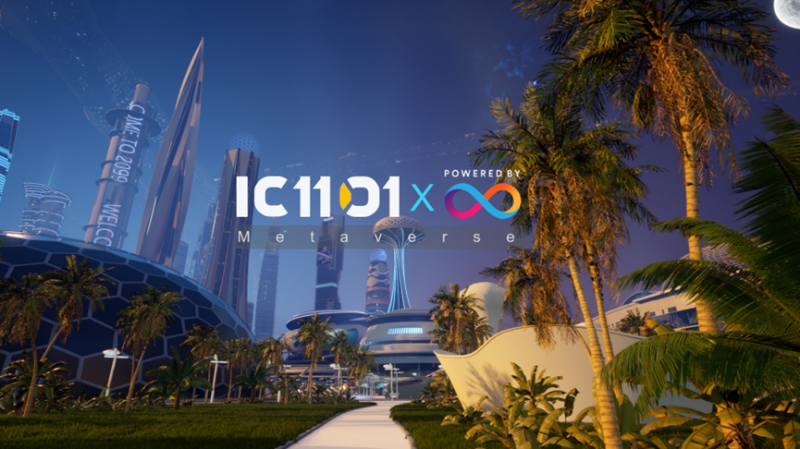
IC1101 official website
IC1101 is a multiverse composed of star chains. Players can pilot spaceships across galaxies to different planets, mining resources, playing games, traveling, adventuring, or meditating.
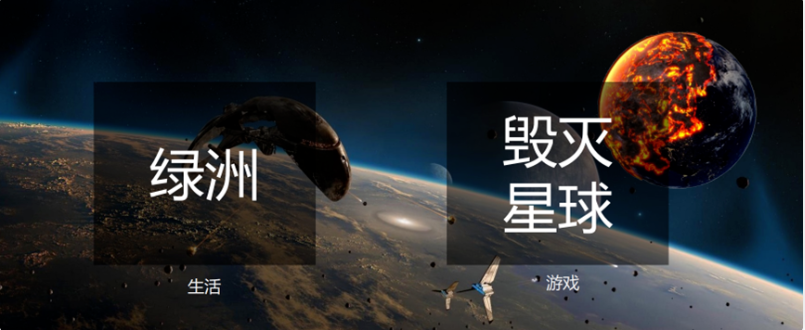
Image source: IC1101
By combining UE5 with Houdini, MetaHuman, and VR, IC1101 delivers the most immersive 3D experiences. With a To C + To B business model, it provides comprehensive commercial solutions for concerts, product launches, brand showcases, and NFT exhibitions.
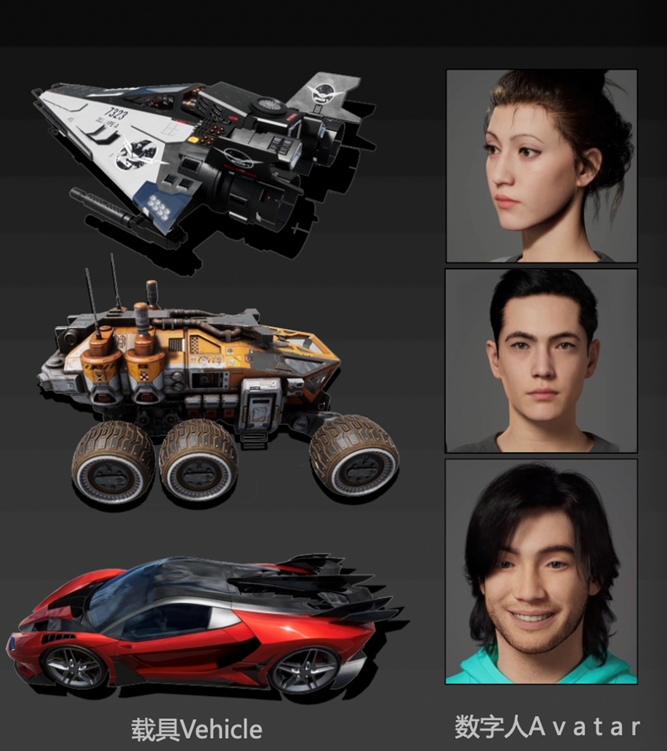
Image source: IC1101
Matterverse
Matterverse aims to enhance user interactivity with AAA-grade visuals, offering highly customizable gameplay to meet diverse project needs. Leveraging cloud-native technology stacks and Web3-powered economies and communities, it creates a digital world. Residents can build avatars, homes, and even games, entertainment venues, and shopping experiences within this open-world sandbox.
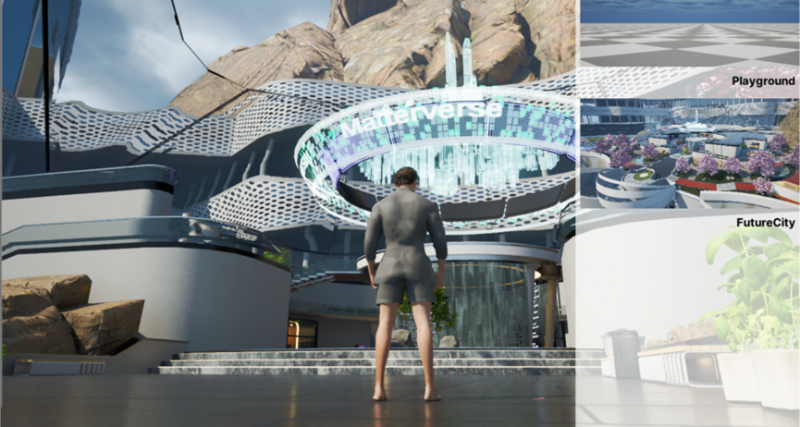
Image source: Matterverse
MatterAvatar serves as the standardized avatar and identity system for metaverse residents. By creating a virtual persona saved as an NFT, users begin their journey in Matterverse. MatterAvatar represents a player’s on-chain membership status, assets, and more.
Matterverse has completed its first round of public beta testing and will distribute land plots, apartments, equipment, OATs, and other NFTs usable in the future Matterverse to its first residents. Players can build anything on their NFT land—even designing games—and all distributed equipment can be used in-game.
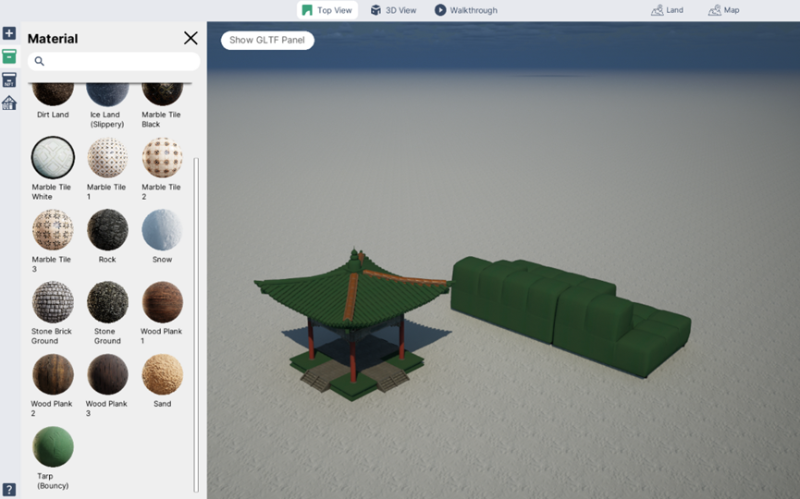
Matterverse Asset Library
This beta test opened two modules:
First is the metaverse creation tool MatterCreator, a powerful and user-friendly metaverse editor that provides abundant generic assets, enabling everyone to create effortlessly on their personal NFT land and invite friends to visit. Professional creators are also supported and encouraged to export their models, designs, assets, or even NFTs.
Second is the player hub in the open world MatterCity, where users can socialize, entertain, and explore. The team will gradually roll out various functional modules including but not limited to: NFT galleries, clothing stores, player apartments/homes, concerts, and arcades. Meanwhile, MatterCity will expand via NFT land plots, allowing users to design and launch their own open-world metaverse content.
Participants in the public test will receive the Matterverse Beta Test OAT (On-Chain Achievement Token) NFT, which will be used to distribute Playground NFT land plots in the first phase.
Conclusion
Some say the metaverse is just a story—an outbreak of internet hype mentality once again—but I firmly believe the metaverse represents a promising experimental ground aimed at dramatically improving experiential quality.
This experimental ground can serve as a carrier for any domain, encompassing Web3 data revolution, organizational transformation, potentially sparking revolutions in chip computing power, technological reform, and innovation—all driving efficiency improvements that remain our core pursuit.
Therefore, humanity’s pursuit of the metaverse is fundamentally about harnessing the innovative potential inherent in the next-generation internet to generate immense economic value—precisely why we are particularly bullish on the AI+3D-driven metaverse sector.
Given the gaming industry’s strengths in visual effects, virtual world construction, user-generated content, and social interaction, gaming naturally becomes the primary early manifestation of the metaverse. Top companies’ strategic moves also focus predominantly on game-centric dimensions.
[References]
[1]"Deep Dive Report Series on the Metaverse: Prospects for the Next-Generation Internet," Guohai Securities
[2]"2020–2021 Metaverse Development Research Report," New Media Research Center, Tsinghua University
Join TechFlow official community to stay tuned
Telegram:https://t.me/TechFlowDaily
X (Twitter):https://x.com/TechFlowPost
X (Twitter) EN:https://x.com/BlockFlow_News
 Cycle Capital Research






