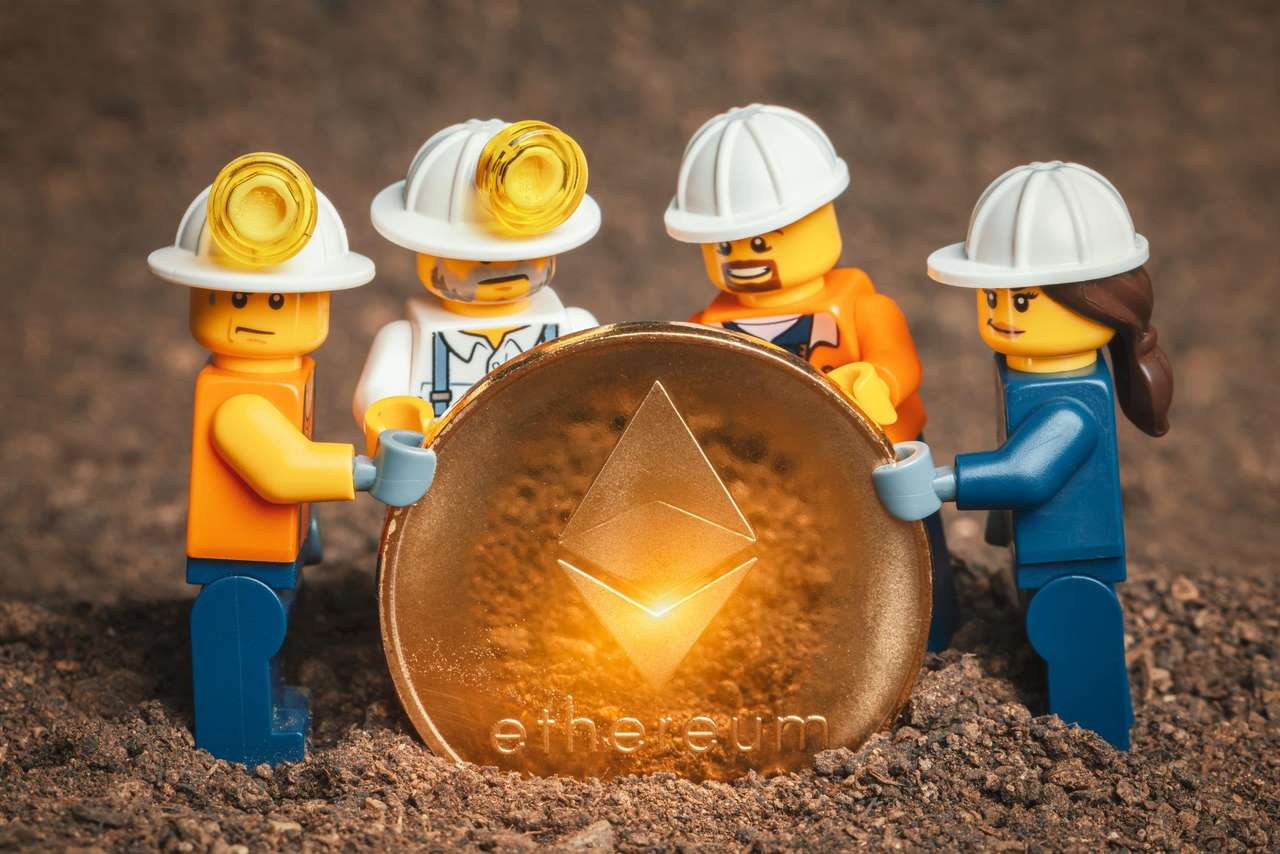
PoW vs PoS: Who Holds True Openness? Who Can Escape the Thermodynamic Endgame?
TechFlow Selected TechFlow Selected
PoW vs PoS: Who Holds True Openness? Who Can Escape the Thermodynamic Endgame?
Layer 1 blockchain protocols must use PoW; only Layer 1 blockchains utilizing PoW can solve the problems we aim to address and realize the future we envision.
 Navigating Web3 tides with focused insights
September 15 — a day etched into crypto history. Ethereum merged, transitioning from Proof-of-Work (PoW) to Proof-of-Stake (PoS), seemingly marking the end of an era.
To PoW or to PoS — that is the question.
On this special day, TechFlow revisits three classic articles: "The Beauty of Hashpower" by Wu Jihan, former co-founder of Bitmain; "Why Proof of Stake?" by Vitalik Buterin, founder of Ethereum; and "The Great Debate: PoW vs PoS: Who Owns True Openness? Who Can Avoid the Thermodynamic Endgame?" from Orange Paper.
Full text below:
Author: Jan X., Chief Architect at Nervos
A: Large PoS stakeholders earn passive capital gains — an insurmountable gap for retail investors, with no way to constrain their power.
B: This is normal in society — wealthy people naturally earn more than ordinary folks. If they invested heavily but earned less, that would be unfair. Now everyone earns proportionally. Those who invest more simply get higher returns.
This is a common dialogue in PoW vs PoS debates. A raises two issues: 1. (Fairness) Large PoS holders profit passively while ordinary users cannot; 2. (Unconstrained power) The power of large PoS holders cannot be restrained. B addresses issue 1.
Regarding issue 1, I agree with B. Higher investment yielding higher returns is reasonable — true for both PoW and PoS. Blockchain is a tool to achieve procedural fairness, not outcome fairness. We still see Matthew effects within blockchain systems. Attempting to use blockchain to solve outcome fairness leads to infinite expansion of governance, pushing all protocol-level problems onto voting mechanisms.
Yet history and theory have long told us: there is no perfect collective decision-making system. Blockchain is a tool that records data, ensures immutability, and provides universal access to information. Using it to better achieve procedural fairness is already an enormous leap forward.
Issue 2 is a crucial point often overlooked in discussions. Earning returns through resource investment is fair — but only if anyone can actually participate. For example, can any VC freely invest in a celebrity startup team? PoW offers excellent openness: new participants can always join the consensus group. PoS lacks such openness. As discussed here:
In PoS, the future consensus group is determined by today’s consensus participants. Any new node wishing to join must submit a transaction (e.g., staking, voting, etc.), and whether that transaction is processed depends on current validators. They may choose to process it — or not. If they don’t, the new node can never join consensus.
Moreover, “not processing transactions” is easy to disguise and hard to punish. I’ve yet to see a consensus protocol that solves this problem. PoS typically allocates block production proportionally to stake weight (independent of node count). Given the high concentration of stake in most systems, this is a very real concern.PoW is fully permissionless. At any time, you can buy mining hardware and electricity to join block producers — no permission needed from existing miners. You might argue: don’t you still need to purchase hardware and electricity? Isn’t that a form of permission?
Yes, at a lower level, it is. But unfortunately, among all Proof-of-XXX schemes, this is the most decentralized form of permission — after all, mining hardware production and electricity supply are far more decentralized than token distributions. We should always pursue maximum decentralization; otherwise, we might as well revert to centralized systems.
The ability to participate itself is a valuable option. PoW has this property because PoW computation is history-independent: No matter when you purchase hashpower and join, you start on equal footing with other miners. This counterintuitive feature uniquely allows newcomers to overcome early movers’ advantages.
PoS differs because stake is an endogenous asset whose ownership depends on system history — so do transaction orders. Whether via staking tokens or just holding them, validator sets are determined by the system's own history. PoS and PoW differ fundamentally on whether consensus participation depends on historical state. This is an essential distinction — no design at higher layers can resolve it.
Thus, PoW and PoS represent two fundamentally different design philosophies:
(PoS) Systems should grant inherent advantages to early adopters
(PoW) Systems should not grant inherent advantages to early adopters
Note the subject is “the system.” Advantages held by participants outside the system cannot be solved by protocol design. If you believe 1 is correct, you naturally support PoS. Otherwise, you likely favor PoW. CKB chose PoW because its design goal is Layer 1 — a shared global infrastructure meant to operate long-term and neutrally. To achieve this, the system must not grant inherent advantages to early participants — including its designers.
A: Buying and staking tokens in PoS isn’t also an investment?
It is indeed an investment — but the meaning of “return” here has changed. Returns must be distinguished: one type is token yield, which most modern PoS systems support via delegation — so nearly everyone can access this. The other is the right to participate in consensus. As explained above, this can be monopolized by existing validators — most lack this option. Rights come in many forms; dividends are just one, and not the critical one.
Why does consensus power matter? It determines transaction ordering — whether your crowdfunding transaction gets confirmed promptly, whether your DEX order executes in time, and so on. Building DeFi on a PoS chain? You must seriously consider what validators do — could they have interests conflicting with your transactions?
You might think: “Don’t PoW miners/pools have the same issue?” Yes, PoW miners have similar rights — but PoW has two advantages that mitigate this problem:
1. Block producers are decoupled from key ecosystem users. Key users — exchanges, wallets, and other service providers — serve vast user bases and accumulate massive transaction volumes.
In PoS, due to high user and transaction volume, stake naturally concentrates among key users, forming natural staking pools. Their business advantage translates directly into consensus and governance power — already evident on some chains — reinforcing early-mover advantages.
In PoW, miners are independent from exchanges/wallets. They have distinct expertise, earn rewards differently, and cannot convert business advantages into protocol advantages — nor can miners convert protocol dominance into upper-layer business control. In PoW, developers, users, and consensus nodes form checks and balances.
2. PoW consensus is open and fiercely competitive. While a pool/miner might temporarily manipulate things, new miners can always freely enter. Sustaining manipulation long-term is extremely difficult. Fierce competition fosters a fair, highly competitive market over time — though it may take decades.
Conversely, in PoS, due to inherent early-mover advantages and the coupling of business and consensus power, early advantages grow ever larger. Competition fades, leading to monopoly or oligopoly. In infrastructure-level protocols, we should strive to avoid monopolies.
A blockchain is essentially a giant queuing machine — the right to determine order is the most crucial right in the system.
A: (Bitcoin) A 51% attack costs only $443,000 per hour...
A implies Bitcoin isn't secure since it can be attacked for just $443K, whereas in PoS, stakes are limited — attackers can’t easily buy enough stake from the market to launch an attack.
This view ignores a key fact: at any moment, global computing power is also finite. If a PoW chain commands only 10% of SHA256 hashpower, that’s fine. But if Bitcoin already holds ~90% (estimated), where would you get another 90% of SHA256 power? Quantity changes quality — shifts in hashpower distribution affect security.
It’s not PoW that’s insecure — it’s PoW chains lacking sufficient hashpower. PoW-based blockchains face greater bootstrapping challenges than PoS ones — but only such real, harsh tests can prove genuine security. Otherwise, I could launch my own PoS chain, keep 99% of tokens, pump the remaining 1% arbitrarily, and claim “security” instantly surpasses Bitcoin? Yet Bitcoin has run for 10 years, secured immense value — why haven’t attacks occurred? Conversely, some chains running less than a year have seen smart contracts worth mere hundreds of thousands repeatedly hacked… Theory must evolve with facts. When theory contradicts reality, the theory is wrong.
Both have limits — but in PoW, the resources required for consensus grow over time, driven by technological progress, human ambition, and fierce competition, with decentralized access to natural resources. In PoS, the resource cap is fixed by protocol — newly minted tokens go entirely to existing validators, then trickle out via sales or staking pool dividends. Does this feel familiar?
A: Ultimately both abstract to capital — PoW uses capex and opex to measure capital cost; PoS uses market value of collateral to measure opportunity cost. Both costs are irreversible.
I disagree with this logic. Reducing everything directly to essence overlooks critical processes. Process matters — it creates friction and loss. Even if both are capital, differences remain in liquidity and speed of monopoly formation, and in protocols’ ability to recover from monopolies — as previously discussed.
A: I don’t think PoS holders will hold forever
A: Excessive centralization won’t contribute to the ecosystem
A: If 90% of chips are in your hands, the ecosystem collapses
A: For you, highly concentrated holdings are worthless
A: If you monopolize 90% of tokens, no one pays rent
Monopolies can still build ecosystems — Tencent and Apple are examples. History, economics, and even “Zero to One” clearly show: only monopolies generate super-profits.
Also, monopoly existence doesn’t mean you know it exists. Tokens are the world’s most liquid capital. Even with 90% of tokens, I’d distribute them across 100 staking pools — not concentrate in one. Monopolists won’t announce: “Hey, I’ve monopolized this system!”
A: Potential malicious monopolists sell tokens for short-term gain
A: Malice is about short-term profit
A: So potential short-term profit seekers sell due to short-term incentives
B: Top stakers are closely watched — if they unstake or withdraw to exchanges, prices drop immediately, reflecting risk before any dump
A: Exactly — if monopolists don’t act maliciously, isn’t the system safe? [smirk]
This confuses monopoly with malice. Malice means explicit attacks — like double-spending — observable events allowing system or ecosystem countermeasures. Monopoly is implicit — monopolists don’t attack the system, but still exploit consensus power for extra gains. As mentioned earlier, controlling transaction ordering lets you control everything.
Manipulating transaction ordering is undetectable. In PoS, controlling transaction order also means controlling future validator sets — enabling easy maintenance of monopoly status. This is the inevitable result of securing the system based on historical state — something absent in PoW.
We currently lack a method to eliminate all monopoly risks at all times — but PoW at least provides a design where monopoly is harder to sustain over longer timeframes. I believe this is vital for Layer 1.
A: First, why can’t latecomers join PoS chains? Buying tokens has much lower barriers than buying miners. I don’t agree that long-term monopolies exist in PoS — there’s no economy of scale. Second, comparing PoS attack costs: acquiring stake is only one aspect; reputation systems matter too. Validators in PoS care deeply about reputation — this cost is huge for them.
On the first point, the monopoly issue has been addressed. Regarding entry barriers, I believe this is a mistake many make — even protocol designers. Blockchain’s primary goals are security and decentralization. Barriers and usability issues are not blockchain’s objectives.
Discussing barriers within blockchain protocols is like asking, “How can ordinary people craft TCP packets?” — conflating different layers of abstraction. To reduce barriers and improve usability, we can build wallets, cloud mining, financial products — why bake usability into the base protocol?
Nervos pursues layered architecture precisely because usability and security must be considered separately. Usability/barriers and security inherently conflict — forcing them together achieves nothing. Future direct participants in blockchain protocols will be professionals — who build (trusted) services, lower entry barriers, and gain support and revenue from everyday users.
Second, reputation is unquantifiable and indeterminable by blockchain protocols. Basing blockchain security on reputation merely returns us to existing trust models. Moreover, reputation has the trait of non-transferability — building a security model on non-transferable assets — does that feel familiar again?
A: There are many implicit assumptions here. If a cartel controls 1/3 of tokens in a PoS chain, the community can fork to exclude them. I don’t think a PoW chain under 51% hashpower faces equally severe issues. Also, I doubt nodes hiding long-term to eventually dominate is likely.
Pushing unsolvable protocol issues onto off-chain governance (note: when a cartel controls 1/3 of stake and poses sufficient threat that the community wants to fork, on-chain governance is already useless) and hard forks can indeed solve anything — but these should be last-resort measures with high costs, not casual tools. Blockchain protocols should avoid falling into such scenarios as much as possible.
Relying on off-chain governance and hard forks equals admitting protocol inadequacy — handing control back to humans. I agree blockchain ecosystems ultimately require human governance — but I believe human intervention should be minimized. If not, why bother with blockchain? Only by reducing human involvement can we lower automation costs and minimize trust requirements for collaboration.
“Nodes hiding long-term to eventually dominate is unlikely” — given enough time, even the smallest probability events occur. Financial black swans have taught us this repeatedly. May our memory last longer than seven seconds.
A: xxx’s tokens are continuously dispersing
A: xxx’s wallet addresses grew from over 1,000 at ICO to tens of thousands in under a month
Token dispersion cannot be proven by top 100 addresses or top 20 staking pools. Simply put, these are permissionless systems — addresses represent public-private key pairs, not identities. Creating addresses is nearly free. The number of staked addresses doesn’t reflect how many actual users hold them. Don’t confuse addresses with users.
In PoS, the number of validators in the set is irrelevant to stake distribution. As previously stated, if you hold 99% of stake, you should spread it across 100 or even 1,000 validators.
PoW also sees hashpower concentrated among large miners — but due to PoW’s openness and lack of built-in disadvantages for newcomers (see above), such concentration is temporary. Hashpower constantly shifts between players through fierce competition. PoW celebrates competition. PoW is an open system — only open systems can escape the thermodynamic endgame and maintain lasting vitality.
PoS has value and problems — thus it cannot suit every scenario. Layer 1 blockchain protocols must use PoW. Only PoW-based Layer 1 can solve the problems we aim to solve and realize the future we envision.
Join TechFlow official community to stay tuned
Telegram:https://t.me/TechFlowDaily
X (Twitter):https://x.com/TechFlowPost
X (Twitter) EN:https://x.com/BlockFlow_News