PoW Boom: Exploring Privacy Coins Riding the Wave
TechFlow Selected TechFlow Selected
PoW Boom: Exploring Privacy Coins Riding the Wave
In this article, we will explore five well-known privacy coins: Monero, Firo (formerly Zcoin), Dash, Verge, and PIVX.
 Navigating Web3 tides with focused insights
Written by: Victor
Compiled by: TechFlow

Cryptocurrencies have revolutionized the financial landscape by offering fast and secure transaction methods. However, certain cryptocurrencies lack privacy, raising concerns about the confidentiality of users' financial activities. In this article, we will explore five well-known privacy coins: Monero, Firo (formerly Zcoin), Dash, Verge, and PIVX. We will also delve into the improvements they bring to cryptocurrency security.
1) Monero
Monero (XMR) is one of the leading privacy coins, focusing on providing untraceable transactions and unlinkable addresses.

It employs a technology called Ring Confidential Transactions (RingCT) to obfuscate transaction details and conceal sender and receiver addresses. Monero achieves this by mixing multiple transactions together, making it extremely difficult to determine the exact source or destination of funds.
Additionally, Monero implements stealth addresses, generating one-time addresses for each transaction, further enhancing privacy protection. At the time of writing, the price of Monero's XMR token is $167.50, with its all-time high reaching $542 on January 9, 2018.
2) Firo
Firo (FIRO), formerly known as Zcoin, emphasizes the concept of "minting" to maintain transaction privacy. Leveraging its innovative technology—the Zerocoin Protocol—Firo ensures that tokens are untraceable in origin.
Users can convert standard coins into "zero-coins," which are then spent using cryptographic proofs. These proofs verify the authenticity of the coins without revealing the original owner’s identity, ensuring complete anonymity.
At the time of writing, Firo's FIRO token is priced at $1.79, with its historical peak reaching $139.77 on December 26, 2017.
3) Dash
Dash (DASH) is a privacy coin that offers both private and transparent transactions. It operates on a two-tier network, allowing users to choose between private or public transactions, thus providing flexibility.
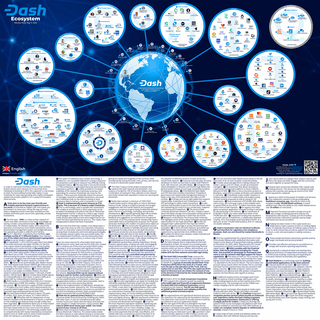
Dash’s privacy feature, PrivateSend, uses a decentralized mixing mechanism to obscure transaction details. It combines multiple users’ transactions, making it difficult to trace individual funds. The Dash masternode network adds an additional layer of security and enables faster transactions.
At the time of writing, Dash's DASH token is valued at $33.78, with its all-time high reaching $1,493.59 on December 20, 2017.
4) Verge
Verge (XVG) leverages multiple anonymity-centric networks such as Tor and I2P to hide user identities and IP addresses. By routing transactions through these networks, Verge aims to achieve enhanced privacy and untraceability.
Furthermore, Verge allows users to choose between public and private ledgers, enabling either transparent or anonymous transactions based on their needs.
At the time of writing, Verge's XVG token is priced at $0.008058, with its historical peak reaching $0.2618 on December 24, 2017.
5) PIVX
PIVX is a privacy-focused cryptocurrency that incorporates features from various other privacy coins. PIVX utilizes a custom implementation of the Zerocoin Protocol called zPIV.
This allows users to convert their regular PIVX coins into anonymous zPIV coins. These zPIV coins are then used for private transactions, ensuring complete privacy.
At the time of writing, PIVX's PIVX token is priced at $0.22, with its all-time high reaching $13.56 on January 10, 2018.
Improvements in Cryptocurrency Security
Privacy coins play a crucial role in enhancing the security and confidentiality of cryptocurrency transactions. By prioritizing privacy, they bring several key improvements:
-
Anonymity: Privacy coins employ advanced cryptographic techniques such as transaction mixing, obfuscation, and unlinkable addresses to conceal the identities of senders and receivers. This anonymity protects users from potential threats and surveillance.
-
Untraceability: Privacy coins implement mechanisms to obscure the origins and destinations of funds, making transactions extremely difficult to track. This prevents malicious actors from analyzing transaction patterns or exploiting sensitive information.
-
Flexibility: Some privacy coins, such as Dash, allow users to choose between transparent and private transactions. This flexibility enables users to tailor their financial activities according to specific needs, achieving a balance between privacy and transparency.
-
Decentralization: Privacy coins often utilize decentralized networks, such as masternodes. This decentralized architecture enhances system stability and security while reducing the risk of single points of failure.
Join TechFlow official community to stay tuned
Telegram:https://t.me/TechFlowDaily
X (Twitter):https://x.com/TechFlowPost
X (Twitter) EN:https://x.com/BlockFlow_News
 @Altcoinbuzzio