Why is Paradigm's VRGDA NFT issuance model considered promising?
TechFlow Selected TechFlow Selected
Why is Paradigm's VRGDA NFT issuance model considered promising?
The Logistic NFT issuance schedule derived from the VRGDA formula can align supply more closely with the project's expected demand growth.
 Navigating Web3 tides with focused insights
Author: Jiaqi
Translation: TechFlow
TLDR: Although VRGDA (Variable Rate Gradual Dutch Auctions) was initially designed for Art Gobblers, further exploration reveals its potential application to many new NFT projects as an NFT issuance model. Notably, the Logistic NFT release schedule derived from the VRGDA formula allows supply to align more closely with a project's anticipated demand growth.
What is VRGDA?
Variable Rate GDAs (VRGDAs) were designed for Art Gobblers developed by Paradigm, allowing tokens to be sold over time according to a customizable schedule—raising prices when sales are strong and lowering them when sales lag.
What’s Wrong with Current NFT Issuance Models?
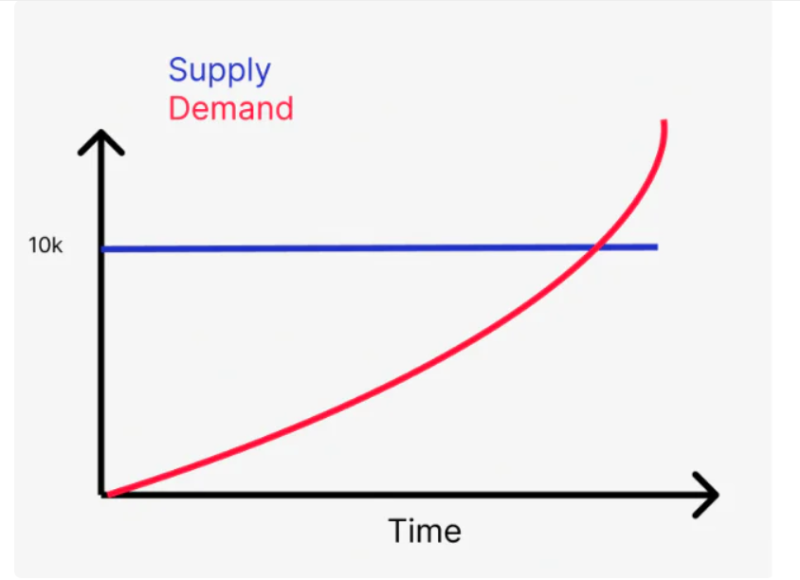
Currently, most NFT projects release their entire supply (typically 10k) all at once at the start of their roadmap.
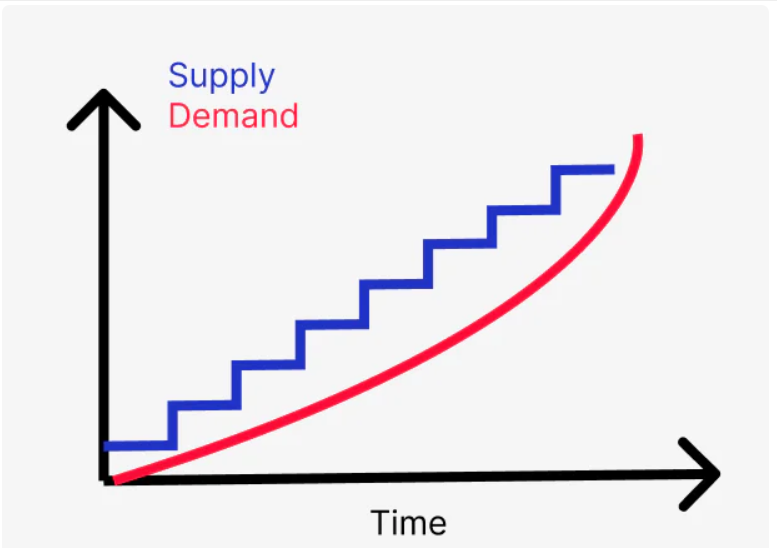
However, NFT projects require time to build loyal communities through executing their roadmaps. NFT demand correlates positively with community growth, and one-time issuance often leads to supply-demand imbalances—either oversupply or undersupply.
Both scenarios are highly detrimental to the long-term health of NFT projects.
Oversupply:
Many promising projects begin with small communities. A one-time issuance creates oversupply, driving down NFT prices and often leaving many NFTs un-minted in early stages.
This significantly discourages founders and early supporters, increasing the likelihood that such projects will fail before completing their roadmaps.
Undersupply:
Conversely, some NFT projects excel at generating hype and high expectations early on. This attracts speculators and flippers, causing NFTs to become irrationally expensive even before any roadmap execution.
Once these speculators exit, prices for such NFT collections often plummet. Meanwhile, founding teams receive large sums upfront, potentially reducing their incentive to execute the roadmap diligently.
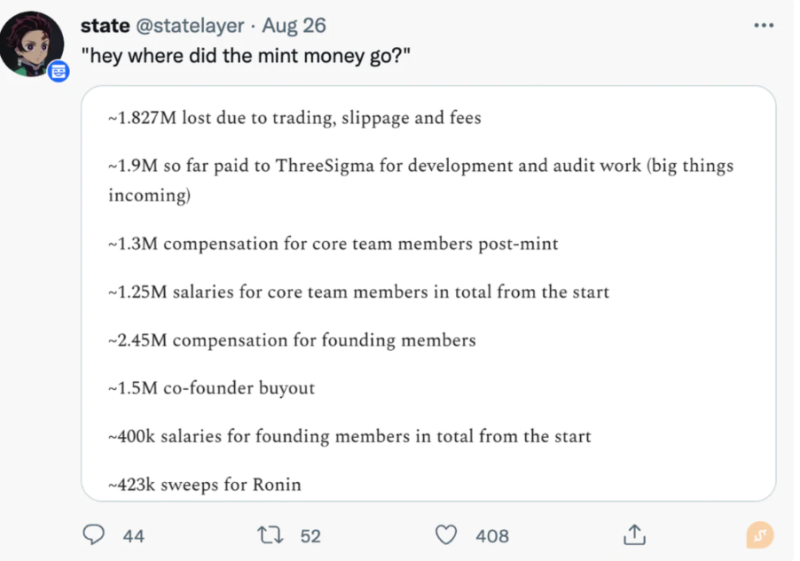
Then users start asking: "Where did the money from your mint go?"
Nouns’ Innovative Issuance Model
Nouns’ daily auction model partially addresses this issue. Supply starts small and expands at a fixed rate, aligning with the pace of community growth during early stages.
Additionally, it features a transparent and efficient treasury-managed DAO that rewards contributors.
The treasury also starts small and gradually grows as more Nouns are sold.

However, in my view, Nouns’ issuance model has two drawbacks:
- Nouns’ infinite supply cannot guarantee the scarcity of the NFT collection, which remains crucial for current NFT projects. Collectors tend to favor limited-supply NFTs because they create social status and community attachment. Although the Nouns DAO could theoretically repurchase and burn leftover Nouns in the future, this would still represent inefficient use of treasury funds.
- In the long run, linear issuance does not match the actual expansion speed of communities. Many successful communities grow rapidly in early stages but slow down later.
Learning from Bitcoin—Logistic Issuance Schedule
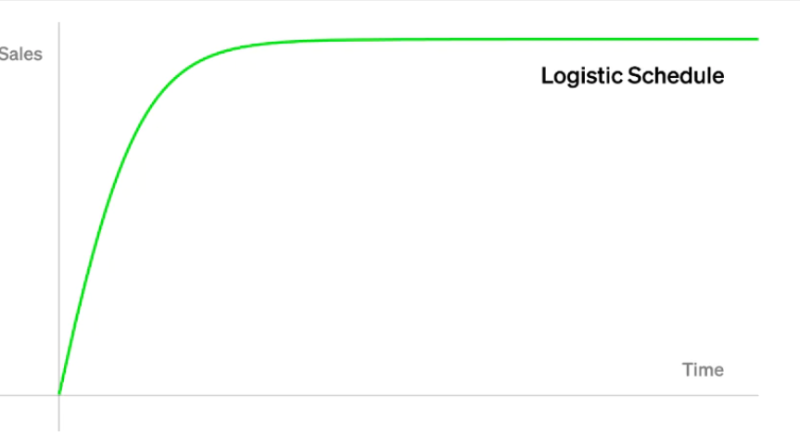
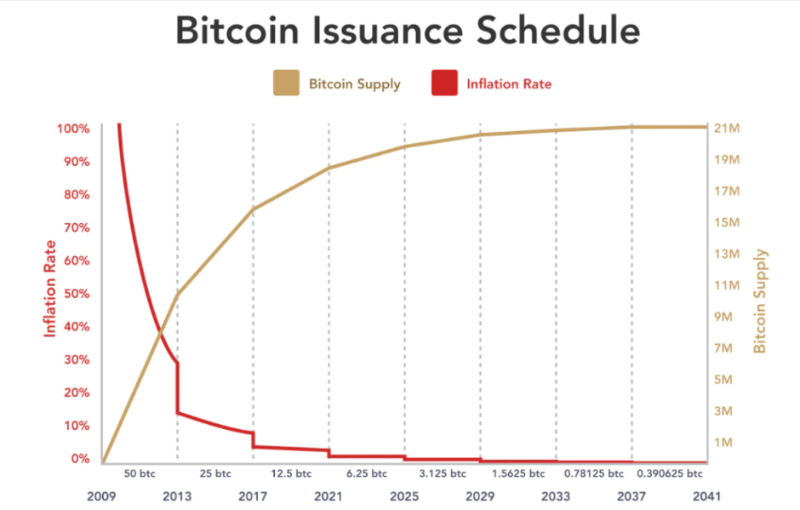
As the most successful cryptocurrency project, Bitcoin employs a Logistic issuance schedule.
Supply increases rapidly in early phases and slows over time, while a capped total supply ensures scarcity.
VRGDA—A Better NFT Issuance Model
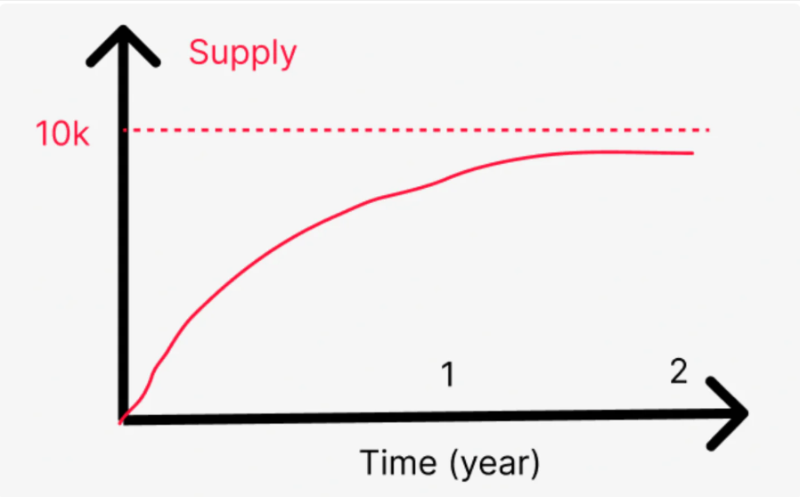
I particularly appreciate Paradigm’s NFT issuance innovation—the Logistic NFT release model derived from VRGDA.
While originally designed for Art Gobblers, I believe it should be applicable to many new NFT projects.
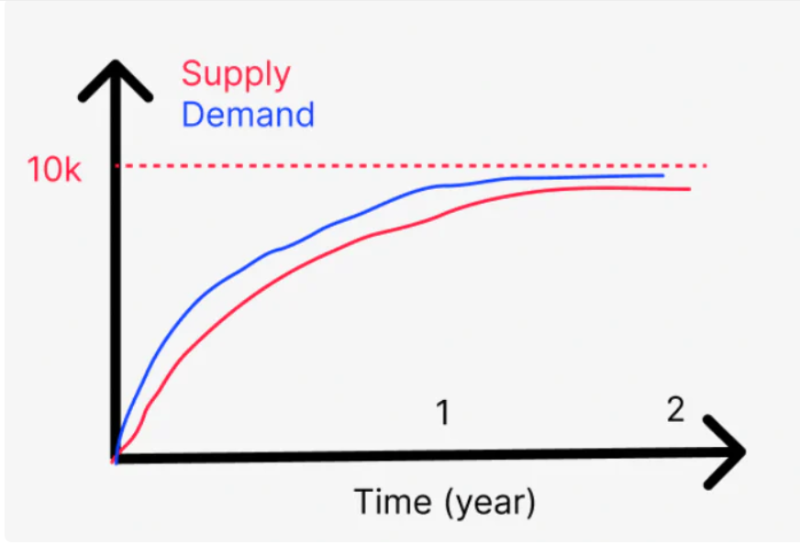
For example, a 10k PFP project could release its NFTs via VRGDA over two years—the typical duration of a PFP project’s roadmap.
This approach better synchronizes supply with projected demand growth, fostering more sustainable and healthy development for NFT projects.
Join TechFlow official community to stay tuned
Telegram:https://t.me/TechFlowDaily
X (Twitter):https://x.com/TechFlowPost
X (Twitter) EN:https://x.com/BlockFlow_News