








Fluidity: Achieve both goals—trading on a DEX while earning the protocol's real yield
TechFlow Selected TechFlow Selected
Fluidity: Achieve both goals—trading on a DEX while earning the protocol's real yield
Are you having trouble choosing between staking on your favorite dApp to earn RealYield and going long/short on a DEX to profit?
 Navigating Web3 tides with focused insights
Author: FarmerTuHao
Translation: TechFlow
Have you ever struggled to choose between staking on your favorite dApp to earn Real Yield and opening long or short positions on a DEX for profit?
Now there’s a protocol—Fluidity money—that allows you to capture both benefits simultaneously, eliminating the need to choose.
Fluidity is a real yield-generating protocol that pays you for using your crypto assets. These actions include, but are not limited to:
- Swapping on DEXs
- Purchasing NFTs
- Sending assets to another user
- Receiving assets from another user
Let’s dive deeper into how Fluidity makes this possible.
First, users must deposit their underlying assets into Fluidity to mint ƒAssets (e.g., $ƒUSDC, $ƒBTC). To earn yield from on-chain transactions, users must use &fnograph;Assets instead of original assets like USDC or BTC.
The yield earned from transactions using &fnograph;Assets is random, similar to a lottery. Of each reward, 80% goes to the sender and 20% to the receiver.
These yields are generated by Fluidity through strategies such as depositing the underlying assets into lending protocols (e.g., Compound and Solend) or other yield-generating mechanisms.
The frequency and amount of rewards paid to users are determined by the Transfer Reward Function (TRF), a formula incorporating the following variables:
- Total Value Locked (TVL)
- Yield generated by deposited assets (APY)
- Annualized Transaction Count moving average (ATX)
- Gas fees or transaction costs paid (g)
- Reward tier (m)
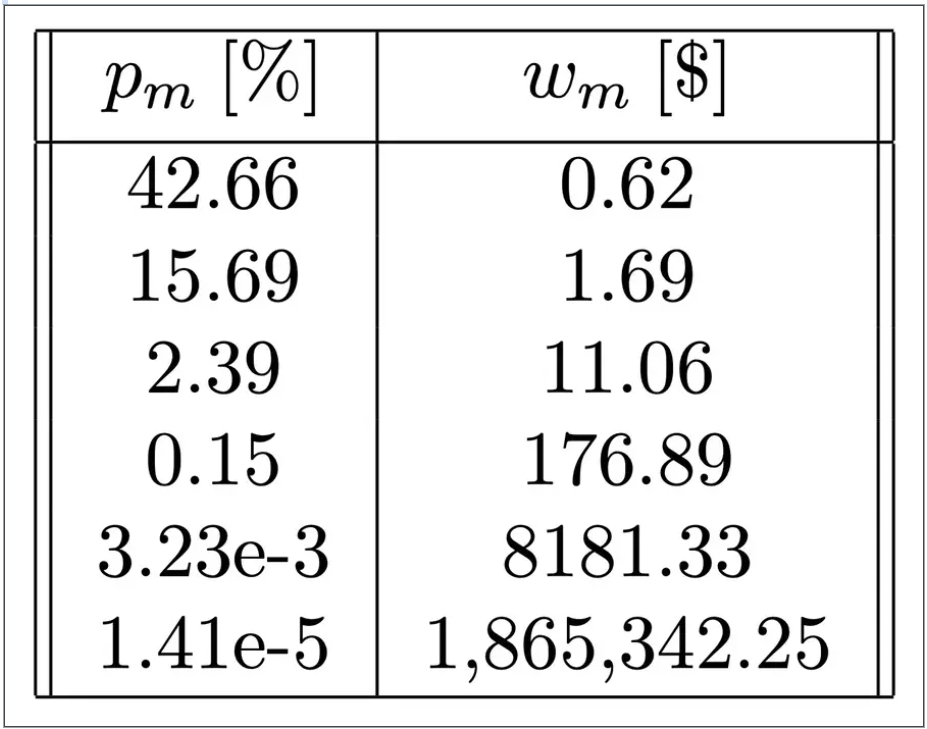
For example, if $50 million in rewards are distributed, with 80,000 daily &fnograph;Asset transactions, an average gas fee of $3, and a reward tier of 6:
- Over half of transactions receive between $0.6 and $1.7
- One in every 650 transactions receives $180
- Four times per year, a user may receive $1.8 million
Wait, wouldn’t malicious users try to spam transactions to earn as much yield as possible?
Fluidity prevents abuse using an Optimistic Solution that ensures spammers lose more in transaction costs than they can possibly gain. This works by calculating each user’s expected value and incorporating it into the TRF.
In summary, the TRF incentivizes asset usage over passive HODLing, promoting beneficial activity within the ecosystem. Examples of entities that could benefit from Fluidity include:
- Blockchains themselves
- DEXs
Blockchains such as Ethereum, Avalanche, and SeiNetwork can benefit as users are rewarded for spending &fnograph;Assets → increasing on-chain transactions → generating higher gas fees → boosting blockchain revenue.
DEXs such as VortexProtocol and Astroport benefit as users are rewarded for swapping &fnograph;Assets or placing orders → increasing trading volume → growing protocol revenue → enhancing returns for liquidity providers and governance stakers.
Using these concepts, there is now an opportunity for other protocols to adopt the TRF as a fair method to distribute their own governance tokens to:
- Loyal protocol users
- New user acquisition
Fluidity could then offer utility mining services to interested protocols for a small fee, which would become one of its primary revenue sources. In addition to this service, other revenue streams for Fluidity include:
- A portion of each payment collected as a fee
- Bribes from FLUID governance token holders
Accumulated fees will be allocated to two purposes:
- Approximately 50% will be used to buy back and burn the FLUID governance token
- Approximately 50% will serve as contingency reserve funds
Join TechFlow official community to stay tuned
Telegram:https://t.me/TechFlowDaily
X (Twitter):https://x.com/TechFlowPost
X (Twitter) EN:https://x.com/BlockFlow_News






