








How to dive deep into the Arbitrum ecosystem?
TechFlow Selected TechFlow Selected
How to dive deep into the Arbitrum ecosystem?
Following the successful completion of Nitro, the highly anticipated network upgrade that increased transaction throughput and reduced fees, Arbitrum is poised for further growth in liquidity, users, and activity.
 Navigating Web3 tides with focused insights
Written by: Ben Giove
Compiled by: TechFlow
Following the successful completion of Nitro, a highly anticipated network upgrade that improved transaction throughput and reduced fees, Arbitrum is poised for further growth in liquidity, users, and activity.
Several upcoming catalysts are expected to benefit from this increased transaction capacity and help drive this momentum.
- The first is Arbitrum Odyssey, an initiative designed to encourage engagement with applications on the L2. Odyssey should bring users and attention back to Arbitrum.
- The second catalyst is the anticipated launch of the Arbitrum token.
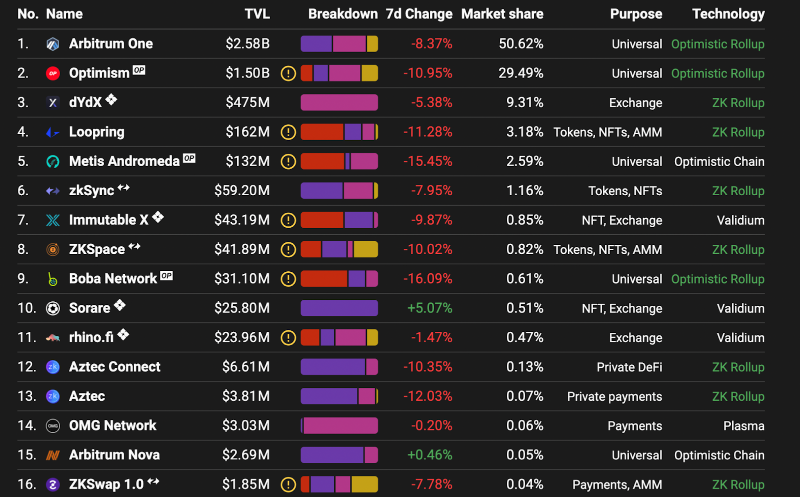
So far, Arbitrum’s ecosystem has been compelling. Despite lacking network-wide incentives, Arbitrum remains the largest L2 by TVL, with over $2.58 billion. The introduction of a token is expected to push this number even higher, as it could be used to incentivize liquidity and encourage more application migrations.
While these catalysts have already made Arbitrum a hot topic in the space, network adoption remains in its early stages—according to Nansen, only 0.45% of Ethereum addresses have ever used Arbitrum.
So, how can one gain exposure to this ecosystem?
Here are several pathways:
1. Arbitrum Native Projects
The most direct way to access the Arbitrum ecosystem is through investments in native projects.
These early adopters are well-positioned to benefit significantly from capital inflows into Arbitrum, potentially driving growth in TVL, revenue, users, and other key KPIs.
There are numerous Arbitrum-based projects spanning various sectors, allowing investors to select those that align with their portfolio composition and risk appetite.
Let’s take a closer look at some of them:
GMX (GMX)
GMX is a decentralized perpetual exchange utilizing a liquidity pool model where traders can open leveraged positions by borrowing from a basket of assets known as GLP. The GLP acts as the counterparty to traders’ positions, assuming their profit risk while earning fees from opening/closing positions, trading fees, and liquidations, which are then distributed in ETH to stakers.
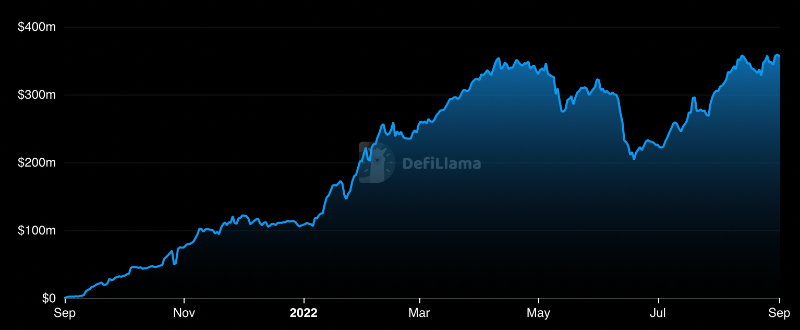
GMX is the largest protocol on Arbitrum, with $282.7 million in TVL—representing 29.6% of all value locked on the network—and has generated $10.36 million in protocol revenue over the past six months. This revenue is paid entirely in ETH to GMX stakers, currently offering a yield of 6.58%. GMX is becoming a core foundation on Arbitrum, with projects like Umami Finance, Dopex, Vesta, and others integrating or building atop the platform. GMX currently has a market cap of $376 million and an FDV of $623 million.
Dopex (DPX)
Dopex is an options protocol. It offers a range of products including Single Staking Option Vaults (SSOVs), which allow users to easily run covered call and cash-secured put strategies, yield insurance vaults enabling speculation on yields across different curve pools, and its latest product—Straddles. Straddles represent the first implementation of Atlantic Options (AO), a unique model where option buyers can borrow against collateral locked in the option contract for a fee.
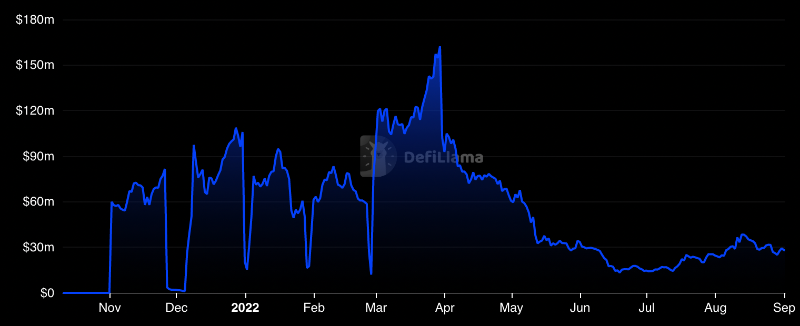
Dopex currently holds $29.15 million in TVL across its products, and DPX tokens can be locked to earn token distributions and a share of protocol fees paid in ETH. Several projects are built on Dopex, including Jones DAO, which creates option vaults leveraging Dopex infrastructure, and Plutus, an L2 governance protocol. DPX has a market cap of $85 million and an FDV of $209 million.
Mycelium (MYC)
Mycelium, formerly known as Tracer DAO, is building a suite of derivatives products on Arbitrum. This includes Perpetual Pools—a novel derivative most similar to leveraged ETFs—that allow users to hedge or gain exposure to specific asset volatility. Mycelium recently launched Perpetual Swaps, a fork of GMX, where users provide liquidity to traders via the MLP pool.
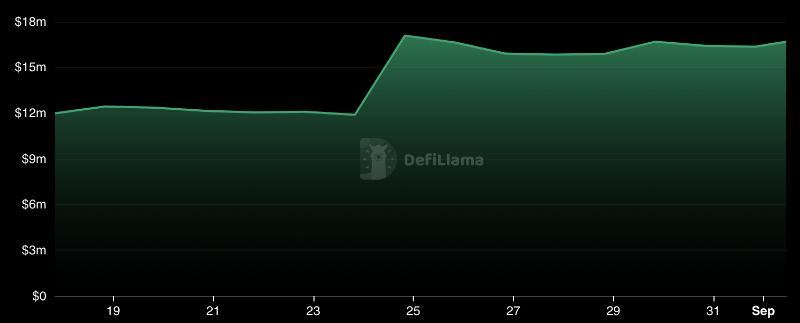
Mycelium has attracted $16.7 million in TVL. The DAO also recently announced former Bitmex CEO Arthur Hayes as an advisor, drawing additional attention. MYC currently has a market cap of $36 million and an FDV of $60 million.
Other Projects to Watch
There are many other exciting projects on Arbitrum that investors should keep an eye on, such as:
- Umami Finance (UMAMI), a vault project focused on emission-free yield
- Vesta Finance (VSTA), a lending protocol and issuer of the VST stablecoin
- Premia (PREMIA), an options protocol
- Galleon (DBL), a DAO building structured products.
Although these tokens have smaller circulating market caps and less liquidity than the top three listed above, they are all likely to benefit from the anticipated growth of the ecosystem.
Additionally, several high-profile projects have yet to launch their tokens upon deployment on Arbitrum. These include Rage Trade, a full-chain perpetual protocol; STFX, a social trading platform; and Y2K, a protocol for hedging or speculating on stable assets. These projects may conduct airdrops for early adopters or community members.
2. Cross-Chain Infrastructure
Another way investors can gain exposure to Arbitrum is by investing in cross-chain infrastructure—projects that facilitate broader adoption of the L2 ecosystem.
Most notably, this includes cross-chain bridges and information transfer protocols. While this sector has faced security challenges over the past year, these systems remain critical components of infrastructure, enabling users to move assets quickly and easily across networks—and crucially, bypassing the 7-day withdrawal period associated with Optimistic Rollups.
While they may not benefit as directly from Arbitrum’s growth as native projects built on the chain, they can still profit from the anticipated influx of liquidity into the L2, as their revenue is derived from fees based on a percentage of inter-network transfers.
Let’s examine a few of these interoperability solutions and identify potential airdrop candidates.
Synapse (SYN), Hop (HOP), and Stargate (STG)
Synapse (SYN) is a cross-chain messaging protocol. Synapse enables users to swap canonical assets (those natively issued on L1 or L2) using AMMs. To date, Synapse has facilitated $11.3 billion in volume and plans to launch Synapse Chain—an Ethereum-focused Optimistic Rollup leveraging Synapse’s cross-chain messaging capabilities. SYN has a market cap of $233 million and an FDV of $311 million.
Hop Protocol (HOP) is another tokenized cross-chain liquidity protocol. Similar to Synapse, Hop uses AMMs to enable swaps between canonical assets and has processed $2.7 billion in volume to date. HOP has a market cap of $5 million and an FDV of $135 million.
Stargate (STG) is a third cross-chain liquidity protocol with a native token that supports bridging to Arbitrum. Built on LayerZero, Stargate leverages its omnichain capabilities to allow users to transfer assets without relying on traditional cross-chain bridges. The protocol currently has $631.2 million in TVL, with STG having a market cap of $84 million and an FDV of $635 million.
3. Airdrops for "Farmers"
Another way investors can engage with L2 infrastructure is through yield farming.
While Synapse, Hop, and Stargate already have tokens, many other projects have not yet launched theirs and may reward early users and community members with token airdrops when they do.
Notable examples include the cross-chain liquidity protocols Connext and Across, as well as Li.Fi, a cross-chain bridge aggregator.
Arbitrum Token
The final way investors can gain exposure to the Arbitrum ecosystem is through airdrop farming. Since no token purchases are required, this is an ideal strategy for risk-averse investors.
While not officially confirmed, it is nearly certain that an Arbitrum token is coming. Tokens not only offer upside for investors and teams but, if distributed effectively, can serve as powerful tools to incentivize desired behaviors and bootstrap an ecosystem. Given that other rollup teams such as Optimism, Polygon, ZK Sync, and Starkware have launched or plan to launch tokens, Arbitrum would be at a competitive disadvantage if it did not follow suit.
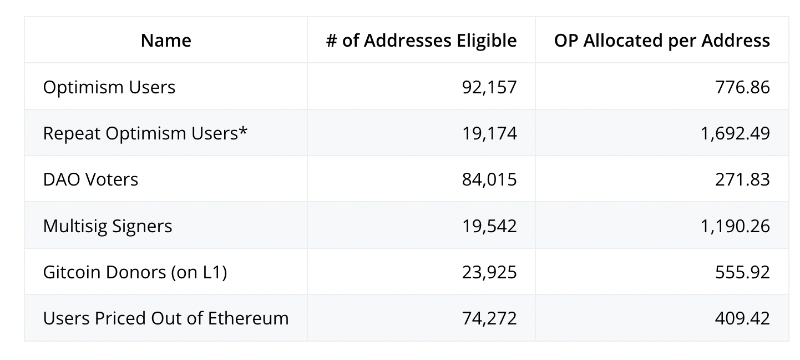
Assuming a token launch, it is highly likely that Arbitrum will airdrop tokens to early users (Optimism and Starkware allocated 19% and 9%, respectively, to early users).
To maximize the chances of receiving an airdrop, users should pursue two approaches: first, actively use cross-chain bridges and conduct transactions on the network. For guidance, the criteria set by the Optimism (OP) airdrop can serve as a reference.
For more proactive participants, the second approach is joining the Arbitrum Odyssey campaign. Odyssey is an eight-week event designed to encourage interaction with protocols deployed on Arbitrum, rewarding participants with custom NFTs.
Although Odyssey was previously launched in June, it was paused after just two weeks due to network congestion caused by user participation. The Offchain Labs team stated the event will resume following the completion of Nitro.
While it remains unclear how Odyssey participation will factor into airdrop eligibility, engaging in the campaign will very likely increase allocation size. Given the low cost of transacting on the network and minimal effort required to earn NFTs, the risk-reward ratio of participating is highly favorable.
The Season for Arbitrum Has Arrived
Arbitrum is poised for significant growth in the coming weeks and months.
With opportunities spanning native DeFi projects, cross-chain infrastructure, and airdrop farming, investors have multiple avenues to gain exposure to the Arbitrum ecosystem.
Which path will you choose?
Join TechFlow official community to stay tuned
Telegram:https://t.me/TechFlowDaily
X (Twitter):https://x.com/TechFlowPost
X (Twitter) EN:https://x.com/BlockFlow_News






