








A Comprehensive Guide to Avalanche's Current Status, Ecosystem Projects, and Tools
TechFlow Selected TechFlow Selected
A Comprehensive Guide to Avalanche's Current Status, Ecosystem Projects, and Tools
Now that the FUD has settled, the bear market is the perfect time to determine who will be the biggest winners of the future—it might be a good time for us to get into Avalanche.
 Navigating Web3 tides with focused insights
Author: Sindermann
Compiled by: TechFlow
Now that the FUD has settled, the bear market is the perfect time to determine who will be the biggest winners in the future—and this might be a great moment for us to dive into Avalanche. If you're unsure where to start learning about Avalanche, this article should help.
1.TECH
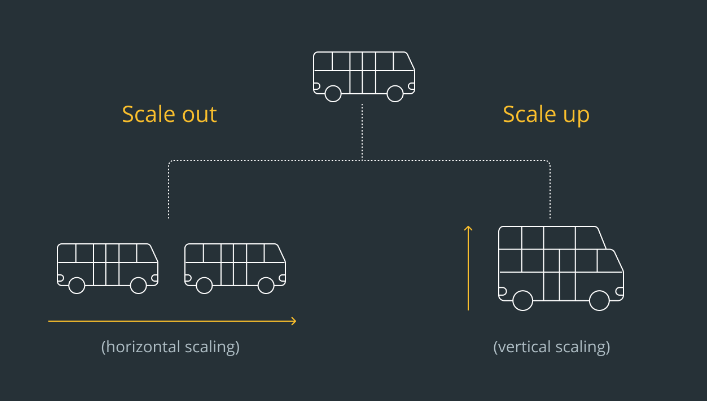
Avalanche is a heterogeneous network composed of multiple distinct blockchains. Simply put, it enables horizontal scalability by allowing anyone to build a custom chain using its provided tools.
All validators on Avalanche must validate a so-called "primary" network, which includes the C-Chain, P-Chain, and X-Chain. Validators can also choose to validate subnets (also known as subnetworks). Each subnet is fully customizable and may even run a different virtual machine.
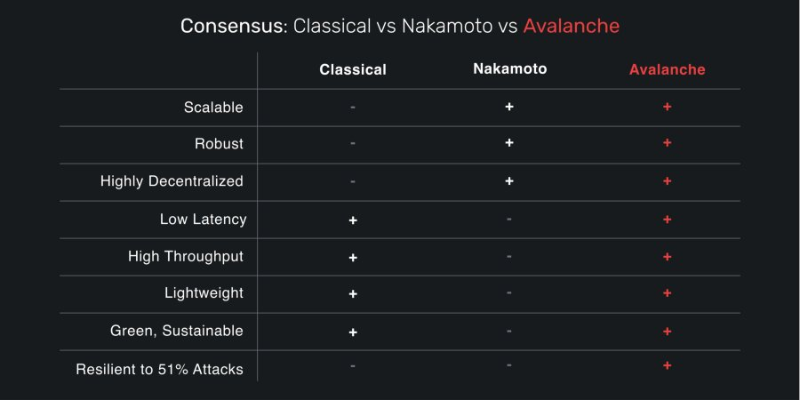
Another innovation brought by Avalanche is the Snow consensus protocol, which allows high transaction throughput and finality while maintaining decentralization and resilience against attacks.
2.Ecosystem
When people refer to "Avalanche," they usually mean either:
a) The C-Chain—the EVM-compatible chain currently hosting most applications;
b) The entire ecosystem, including multiple subnets.
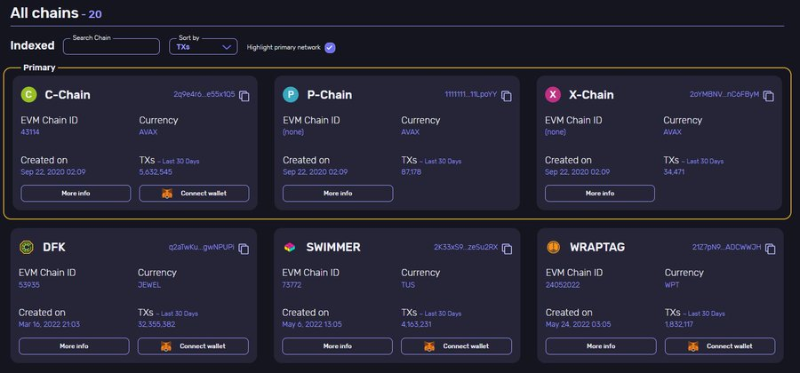
The C-Chain is renowned for DeFi, having reached a peak TVL of $12 billion. Meanwhile, several well-known and innovative projects are developing or have already launched on it. However, most transactions on Avalanche come from gaming-dedicated chains (primarily DFK and Crabada).
3.Stats
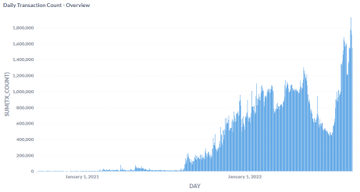
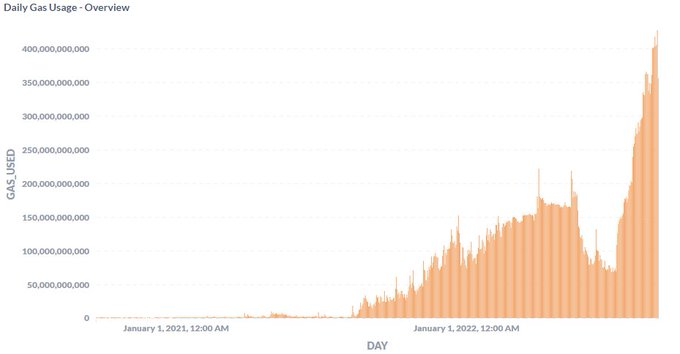
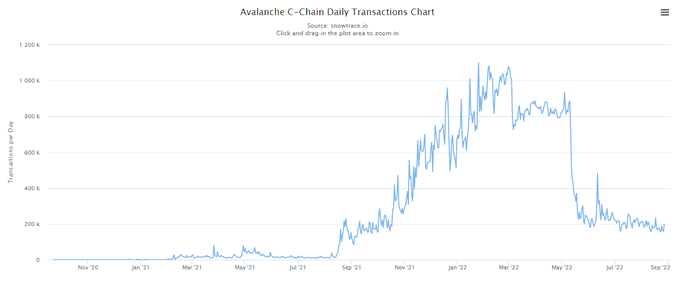
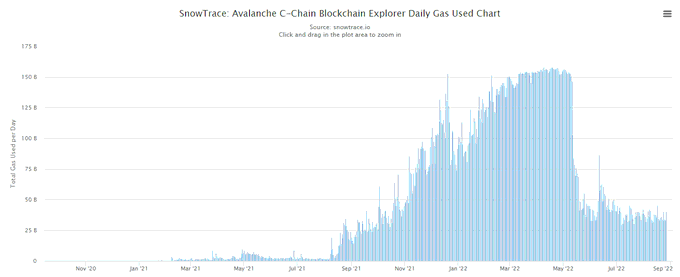
Thanks to dedicated gaming chains, Avalanche recently set new all-time highs in daily transactions and gas usage. While the C-Chain experienced a significant drop in usage in May, it has since remained relatively stable.
4.Token
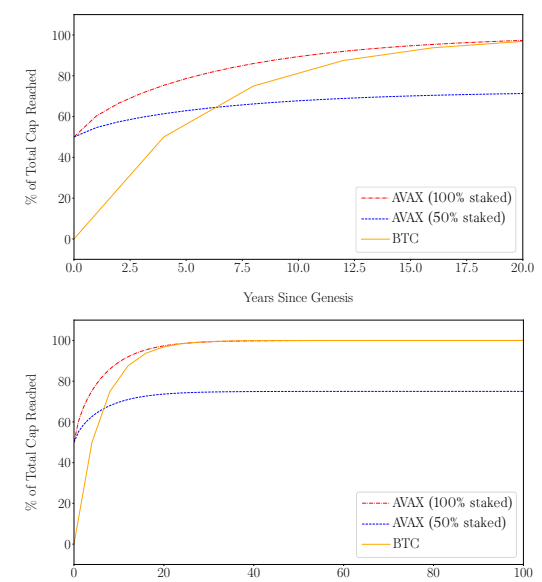
$AVAX is Avalanche’s native token. It is used to pay gas fees on the C-Chain, and running a validator requires staking 2,000 AVAX. Gas fees are burned, and the maximum supply of $AVAX is capped at 720 million.
Subnets can choose to use different gas tokens and impose additional requirements on validators.
5.DEFI
Avalanche hosts a vibrant DeFi ecosystem, including cross-chain projects (like AAVE and Curve) and native-built ones. Here are some notable examples:
Benqi Finance — The largest native money market and liquid staking provider, managing nearly 5 million staked $AVAX.
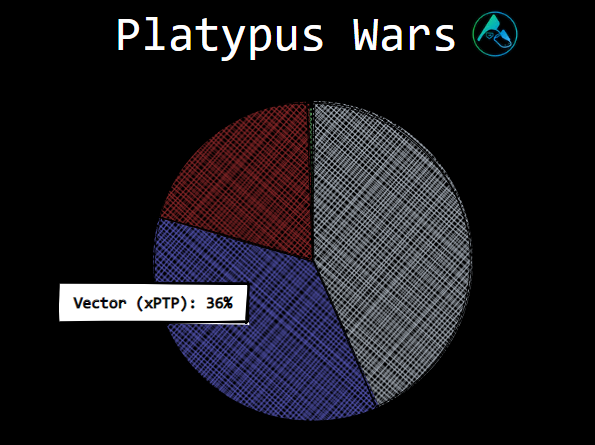
Platypus — A DEX for pegged assets using a liability management model instead of traditional bonding curves to determine prices. They were the first project to introduce a new ve-model and are now expanding it through voting and governance.

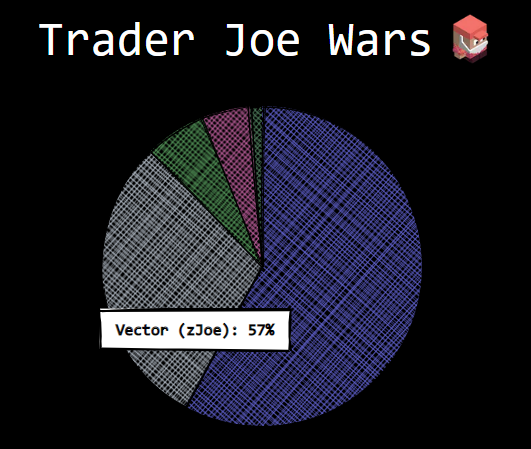
Trader Joe — The largest native DEX, originally launched last year as a Sushi fork but has since evolved with continuous innovation. It offers the best tokenomics in the ecosystem, built a new concentrated liquidity AMM with volatility-adjusted fees.
Vector — A protocol similar to Convex, controlling large amounts of vePTP and veJOE (governance tokens of Platypus and TraderJoe respectively). The protocol aims to boost yields for all liquidity providers by leveraging its holdings, without requiring users to accumulate ve-tokens themselves.
Yeti Finance — A CDP protocol allowing users to borrow the YUSD stablecoin against interest-bearing collateral. Operates similarly to Liquity (via Troves). Recently announced protocol upgrades introducing a PSM and interest rates.
Yield Yak — An auto-compounder supporting many protocols and farms (including TraderJoe, Platypus, Curve, AAVE). Recently introduced liquid staking for $AVAX via their own $yyAVAX token.
Dexalot — A central limit order book (CLOB) designed specifically to run on its own subnet. Has an ambitious roadmap and has been under development over the past year, getting closer to official launch.
Arrow Markets — Another long-in-development project building an AMM for decentralized options trading, currently live on testnet for public use.
Hubble Exchange — A recently launched perpetual futures exchange. Currently supports long/short positions on $AVAX, with plans to add more tokens in the future.
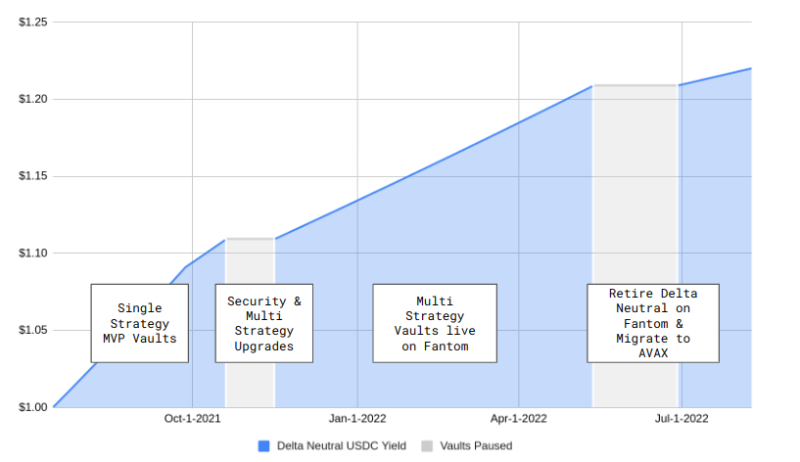
RoboVault — Combines multiple protocols under one vault to generate delta-neutral returns for users. Their USDC strategy has yielded approximately 7–10% APY, even in the current market conditions.
6.NFT
Avalanche’s NFT ecosystem lagged behind for a while, but recent activity has significantly increased. There are three main NFT marketplaces, each with its own focus and feature set.
Joepegsnft — A launchpad marketplace responsible for initial project releases. Examples include: ConsciousLines, Peonnft, Smol Joes. Many collections are internally incubated/developed through Joe Studios.
Campfire — Focuses more on emerging collectors and artists.
Kalao — The oldest of the three, emphasizing metadata, art, and VR experiences. Recently launched its V2 version with major improvements in UI/UX and new features.
7.Gaming
Avalanche’s subnet architecture is ideal for gaming applications, as it allows each game to run on its own chain without congesting or slowing down others. So far, two games have launched and operate their own subnets.
Defi Kingdoms (DFK) — A gamified DEX that expanded from Harmony in March and accounts for most of the monthly transaction volume.
Crabada — A game similar to Axie, initially launched on the C-Chain but migrated to its own gaming-focused subnet in May this year.
These represent the "first generation" of on-chain games with strong economic components. The second generation is emerging, with more games integrating blockchain into various aspects of gameplay.
Castle Crush — A mobile game with a large player base that recently integrated Avalanche NFTs internally.
Ascenders — Building a sci-fi RPG game and released a promising demo earlier this spring.
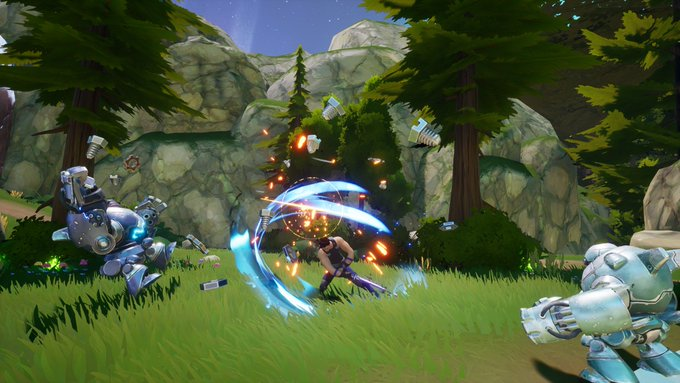
Pulsar Game — An MMO RTS launching by year-end, offering gameplay similar to StarCraft but incorporating multiplayer elements and NFTs.
8.Tools/Resources
Navigating a new ecosystem can be challenging. Here are some helpful resources:
https://snowtrace.io — Block explorer for the C-Chain. If you've used Etherscan or similar tools, this will feel familiar.
https://avascan.info — Explorer focused on subnets.
https://t.me/avalanchejobs — Job board for the Avalanche ecosystem.
https://joepegged.xyz — Tool built by VirtualQuery to track Joepeg sales.
https://avaxnftstats.com — More commonly used AVAX NFT data platform.
Join TechFlow official community to stay tuned
Telegram:https://t.me/TechFlowDaily
X (Twitter):https://x.com/TechFlowPost
X (Twitter) EN:https://x.com/BlockFlow_News






