Exclusive Interview with Avocado Gaming Guild Founder: Prefer Calling Blockchain Games "Blockchain Game" Rather than "GameFi"
TechFlow Selected TechFlow Selected
Exclusive Interview with Avocado Gaming Guild Founder: Prefer Calling Blockchain Games "Blockchain Game" Rather than "GameFi"
Survival is the constant theme during bear markets.
 Navigating Web3 tides with focused insights
-Summer bodies are made in winter.
-It's OK to fail, but don't be afraid to try.
After the interview, we asked Brendan, founder of Avocado, to share a few words to encourage fellow builders who are still pushing forward during this bear market. The two quotes above are his exact words.
In the midst of the crypto winter, GameFi—once thriving and full of promise—is also struggling.
“Play-to-earn is dead,” “GameFi is just a Ponzi,” “Any random 4399 web game is a hundred times better than today’s blockchain games.” For GameFi, which led last year’s bull run, the colder the market becomes, the louder the criticism grows—mirroring its past popularity.
Whether it’s blockchain games, guilds, or related blockchains, most GameFi-related projects have seen drops of at least 10x during this bear market.
If GameFi is a wave, then guilds are undoubtedly the surfers—riding at the crest, yet mired in controversy.
As someone who remains bullish on GameFi, and with a personal desire to defend GameFi, guilds, and more builders in the space, I was honored to sit down with Brendan, founder of Avocado—one of the leading blockchain gaming guilds—for a conversation on current market conditions, guild operations, and the future direction of blockchain gaming.
Avocado is a Southeast Asian gaming guild, top-tier in both community size and number of scholarship players, and raised $18 million in funding last year. In this interview, Brendan shared many personal gaming experiences, his views on YGG and Merit Circle, and we also discussed commonly debated topics such as “guilds are just about farm-sell-dump” and “how guilds choose which blockchain games to partner with.”
We’re grateful for Brendan’s sincerity, allowing us to reflect on this trend from the perspective of someone at the forefront. For those following blockchain gaming or still holding out hope for GameFi 2.0, we hope this piece offers some value. Below is the full transcript.
TechFlow: Are you a traditional gamer? Can you share a few games you often play?
Brendan: I play all kinds of games—RPGs, FPS, you name it. I started playing MMORPGs when I was 14, and became the leader of the largest guild on one World of Warcraft server at the time, with around 200 members. Some of those original guild members are now part of Avocado’s team.
For me, what draws me to games isn’t leveling up or grinding—it’s the native communities that form around each game. In these communities, we interact and compete with real people, not just AI.
For example, when I play CS, I feel a sense of pride beating other players. When I played World of Warcraft, I enjoyed exploring and raiding with friends. If I got a rare item, I could show it off—that’s another kind of value these items hold.
In real life, these gaming experiences also help me connect with others and make friends.
TechFlow: When did you first learn about GameFi, and what was your initial impression of this new phenomenon?
Brendan: I learned about blockchain gaming fairly early in 2021, though I had already been exposed to and invested in Bitcoin back in 2017—lost a lot of money, actually. It wasn’t until the market improved in 2021 that I started making gains and getting involved with more projects.
But back then, many project tokens lacked real utility. Today there are many DeFi and GameFi projects whose tokens offer functionalities that were rare back in 2017–2018.
This made me realize something positive and innovative was emerging, and I grew increasingly interested in GameFi, so I decided to dive deeper.
I saw games rewarding players with their own tokens, and players using that income to improve their lives. Many of these players were from the Philippines—they used the earnings to support themselves and made new friends. That fascinated me.
And I believe we’re still very early—there’s enormous potential to build something truly great in the future.
TechFlow: What do you see as the improvements or real value blockchain games bring compared to traditional games? And are there any common misconceptions about blockchain gaming you’d like to correct?
Brendan: I love this question, but let me start by reflecting on the evolution of technology.
I was born into a world without mobile phones or computers—some places didn’t even have TVs. When the first mobile phone came out, it only had numbers, no color, and couldn’t play games. I remember when color phones arrived, people asked: “I already have a pager—why do I need colors?”
When email emerged, people said: “I can already text and call—what’s the point of email?” But technological innovation always starts small and gradually evolves, like a child growing up.
It’s the same with blockchain.
When you first introduce blockchain to someone, they might say: “It doesn’t solve any real problem—we don’t need this tech.”
Don’t get discouraged—this skepticism is normal. When someone’s used to doing things a certain way, and suddenly someone suggests a different approach, they’ll usually reject it and insist their old way is best.
When blockchain games appeared, most people rejected them too. But as a player, I clearly felt their significance.
Take my experience with World of Warcraft: Leveling from 1 to 30 was the most enjoyable part—I loved exploring and battling other players. Later, I wanted to speed up leveling, so I needed more gold. I could grind it myself, but that was boring—or I could buy it from others. Back then, 1,000 gold cost about $12–18. By level 80, I considered selling my account—and found it could fetch $750! That was mind-blowing. And I realized that price reflected the value of my time invested.
With blockchain games, I don’t want to judge them solely based on today’s state. I care more about what the technology itself can bring to gaming. If applied well, blockchain could optimize many aspects of my WoW experience—like streamlining gold purchases, simplifying gear and character trading, and enabling safer, more transparent transactions.
One more thing: We’ve all seen *Ready Player One*, mesmerized by its immersive world. But we must remember—before we reach that vision, countless technologies need to be invented and deployed step by step. New innovations always come with misunderstandings and criticism. I understand the pushback, but progress takes time. With blockchain gaming, we’re only at step one.
TechFlow: How did you feel during last year’s (2021) GameFi boom? How does that compare to the current “ice-cold” phase?
Brendan: The GameFi explosion last year was astonishing—it brought massive awareness to gamefi and showed how blockchain could impact gaming. This year, everyone lost money, including me. But so did people in stocks—all markets are down due to recession, war, etc.
From a user awareness standpoint, last year’s boom was hugely beneficial for the industry. People feel disappointed now mainly because token economies are closely tied to the real world, and current token economy designs are still very primitive. Once tokens become tradable, their prices are inevitably influenced by macroeconomic factors.
Economic cycles are natural—we should use each cycle to learn and grow.
TechFlow: When entering the blockchain gaming space, why did you choose the guild path? What was your motivation? And why do you think you can outperform YGG or Merit Circle?
Brendan: Before officially launching Avocado, we studied how guilds like YGG operated and why they succeeded. I believed we could excel in certain areas.
As mentioned earlier, I believe GameFi still has massive untapped potential. Many community members—especially in the Philippines or Indonesia—know how to play blockchain games but lack the NFT assets needed to enter.
So our initial model was: buy in-game NFTs, rent them to community members, and share profits. From the user side, guilds educate them on participation and help them through tough times like the pandemic. For developers, we provide player feedback and help improve their games.
Frankly, I don’t think we’re vastly different from YGG or Merit Circle—most guilds are fundamentally similar. YGG focuses more on community; Merit Circle emphasizes infrastructure. We drew inspiration from YGG, then forged our own path, aiming to onboard more users into GameFi.
TechFlow: This year, many in the community believe blockchain gaming is failing, calling it a Ponzi. Within your guild, have you faced negative sentiment? How has the community mood shifted, and how do you manage it?
Brendan: There are many speculators in today’s blockchain gaming market, and yes, many criticize it as a Ponzi or low-quality. I agree with some criticisms, but I also believe many projects weren’t designed from day one to be Ponzis.
In the Avocado community, we don’t have many extreme members. Most partners understand what Avocado does, how we’ve helped them, and genuinely believe in blockchain’s role in gaming. We have our scholarship program and hold AVG tokens.
That said, we do hear criticism now. I welcome it—I see it as part of the growth process. Continuous iteration is necessary to build better games.
Right now, I talk to many game teams every week—each trying new innovations. I don’t know which game will succeed, but I’m certain many exciting innovations are underway.
TechFlow: Avocado frequently hosts traditional gaming events, like group CS sessions. What’s the purpose behind these activities?
Brendan: Avocado is always community first. Our members aren’t here just to earn money—P2E is just a way to earn extra income. After that, they hang out like friends, discuss strategies, and even meet offline to support each other.
For example, during past crises like the pandemic or typhoons, the community self-organized donations and town halls to uplift one another.
So for Avocado, community is everything. And I believe traditional gaming events are the best way to bring our members together.
TechFlow: Guilds are widely seen as ‘farm-sell-dump’ operators in the blockchain gaming ecosystem. Some games like StepN even promoted ‘no guild partnership’ as a feature. What’s your view on the value of guilds in the ecosystem? Are there common misconceptions?
Brendan: I completely understand the ‘farm-sell-dump’ label. Both blockchain games and guilds are evolving.
In the early days of DeFi and GameFi, high yields attracted users. Whoever captures those yields—whether guilds or individuals—is essentially performing the same role. So the ‘farm-sell-dump’ issue isn’t caused by guilds—it stems from the game’s economic model itself.
Some games simply don’t want guilds involved—that’s fine, since diverse game types will always exist. But seeing guilds only as value extractors is inaccurate. Guilds provide strategic input, capital, user feedback, development suggestions, and player acquisition.
We hope to look at the bigger picture and contribute more positive value to the industry.
TechFlow: What criteria do you use when selecting blockchain games to partner with? Can you give examples?
Brendan: GameFi has changed a lot over the past eight or nine months—my criteria today differ from before. For current blockchain games, first, they must have reasonable valuations; second, their teams must be resilient, especially in tough market conditions, and committed to building.
We also prefer teams with strong game development experience, who see Web3 as a genuine technical enabler rather than mere decoration—teams that thoughtfully integrate the technology to enhance gameplay or solve real problems.
Tokenomics matter too—I want teams to have deeply considered their in-game economic models.
These are basic requirements. Beyond that, I hope founders focus less on how much money they’ll make and more on the challenges ahead—respect the difficulties, listen to advice, and work to overcome them.
TechFlow: There’s a growing view that blockchain integration should be seamless—players shouldn’t notice it at first, only realizing it later. What do you think of this idea?
Brendan: I think it’s a great idea, and I’ve seen many blockchain games adopting this mindset. Another scenario I envision is games where blockchain makes the game inherently more fun—people play because it’s enjoyable. In this case, the focus shifts to making blockchain interactions seamless within gameplay. If successful, such examples could inspire traditional games to explore new possibilities and voluntarily adopt blockchain.
Of course, these are still ideas—we don’t know if they’ll materialize. But I do see today’s blockchain games improving, and I’m excited about both scenarios.
Beyond that, I see a critical unresolved issue: many current blockchain games are actually centralized, contradicting our original goal of decentralization. While progress takes time, I believe decentralization is crucial.
TechFlow: Compared to last year, both blockchain game projects and guilds are facing tougher conditions. Has Avocado changed its operational strategy?
Brendan: During bull markets, everyone rushes in; in bear markets, fear sets in. We now operate more prudently—tightening budgets. We’re also prioritizing investments in projects with more reasonable valuations. Hiring is more cautious—we seek people who truly believe in Avocado’s mission and are willing to weather both bulls and bears with us.
During this time, we’re also analyzing what’s currently holding blockchain gaming back.
I believe the main bottlenecks are game quality and user growth. So recently, we’ve dedicated more effort to helping games improve quality and acquire more users.
We believe this work also positively contributes to the broader Web3 ecosystem.
In this bear market, we should spread less FUD and more solidarity and encouragement.
At the end of the interview, we asked Brendan to share some encouraging words for fellow builders. Beyond the two quotes at the beginning, there’s one phrase he often repeats: Be Resilient.
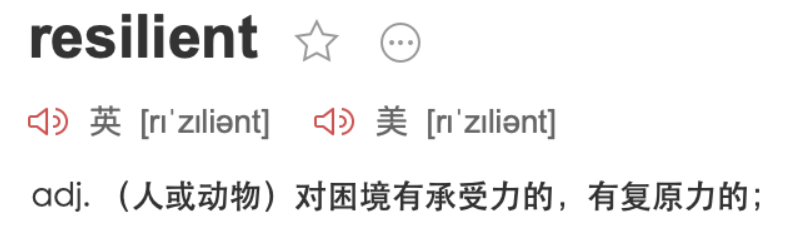
Recently, many projects are collapsing, laying off staff.
As the bubble bursts, overvalued projects and teams lacking resilience are being eliminated.
Survival is the constant theme of bear markets.
And how to survive—that’s what truly tests every team’s strength.
Summer bodies are made in winter.
We don’t know what star products or teams will emerge in the next cycle,
but we firmly believe
those future leaders are right now being forged in this very bear market, just like you.
Keep going, builders in the bear market!
TechFlow will continue publishing more builder interviews, walking together through the bear market.
If you have a compelling story or insights to share with the community, we’d love to hear from you.
Join TechFlow official community to stay tuned
Telegram:https://t.me/TechFlowDaily
X (Twitter):https://x.com/TechFlowPost
X (Twitter) EN:https://x.com/BlockFlow_News