








A Comprehensive Guide to Ethereum's Merge, Surge, Verge, Purge, and Splurge
TechFlow Selected TechFlow Selected
A Comprehensive Guide to Ethereum's Merge, Surge, Verge, Purge, and Splurge
Ethereum's shift from execution sharding to a rollup-centric roadmap is a crucial step toward scaling blockchain for the next billion users.
 Navigating Web3 tides with focused insights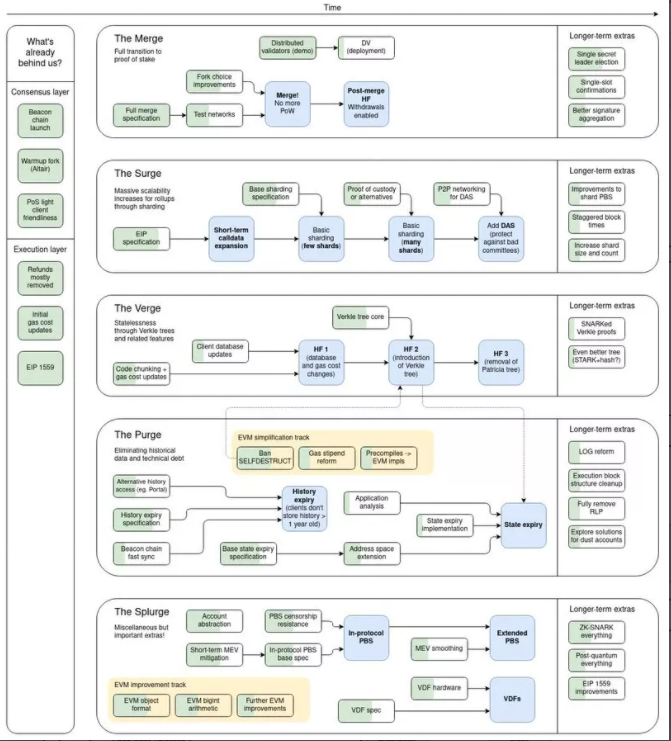
Author: Alec, volt capital
Translation: TechFlow intern
The "Merge," which refers to Ethereum's transition to a PoS network, is scheduled to occur on the mainnet before the end of September. Its goal is to unlock blockchain accessibility at scale. Ethereum’s shift from an execution-sharding approach to a rollup-centric roadmap represents a critical step toward scaling blockchain for the next billion users.
Rollup-Centric Roadmap
The original Ethereum 2.0 plan (now abandoned) aimed to achieve scalability by dividing the mainnet into 64 shards, each with its own set of miners/validators.
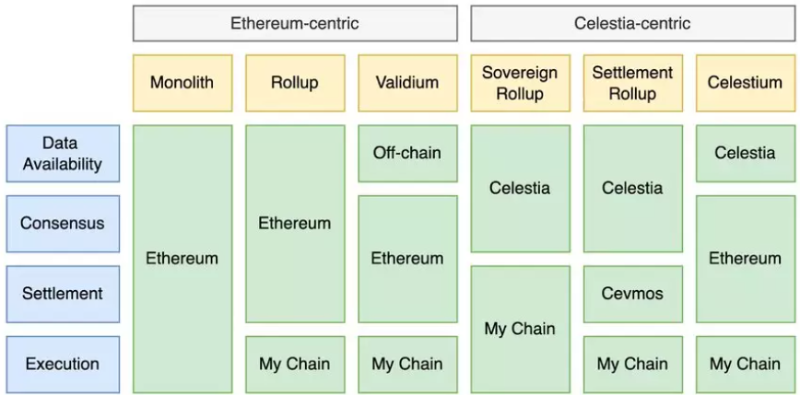
Due to the rise and adoption of rollups, combined with the complexity of execution sharding, the original execution-shard-focused scalability roadmap has been abandoned in favor of data sharding. The Ethereum team now believes that scaling Ethereum to meet global demand will be achieved through rollups. Therefore, Ethereum’s post-Merge plan is to become a robust settlement and data availability layer, from which rollups derive security.
Beacon Chain (The Merge)
Contrary to popular belief, the purpose of the Merge is not to reduce transaction costs, but to transform Ethereum into a strong foundational infrastructure layer for rollups.
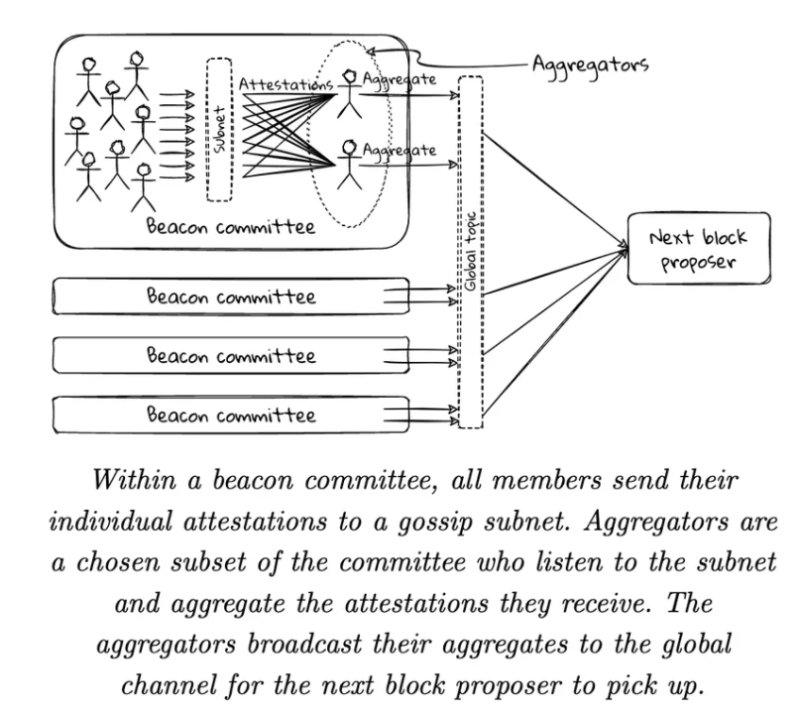
The first key component in achieving this goal is the Beacon Chain. This transitions Ethereum from its previous PoW system to a PoS system, where stakers must post collateral to produce blocks, and dishonest participants have their stake slashed.
Moving the consensus system to PoS (Proof of Stake) introduces validators as a primitive, which in turn strengthens network consensus and paves the way for an efficient protocol-level data availability layer. Validators represent a key innovation introduced by the Beacon Chain. They are randomly assigned by the Beacon Chain to vote on blocks and form consensus.
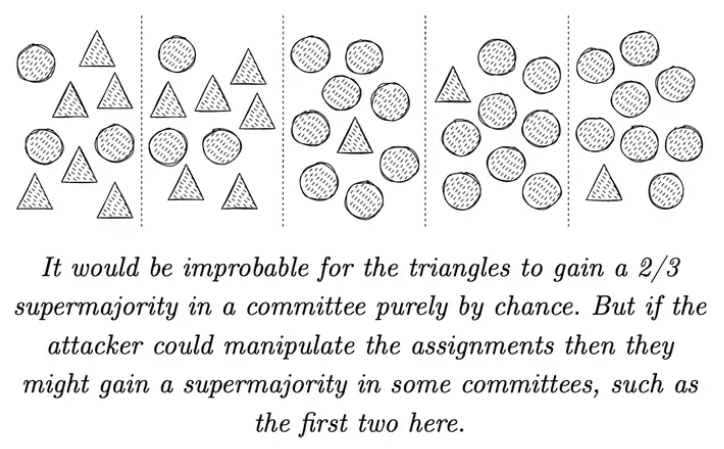
Votes are called attestations, and by checking validator votes, the state of the Beacon Chain can be easily verified—minimizing block size and data growth compared to single-validator verification.
The introduction of validators also strengthens consensus, as a relatively large number would need to collude to create a fork. Validator sets are also regularly shuffled, making it difficult for malicious validators to coordinate attacks in time.
Consensus and MEV (The Splurge)
Vitalik believes that the endgame for all blockchains is centralized block production with decentralized block verification.
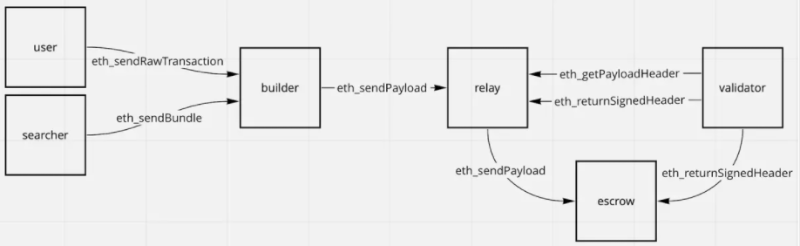
Because post-sharding Ethereum blocks will be extremely data-dense, high data availability requirements make centralized block production necessary. At the same time, there must be a way to maintain decentralized validators.
After the Merge, Ethereum will implement proposer-builder separation (PBS) at the consensus layer. A new builder role constructs Ethereum blocks and submits them to proposers for acceptance. Since the payload sent to proposers is stripped of transaction contents, this eliminates the possibility of proposers engaging in front-running.
Additionally, in an efficient market, the introduction of a block space market incentivizes builders to bid up to the full value of extracted MEV, allowing the validator set to capture most of the MEV rewards.
Sharding also enhances rollups that inherit security from Ethereum.
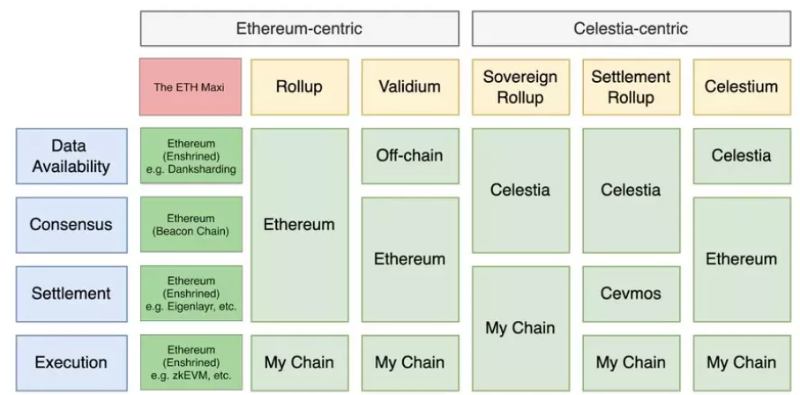
By tightly integrating data availability with the consensus and settlement layers to upgrade the underlying infrastructure, rollups can leverage native data availability solutions and drop the security assumptions required for verification. This architecture eliminates governance and smart contract risks by enabling entire rollups to be deployed directly within the protocol.
In-protocol rollups offer several benefits: eliminating the fixed per-block gas costs currently faced by smart contract rollups, and removing the need for validators to re-execute transactions to verify blocks due to the separation of computation from consensus.
Sharding (The Surge)
While the initial purpose of proposer-builder separation was to mitigate MEV externalities and centralizing forces, the Ethereum core team realized it could also serve the goal of data sharding.
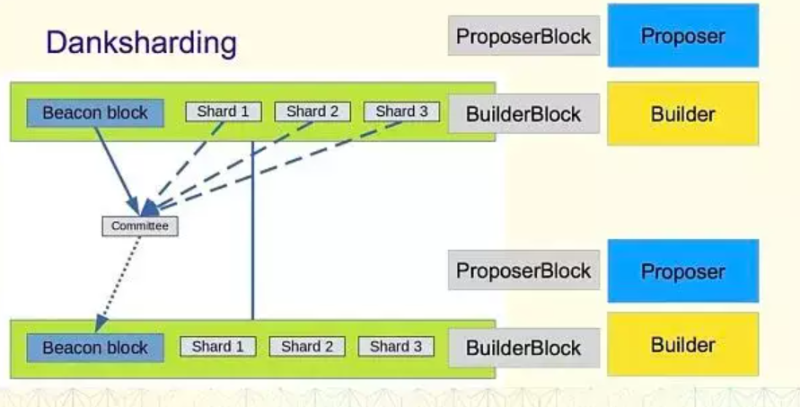
Danksharding, named after core contributor Dankrad Feist, introduces a key innovation: a unified fee market—rather than a fixed number of shards with separate blocks and proposers. Proposers are a randomly selected set of validators who perform data availability sampling on blockchain data.
This ensures data availability for light clients in a decentralized manner—something impossible via single-node validation due to the massive data volume of post-Merge blocks. Since consensus nodes also perform data availability sampling, this model unifies the settlement, consensus, and data availability layers.
The unified settlement and data availability layer unlocks exciting rollup capabilities via validity proofs: ZK Rollups can now make synchronous calls to Ethereum’s execution layer. This enhances and strengthens Layer 2 foundations such as distributed liquidity and scalability, creating conditions for building innovative next-generation dApps on ZK Rollups.
Proto-Danksharding
Although it holds great promise for Ethereum’s future, Danksharding will not be fully utilized immediately after the Merge. Proto-Danksharding (EIP-4844) is a preliminary version of Danksharding planned for release prior to full implementation.
Currently, rollups publish transaction data back to Ethereum using calldata, resulting in high gas costs. In the sharded future, rollups will use blobs, saving users from gas fees associated with EVM execution.
The Verge & The Purge
Ethereum’s state and storage are also important considerations. Growing state size may impact decentralization, as validators must be able to perform their duties using consumer-grade hardware.
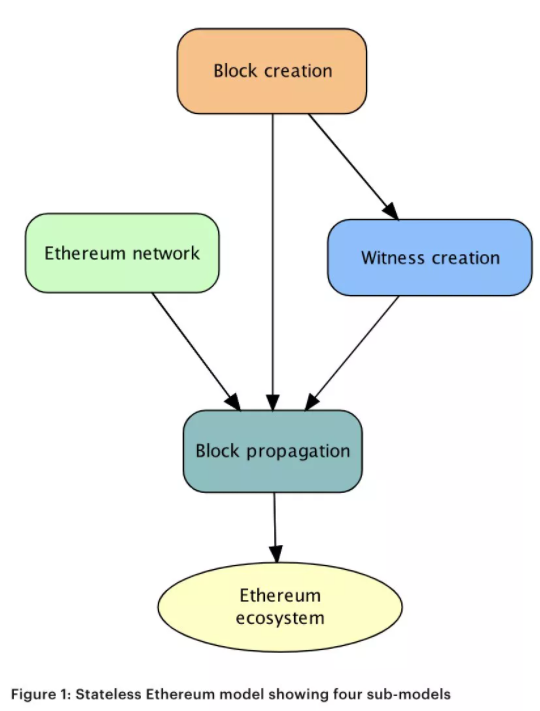
Blockchain state needs to be stored in RAM or SSD. However, historical data—information already agreed upon by Ethereum consensus—can be stored on cheap HDDs.
A major goal of Ethereum’s post-Merge roadmap is to minimize trust assumptions and provide in-protocol scalability through native solutions. Ethereum’s base layer supports an entire ecosystem of decentralized applications and has the potential to fundamentally change how we think about identity, storage, search, reputation, and privacy in the digital age.
These upgrades also enhance Ethereum’s application layer by providing highly secure, powerful infrastructure to scale these use cases globally, benefiting both users and developers. Ethereum’s vision is to enable a digital future worldwide—the Merge being the first step toward realizing this vision.
Join TechFlow official community to stay tuned
Telegram:https://t.me/TechFlowDaily
X (Twitter):https://x.com/TechFlowPost
X (Twitter) EN:https://x.com/BlockFlow_News






