








Bankless: Why ZkEVM Will Unlock the Huge Potential of NFTs?
TechFlow Selected TechFlow Selected
Bankless: Why ZkEVM Will Unlock the Huge Potential of NFTs?
The "zkEVM" solution will be a game-changer for general Web3 projects, including NFTs.
 Navigating Web3 tides with focused insights
Written by: William M. Peaster
Translated by: TechFlow intern
The future of Ethereum is scaling via Rollups, and a special class of Rollup—ZK Rollups compatible with the Ethereum Virtual Machine (EVM)—is the most promising path toward realizing this vision.
Looking ahead, it’s no exaggeration to say that "zkEVM" solutions will be game-changers for general Web3 projects—including NFTs.
What is a zkEVM?
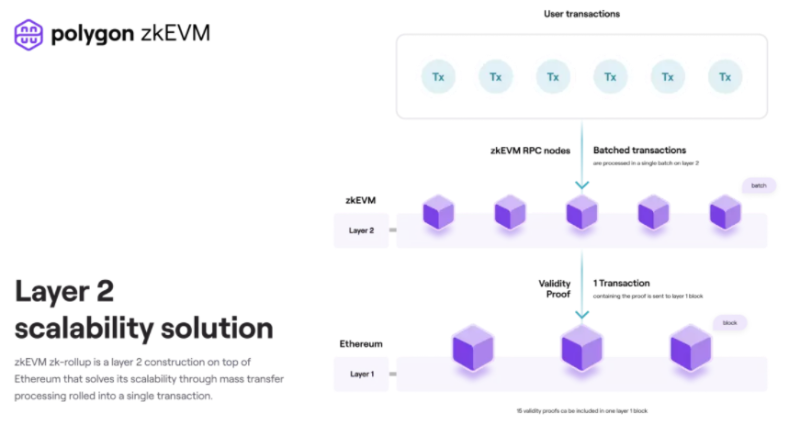
Rollups are Layer 2 (L2) scaling solutions because they operate on top of Ethereum's Layer 1 (L1), aiming to make Ethereum transactions affordable and fast. The two most popular types of Rollups currently available are Optimistic Rollups and ZK Rollups.
Both types execute transactions off-chain—that is, outside of Ethereum L1—and both inherit Ethereum’s robust security by posting batches of transaction data back to Ethereum. The key difference between Optimistic Rollups and ZK Rollups lies in fraud proofs versus zero-knowledge validity proofs, along with differing trade-offs in their advantages.
From the start, Optimistic Rollups have been well-suited for "general EVM computation," meaning Ethereum projects—such as NFT projects—can easily port their Solidity-written L1 smart contracts or create L1-like smart contracts on these L2s.
In contrast, ZK Rollups are highly efficient and secure, and these advantages become even more pronounced over time. However, until now, technical differences have meant that this type of Rollup has not offered EVM compatibility.
Therefore, a ZK Rollup with an EVM-compatible execution environment is a zkEVM. No such project has launched yet, which is why progress in zkEVMs represents the "holy grail" of ZK Rollups: because they finally allow these L2s to combine general-purpose EVM computation with the efficiency provided by zero-knowledge proofs.
As Vitalik Buterin has predicted, this level of upgrade will help ZK Rollups win out across all use cases. And today, “all use cases” includes a large NFT ecosystem. But before we discuss the impact of zkEVM + NFTs, let’s briefly review recent developments to see how the future of zkEVM is unfolding right now.
Three New zkEVM Announcements
On Monday, July 18, the Scroll team launched a Pre-Alpha testnet for its zkEVM-based ZK Rollup, also named Scroll:

Then on Wednesday, July 20, two more major zkEVM announcements were made:
-
Matter Labs, the builder behind zkSync, revealed that zkSync 2.0—a zkEVM-based ZK Rollup—"will launch on mainnet in 100 days."
-
Polygon launched Polygon zkEVM as open-source software and announced an upcoming public testnet. Notably, this ZK Rollup is designed not just for EVM compatibility, but full EVM equivalence—meaning coding and using tools on this ZK Rollup is identical to doing so on Ethereum, making it extremely developer-friendly for Web3 builders.
Why is zkEVM Important for NFTs?
We are moving toward a future where zkEVM-based ZK Rollups become the gold standard for scaling Web3 projects.
Because they rely on cryptography rather than economic incentives, ZK Rollups are inherently more secure than Optimistic Rollups. Multiple examples show that ZK Rollups also significantly reduce transaction costs. Moreover, withdrawing NFTs from a ZK Rollup takes as little as 15 minutes, compared to about one week required by Optimistic Rollups.
Thus, fast and affordable transactions + high security guarantees + EVM compatibility + fast NFT withdrawals = zkEVM.
It’s also worth noting that the future of zkEVM could be even brighter. Later this year, Ethereum will undergo the long-awaited Merge upgrade—but that’s not the end of the roadmap. After the Merge comes The Surge, which will further enhance Rollup scalability through sharding technology.
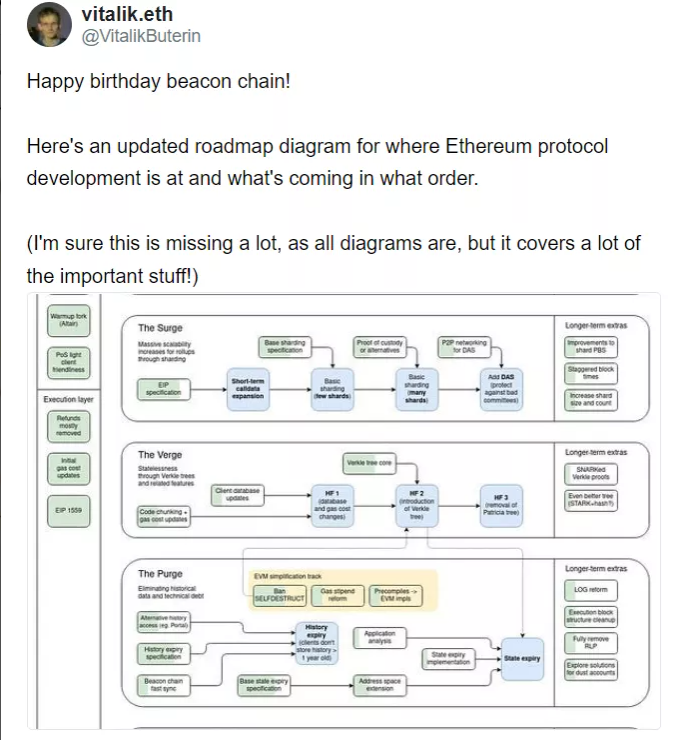
This means ultra-low transaction costs and ultra-high-performance L2s are on the horizon, upgrades that better prepare NFTs for the global stage. In the long run, Ethereum itself may transition from EVM to a zkEVM model, meaning NFTs themselves are likely to run on zkEVMs in the future. In crypto, sometimes you get a rare glimpse into the future—and this is undoubtedly one of them.
Join TechFlow official community to stay tuned
Telegram:https://t.me/TechFlowDaily
X (Twitter):https://x.com/TechFlowPost
X (Twitter) EN:https://x.com/BlockFlow_News






