








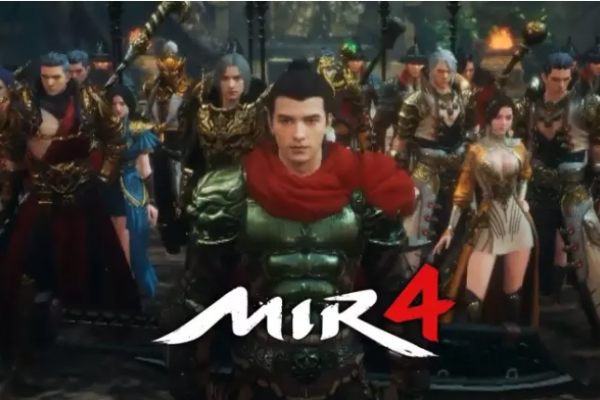
How Wemade, the South Korean gaming company, is building a Web3 Steam with Legend of Mir 4?
TechFlow Selected TechFlow Selected
How Wemade, the South Korean gaming company, is building a Web3 Steam with Legend of Mir 4?
"I firmly believe that all successful games will eventually transform into blockchain games, because they will be more fun."
 Navigating Web3 tides with focused insights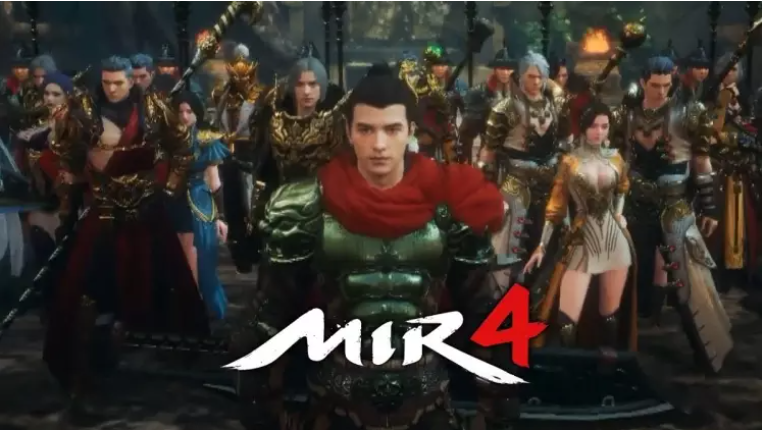
Most players in Western countries may not yet be familiar with Korea’s Wemade, so it's understandable if they’re unaware of the company’s ambitions.
Wemade CEO Henry Chang wants to change that. He aims to turn Wemade—the company known for its Mir series of online games—into the Steam of blockchain gaming.
It’s an ambitious plan, and turning Wemade into the Steam of blockchain gaming will require significant effort. The Legend of Mir series has over 500 million players, and its latest blockchain game, Mir4, is a hardcore title (notoriously difficult to play), yet still attracts more than 4 million monthly players.
Many Western gamers avoid blockchain games, seeing them as low-quality or purely money-grabbing schemes. However, the strength of the Mir franchise lies in gameplay mechanics beloved and familiar to fans of anime-style games. Now, Chang has launched Wemix, a blockchain gaming platform that could serve as the foundational ecosystem for other developers creating similar titles.
This week, Wemade reported a profit of $6.5 million on $131 million in revenue for the first quarter.
The Wemix platform allows game developers to launch blockchain games without needing full expertise in Web3. Recently, nine new games joined the platform. Chang hopes to reach 100 games by the end of 2022. This year, the company has invested in 22 blockchain-related projects and plans to launch a fully collateralized Wemix stablecoin called WEMIX$.
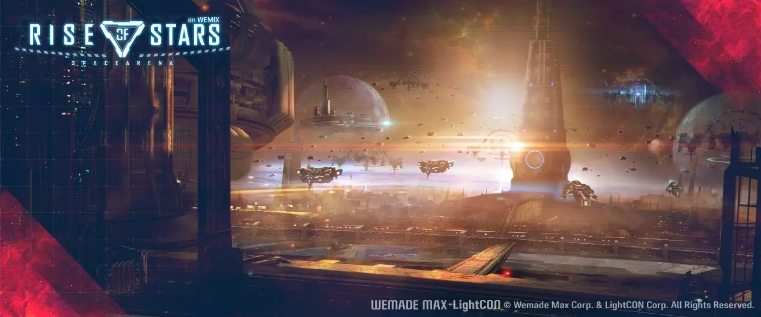
Wemix 3.0 expands the platform’s existing P2E features, allowing players to sell upgraded and purchased NFT items to earn real income from gameplay.
With this potentially disruptive technology in hand, Chang hopes to gain traction in Western markets, aiming to enhance interaction between developers and players through decentralization. While many Western hardcore gamers remain skeptical of blockchain games, Chang believes high-quality products can win them over as the industry moves toward the “metaverse.”
Below is an interview with Henry Chang.

GamesBeat: I’ve been following what your company has been doing lately, especially in blockchain. But I’m curious—how do you view Wemade’s history? Your new direction is quite interesting.
Henry Chang: It was probably similar to other companies in the market. Before the crypto price surge in 2017, we didn’t know much about it—we just saw Bitcoin and cryptocurrencies as another form of in-game currency, nothing more. From late 2017 to January 2018, when Bitcoin prices spiked, many wanted to understand the future of crypto and capitalize on the opportunity.
We at Wemade also started thinking about what we could do. Some key questions remained unanswered, but the most important one was clear: where should crypto be applied? We found our answer: gaming. We believed cryptocurrency would shine brightest in gaming.
You might recall that in February 2018, Bitcoin prices began to crash. Many companies thought it was time to abandon crypto, but we didn’t. Instead, we turned to blockchain gaming, linking games with blockchain. That’s what we’ve been doing for the past four and a half years. Blockchain gaming is fascinating—I believe all games in the world will eventually become blockchain games. We’ve been iterating continuously, building a platform to update games using this method.
Currently, there are around 15 games on the platform. Our most successful blockchain game, Mir4, will launch globally in August. We aim to have 100 games on the platform by year-end—an important goal for us. But we also believe this process will provide valuable learning experiences, and that our blockchain gaming platform will become the best. You might think of platforms like App Store, Google Play, or Steam—they’re distribution channels. We don’t interfere with distribution. Instead, we offer solutions enabling games to issue tokens and NFTs, along with virtual blockchain systems to build their economies.
GamesBeat: Will Mir4 continue to grow? What’s its current scale? Has the recent drop in cryptocurrency prices affected it? Is there a link between crypto declines and Mir4 player numbers?
Chang: Since its launch last August, player numbers rose sharply until November. After that, growth plateaued, and player counts have remained stable. For us, 6.2 million players marked the peak of our monthly active users.
However, regarding market price drops, we haven’t seen any impact on traffic, MAU, or game revenue. I believe a game is more influenced by its own economic system, though overall financial conditions may have indirect effects. Currently, our platform hosts 15 games, each with its own economy, and their performances vary. With 15 games come 15 different in-game currencies. Analysis from June showed that 10 of these tokens declined in price, while others increased—indicating that game economics, rather than broader crypto trends, drive performance.
GamesBeat: Stepping back, given how competitive the blockchain gaming market is, why do you consider Mir4 successful? Beyond high production values and art quality, what else contributes to its success?
Chang: I like the neutral term “blockchain gaming.” I see two distinct approaches.
The first starts with cryptocurrency and applies it to gaming, such as Axie Infinity, where you use crypto within a P2E model.
The second approach begins with making a well-crafted game, then integrating cryptocurrency economics to turn it into a blockchain game, which is exactly what we did with Mir4.
Both models exist across the blockchain space, but they differ significantly. In the crypto-first P2E model, the game itself isn't very engaging—players are mainly focused on earning money, which I don’t think is sustainable.
If players are meant to enjoy the game, it must be fun from the start. And fun depends on two things.
First, the gameplay must be enjoyable. If the game isn’t fun, it won’t last long.
Second, the game needs an economic system to support progression. In the past, even well-made games had economies confined entirely within the game. But if you introduce tokens and NFTs with real economic value, the game becomes far more engaging.
As you saw with Mir4 (full name Mir4 Global), we launched a non-blockchain version in Korea a year ago—and it succeeded. We know the in-game economy played a crucial role in Mir4’s success. I believe if a game’s economy works well and developers apply blockchain technology effectively, players will enjoy the experience more, attracting more users and leading to greater success. I’m confident in this idea, and we have multiple cases proving it. That’s why I chose to build a platform first—not jump straight into blockchain games—because I knew our platform could transform traditional games into blockchain ones.
GamesBeat: These games are popular in Asia. But in Western markets, hardcore gamers seem to dislike NFTs and blockchain gaming—they resist it, and some developers feel the same. Who do you see as the core audience for these games, and how do you overcome resistance during development?
Chang: Let me share some data. You're right—it’s true these games are more popular in Southeast Asia and Latin America. But look at the results from last year and early this year: Mir4 achieved strong success in the UK, Netherlands, Sweden, and Belgium.
At our peak revenue period, the Philippines ranked first, Brazil second—but the U.S. and UK came third and fourth. While you’re correct that blockchain gaming may not be mainstream in the West, we clearly see there is a Western audience for it.
I think there’s a misconception in Asia. Because Wemade previously made pay-to-play games, initial resistance is natural. But I believe gamer attitudes will evolve. In fact, I think token- and NFT-based blockchain games are well-suited for the Western hardcore gaming market, since Western hardcore games already involve purchasing games and items individually. The people trading tokens and NFTs aren’t developers—they’re players. I believe tokens and NFTs serve the users. The more user-to-user trading occurs, the greater the benefits, leading to better returns, increased game sales, and improved outcomes for developers.
There may be some misunderstanding because, in the West, the most famous blockchain games are like Axie Infinity—games with little fun factor—or pay-to-win titles like Legend of Mir 2. But I believe if we succeed in delivering high-quality hardcore games, players themselves will demand tokens and NFTs. Take a game like GTA—if it included tokens or NFTs, it would gain real economic value, making the experience more engaging. In-game tokens and NFTs would only be used for peer-to-peer trading, separate from the developer.
GamesBeat: What’s your strategy for the Wemix platform? What are you trying to achieve, and why invest so much time and resources into it?
Chang: As I said earlier, I firmly believe all successful games will eventually transition to blockchain gaming because it makes them more fun. But what makes a game fun? Not blockchain technology itself. I don’t think game companies should try to build their own blockchain tech—it’s inefficient. In the future, countless games will issue their own tokens and NFTs, so my goal is to provide a plug-and-play solution—a convenient platform.
Steam started with just 35 PC games. Over the years, it grew to host 11,000 games and now dominates PC game distribution. On mobile, about 50,000 games launch annually. These are our benchmarks. As you may know, crypto markets operate 24/7 without holidays, running 4.5 times faster than traditional markets. Our goal is to become the dominant blockchain gaming platform within three years. Steam took 15 years to reach its current status—we aim to achieve a similar position in the blockchain space in just three.
GamesBeat: Compared to other competitors in the space, what advantages does Wemade have?
Chang: Currently, we host the largest number of sustainably developed games on our platform, and we’ve created the most successful blockchain game to date. Our platform is unique—if a developer with zero blockchain knowledge comes to us wanting to issue tokens or NFTs, we can deliver within a month. We’re all-in, dedicating all our efforts. We believe that launching a large number of games by year-end will significantly widen the gap between us and competitors.
I believe when categorizing technologies, there are different types. The first kind—like biotech—requires massive time and investment and may still fail. Then there’s a second type, built on strong operations: investing time and effort to master machines, AI, and blockchain. In all these areas, operational excellence is critical. Experience drives improvement in technical quality—Tesla’s self-driving is a great example. Wemade entered this field early and has been working on it for years. We’ve gained extensive experience across diverse use cases, giving us a strong competitive edge.
Western blockchain companies like Solana or Binance have followed our strategy, inviting partners to collaborate. But they lack the technology to enable non-blockchain-savvy companies to develop games.
GamesBeat: How do you plan to raise Wemade’s profile and reputation in the West? Are you attending events there?
Chang: I’ve been doing exactly that. Previously, our main markets were Korea and China, so I attended events there. Now, I believe Wemade is just beginning to appear on the Western stage. We’ve long been sponsors of GDC. I’m not sure yet about the response, but I’ve delivered keynote speeches there. The ultimate goal is to create games that Western users truly want. To achieve this, we need broader promotion, and I’ve been actively pushing forward. I’ll continue participating in Western blockchain, gaming, and tech events to promote our games.
Join TechFlow official community to stay tuned
Telegram:https://t.me/TechFlowDaily
X (Twitter):https://x.com/TechFlowPost
X (Twitter) EN:https://x.com/BlockFlow_News






