








Why has BanklessDAO grown so quickly?
TechFlow Selected TechFlow Selected
Why has BanklessDAO grown so quickly?
Although Bankless DAO's overall structure appears complex, its actual architecture is not complicated.
 Navigating Web3 tides with focused insights
Have you ever seen an organization develop corporate bloat just six months after its birth?
Have you ever seen an organization launch a fundamental revolution against its own structure in a very short time?
Have you ever experienced a work environment that undergoes massive changes every few weeks?
All of this is happening inside BanklessDAO, whose pace of evolution is truly terrifying.
If you leave the community for a few weeks and come back, it's almost unrecognizable—full of new people, new projects, new channels, and new meetings.
In November 2021, just six months after its inception, BanklessDAO already had 1,500 official members and several thousand more holding guest passes. All of them were contributing to the DAO to varying degrees. The Discord server became as chaotic as a neighborhood group-buying chat during Shanghai’s pandemic lockdowns, with every channel overflowing with information. If you miss one day, you’re instantly behind.
Why has this organization grown so fast?
In traditional companies, someone must go through a lengthy hiring process before landing a position.
In a DAO, a person can join a Discord server, start creating value, and get paid immediately.
This low barrier to entry makes DAOs ideal for low-risk experimentation. People join DAOs, propose ideas, form teams, secure funding, and execute relatively autonomously.
And among all DAOs, BanklessDAO stands near the top.
What does BanklessDAO do?
In one sentence: it's a community and a self-governing organization.
But if you dig deeper, what exactly *is* BanklessDAO?
Ask 100 members, and you might get 90 different answers. Some say it's hundreds of Discord channels plus a forum. Others describe it as a set of smart contracts, or something like a company made up of guilds. Some see it as a playground full of fun projects. Interestingly, even core founders give different answers.
Regardless of the answer, one thing is certain: BanklessDAO is complex, and the community is vibrant.
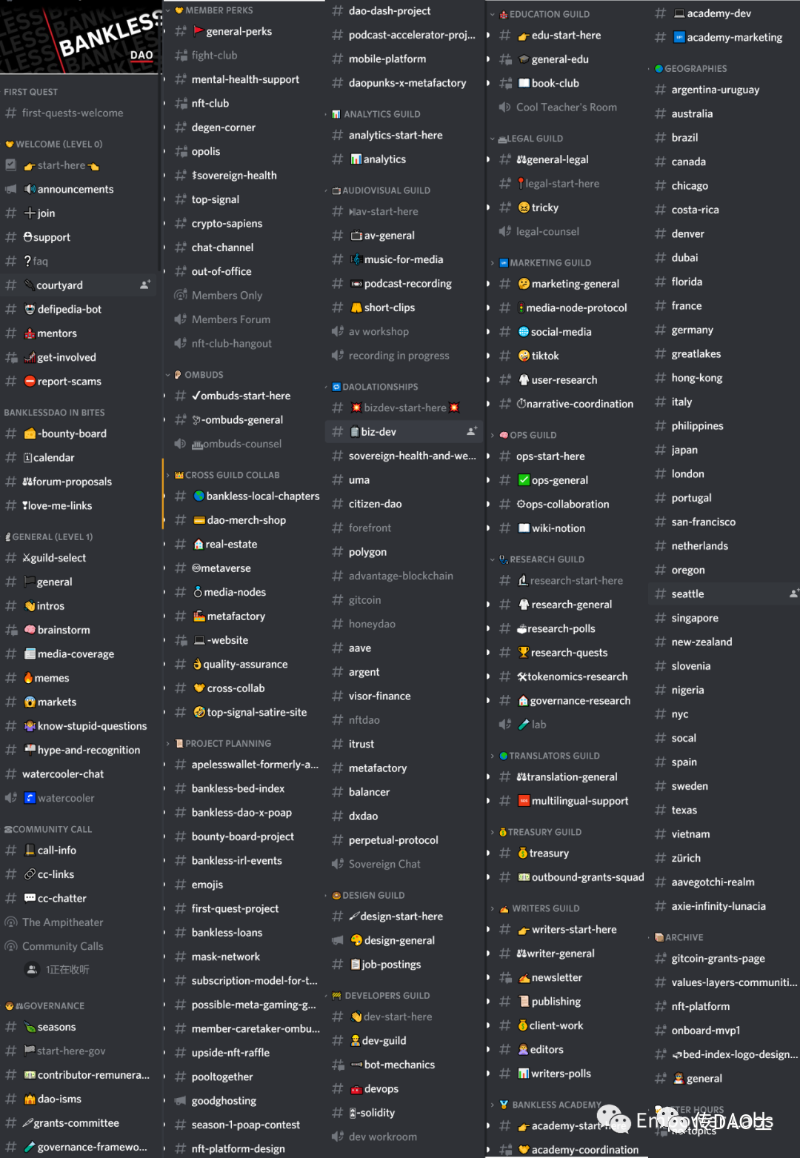
Step into BanklessDAO’s Discord, and within the first minute, you might feel overwhelmed—there are over 200 seemingly chaotic and bizarre channels.
The History of BanklessDAO
BanklessDAO originated from Bankless (https://banklesshq.com/), a media outlet founded in 2019. It started simply as a newsletter tracking developments in the crypto industry and added audio content in 2020. Its business model was straightforward: paid subscriptions. Free subscribers only saw limited content.

Bankless is an influential media brand in the crypto community, with over 200,000 subscribers and countless viral articles. It often predicted industry trends accurately—looking back at old posts reveals a treasure trove of “wealth codes.” Despite charging $22/month—more than double the Wall Street Journal’s $9.99—it still retains many long-term users.
Its strength lies in storytelling—stories that resonate with ordinary people. Some insiders look down on Bankless for lacking depth, but deep content isn’t always accessible. Content that’s easy to understand naturally attracts more readers. This approach helped Bankless gather a large base of non-crypto-native audiences across Western communities.
On May 4, 2021, Bankless launched a call to establish Bankless DAO. The goal: accelerate mass adoption and social consensus around truly bankless financial systems—including Bitcoin, Ethereum, and DeFi—through collective community participation.
In short, BanklessDAO is the organization behind the Bankless brand. It operates independently as a typical decentralized autonomous organization (DAO). The BanklessDAO community aims to create an environment where everyone can explore decentralized finance and technology.
Exceptional writing ability proved to be a killer skill in the DAO space. BanklessDAO excelled at rallying community members—their recruitment posts were compelling and quickly gained widespread support. Soon, BanklessDAO began operating with a formal structure, achieved profitability, and incorporated as Bankless LLC.
● Values and Vision
Integrity and honesty: Operate transparently through open discussions and financial audits to build trust.
Distributed governance: Place decision-making power in the hands of the collective, leveraging crowd wisdom for governance.
Open culture: Enable the community to continuously drive new initiatives and act quickly through self-organization.
BanklessDAO strives to be a trusted community, empowering people worldwide to participate in decentralized finance by sharing accurate, truthful, and objective information.
● BANK Token
The $BANK token is BanklessDAO’s native governance token, used to coordinate all DAO activities and distributed to active community members.
One billion members, one billion BANK.
To attract one billion members, Bankless created one billion $BANK tokens. Of these, 30% were retroactively allocated to early supporters, 30% belong to the project treasury, and 40% will linearly vest into the treasury over three years. The Bankless team holds no $BANK. Later, a proposal reallocated 25% of the original treasury portion to be managed by Bankless LLC (the legal entity owning Bankless HQ) as options.
The $BANK token itself has no intrinsic value—it represents only a member’s level of contribution and participation. $BANK was never sold and has no investors behind it. Only those who actively contribute to the community can earn $BANK, and community participation is the sole way to obtain it. How contributions are defined is decided by community voting.
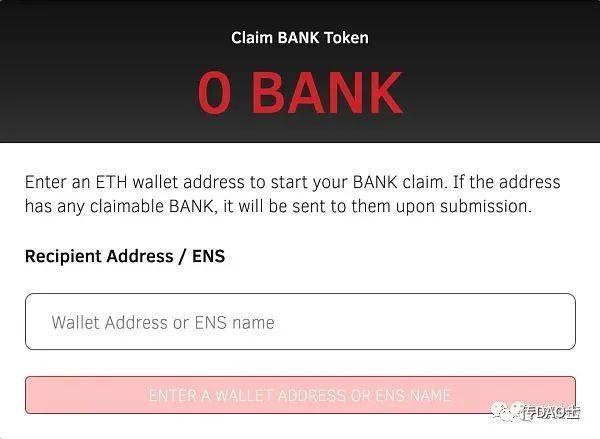
On May 4, 2021, members who had previously participated in Bankless community activities received retroactive $BANK distributions—commonly known as an airdrop.
Since Bankless’ audience consists largely of crypto newcomers with limited funds and experience, they joined not for speculation but out of genuine belief in the mission and enthusiasm. They weren't jaded by the greed, scams, and infighting common in crypto circles.
As a result, BanklessDAO quickly established a clear and reasonable collaboration framework in its early days, effectively integrating passionate contributors. It essentially pioneered a new school of community building.
BanklessDAO organizes its operations in a highly structured way, built around individual guilds. A guild, in BanklessDAO terminology, is a talent pool—grouping individuals with specific skills to serve the DAO. This is why they resemble departments in a traditional company.
Peek into a few channels, and you’ll find BanklessDAO rivals major Chinese internet firms. Guild members “show up to work” daily, holding numerous meetings large and small. Every meeting, regardless of scale, produces open and accessible minutes—enabling better coordination and governance.
In this environment, you clearly feel specialization matters, governance is everyone’s responsibility, and even without specialized skills, you can become a guild recorder or operator. Members feel strong belonging—regardless of how many tokens they hold, or even if they hold none at all. Your voice is respected in channels. As a contributor, you have influence. Here, flat “creative work” thrives. The atmosphere acts as emotional fuel, motivating members to contribute passionately and “work remotely” online.
From an entrepreneurial perspective, BanklessDAO supports “internal startups,” providing brand and capital while keeping projects within the ecosystem.
Although initiated under the Bankless media banner, BanklessDAO is a product of community consensus. It has no legal entity in the traditional sense and operates independently from Bankless media, sharing only the brand. Personnel overlap is minimal—BanklessDAO is primarily run and maintained by community contributors.
Who’s in the community? What are they doing?
Bankless’ Discord now hosts over 22,000 members—people from all walks of life with diverse motivations. Some seek a bankless society, others are curious about internet collaboration, some hope to earn side income, and others are just passing by, intrigued by a particular channel. Yet they’ve all converged here.
BanklessDAO is rational. When you want to initiate or join something, you’ll find a mature structure and professional talent ready to support you—a mechanism far ahead of most other DAOs.
Yet BanklessDAO is also diverse. Most members aren’t seasoned blockchain veterans but ordinary people—retail workers, fitness trainers, lawyers, IT staff, and nearly every background imaginable. Their ideas and creativity form a rich microcosm within BanklessDAO.
BanklessDAO’s goals are grand and ambitious, yet somewhat abstract. Thus, few projects can be directly tied to measurable KPIs. But perhaps precisely because of this, imaginations aren’t constrained—almost anything can be justified as meaningful.
With a shared vision bringing people together, members gradually get to know each other and then spontaneously form over a dozen interest-based guilds. Like departments in a company—design, development, legal—each guild has its own members, specialties, and responsibilities. Upon closer inspection, guilds resemble business units, each aiming to launch initiatives and create public goods rather than merely serving other departments.
One word appears constantly throughout BanklessDAO—“action.” More than talk, action is encouraged. This is their foundational community culture:
“We encourage action and embrace risk. We provide a self-organizing space where our community can continuously push new ideas and rapidly turn them into action.”
This culture gave rise to 13 guilds: Writing, Finance, Translation, Research, Operations, Marketing, Legal, Education, Design, Business Development, Development, Video, and Data Analytics.

Theoretically, all guilds aim to promote a global bankless society (#gobankless). Methods vary, but the goal is shared. And since the goal is both vast and abstract, almost any direction can align with it and justify its existence.
Discussions within guilds generate countless project ideas. Some gain enough consensus to move from concept to action. Projects range from building Discord bots and launching a blockchain index fund, to constructing a Bankless Island in the metaverse, or pursuing real-world commercial partnerships to strengthen guilds and organizations.
Whether guilds or project teams, all collaborate entirely via internet tools. Discussions mainly happen on Discord. Weekly 1–1.5 hour voice calls are standard, and agreements, decisions, and tasks are documented in Notion, co-maintained by all to track progress. Any member can join any guild discussion or call. Nearly all work documents and meeting notes are fully open.
It’s as if you accidentally walked into a company and discovered you could freely explore every department, attend any meeting, and access all historical discussions and documents. After wandering a while, you find a department or project that interests you and say, “I’d like to join.” People respond, “Come on in, we’ve been waiting!” You ask, “Can I only commit one hour a day?” They reply, “Even one hour a week works—just jump in.”
Can you imagine a more open productivity organization?
How to Join BanklessDAO?
Want to join a top tech firm? Nearly impossible—top graduates face multiple rounds of interviews and evaluations. Even internships are hard to land.
But joining BanklessDAO takes just minutes.
BanklessDAO is an extremely open community. Anyone can join the BanklessDAO Discord server and gain access to browse most information and historical work documents.
However, participating in collaboration and meetings requires membership, which means holding a certain amount of $BANK tokens.
What if you don’t have any?
There’s a special pass available. In Discord, there’s a dedicated channel to apply for a guest pass. Introduce yourself and your interests, and you can easily obtain a guest pass, unlocking speaking rights and collaboration features.
Joining any guild is completely open. The only step is adding your name and skills to the guild’s documentation hub—a customized Notion page. Just for learning, it’s already worthwhile—guilds host many experts. The Legal Guild has real legal professionals; the Data Analytics Guild has machine learning enthusiasts.
Worried about being judged for lack of expertise?
No need. Non-experts are welcome in all guilds. Many guild themes are broad enough for anyone to contribute. Even in highly specialized guilds, many operational tasks are handled by non-specialists. For example, you can hang out in the Legal Guild, listen to discussions on compliance, legal architecture design, or differences between U.S. and European regulations, and occasionally help with odd jobs.
What to do in your first week?
At first, it feels like arriving as a freshman—everything is exciting yet overwhelming. Suppose you spend 2–3 hours daily in BanklessDAO. Here’s what might unfold:
First, head to the role-select channel and choose interested guilds and projects. Guilds are talent pools; projects pull members from these pools to form teams. Selecting a role doesn’t mean formal membership—just that related channels appear in your Discord list.
Next, introduce yourself in dao-intros: your skills, background, and interests. Within days, you might receive a new project invite or suggestions to join specific guilds (e.g., Tokenomics Guild, Research Guild).
Then, study materials for interested guilds and projects, including all Meeting Notes. These reveal what everyone has been doing, progress made, and next-phase goals. Once familiar, you’ll find it easier to engage in discussions.
After that, visit the relevant guild’s Notion page to fill out the application form.
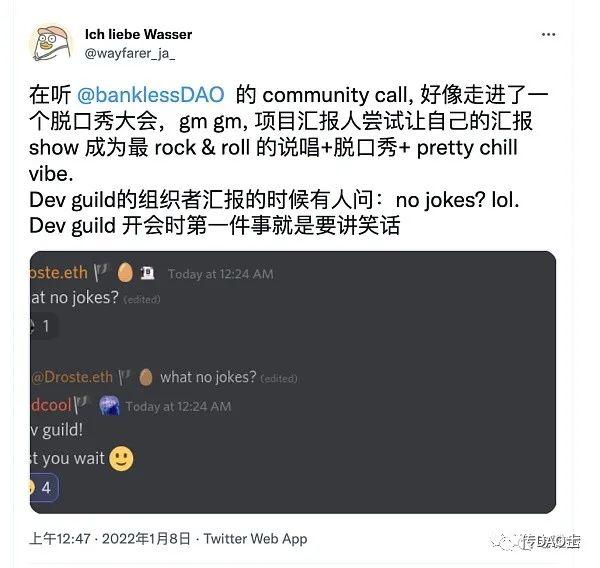
Then join community calls—all held overnight, which you might quickly find exhausting. Alternatively, read meeting notes. But notes are condensed—many valuable details may be omitted.
For instance, raw discussion dynamics (including complaints and conflicts), in-depth Q&A, live bot command demos in channels, or strategy talks about giveaways—these rarely appear in notes. Attending calls gives you direct insight into a guild’s current state and key community figures.
If lucky, you might catch a reward distribution—even without concrete work, friends might send you some $BANK tokens. Simply engaging in Discord, greeting others, and livening up the community counts as a contribution to the atmosphere.
How to Join a Guild?
BanklessDAO’s server has a channel called “Select Guild.” Just click the corresponding guild icon—membership is granted in one second.
Guild selection interface.
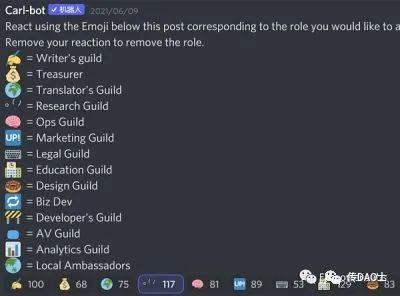
Once done, you automatically gain the guild’s role and access to all its channels. Future mentions of the guild will notify you.
Gaining a role is just step one. People won’t consider you part of the guild unless you’re active. Recognition comes through visibility—building social capital within the community, i.e., “who knows you” and “whom you know.” Whether consistently offering constructive input or just chatting daily, both help. You can’t walk into a new place and suddenly declare, “I have an idea—who wants to join?” People will wonder, “Who is this? Are they credible? Trying to scam us?”
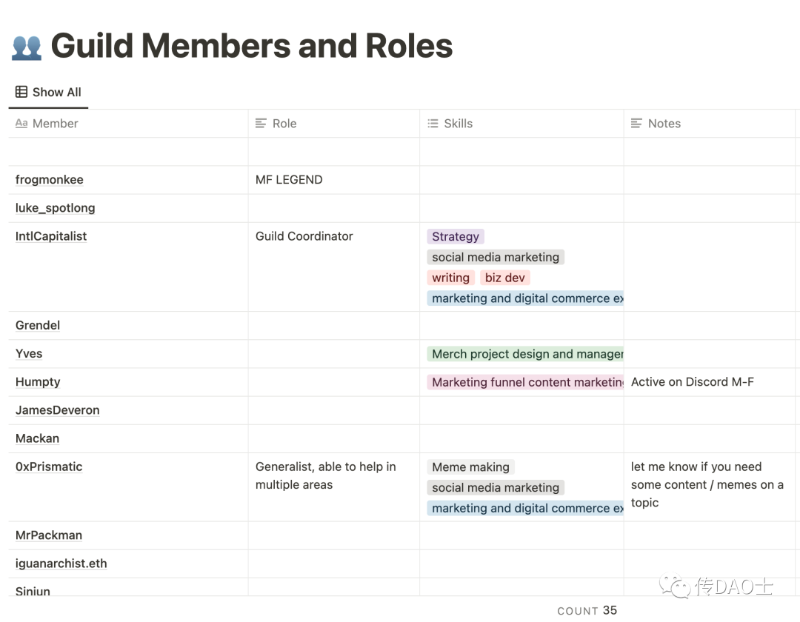
For members wanting to join guild operations or project collaborations, it’s common practice to add your name and skills to the guild’s Notion page to facilitate coordination.
Most guild member pages are simple, like this:
A few hardcore guilds use more complex dashboards.
For example, the Development Guild:

In any guild, most members are casual contributors. Active collaborators fall into two categories. One is the guild’s organizing team. Roles vary per guild but typically include a coordinator—usually more than one—to manage daily affairs. The latest governance proposal outlines recommended roles: Guild Organizer, Governance Coordinator, Secretary, Talent Coordinator. Each guild also has its own budget, multi-sig address, and multiple signers.
The second category includes project team members. Theoretically, projects and guilds are independent. But since project ideas often originate within specific guilds, most project members come from that guild, leading to frequent blending in practice. Projects have their own operational frameworks—explained in detail later.
How to officially start working?
Once past the beginner phase and ready to dive into BanklessDAO work, follow this process:
Step 1: Build Initial Consensus on Discord
Start with a project idea—say, establishing a “virtual bank” within the Bankless community. First, confront key questions: Does the community actually need this? How many people would join? What resources would it require?
You might not know whom to approach or quickly find a “leader” to consult.
In fact, you don’t need top-down approval. Just keep raising your idea in relevant Discord channels. This grassroots layer is the DAO’s most fundamental—and vital—space. It’s like the agora in ancient Greek democracy, where anyone could stand on a soapbox and speak.
If your “virtual bank” idea resonates, you’ll attract your first collaborators. Or, post it on Bankless’ official forum—feedback is slower but discussions are deeper.
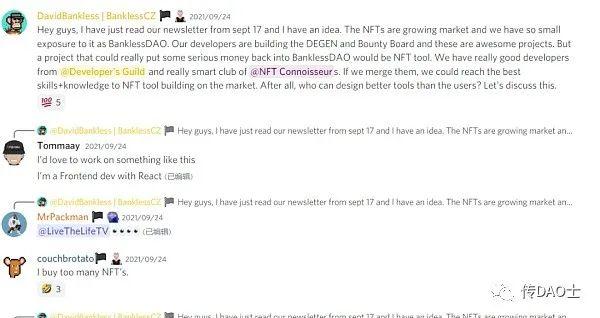
(Chat when the Flipper.tool NFT project was proposed)
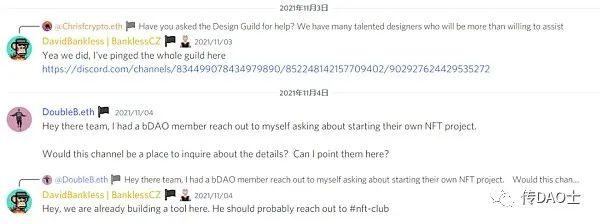
Step 2: Submit a Proposal on the Forum
While Step 1 doesn’t require the forum, advancing your “virtual bank” project does. Once you reach Level 1 (holding 35,000 $BANK), log in to the Bankless website (https://forum.bankless.community/)—this is a more formal venue. Present your project publicly for broader review.
In BanklessDAO, such proposals follow strict formatting. Here’s an example—a proposal to fund an NFT project—which illustrates how to write one:
https://forum.bankless.community/t/flipper-tool-nft-project-grant-request/2081
(Link to Flipper.tool NFT project’s funding request)
Bankless requires each proposer to submit a feasible plan—from background to detailed execution, personnel, financials, and success metrics—everything must be actionable, measurable, and transparent. It must align with BanklessDAO values and include budget considerations.
Currently, BanklessDAO compensation is roughly hourly—about 1,000 $BANK per hour (when $BANK trades at $0.1, ~639 RMB). That’s ~5,112 RMB for an eight-hour day! No wonder some say earning 100,000 monthly in a DAO isn’t a dream. Also crucial: clearly listing team members.
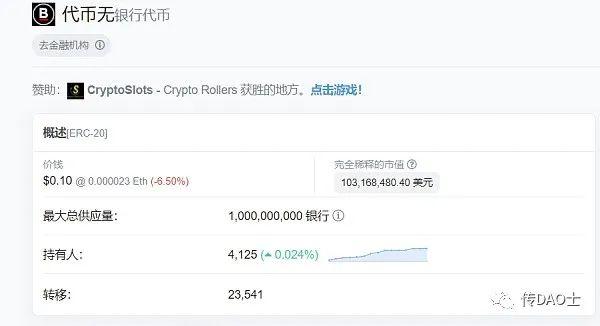
(Market price of $BANK)
In the comment section, you’ll see various project questions. For this NFT project, after reviewing Discord chats, some questioned whether organizers were bringing external projects to extract community funds—pointing out their limited activity and short tenure in the DAO. Others raised concerns about finances and revenue plans—unreasonable income splits, missing execution timelines and financial justifications. To gain approval, the proposer must patiently address these below. This process refines the proposal and expands consensus.

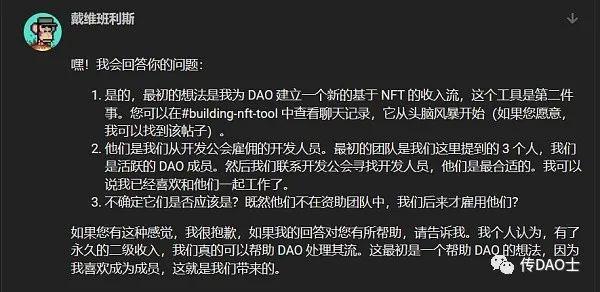
(Questions and responses regarding the Flipper.tool NFT project)
Step 3: Voting
Finally, the most critical step in community decision-making: put your “virtual bank” proposal to a DAO-wide vote. Bankless strictly defines passage criteria: within seven days, attract votes from 1% of the entire DAO, with over 66% approval. Early key projects like quarterly reports and monetary issuance plans were voted on Snapshot, but now many proposals allow direct voting beneath the thread—much more convenient.
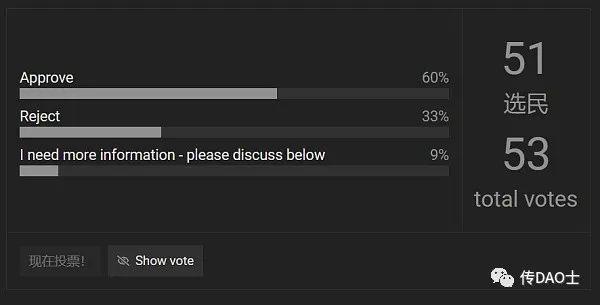
(Voting section for Flipper.tool NFT project)
Bankless also requires proposers to update relevant descriptions in the Wiki (Notion docs). If your virtual bank involves finances or cross-guild staffing, the Finance Guild, multisig team, and community ops will contact you to match resources and track progress.
In summary, while BanklessDAO’s structure seems complex, its actual construction isn’t. Broadly, it divides into human and financial resources. Human resources are the visible guilds, channels, and Notion docs, coordinated daily by the Ops Guild (though coordinators often volunteer as needed). You can sign up for guilds by entering your skills in Notion. Financial resources involve the Treasury Guild (overall planning), Grants Committee (budgeting and pricing), and Multisig Group (final fund release)—possibly the most “centralized” part. Until recently, some teams were still run by founding managers, maintaining the incentive system’s stability.
What is BanklessDAO’s management hierarchy?
Trying to grasp BanklessDAO’s organizational chart is tough. No matter how many channel chats, forum posts, or community calls you review, you won’t figure out who’s in charge.
Of course, you’ll notice key figures with high authority and strong capabilities handling critical tasks—but none are ultimate bosses. Because BanklessDAO has no supreme leader. Everyone governs collectively based on consensus and a mature, evolving rule set.
BanklessDAO provides abundant communication spaces, generating substantial daily discussions. But pure chat groups alone can’t sustainably advance a DAO toward its goals. As an organization coordinating global advocates of the Bankless vision, it has clear objectives. To achieve them, it relies on mechanisms like Season Plans, guilds, and project funding to coordinate operations and manage outputs.
BanklessDAO’s foundation is its guilds. A guild is defined as a talent pool—aggregating individuals with specific skills to serve the DAO. Hence, they resemble functional departments in a company.
There’s no supreme governing body or leader above guilds (like a CEO office). Instead, peer-level guilds constitute the entire DAO. Guilds operate permissionlessly—joining and leaving freely, with no top leader, only coordinators, all driven by consensus. Guilds emerge organically from community proposals, and more continue to form. Then, through proposals, various projects are initiated to build the DAO.
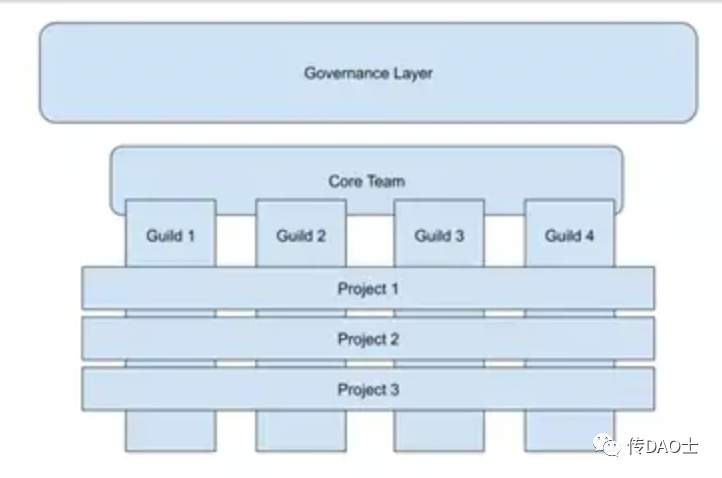
This is the org chart. It fairly accurately depicts BanklessDAO’s structure. This model has since been widely adopted and adapted—here’s one variation.
At the top is governance. Undoubtedly, governance reflects the collective will of all community members, deciding DAO strategy, including management and finance—core functions.
Below is Core Team. Core Team refers to key personnel—DAO founders, operational backbone, guild coordinators, treasury managers. Essentially, Core Team is the small group supporting the DAO’s foundational architecture.
Then come the guilds—Guild 1, Guild 2, Guild 3, Guild 4. Once gathered in guilds, few wait passively for assignments. Naturally, they discuss interests and initiate actions, generating countless project ideas. Thus, guilds evolve beyond mere talent pools into mini-business units, each inclined to launch their own projects. But this creates issues—guilds become somewhat closed, with limited inter-guild collaboration.
Typically, projects are proposed by members, discussed in the community, and gain collective consensus. If deemed viable, the project proceeds. Project scope is broad—writing a newsletter, launching a training program to teach Web3, developing a product, or creating a revenue-generating service. As long as the community recognizes alignment with shared values and mission, the specifics matter less.
Projects draw members from guilds—guilds function as resource pools, so project teams are usually cross-guild. For example, a project might pull two developers from Dev Guild and two designers from Design Guild, forming a complete unit.
Turning ideas into real projects is hard. Why? Recruiting people signals credibility. Say in the community, “Guys, I’m starting X”—briefly explain. People cheer, “Great idea, we support you!” Then you ask, “Who wants to join?” Often, no one steps forward—just superficial encouragement.
Thus, truly transforming an idea into a project—and finding others willing to build it with you—is extremely difficult. Failure to recruit indicates insufficient consensus. This natural mechanism filters viable projects in DAOs.
This is a hallmark of BanklessDAO—and likely most future DAOs.
Guild members enjoy full autonomy—not just for BanklessDAO projects, but external ones too. Take the Writing Guild: a group of writers producing articles or newsletters for the DAO. But they don’t stop there. They started taking external gigs—compiling content for Argent Wallet’s DeFi section, paid per article. This can also be seen as paid service to the ecosystem.
Among all guilds, two are unique: Treasury Guild and Operations Guild. The Treasury Guild manages the DAO’s financial planning—both treasury usage and potential revenue streams. The Operations Guild essentially serves as the DAO’s administrative and backend support. These roles exist as guilds, following standard rules and open to all. Next, we detail the Ops Guild’s structure and responsibilities.
Operations Guild – Backbone of the DAO
The Operations Guild’s specific duties include:
Coordinating daily operations to ensure smooth DAO functioning and shared goals.
Oversee DAO daily activities, ensuring alignment with the vision
Facilitate seamless and rapid operation of all other DAO components
Advance core operations, personnel, budget, goals, project delivery, and strategy
Support synergy across all DAO functions
Roles in the Ops Guild are finely divided with clear responsibilities: Community Manager, Operations Manager, DAO Mapper, Project Manager, Product Manager, Happiness Manager, etc.
Since most members are part-time, nearly all roles are shared among multiple people. This guild is the DAO’s most active presence. Its members wield high influence across the DAO—not due to formal power structures, but through expertise, deep understanding of the DAO, extensive time investment, and consistent support to others.
You might wonder: In such a flat, networked structure, how are disagreements resolved? What if someone takes on a task but fails to deliver?
How does the community make decisions?
Hundreds of members generate countless discussions daily across project groups and guilds, creating constant demand for decisions. Achieving full DAO-wide consensus for every decision is impractical.
Thus, most decisions in BanklessDAO rely on soft consensus. This contrasts with hard consensus, requiring full DAO voting. Roughly, financially significant decisions follow hard consensus; others proceed via soft consensus.
BanklessDAO hasn’t formally defined soft consensus. The required level of consensus, decision scope, and venues vary significantly. Soft consensus can emerge in chat channels, forum threads, small meetings, or even Twitter discussions.
Theoretically, this risks problems—insufficient discussion, overrepresentation, unauthorized actions. Yet, given BanklessDAO’s current operation, benefits outweigh drawbacks.
The efficiency and freedom from soft consensus drive BanklessDAO’s rapid evolution. Solving flaws through evolution beats striving for error-free perfection.
Viewed differently, the effectiveness of this imperfect (or non-existent) soft consensus mechanism proves the community shares healthy culture and values. Effective operation stems from shared principles, not predefined rules.
Whether soft consensus remains effective warrants ongoing observation. This is a shared challenge for all large-scale collaborative DAOs.
In contrast, hard consensus follows a seemingly bureaucratic and complex process. But most hard-consensus decisions involve moving significant funds—so extra safeguards are normal. For example, forming a project follows a standard hard-consensus process.
Broadly summarized in these steps:
Test the idea in a small circle, gaining initial consensus
Provide detailed info using templates to spark broader discussion and expand consensus
Submit a formal voting proposal and secure approval
Why does the community have tiers? How to level up?
While anyone can join BanklessDAO, to measure contribution and boost engagement, members are currently tiered into three levels: joining makes you a community member (no governance rights); holding 35,000 $BANK grants Level 1 status (can participate in governance); making notable contributions, receiving nominations, and passing community votes grants Level 2 (honorary); holding 150,000 $BANK grants Level 3 status.
Most communities, including DAOs, aren’t initially focused on maximizing shareholder value. Instead, people seek resonance—surrounded by like-minded peers, collectively making decisions, and advancing shared goals.
Community culture is why high-caliber talent sustains support for a DAO. Strong culture motivates active contributions—often beyond monetary incentives, which alone aren’t robust enough. Internal motivation from shared values is powerful. The most precious contributors are those investing time, not capital—those truly believing in the project and enthusiastically dedicating themselves to its growth. Such contributors are invaluable and rare in any community.
Upon close inspection, despite appearances of vibrancy and abundance, the number of highly engaged core members is small—most are just spectators. Tens of thousands join the Discord daily, yet even the most popular proposals get under 2,000 views, only dozens vote, and regular commenters are mostly familiar faces. This may be a general issue for DAOs today—though less severe in BanklessDAO.
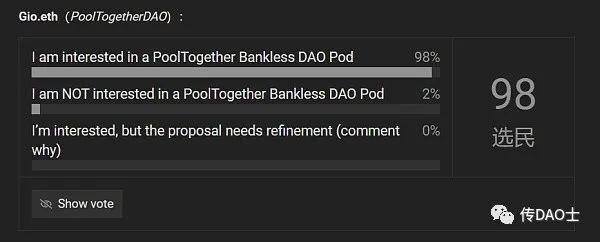
(Views and votes on a popular project)
How does BanklessDAO guide members to become contributors?
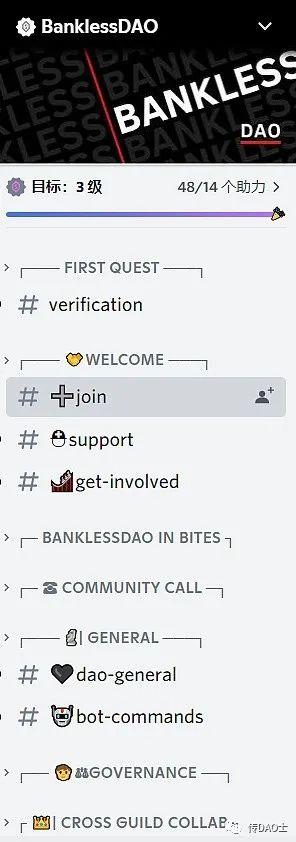
When you join BanklessDAO’s Discord, you’re immediately prompted to complete FirstQuest—learning about the community’s mission, values, structure, operations, key documents, and how to collaborate. Reading everything thoroughly takes about 20 minutes. Follow the steps, complete the initial task, and earn your GuestPass.
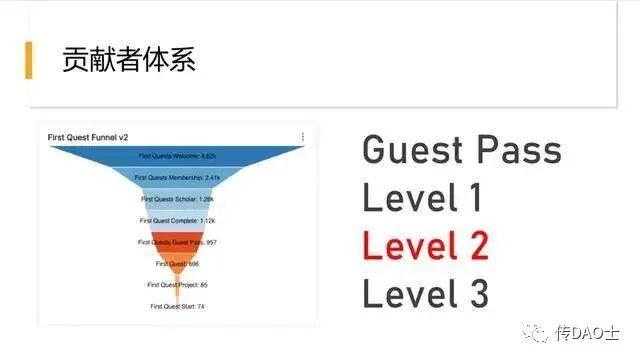
This is a funnel model—the top layer receives the first task.
The next layer is GuestPass. With this, you unlock nearly everything—ready to work, chat, and collaborate.
GuestPass is open to all—no restrictions. You only need to complete FirstQuest and introduce yourself in the designated channel, expressing your desire to contribute. Soon—sometimes multiple times a day—someone will grant you a GuestPass, unlocking over 95% of community permissions.
Above GuestPass is Level 1 membership. Requirements: hold 35,000 $BANK. You can buy them, but earning through contributions is encouraged—eventually accumulating enough to upgrade.
Level 2 is special—you can’t buy it. Based on community contributions, if you’re exceptionally active and impactful, you can be nominated, then approved by community vote. Level 2 members are the core contributors, most respected in BanklessDAO. There are currently over 80—quite a few.
Level 3 is WhaleStatus—
Join TechFlow official community to stay tuned
Telegram:https://t.me/TechFlowDaily
X (Twitter):https://x.com/TechFlowPost
X (Twitter) EN:https://x.com/BlockFlow_News


