









Grayscale sues U.S. SEC over ETF rejection—why are ETFs so important?
TechFlow Selected TechFlow Selected
Grayscale sues U.S. SEC over ETF rejection—why are ETFs so important?
SEC rejected Grayscale's ETF, prompting Grayscale to file a lawsuit!
 Navigating Web3 tides with focused insights
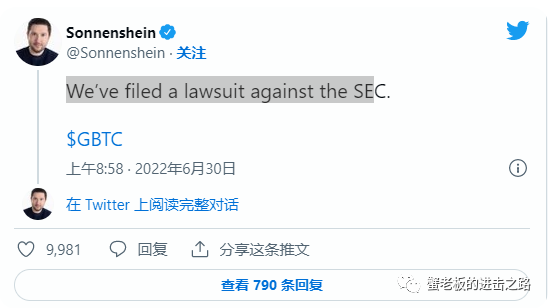
The U.S. Securities and Exchange Commission (SEC) rejected Grayscale Investments' application on Wednesday to convert its Grayscale Bitcoin Trust (GBTC) into an ETF, marking the end of Grayscale’s public campaign for such a conversion that began in April last year. Grayscale is now suing the SEC.
The reasoning behind the rejection was notably vague. In its ruling, the SEC stated that Grayscale's spot ETF proposal did not sufficiently address protections against "fraudulent and manipulative acts and practices" to safeguard investors.
A Review of ETF History:
On October 16, 2021, the SEC approved its first bitcoin ETF: ProShares’ Bitcoin Futures ETF (NYSEARCA: BITO), marking the beginning of futures-based bitcoin ETF approvals. Following this, ETFs like BTF and XBTF—established under the Investment Company Act and Investment Advisers Act of 1940—entered the market as bitcoin futures ETFs.
Unlike those funds, in April this year, Teucrium became the first to receive approval to launch a bitcoin futures ETF under the Securities Act of 1933 and the Securities Exchange Act of 1934;
In May, Valkyrie also launched its 33/34 Act-compliant bitcoin futures ETF, VBB;
In June, amid a 70% drop in the overall crypto market capitalization, ProShares introduced the first short bitcoin ETF, BITI.
The approval of these 33/34 Act-based ETFs led to optimism that by late June and early July, spot bitcoin ETFs from Bitwise and Grayscale would likely gain SEC approval.

However, things didn’t go as hoped—the ETF rejection today has prompted Grayscale’s lawsuit.
Fueled by earlier optimism, GBTC’s negative premium significantly narrowed—from a low of -34% on June 17 to -29% today. If a spot ETF were approved, even a conservative estimate of just 1% of capital from the hundreds of trillions in traditional financial markets flowing into crypto could mean hundreds of billions of dollars—equivalent to dozens of GBTCs. With leverage, market caps could multiply, potentially acting as a catalyst for a bull market resurgence across the entire crypto sector.
Due to certain drawbacks of futures ETFs—such as higher fees—market enthusiasm remains low. BITO, BTF, and XBTF have consistently underperformed spot bitcoin prices by 7%-10% annually. The broader crypto downturn has further hurt futures ETF performance. As the first bitcoin futures ETF, BITO even ranked among the ten worst-performing funds just two months after listing.
So Why Hasn't a Spot ETF Been Approved Yet?
Let’s start with the SEC’s previous reasons for rejecting Grayscale’s spot bitcoin ETF application.
1. The SEC's primary concern about spot cryptocurrency ETFs is that cryptocurrencies trade on largely unregulated exchanges, making oversight difficult. The SEC has long cited market manipulation as a persistent issue in spot markets. While it has approved crypto futures ETFs, these are based on products traded on platforms regulated by U.S. financial authorities.
2. Many investors in BTC spot ETFs would use retirement savings or pension funds. These investors cannot afford high-volatility, high-risk ETF products, which may lead to significant losses.
Yet Many Supporters Argue That the SEC’s Skepticism Is Unfounded.
1. Grayscale’s trust was established as a private investment trust. Similar commodity ETFs like GLD, SLV, and IAU are backed by physical gold and silver. Grayscale is using the same traditional spot ETF product structure for its BTC spot ETF, which is entirely reasonable and compliant.
2. The SEC has already approved other ETFs—including numerous leveraged gold ETFs with 2x or higher exposure. ETFs based on emerging market equities often exhibit volatility comparable to bitcoin, and their underlying markets are also susceptible to manipulation.
3. The SEC’s approval of bitcoin futures ETFs while rejecting spot ETFs creates a paradox: investing in bitcoin derivatives is deemed safer than holding actual bitcoin. Yet historically, derivatives are considered riskier. Additionally, due to futures roll-over costs (Roll Yield Cost), investors must close expiring contracts and open new ones each month, potentially leading to asset erosion of up to 30%.
To resolve these issues, Grayscale filed an application on November 29, 2021, to convert GBTC into an ETF under the 33/34 Act framework. Figure: Grayscale Bitcoin Spot ETF Timeline
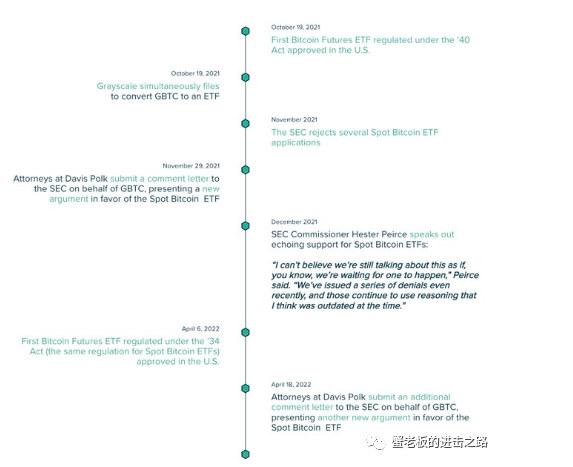
In fact, both the 33/34 Acts and the 40 Act were established after the 1929 stock market crash to create a more stable financial regulatory framework. The key difference lies in the process required to issue ETFs.
The 40 Act emphasizes regulation of retail financial products and provides strong protections for individual retirement savings (since retirement funds are a major source of capital for mutual funds), placing great importance on investor suitability. Under the 40 Act, investment companies must register with the SEC before offering securities publicly.
In contrast, the 33/34 Acts focus primarily on transparency for investors and impose fewer requirements on issuance procedures. Given that Teucrium’s bitcoin futures ETF has already been approved under the 33/34 Acts, many believe this paves the way for spot ETFs to be approved under the same framework.
An Interesting Development: FTX Could Help Enable Approval of a BTC Spot ETF.
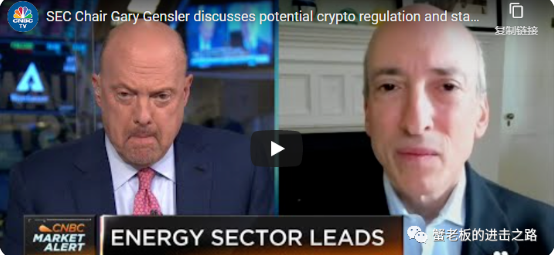
1. SEC Chair Gary Gensler previously stated that the “largely unregulated” nature of the bitcoin market raises concerns about fraud and manipulation. He urged crypto exchanges to register with the SEC and suggested most cryptocurrencies qualify as securities under SEC jurisdiction.
2. Earlier this year, FTX US submitted a proposal to Congress seeking oversight from the Commodity Futures Trading Commission (CFTC). The CFTC has received inquiries from Derivatives Clearing Organizations (DCOs) or potential DCO applicants interested in offering margin product clearing directly to participants—bypassing intermediaries like futures commission merchants (i.e., a non-intermediated model).
3. SEC Chair Gary Gensler also said yesterday that bitcoin is a “commodity” and “the only cryptocurrency I am willing to call a commodity.” This appears to signal that bitcoin trading may fall under CFTC jurisdiction.
Therefore, FTX’s initiative might lead to the creation of a CFTC-regulated, compliant exchange for both spot and derivative bitcoin trading. This could significantly increase the share of “regulated” bitcoin trading volume, thereby alleviating the SEC’s biggest concern regarding approval of a spot bitcoin ETF.
Why Does Grayscale Want an ETF Structure?
Exchange-Traded Funds (ETFs) bundle securities such as stocks or commodities, allowing investors to buy shares on public markets without directly owning the underlying assets—in this case, bitcoin. In October last year, the SEC finally approved bitcoin futures ETFs, which offer speculative exposure to future bitcoin prices through derivative contracts. However, it still does not allow spot bitcoin ETFs tied directly to current bitcoin prices.
According to Grayscale, the Grayscale Bitcoin Trust currently manages $12.9 billion. Since February 2021, shares of the Grayscale Bitcoin Trust (GBTC) have traded at a steep discount to the net asset value of the bitcoin held by the trust.
By converting the trust into a spot bitcoin ETF, Grayscale hopes to eliminate GBTC’s persistent "discount," reduce management fees, and allow easier inflows and outflows of capital.
Conclusion:
If Grayscale’s ETF application were approved, it would undoubtedly be a major positive development. However, today’s rejection means little can be done now. Grayscale has already initiated legal action against the SEC. We should continue monitoring developments closely. With Ethereum’s Merge now the only major catalyst left this year, let’s hope it isn’t delayed.
Join TechFlow official community to stay tuned
Telegram:https://t.me/TechFlowDaily
X (Twitter):https://x.com/TechFlowPost
X (Twitter) EN:https://x.com/BlockFlow_News






