








Harvard Blockchain Club: NFT 2.0 Investment Guide — How to Identify High-Quality Projects?
TechFlow Selected TechFlow Selected
Harvard Blockchain Club: NFT 2.0 Investment Guide — How to Identify High-Quality Projects?
This article aims to help readers identify high-quality projects.
 Navigating Web3 tides with focused insights
By Boba Epicure
TechFlow is authorized to compile and publish this article
Recently, the NFT space has gained further growth potential through innovation. These innovative NFT 2.0 projects aim to grant users tangible benefits—such as yield generation, merchandise purchasing rights, access to private yacht parties, exclusive entry to Michelin-starred restaurants, coffee bean purchasing rights, early membership in project teams, Play-to-Earn gaming, music rights, celebrity meetups, and IRL (In Real Life) events and parties.
NFT 1.0 projects like CryptoPunks and Art Blocks succeeded by building exclusive communities around their digital collectibles; in contrast, NFT 2.0 teams focus on using the Web3 tech stack to craft narratives and build new worlds, creating positive systemic dynamics. NFT 2.0 teams attempt to establish a sociocultural environment—a belief system—that organically forms a Web3 lifestyle brand, collectively and decentralizedly governed and managed.
The rapid pace of development makes this space increasingly difficult to navigate. Therefore, this article aims to help readers identify high-quality projects. As someone who has worked in the NFT space for several years, I present a framework for evaluating NFTs—particularly applicable to "avatar" or "metaverse" NFTs on Ethereum, which constitute the majority of current NFTs.
Evaluating NFTs
NFT 1.0 projects are evaluated as art pieces, while NFT 2.0 projects can be assessed as investments. That is, an NFT 2.0 project’s longevity depends on prudent allocation of monetary resources, generating long-term holder benefits that in turn drive demand for its NFTs. Since business sustainability is a prerequisite for long-term value creation, determining whether an NFT project will succeed is analogous to judging whether a company with a sound business model can grow successfully.
From this perspective, early-stage (floor price below 2 ETH) and growth-stage NFTs should be evaluated differently. Early-stage projects should emphasize narrative, storytelling, and experimentation, while later-stage projects should prioritize utility delivery to holders and revenue generation through sound financial management. Thus, evaluating NFTs should combine fundamental and technical analysis, focusing on innovation potential, management, community strength, on-chain metrics, and macroeconomics.
Innovation Potential
Does the NFT project have a unique approach that pushes the space forward? Does it possess some distinctive advantage? Broadly speaking, innovation takes many forms:
-
Technological: Space Doodle (non-dilutive, non-airdropped, value-added and re-customizable NFTs).
-
Artistic: Cyberbrokers (entirely on-chain artworks composed of compressed SVGs, a type of image format).
-
Financial: Nanopass (each NFT Pass generates a weekly black box loot funded by the community treasury).
-
Ideological: Loot (decentralized, composable world-building), and Pak’s $ASH ecosystem (burning Pak’s NFTs via burn.art to earn $ASH).
-
Social: Proof Collective (a token-gated alpha group).
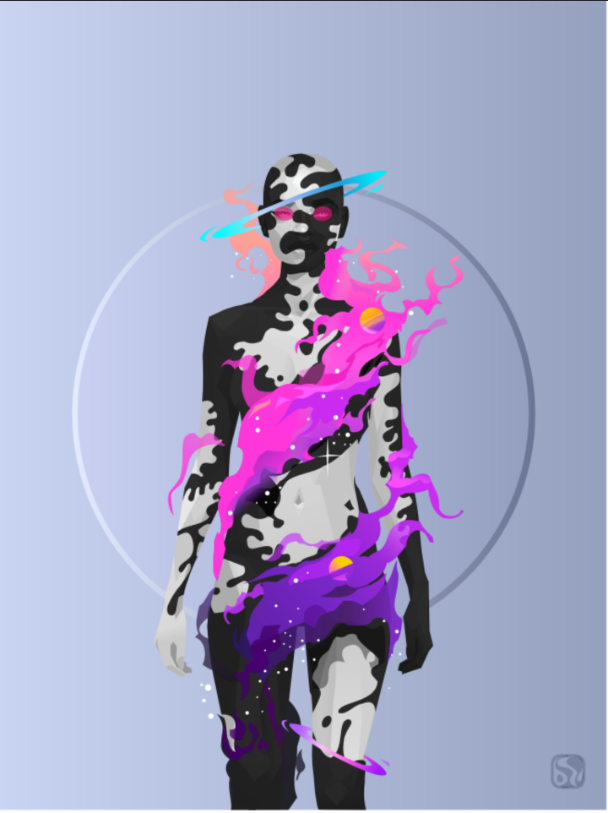
Our competitive edge comes from identifying projects that push the space forward, rather than merely extending past trends—or worse, imitating existing projects. For example, the next Bored Ape Yacht Club won’t be the “Bored Monkey Jet-Ski Club.” While Yuga Labs may make those hunting for “the next great PFP series” anxious, the truth is hard to accept.
According to a Chainalysis report, “while flipping NFTs for profit succeeds 65% of the time on secondary markets, ‘only 29% of brand-new NFTs sell at a profit.’” A recent Nansen report further warns: “one-third of NFTs become nearly inactive ‘dead assets,’ while another third trade below mint cost.”
Mindlessly chasing trends is a negative expected-value investment. It's clear that today’s wave of imitation has already consumed itself through unsustainable incentive structures. Understanding how a project attempts to reshape the landscape—and holding a portion of it long-term—is the path to success.
Management
The primary innovation of NFTs lies not in technology, but in finance and culture. They represent a new medium for social communication and organization. Hence, when evaluating NFT projects, storytelling is one of the most underestimated yet critical evaluation criteria. Strong management knows how to control the narrative—meaning they under-promise, over-deliver, use deliverables to fuel hype and FOMO, and manage expectations effectively.
For instance, free airdrops and new NFT mints offered exclusively to current NFT holders have proven beneficial for projects like BAYC, CloneX, and Azuki, generating positive-sum outcomes. When executed well, airdrops can attract high-conviction holders, anchor higher floor prices, incentivize community engagement, and increase capital inflow into the entire NFT ecosystem. Airdrops are just one of many value-adding deliverables—how such deliverables are managed can determine a project’s success or failure.
Additionally, conducting due diligence on the team is crucial. Who are the founders? Have you researched their online presence? Can they lead, scale, and drive progress? Do they maintain a healthy balance among artists, community moderators, and engineers? Although MekaVerse had strong artwork and launched earlier than some top-tier projects, its management proved incapable of fostering sustained growth, poorly handling fraud scandals and the Disco hacker incident. MekaVerse eventually faded into obscurity, its floor price dropping from 8–9 ETH to just 0.4 ETH.
In contrast, the Doodles team exemplifies a well-balanced, strong team. Evan Keast, known in the community as Tulip, is a product marketer and NFT advisor formerly with Kabam Games (Net Marble), Dapper Labs, and CryptoKitties. Poopie (Jordan Castro), another co-founder, was previously known for leading the CryptoKitties team at Dapper Labs. Artist Scott Martin, aka Burnt Toast, possesses a distinct artistic style instantly recognizable across NFTs and other domains. His clients include WhatsApp, Google, Snapchat, and more.
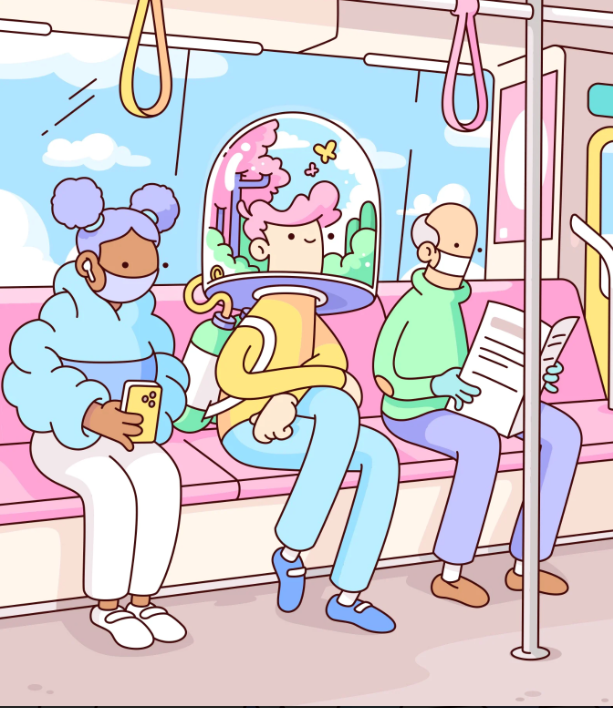
Although decentralization is a core principle of Web3, most NFT projects—at least initially—require strong, centralized leadership. When investing in a project, remember you’re also investing in the team—know who’s working behind the scenes.
Community Strength
Having discussed management, it’s natural to turn to community strength. Community strength stems from the team—an effective team must be driven by mission, values, and vision, and leadership must mobilize internal community resources efficiently. MekaVerse gained fame overnight with over 100,000 Discord members after a Forbes article, but these members failed to convert into long-term believers. In contrast, Azuki and BAYC both possess strong core values, enabling them to weather storms and stay committed to their roadmap. Projects led by such teams emerge from healthy corrections with speculators gone and true believers remaining. The reverse happens for teams lacking such conviction.
Here are some simple ways to assess community strength:
1) Check their Discord and read chat logs.
2) Check Twitter: What’s the sentiment? How many followers do they have? What’s the engagement-to-follower ratio? Is engagement artificially inflated via giveaways? Are people highly motivated to get whitelisted?
3) Check Google search statistics.
4) Check alpha chats in other Discord servers: Are they discussing it? Most importantly, are whales involved? One whale’s interest is worth more than 1,000 anonymous followers. Of course, beware of paid promotions by compensated whales—this requires personal judgment.
It’s also important to evaluate community strength from the founder’s perspective. In my view, teams can adopt two approaches to community building: top-down and bottom-up. Strong teams foster strong communities because holders grow alongside the brand (many BAYC members became influencers through their NFTs). In October, Doodles launched Doodlebank, allowing the community to pitch ideas, build projects, and receive funding from royalties-generated treasury. Azuki plans to offer similar grants to its holders. This could be as simple as retweeting fan art or Discord mods chatting with holders—but look for actively engaged teams, as their communities grow stronger over time.
An alternative approach is bottom-up. Web3 is ultimately about decentralized ownership and creator liberation. This breeds memes—and lots of them. If a project spawns high-quality memes and derivatives, its community grows stronger. For example, Mfers by Sartoshi has no centralized team and made no promises of added value to holders, yet achieved massive growth.
Mfers are also CC0 (Creative Commons Zero), meaning anyone can do whatever they want with the NFTs. This freedom fueled explosive cultural impact for Mfers. This embodies the utopian origin of Mfer—holders resonating harmoniously. The cigar-smoking, black-hoodied sovereign Mfer declares: “Let us toast to Dionysus!” “No more Apollonian chatter.” As Sartoshi himself wrote: “I don’t know what this will become in the end—the point is… it’s unknowable… I think the most valuable thing I can offer Mfer holders is to amplify their best ideas and creations to wider audiences.”

Mfer #7409 by Sartoshi
On-Chain Metrics
Tracking volume, floor price, and sales count gives you an edge. To elevate your NFT analysis, consider additional selection strategies. Tracking “whales” (ultra-wealthy traders) is essential, as they dominate much of the NFT market. Whales often form groups, leveraging exclusive information, coordinated buying, or collective dumping to gain market advantages. Using NFTGo, you can track what whales mint, buy, and sell—and act accordingly.

1,505 whales hold $5.87B worth of NFTs, representing 30.49% of the global market cap of $19.24B.
To illustrate basic quantitative metric analysis, let’s examine the Degen Toonz collection.

Degen Toonz #7626
First, analyze listing count data to assess floor depth. Fewer listed NFTs mean thinner sales pressure and greater upside potential. Higher listings indicate willingness to sell, leading to either falling or stagnant floor prices. The chart below shows a strong inverse correlation between listing count and floor price. A handy “diamond hands” metric is calculated as follows: (Total Supply – Listed Count) / Total Supply. For Degen Toonz: (8,888 – 984) / 8,888 = 88.9%. Not bad for an emerging project.

Next, examine holder distribution. Degen Toonz has a significant number of diamond-handed holders due to many buyers who never sold.
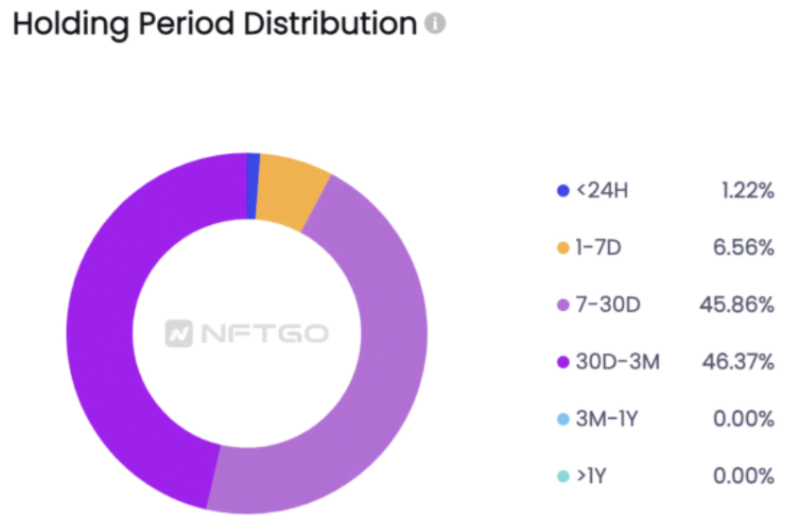
Moreover, analyzing ownership distribution reveals that individual holders control 64.71% of Degen Toonz NFTs (see below), meaning they’re relatively resilient to whale dumps. Additionally, since 65% of holders own only one Toonz, they’re less likely to sell—they cannot split their holdings. Psychologically, they fear missing out on future price appreciation or additional utilities (e.g., airdrops). Their high holding concentration immunizes them against psychological pressure and aggressive selling, leaving less room for traders.

Finally, cross-holding analysis is important. While 167 Mutant Ape holders also own 450 Toonz, holders of BAYC, Punk, Doodles, and Azuki aren’t prominently represented in Toonz holdings—a negative signal. Thus, Toonz lacks the necessary endorsement for explosive growth—at least so far.

Coniun Toonz’s Coniun comparison feature
Due to lack of clear collection descriptions, these metrics must be studied holistically. However, if at least three or four of the above indicators are bullish—as is currently the case—it may still be a good buying opportunity even if the floor hovers above 0.3 ETH.
Recommended tools: Cryptoslam.io, NFTGo, Conium, NFTNerds, Flips, WGMI, and Nansen.
Macroeconomics
Cryptocurrencies remain highly correlated with public markets, and NFTs are crypto assets. If broader markets are fragile, NFTs could collapse. Given ongoing Russia-Ukraine war, rising inflation, and public market panic, exercise caution and invest within your means when buying NFTs.
However, as fear, uncertainty, and doubt subside, blue-chip NFTs (broadly defined as collections with floor prices >2 ETH and trading volume >10k ETH) exhibit lower volatility, while small-cap growth projects suffer from high gas fees. As ETH gains momentum, traders shift to buying altcoins on DEXs, congesting the network and making NFT transactions prohibitively expensive—eliminating many investors. Blue-chip NFT prices will also correct during major crypto downturns. Yet due to strong buyer pressure, NFTs tend to rebound quickly once ETH stabilizes.
Overall, NFTs suffer when ETH rallies or crashes, as they sit at the tail end of the risk curve across asset classes. Notably, during economic downturns, perception of blue-chip NFTs may shift toward USD-denominated valuations rather than ETH-based ones. Finally, NFT trading volume is a key indicator of market demand—low volume typically signals bearish conditions. While the extent of macroeconomic influence on NFT prices remains debated, reasonable concerns suggest a risk-off environment in the near term—yet the sector’s long-term vitality points to optimistic prospects.
In-Project Discrimination
After deciding to invest in a specific project, you may face the challenge of selecting the right rarity within the collection. Generally, due to low base costs of potential deliverables, Floor NFTs (the most common in a set) offer better value per individual NFT. For example, CloneX provided holders with three airdrops valued at 2–3x its public sale price, while BAYC granted MAYC, Kennels, and APE tokens. Buying five Floor NFTs instead of one rarer NFT could yield five times the deliverables. Floor NFTs also offer superior liquidity compared to rare NFTs, reacting more sensitively to price movements—since Floors are effectively fungible when assessing value. Most PFP collections follow a log-normal price distribution (with rare NFTs forming the long tail), and most trades occur near the Floor price. Therefore, for most investors, the Floor is the optimal choice.

Azuki rarity score vs. last sale price. Clearly shows a peak near Floor value and a long tail effect.
While mid-tier rarities suffer from poor price discovery and liquidity, ultra-rare NFTs may appeal to long-term investors. They retain value better and, due to their ability to capture long-tail returns, can outperform Floors in raw returns. At the high end, NFTs take on more art-like qualities, as whales cluster and collude to anchor rare NFT floor prices (though markdowns remain possible if volume is low). These rarities trade at 5x–25x Floor: for mature collections like CryptoPunks, top-tier items can reach up to 120x (e.g., an alien punk sold for 8,000 ETH). Some collectors derive immense utility from owning the rarest NFTs.
Furthermore, Web3’s native incentives encourage whales to strengthen communities—another reason to own top-tier items. GE selling stock to numerous shareholders doesn’t harm corporate integrity, but for a whale already holding 100 NFTs, acquiring one more means one fewer person—someone who truly identifies with the brand but can only afford one NFT—can join. Pranksy once owned over 1,200 Bored Apes. Effectively, this excluded 1,200 potential BAYC members who could have better nurtured the community and strengthened the brand.
In April, a whimsical billionaire could have bought the entire BAYC collection for just 800 ETH. Given this counterintuitive reality, Yuga Labs would have been eliminated. Thus, for whales bullish on a specific series, a positive-sum strategy is to acquire top-tier items. Above all, premium PFPs can be used strategically—owning a Golden Ape or Alien Punk confers instant legitimacy. If you’re investing long-term and financially capable, ultra-premiums are your best bet.
Liquidity Sources
An active investor draws liquidity from multiple channels. Some markets allow users to find NFT buyers and sellers via order books, with OpenSea being the most popular, though LooksRare and X2Y2 attract users with novel incentive designs. However, most long-tail assets on these platforms ultimately lack liquidity. Thus, traders commonly engage in off-chain OTC deals, temporarily sourcing liquidity. Complex multi-NFT and FT (fungible token) bundle trades are common but inherently risky—avoid them unless technically proficient or fully confident. If required, I recommend only using NFTTrader, an audited escrow service. NFTs can also be purchased via aggregators like Gem, which pools liquidity across all markets, offering better liquidity.
Finally, the growing DeFi-ification of NFTs offers novel liquidity solutions. P2P lending protocols like NFTfi are being augmented by P2Pool platforms like Pine and Bend, which use machine learning and algorithmic valuation to provide instant liquidity. 0xmons even developed an AMM-based NFT DEX for Sudoswap. While deep analysis of these new liquidity sources exceeds this article’s scope, trends point toward increasing fragmentation—mortgages, Gradient-like yield protocols, NFT derivatives, contracts, and exotic structured products (e.g., Abacus). Personally, I’m excited about NFT floor perpetuals via NFTures and Injective Pro. In any case, exchange-backed NFT markets bring dormant capital into the space, simplifying NFT trading. Meanwhile, improved front-end design and SocialFi integration will ease price discovery and ignite the next wave of NFT applications.
Conclusion
NFT 2.0 projects should be treated as businesses and evaluated with utmost care. Successful investors must apply intuition, market conditions, technology, and fundamentals to identify projects capable of delivering value through future deliverables. On a deeper level, when evaluating a PFP NFT, I always ask myself: Would I use this as my personal profile picture? Philosopher Walter Benjamin wrote, “Ownership is the most intimate relationship a person can have with an object.” So—do you want this JPEG to represent you in Web3? Moreover, remember you’ll never lose money due to illiquidity—there are always more opportunities. Resist the urge to trade daily; cultivate a longer-term mindset.
I leave readers with a lingering thought: Should you buy NFTs purely for exchange value? Contemporary artist Damien Hirst once lamented, “I used to give away a lot of my art, but they’d always sell it much sooner than I expected… sell the art and buy bags. I’d think, ‘Damn, I hate that.’” Hirst’s concern lies in exploring where the line between collecting and profiteering should be drawn—and whether such a line should exist at all. Every NFT investor should reflect on this before clicking the purchase button.
About the Author:
Boba Epicure (Andy Zeng) is a junior in Harvard University’s Philosophy Department, founding member and investment committee member of HBC (Harvard Blockchain Club), former community ambassador at Sky Mavis, investor at Dragonfly Capital Partners, Azuki maxi, enjoys reading ancient Roman literature and Romance of the Three Kingdoms in his spare time, and previously authored “The End of History and the Philosophy of Cryptocurrency” and “The Future of Crypto Gaming.”
Special thanks to Haseeb Qureshi, Ashwin Ramachandran, and Roman Ugarte for editing the full text, and to Jihoz and DeeZe for guidance and thoughtful feedback during the article’s production.
Disclaimer: Harvard Blockchain and the author of this article are not financial advisors. Nothing in this research article should be construed as investment advice.
Note: This article was originally drafted in March 2022 and republished after updates.
Join TechFlow official community to stay tuned
Telegram:https://t.me/TechFlowDaily
X (Twitter):https://x.com/TechFlowPost
X (Twitter) EN:https://x.com/BlockFlow_News






