








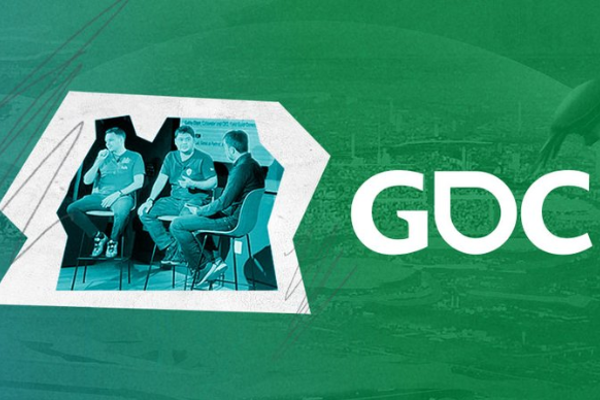
a16z Roundtable: What’s the Future of Web3 Gaming?
TechFlow Selected TechFlow Selected
a16z Roundtable: What’s the Future of Web3 Gaming?
The next step in the development of web3 gaming.
 Navigating Web3 tides with focused insights
Source: a16z
Compiled by: TechFlow intern
Below is a transcript of a discussion on NFT gaming, featuring Aleksander Larsen, Co-Founder and COO of Sky Mavis/Axie Infinity; Gabby Dizon, Co-Founder and CEO of Yield Guild Games; and Jonathan Lai, Partner at A16z. This conversation took place during an event hosted by A16z at GDC 2022.

Jon: Thank you all for joining. I'm Jon, a partner at a16z. Today’s topic hits close to home and is something everyone at GDC cares about—NFTs, Web3, and their impact on gaming. I’m honored to have two outstanding figures from the Web3 gaming space with us today.
Aleks Larsen, Co-Founder and COO of Sky Mavis behind Axie Infinity, and Gabby Dizon, Co-Founder of Yield Guild Games.
Let’s dive in. Aleks and Gabby, over the past year we’ve heard a lot about how NFTs and Web3 gaming will fundamentally change how people play games and how the industry evolves. Let’s break it down into specifics. First, from a player’s perspective—what can we do today with NFTs or other Web3 infrastructure that was previously impossible?
Gabby: As players from developing countries, the Philippines has long been one of the launching grounds for gaming because there are so many passionate gamers who are highly socially engaged. But people haven’t always been able to earn real-world rewards for the time and effort they invest in games. Now, with game NFTs, people can own their assets and participate directly in the game economy. For people in my country and other emerging markets participating in economies like Axie Infinity, this is transformative. It allows individuals to own digital assets—like Axies or tokens—that hold value as NFTs. It truly changes how people view gaming. I believe nearly 2% of Filipinos have played Axie Infinity, making it a massive game-changer for entire populations.
Aleks: One thing we’ve seen with Axie is higher engagement and retention rates. People also care more deeply about their in-game assets. When you consider what an NFT actually is, it becomes part of your digital identity. That’s partly why we built Axie and Sky Mavis—we want people to own their data. Especially for younger users, much of their online journey begins in games. Every time you play a game, I firmly believe you should own what belongs to you.
This matters beyond just monetary value—it’s about emotional attachment to these game assets. In the past, if a game shut down, your data disappeared. Now, at least you have tangible proof: “Hey, I really did achieve this in that game.” That means something. So for me, this is deeply meaningful—and previously impossible. While money may attract people initially, I believe they’ll stay for other reasons, which make the experience unique.
Jon: It's fascinating that you both started with ownership—the idea that these are digital assets no one can take away from you. If a game shuts down, even if Axie Infinity were to close tomorrow, your Axies would still remain in your wallet. You can trade them; they carry intrinsic value. One counterargument we hear from Web2 developers is that digital ownership could simply be a policy shift in existing games. For example, World of Warcraft could allow gold trading between accounts; Diablo once had a real-money auction house where players could buy and sell weapons and armor found in-game. If you dig deeper—what makes Web3 and NFTs special beyond just owning and trading digital items?
Aleks: This ties back to identity. Players spend years acquiring assets in games like World of Warcraft. These items are valuable not because of resale value, but because of the immense time invested. If they later leave the game and want to prove their achievements to someone, there's no way to verify it. Game developers can easily delete those assets.
Gabby: Yes, NFTs are digital property. You can build entirely new games around these assets. NFTs transfer the concept of digital ownership into the digital world.
Jon: From a developer’s standpoint—if you’re building a game today, how should you think about NFTs and exploring Web3? We see many game developers transitioning from Web2 to Web3. What motivates them? What excites them?
Aleks: We've spoken with many game developers, all curious: “How does this innovation work? What’s a dual-token model? What’s SLP?” Honestly, much of it comes down to experimentation—trying to understand what this new technology enables. For developers entering this space, token design requires extreme caution. I emphasize to founders—especially those raising funds by selling tokens—how critical tokens are. They provide immediate liquidity to players or investors, which your studio must sustain long-term.
Rather than selling NFTs for quick cash, reward early community members with NFTs to connect them to your ecosystem. When you sell something, players feel entitled; when you give something, they feel grateful. That sense of reciprocity is incredibly powerful. This is how you begin building core community members.
Gabby: My view on the difference between Web2 and Web3 is that you start with assets as the foundational layer—NFTs become the base layer of your IP (intellectual property). Instead of thinking about the game first and then adding assets, ask: what is the core asset itself? Take Yuga Labs as an example. You have BAYC, then receive MAYC via airdrop. You're literally building your universe piece by piece from these assets. Once you have the base asset, you can create three-month, six-month, or two-year gameplay experiences for your community. All experiences use the same foundational asset layer to reward your community—not only with varied experiences but also with additional assets accessible through holding your base NFT.
Jon: I find Yuga Labs and what they’ve done with ApeCoin particularly compelling, as it exemplifies bottom-up game development. They essentially gave the community a set of primitives—the NFTs themselves—and said, “Hey, let’s build a universe around this.” Then they granted commercial rights to NFT holders. How do you reconcile this with traditional game development models? When you have a centralized game studio like Sky Mavis ensuring the game remains fun and cheat-free, do you see these approaches as conflicting? How are they reconciled?
Aleks: In a way, Sky Mavis’s approach is actually hybrid. Looking at Yuga Labs, they’re granting commercial rights to use BAYC across various applications. That’s great—it unleashes creativity. As game developers, we’re trying to gradually decentralize. In Axie, users gain significant monetary value, but deeper ecosystem participation requires alignment with us. In our case, we align incentives with holders of foundational tokens like AXS. Revenue generated either returns to players or flows into our treasury, benefiting token holders.
Now, regarding ApeCoin, I have stronger opinions. I’m not a fan of pure currency tokens. I believe tokens must offer clear mechanisms for capturing value—whether through cash flows or governance. Using them solely for trading isn’t what drives sustainable price appreciation—that’s missing the point. I’d rather focus—especially if issuing a token—on why people would hold it. Make people want to hold your asset long-term, not just treat it as money.
Gabby: Making games is really hard, but NFT and Web3 communities empower creators in new ways. One of my favorite examples is RTFKT and CloneX—they started as a collection of NFTs. Then they launched another NFT, Space Pods—a 3D virtual space people could decorate. Many actually joined as creators, designing their own pods, even learning Blender to do so. This gives your community the feeling: “I’m a true owner of this economy, and I can co-create with developers.” Of course, you can set boundaries—core gameplay experiences reserved for official developers.
Jon: One challenge we face in Web3 today is the relatively small number of players. Personally, two days ago I beat Elden Ring, a best-selling 3A console game. They recently announced 12 million people played Elden Ring last month. To my knowledge, no blockchain game has yet reached 12 million cumulative players, let alone monthly active ones. What would it take for a blockchain game to achieve Elden Ring-level success?
Aleks: Currently, Axie has about 1.6 million daily active players—and this is without being listed on any app store. You can’t download it on iOS, and the only way to get it on Android is by directly downloading the APK. That said, imagine lowering entry barriers further. As a developer, it’s not about maximizing profit upfront but offering some return. Gamers have long been taken for granted—even exploited—especially by mobile game studios. They’ve been squeezed to the maximum.
Aleks: As mobile game developers ourselves, we realized the biggest obstacle isn’t developers—it’s intermediaries. Specifically, the cost of advertising. The promise of blockchain gaming is that you can market directly to consumers by distributing tokens. That’s exactly how Axie Infinity scaled from 36,000 users to 2.5 million by the end of last year. Further reducing barriers—letting people play for free—is what it takes to reach those numbers.
Gabby: We built YGG on the Axie community. Through a dual-login system, we discovered we could lend NFTs to others without giving up wallet access. If I grant you access to a username and password—but not my blockchain wallet—you can play, enjoy the game, and earn value, without trusting someone with your assets. We started doing this in 2020, and it’s now exploded across the Philippines and other parts of the world within Axie Infinity. We operate as a player community—or as a DAO (decentralized autonomous organization). We now purchase assets across different games—over 40 so far. Whether card games, strategy, or RPGs, we now own the assets needed for players to enter and enjoy these games, starting without needing to buy NFTs. Of course, if they love it, they might buy in later.
YGG has seen tremendous growth, especially in emerging regions like Southeast Asia, India, and Latin America, where people play these games and earn supplemental income. But I think we’ll see an evolution similar to World of Warcraft guilds with bank accounts. A guild itself might buy a castle or kingdom that produces buildings. People come in to harvest resources. Layering guilds atop digital assets unlocks unprecedented new gameplay primitives.
Jon: Gabby, touching on DAOs—perhaps a controversial question… Have DAOs essentially become Web3 game publishers today? If you’re developing a new Web3 game, you’d want YGG to review your token design, examine your game design documents, and give approval. That signals legitimacy to your community, scholars, and scholarship managers—they know it’s a project worth investing time and money into. Do you think DAOs have become too powerful from this perspective? They’re effectively becoming gatekeepers for future Web3 games and even broader dApps, extending beyond gaming. How do you view this as you scale your organization?
Gabby: That’s an excellent question. The way value is created and captured in Web3 is fundamentally different. Before, if you had something proprietary, you locked it down and monetized it—that’s how Facebook and Google grew so large atop their algorithms. In Web3, growth happens through compounding network effects. If YGG joins, helps launch a game, assists with token design, and purchases assets, we don’t gatekeep or block other guilds from entering. Instead, we design systems so hundreds of other guilds can join, enjoy the game, and thrive economically. By gatekeeping, we’d reduce network effects and ultimately devalue our own work. This is the core distinction between Web2 and Web3 in value creation.
Jon: One final question: There are many Web2 developers in the audience curious about crypto, wanting to learn more about Web3. What general advice would you give them? How should they get started?
Aleks: Honestly, NFTs are basic building blocks. If used correctly, they can yield valuable insights. But start from the ground up. Don’t get caught up in fundraising hype before you’re ready.
Gabby: Understanding the difference in community value between Web2 and Web3 is crucial for game creation. Communities have always mattered in games, right? But in Web3, they can literally make or break your game. Join a DAO, become part of a community or a guild, vote on proposals, or experience a game from a DAO perspective. It truly reveals how powerful network effects can be when players collectively own digital assets.
Jon: Thank you all for joining us.
Join TechFlow official community to stay tuned
Telegram:https://t.me/TechFlowDaily
X (Twitter):https://x.com/TechFlowPost
X (Twitter) EN:https://x.com/BlockFlow_News
 a16z
a16z






