LD CAPITAL: How Was the So-Called "Bull Market Winner" Forged Amid Controversy?
TechFlow Selected TechFlow Selected
LD CAPITAL: How Was the So-Called "Bull Market Winner" Forged Amid Controversy?
LD CAPITAL's growth trajectory and the secrets behind its aggressive expansion.
 Navigating Web3 tides with focused insights
Note: "WEB3 VC Pilgrimage" is a series we've launched to deeply explore the founder stories, investment methodologies, and unique industry perspectives of WEB3 VCs, offering fresh insights and inspiration. If your firm would like to share your story and investment philosophy, please reach out via our backend.
“Look, how stunning the graphics of ‘BIG TIME’ are!”
The investor across from me enthusiastically showed a test video in his Hunan-accented Mandarin, visibly excited—his fund stands to gain over a hundredfold equity return from just one blockchain gaming project, “BIG TIME.”
This investor is Yi Lihua, founder of LD CAPITAL.
As LD CAPITAL captures numerous alpha projects during this bull market cycle, Yi Lihua has once again become known as “Boss Yi” among peers.
“Unbelievable,” said a traditional Shanghai-based investor who had interacted with Yi Lihua, describing his journey. “A few years ago, Yi Lihua was just ‘hooking people up,’ a nobody on the basketball court. Never thought he’d become a ‘crypto big shot.’ Then we heard his fund collapsed during the bear market—yet here he is, rising again.”
From a poor rural boy in Hunan to today’s “VC tycoon,” Yi Lihua's life vividly embodies the blockchain revolution shaped by the tides of the times—and soaring alongside him is LD CAPITAL, the firm he built from scratch.
Starting with $500,000 of personal capital and no external fundraising, LD CAPITAL invested in hundreds of projects within four years, rapidly growing its assets under management to over $1 billion—yet facing constant skepticism and controversy.
TechFlow spoke with Yi Lihua, founder of LD CAPITAL, and multiple investment managers to reconstruct LD CAPITAL’s growth trajectory and uncover the secrets behind its wild expansion.
Origins and Setbacks
“My life has no fluff. You don’t know how tough it used to be—I’ve played a terrible hand to get here, but deep inside I carry a defiant spirit.”
In September 2018, when Yi Lihua returned to Loudi, Hunan, to donate and establish an “Assistant Teaching Fund” at his alma mater Xinhua No.1 High School, he made this statement.
“I’m a rural kid, started with nothing. I always wanted to escape that world. I came to Shanghai for university, started my first venture there. After repeated failures and being scammed, I finally earned my first fortune through entrepreneurship. Then came traditional investing—but none of that was the world I truly wanted. Until blockchain gave me a weapon. That desire carried me forward.”
This is a glimpse into Yi Lihua’s early life.
Three pivotal moments changed everything.
In 2013, a local government was seeking investment. Yi Lihua reached out to every entrepreneur he knew in Shanghai, screened 60 from 400, and helped them complete lengthy 40-page applications covering technology, team, and business models. Eventually, 20 succeeded—Yi earned his first $5 million.
In 2015, he first encountered Bitcoin. He invested into BitSE for mining, when
By late 2016, amid the ICO boom, Yi invested 100,000 yuan in Qtum’s angel round, acquiring 100,000 Qtum tokens. When Qtum listed in May, prices quickly surged to 100 yuan, peaking at 600 yuan—earning him a hundredfold return. He then participated in early rounds of VeChain, EOS, and other projects, reaping significant gains.
Through ICOs, Yi Lihua secured his true “first pot of gold.” In January 2018, continuing his personal investments, Yi formally founded Crypto Fund LD CAPITAL (Ledede Capital).
From day one, LD CAPITAL was controversial and headline-grabbing.
On one hand, Yi Lihua attracted attention through public disputes with crypto OGs; on the other, LD CAPITAL’s investment approach was overly aggressive and flashy.
Within its first ten months, LD CAPITAL had already invested in over 80 projects.
GRE, Bitget, Bitgogo, Citex, Lbank, MEXC, BHEX, GGBTC, Coinsuper, BiLaxy... LD’s portfolio included a large number of exchanges.
It’s reported that Yi Lihua once had the opportunity to invest in Binance at its earliest stage, but missed it due to friends’ advice and lack of personal due diligence.
Perhaps driven by regret over missing Binance or long-term conviction in the sector, Yi Lihua developed a persistent fascination with exchanges.
Additionally, LD CAPITAL continued Yi Lihua’s ICO-era investment style—rapidly backing numerous “domestically developed projects.”
In a 2018 interview with Chain Catcher, Yi Lihua explained his investment logic—“We don’t define any project upfront—only speed of evolution matters.” He also described LD CAPITAL’s decision-making process bluntly: “Decisions are fast—if the team agrees on a project after discussion, we invest immediately, sometimes within a single day.”
At the time, both LD CAPITAL and Yi Lihua himself were exceptionally high-profile in the industry.
A classic example: one day in 2018, Yi Lihua posted a message in a media influencer WeChat group announcing “LD CAPITAL’s strategic investment in Hailian,” triggering a red packet storm. Long-silent blockchain journalists and professionals quickly emerged to offer their “congratulations.”
Fast decisions, massive investments, and a flashy demeanor made LD CAPITAL highly visible.
However, the brief illusion of prosperity quickly collapsed under the bear market. As the ICO bubble burst, many projects dropped below their issue price upon listing, and frequent cases of team exit scams emerged.
Angry investors began investigating backgrounds of various “shitcoin teams,” repeatedly finding familiar names—“Why is LD CAPITAL everywhere? They’ve taken all the money!”
Regarding public criticism, Yi Lihua said he understands yet feels innocent.
On one side, LD CAPITAL was seen as a “scalper” harvesting the market; on the other, Yi stated on social media that LD lost 600 million RMB in 2018.
“I fully understand public perception. First, most people don’t know the founders, but recognize a few major investment firms—so when projects fail, some naturally blame the VCs. Second, back then, our understanding was shallow, lacked global perspective, our investment ability was average, yet we were overly loud—of course that made us unpopular.”
Having lost both reputation and fortune amid a bleak market, LD CAPITAL nearly went bankrupt. After deep reflection, Yi Lihua and his team made four key adjustments:
1. Focus on investing—cut all non-investment-related businesses.
2. Stay as low-key as possible, and deepen understanding of industries and sectors.
3. Comprehensively enhance post-investment services to earn recognition and support from top-tier projects.
4. Despite brutal bear market losses, remain steadfast in belief in blockchain’s future.
Afterward, LD CAPITAL gradually faded from public view, awaiting rebirth.
Bull Market Winner
By 2021, “Ledede Capital” had vanished, replaced by LD CAPITAL frequently appearing in funding announcements worldwide.
The investment style remained aggressive—but now with subtle differences.
No longer focusing solely on exchanges and “domestic shitcoins,” Flow, Mina, Assembly, Flare, CoinList… numerous international top-tier projects now appear in LD CAPITAL’s
In NFT and GameFi, LD’s portfolio is packed with alphas: AAA blockchain games Illuvium and Big Time, distributed rendering network Render Network, Solana ecosystem star game Star Atlas, and Alien Worlds (TLM), which launched via Binance IEO…
Benefiting from the GameFi boom, LD achieved an extremely high paper ROI.
Illuvium peaked at 63,609% paper return; Star Atlas at 62,200%; Alien Worlds at 238,567%…
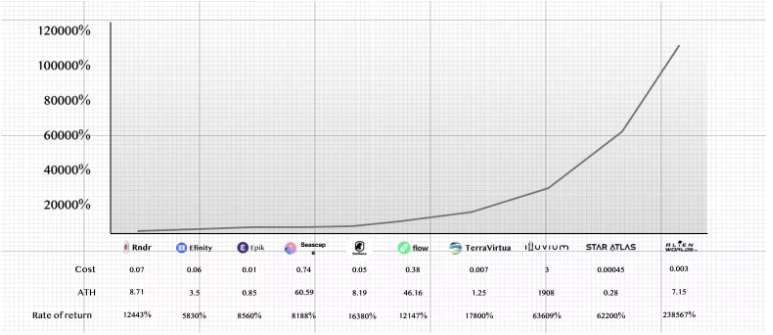
Some high-return GameFi investments by LD
How did LD CAPITAL transform to secure investment opportunities in high-alpha projects within the fiercely competitive primary market?
Insights from multiple LD CAPITAL investment managers may offer answers.
1. Willingness to Bet.
LD CAPITAL maintained its bold betting mentality. Fortunately, this time they bet right before the bull run.
On March 12, 2020, after a historic market crash, both primary and secondary markets hit rock bottom. Most entrepreneurs and investors chose to exit or wait. LD CAPITAL, driven by faith in blockchain and sheer determination, decided to go “ALL IN,” accelerating its primary market deployment.
As one investment manager put it, the brief window post-March 12 was a golden vacuum in the primary market: less competition, easier access; lower valuations—many quality projects valued around tens of millions; founders pushing forward during downturns deserve more trust and investment…
More importantly, LD dared to be the first investor in a project, regardless of whether other VCs had already joined.
“We were the first investors in many projects—not just providing capital, but confidence to founders. It’s risky, but we believe it’s worthwhile,” Yi Lihua said.
2. Comprehensive Post-Investment Support.
LD CAPITAL treats post-investment service as a critical advantage in securing deals, claiming full-team involvement in supporting portfolio companies—including but not limited to strategic consulting, economic model design, capital and platform relations, marketing and brand growth, ecosystem partnerships, technical development, and talent recruitment.
For example, after investing in a trading aggregation protocol, LD not only helped the team secure funding from top overseas VCs but also assisted with IDO platform connections, listings on major exchanges, collaborations with prominent international KOLs and communities, and DeFi ecosystem integrations—remaining fully involved without selling a single token.
3. Talent and Incentives.
People are at the heart of all investing. How do you attract top-tier investment managers? How do you motivate them?
Because it uses proprietary capital, LD CAPITAL offers flexible incentives: sharing investment allocations with managers—up to 30%, and increasing, with lead investors eventually able to co-invest over 50%.
Hence the joke: at LD, you’re investing for yourself, just bringing your boss along.
Moreover, partners play crucial roles in top-tier deals, leveraging their own networks and expertise. Pitches and investments in Illuvium, Big Time, and others heavily relied on individual partner capabilities.
Compared to many VCs adopting a passive attitude, LD ranks among the most hardworking. Partner Lee XI said, he hasn’t had a good night’s sleep in two years.
Currently, LD has nearly 40 members and continues expanding.
4. Starting Anew.
Why did LD CAPITAL capture NFT and GameFi opportunities?
Fortunate misfortune.
After the 2020 DeFi Summer, the DeFi sector heated up. However, top projects were mostly concentrated in North America and Europe. As an Asian firm, LD struggled to access leading DeFi deals—in short, LD wanted to invest in top DeFi projects but couldn’t get in.
So LD had to pivot toward new sectors. As early as two years prior, one LD partner began researching NFTs and GameFi. After internal discussions, LD decided to double down. Their rationale: this is a breakout sector. While DeFi captures massive TVL, it remains concentrated among a few. NFTs and GameFi can bring in massive user bases—any real opportunity lies in huge incremental markets. Web2.0 already proved this—those who own users own the future.
5. Going Global & Offline Engagement
LD CAPITAL realized early on that “in crypto, the West rises while the East declines.” Most high-quality projects originate in the U.S. or Europe—going global became essential.
Thus, LD began hiring in the U.S. and Singapore, actively attending offline conferences and events to source projects.
Pandemic restrictions pushed communication online, but offline interactions build deeper trust and connection, making pitches simpler and more direct.
Through relentless offline outreach, LD CAPITAL invested in numerous early-stage U.S.-based projects, many still undisclosed.
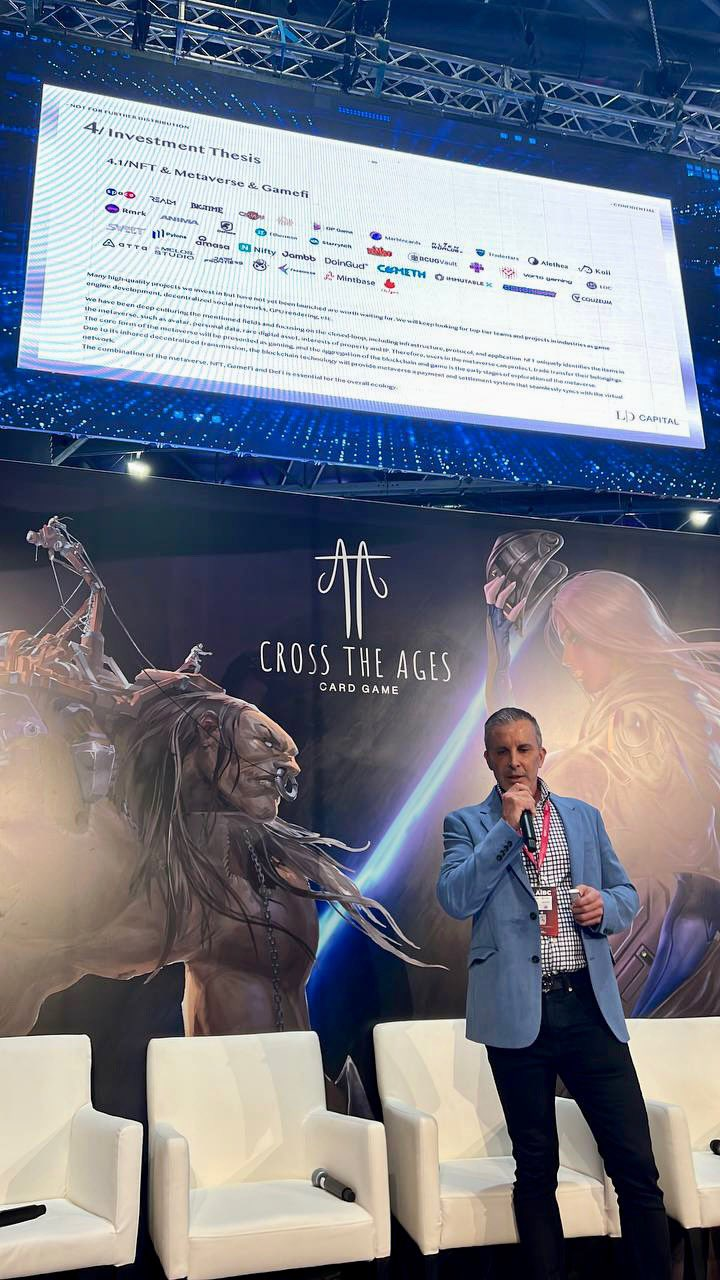
LD personnel in the U.S.
6. FOF and Resource Networking
In September 2021, LD Capital announced a $50 million blockchain-focused fund-of-funds (FOF) to invest in top global blockchain funds.
According to its website, LD has since invested in 1kx Capital, Kraken Ventures, Republic Fund, Shima Capital, BigTime Ecosystem Fund, DHVC, and others.
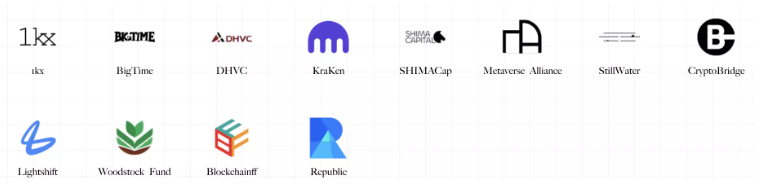
Yi Lihua said the FOF strategy serves two goals: first, building global relationships and discovering more investment opportunities; second, pooling resources for better post-investment support. Different funds have different strengths—we aim to combine them to empower our portfolio companies. Post-investment service is core.
On one hand, VCs like Shima and Republic serve as deal sources for LD; on the other, LD builds its own network connecting top projects.
For instance, after investing in DAOMaker, LD gained access to many new deals.
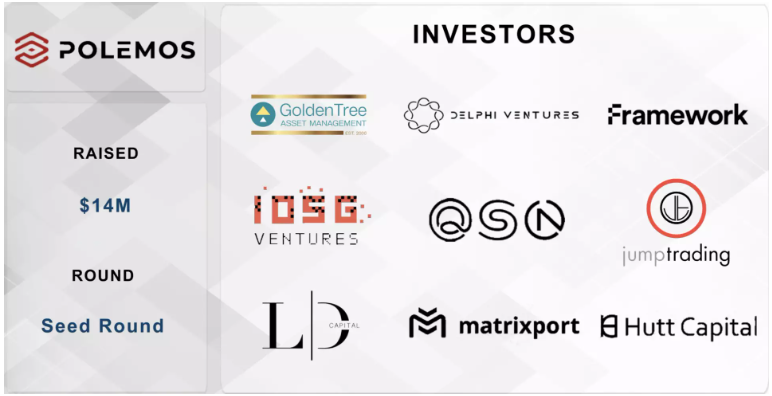
After LD invested in a top-tier AAA GameFi project, that project referred other elite ventures to LD—such as P2E gaming guild Polemos, which recently raised $14 million in seed funding, led by Framework Ventures and Delphi Digital, with LD Capital participating.
One final point: persistence. To win a deal, LD is willing to “lower its posture and visit the thatched cottage nine times.”
One founder shared that after multiple rounds of communication and commitments, LD ultimately secured investment through “persistent persuasion,” “sincerity, and perseverance.”
Fighting for Pricing Power
Financially, LD Capital has been a major winner in this bull cycle—but still lags behind top-tier crypto funds.
On VC evaluation standards, a crypto VC professional noted: “Outsiders judge VCs by returns—how many multiples. But insiders evaluate by fund size, ecosystem positioning, and influence.”
Compared to elite VCs, LD still lacks “pricing power.”
To date, in the vast universe of crypto VCs, only a few—like a16z, Paradigm, Binance Labs, Multicoin Capital—truly hold pricing power.
Pricing power comes from brand strength and value-added services.
An objective reality: LD Capital still suffers from “historical baggage.” Some projects and funds still reject LD’s investments—even after terms are agreed, some founders back out at the last minute, because another participating VC labeled LD Capital as a pump-and-dump fund.
Typically, there are two types of VCs. One type is pump-and-dump—focused solely on maximizing financial returns, offering no value-added, even dumping all tokens upon listing, harming the project.
The other is DiamondHand—not only holding long-term, but consistently delivering value-added. For example, in January, Coinbase Ventures announced it has never sold any of its invested tokens.
Yi Lihua believes LD sits between these two—since all capital is proprietary, their strategy involves partially exiting to fund new projects. However, when deciding exits, LD communicates thoroughly with founders, respects their needs, and maintains long-term holdings in teams showing consistent progress—believing in compounding value growth.
“LD strongly opposes dumping at unlock and condemns such investors. Between extreme profit-taking and market respect, LD chooses the latter.”
Additionally, the widely circulated “LobsterDAO Crypto VC Blacklist” caused serious damage to LD’s fundraising efforts. The list falsely categorized LD Capital as blacklisted. Although LobsterDAO later denied authorship, the list had already spread widely across communities and social media.
Regarding public opinion, Yi Lihua says he no longer cares: “We focus on doing our work. Times have changed. Beyond investing, LD will now prioritize overseas branding and building higher-quality post-investment services. Most new hires are dedicated to enhancing post-investment support.”
According to LD investment managers, rejected investment offers have significantly decreased: “Investing creates a virtuous cycle—landing one good deal makes it easier to land others. LD has proven itself through its portfolio, especially in GameFi. Plus, we deliver comprehensive post-investment support.”
Will LD continue its previous broad-investment approach?
“Maybe because our team strongly believes in blockchain’s future, we can’t help but support teams showing innovation and vision—willing to be the first investor,” Yi Lihua explains. But change is underway.
“We’re reflecting, continuously improving—we’ll save our bullets for the best teams, dedicating our services and resources to top-tier projects. So we’ve already begun shifting—our recent two months’ investments have focused on heavy bets in elite projects. The market will soon see a transformed LD Capital.”
Regarding future outlooks, LD investment managers say they’re still seeking WEB3 applications capable of mass adoption. Gaming remains a key area—games like Big Time and Cradles.
Big Time is an AAA blockchain game led by Ari Meilich, co-founder of Decentraland, with team members from Epic Games, Blizzard, EA, Riot, and other top studios.
Cradles is a prehistoric-themed RPG that creatively introduces time and entropy systems, integrating real-world time and space rules into gameplay.
To achieve this, the Cradles team developed a new NFT standard, EIP-3664, adding modular operability to static NFTs, turning them into “flexible” and “living” NFTs—for example, NFTs with attribute decay simulating aging of real-world objects.
Modular blockchains are another direction LD is bullish on.
A typical blockchain consists of consensus, data availability, and execution layers. Most current chains are monolithic. As node count grows, blocks expand, inevitably causing congestion. Hence, modularity becomes a trend—the Rollups commonly discussed in Layer2 are products of blockchain modularity, handling transaction execution.
In this space, LD backed Assembly, a smart contract chain developed by the IOTA team. Assembly allows developers to freely create customized smart contract chains, similar to Cosmos or Polkadot’s multi-chain networks. The key difference: while Cosmos chains remain loosely coupled without shared security, Assembly chains rely on IOTA 2.0’s L1 consensus layer, solving the shared security problem.
Overall, LD’s evolution has passed through three phases.
In 2018, Ledede Capital resembled a speculative VC with a “nouveau riche” mindset; in 2021, LD Capital went global and gradually formed its investment methodology; today, LD Capital is entering version 3.0:
(1) Greater focus—placing heavy bets on top-tier projects.
(2) Building higher-quality, comprehensive post-investment services to deeply empower projects.
(3) Full-scale globalization to enhance global brand influence.
(4) Willingness to be the first institutional backer for founding teams.
Overall, both LD Capital and its founder are filled with narrative and controversy. Defining LD Capital is difficult—it benefited from unwavering belief in blockchain, perhaps a bit of luck, riding the global wave of WEB3 as a quintessential Chinese crypto VC archetype.
Looking ahead, WEB3 will inevitably be a global competition. Primary markets will grow fiercer and increasingly “class-rigid.” Can LD Capital fully emerge from its “brand shadow,” find its stronghold within Western crypto narratives, and gain greater influence?
I don’t know—but a rushing river can only flow toward the sea, never backward.
Join TechFlow official community to stay tuned
Telegram:https://t.me/TechFlowDaily
X (Twitter):https://x.com/TechFlowPost
X (Twitter) EN:https://x.com/BlockFlow_News