
2026 H1 Crypto VC Report: $13.3 Billion Invested in Only 435 Deals, Capital Begins Vying for Control
TechFlow Selected TechFlow Selected
2026 H1 Crypto VC Report: $13.3 Billion Invested in Only 435 Deals, Capital Begins Vying for Control
Traditional financial institutions have already established market dominance; only projects that can demonstrate mature business models and compliant licenses can secure funding.
 Navigating Web3 tides with focused insights
Author: Tiger Research Reports
Compiled by: TechFlow
TechFlow Editor's Note: The crypto investment market is undergoing a brutal elimination round. Funding amounts in the first half of 2026 have reached $13.3 billion (equal to the full year 2024), but the number of funding rounds plummeted 78% to 435—more money, but flowing only to a very few projects. For investors and practitioners, this means "spray-and-pray investment" has completely failed, and traditional financial institutions have dominated the market (participating in 54.5% of transactions); only projects with mature business models and compliance licenses can get money.
Capital in the crypto market is undergoing a paradigm shift, concentrating flowing to specific industries and companies. Tiger Research and RootData studied this shift in the capital market by analyzing 9,416 investment transactions recorded from 2018 to the first half of 2026.
Key Findings
Capital inflows reached $13.3 billion in the first half of 2026, equivalent to the $13.2 billion for the full year 2024, but the number of funding rounds dropped to only 435, a 78% decrease from the 2022 peak of 1,978.
The market is now split into two camps: a few large crypto-native VCs focus on leading rounds, exchange-affiliated VCs compete with liquidity advantages, while mid-sized institutions without clear competitive advantages are quickly exiting the market.
The number of funding rounds in the gaming sector plummeted 96% from 141 in 2024 to only 5 in the first half of 2026.
Capital inflows in the payments and stablecoin sector and the centralized exchange (CEX) sector are driven entirely by M&A.
Traditional financial institutions participated in 54.5% of investment transactions in the first half of 2026.
1. 2021 Market: Speed and Diversification Were King
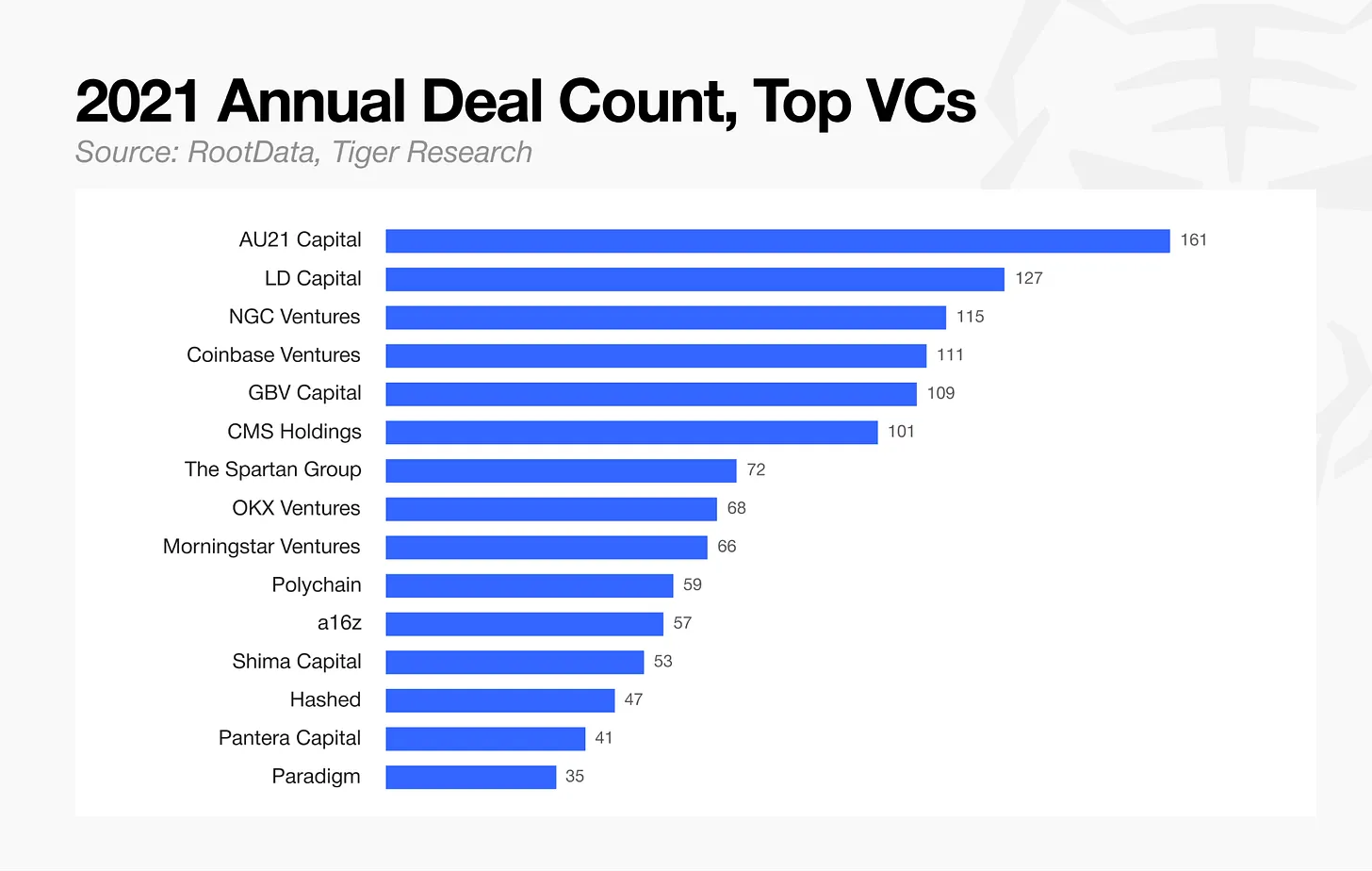
The core strategy of the crypto investment market in 2021 was speed and portfolio diversification. Investors completed 1,750 transactions that year, including seed rounds; competition for speed was so fierce that AU21 Capital alone completed an average of over 13 transactions per month.
Investment decisions at the time were simplified to simple criteria such as Token Generation Event (TGE) timelines and tokenomics. Since token issuance alone could generate returns without any actual product development, VCs basically adopted a "spray-and-pray" strategy, dispersing capital into dozens or even hundreds of projects regardless of valuation.
Execution speed took precedence over comprehensive due diligence. New rounds were completed almost instantly; VCs that missed one round often chased the next at higher valuations, and this FOMO model played out repeatedly in the industry.
Many VCs that adopted this strategy did not survive the subsequent bear market, while those that survived fundamentally changed their strategies.
2. Which VCs Survived: The Landscape Has Changed
2.1. Leading Rounds, Past and Present
The first metric to examine is leading rounds, i.e., funding rounds historically dominated by major VCs.
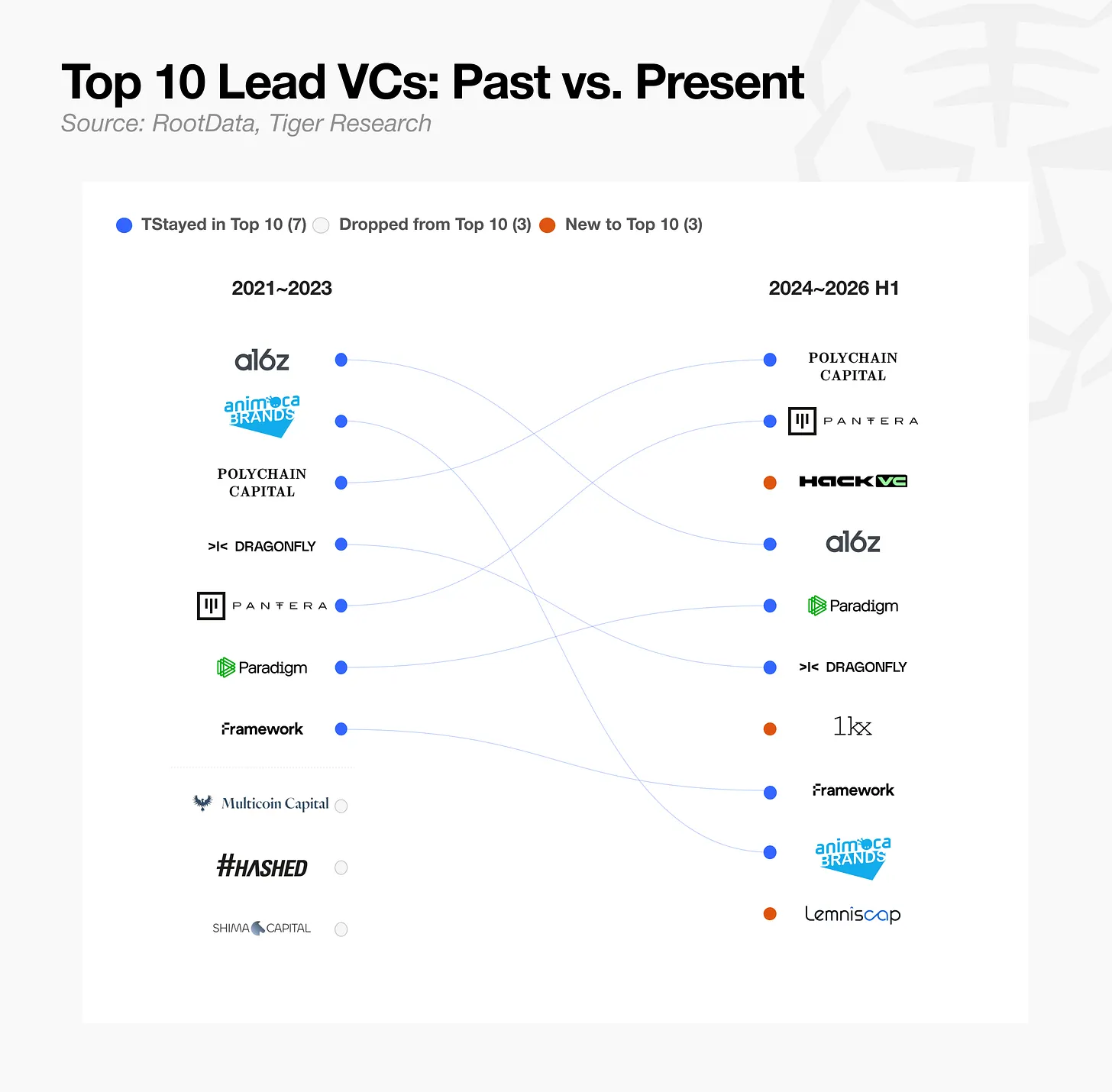
Some VCs are still active in leading rounds today, while others have disappeared completely or only appeared recently. Since leading rounds have always required reputation and capital scale that only large VCs possess, institutions that led major funding rounds in the past have proven their resilience, and most remain in the top ten today.
2.2. How Surviving VCs Differentiated
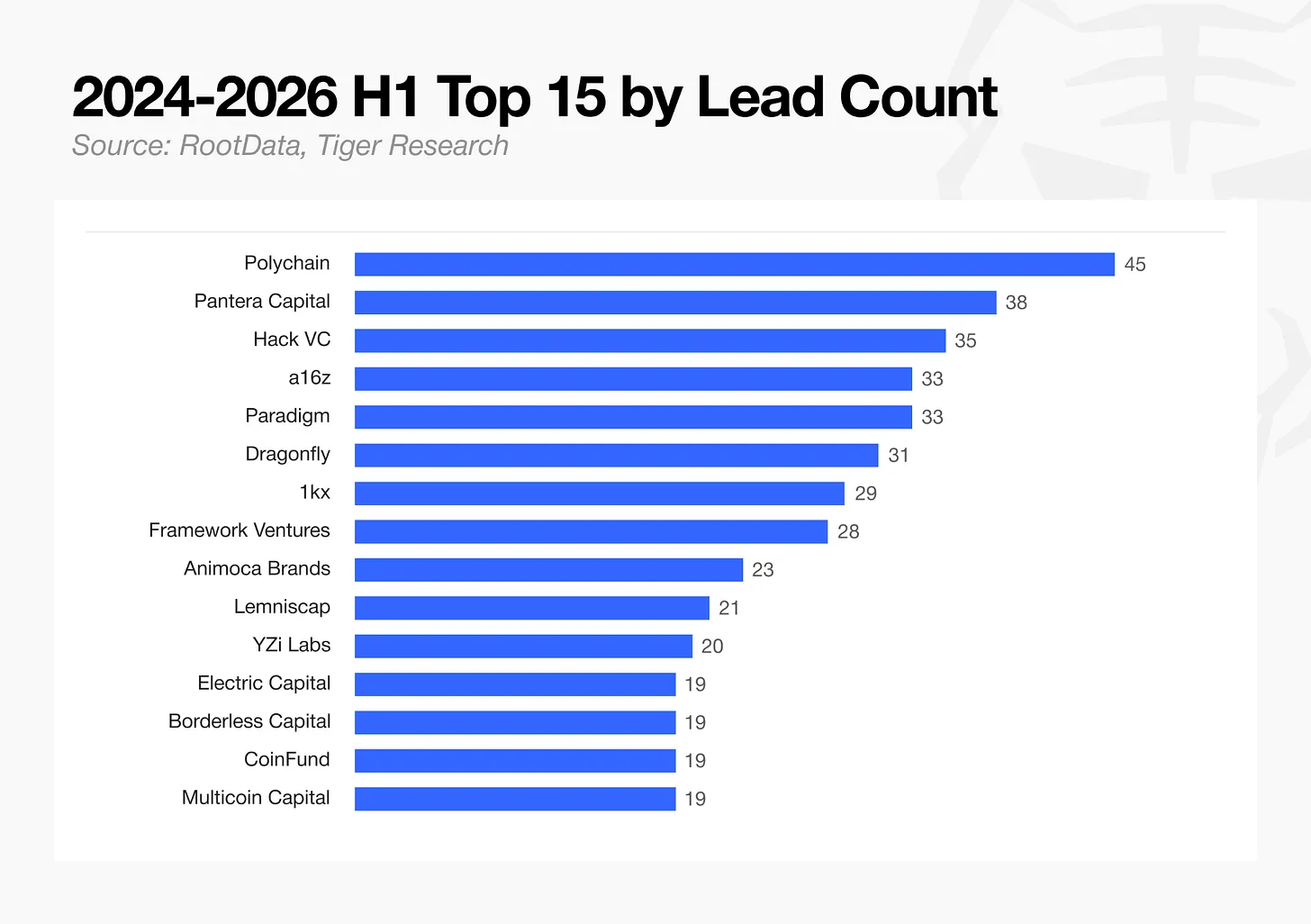
According to the latest data from 2024 to 2026, crypto-native VCs and established large institutions are concentrating resources on leading rounds, participating more deeply in single transactions. They have shifted their business models to reduce the overall number of transactions while raising due diligence thresholds, striving for board seats and greater influence on governance.
However, different patterns have emerged in the cumulative number of participating rounds outside of leading rounds.
Among the top 15 VCs ranked by participating rounds from 2024 to the first half of 2026, exchange-affiliated institutions occupy a large share. Exchanges are more active in joining rounds than leading them. Coinbase Ventures ranks first with 140 transactions, OKX Ventures ranks second with 94, and YZi Labs ranks third with 92. YZi Labs is the organization after Binance Labs changed its name in January 2025.
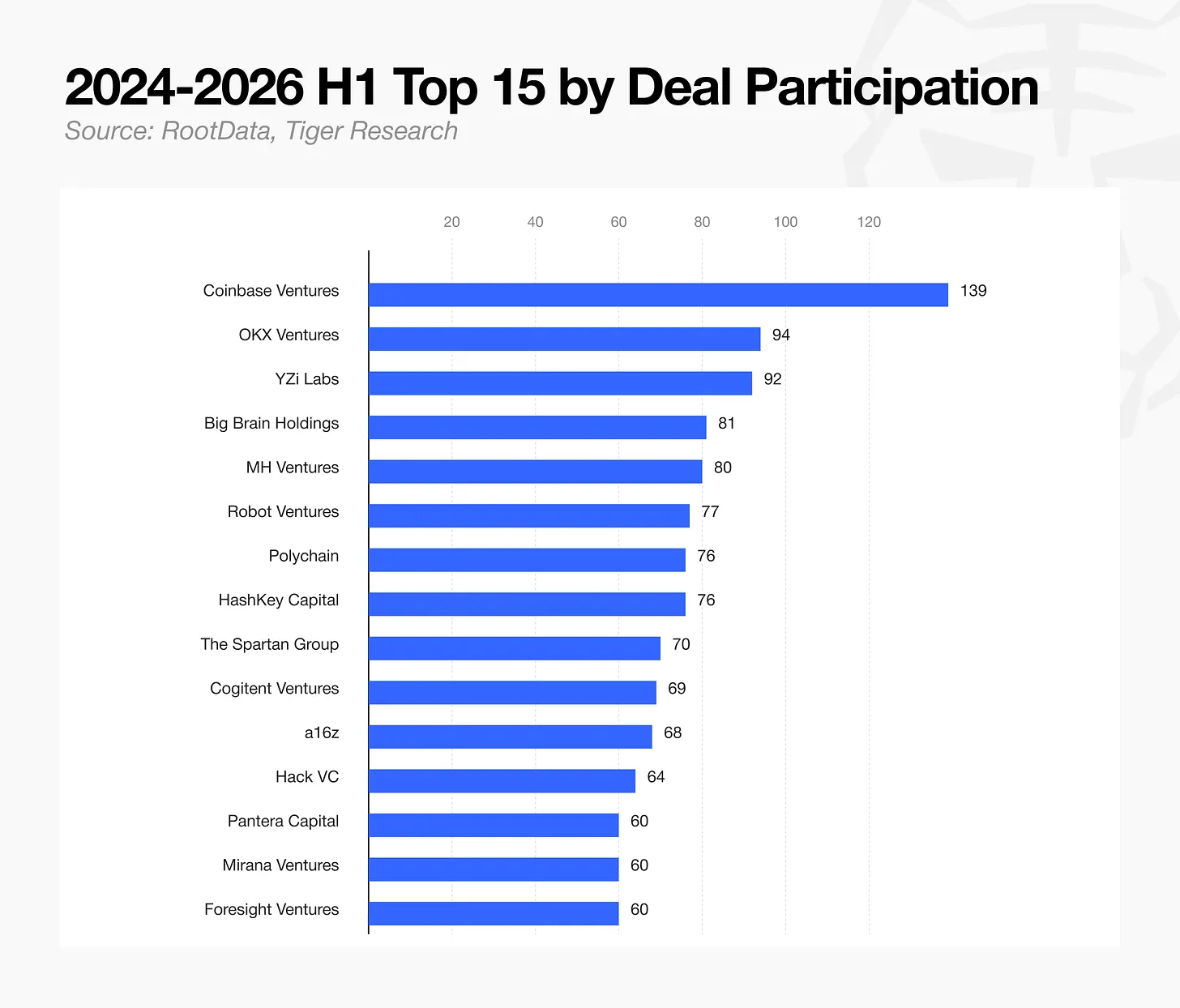
HashKey Capital, ranked seventh, is the VC arm of Hong Kong exchange HashKey Exchange, and Mirana Ventures, ranked fourteenth, is the VC arm of Bybit. Through their respective VC arms alone, the top five exchanges appear in the top 15. Large VCs focused on leading rounds, such as Polychain and Pantera Capital, rank lower on the metric of overall participating rounds.
Exchange-affiliated VCs have established themselves as core participants in major rounds through the liquidity and marketing support their platforms can provide. Mid-sized VCs lacking clear defensible advantages—whether economies of scale, brand recognition, or exchange-level liquidity support—are being quickly squeezed out of the market under the dual pressure of capital pressure and failed exits.
2.3. VCs Exiting: The End of Spray-and-Pray Investment
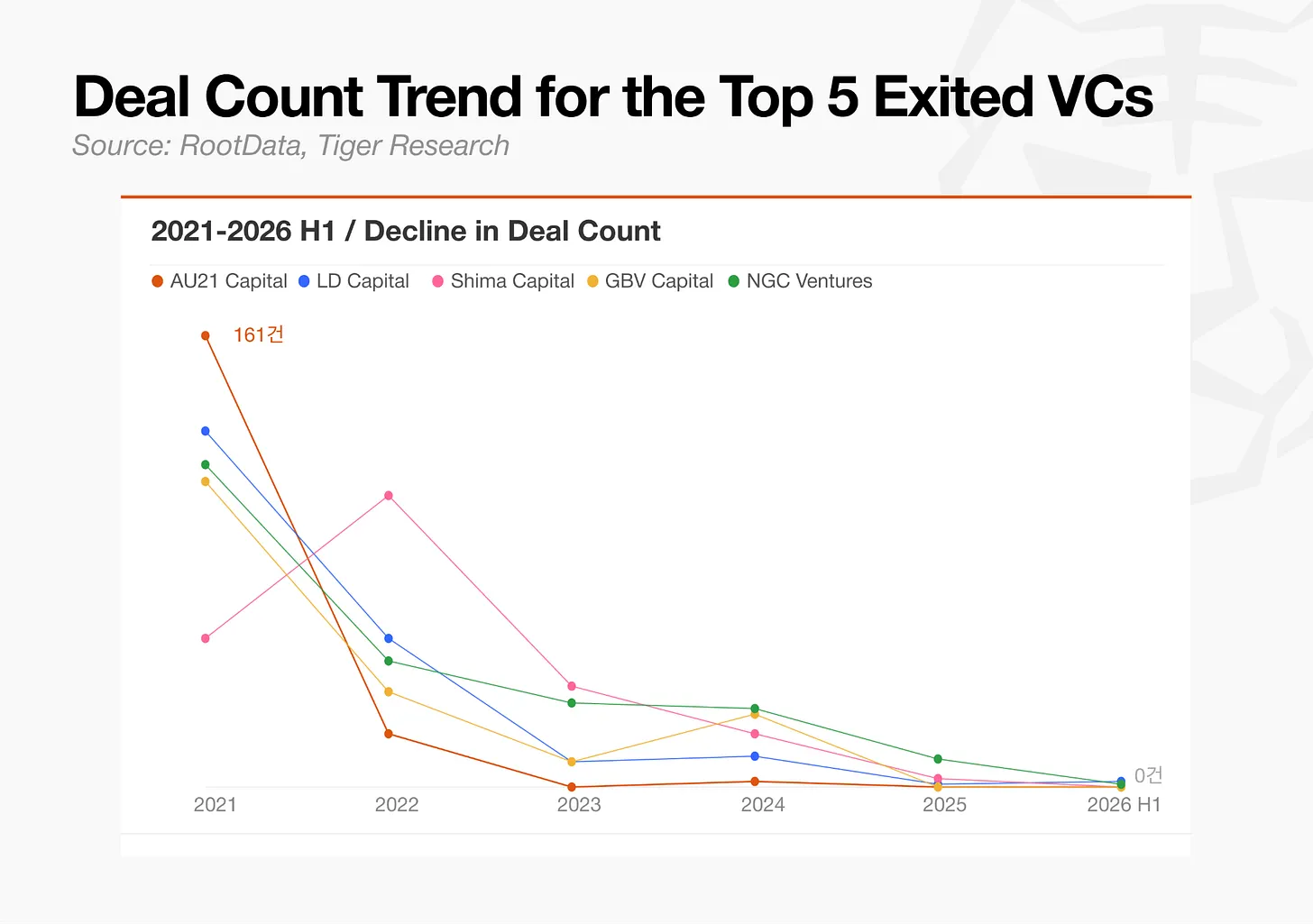
Most VCs that built broad portfolios relying on rapid token monetization during the previous bull market have disappeared. The number of transactions for AU21 Capital, LD Capital, and Shima Capital dropped by as much as 98.9%, effectively losing their influence in the market. Once entering a sustained bear market and regulatory tightening, strategies built on chasing short-term narratives no longer work.
Failure to develop any real differentiation is the main reason, but it is also worth noting that the overall flow of crypto capital has shifted towards projects that have reached a certain level of maturity, and new projects requiring early financing rarely appear. In other words, the opportunities these VCs relied on for survival no longer appear in the market.
3. Funding Rounds: Buying Mature Fruit, Not Seeds
3.1. Seed Round Collapse
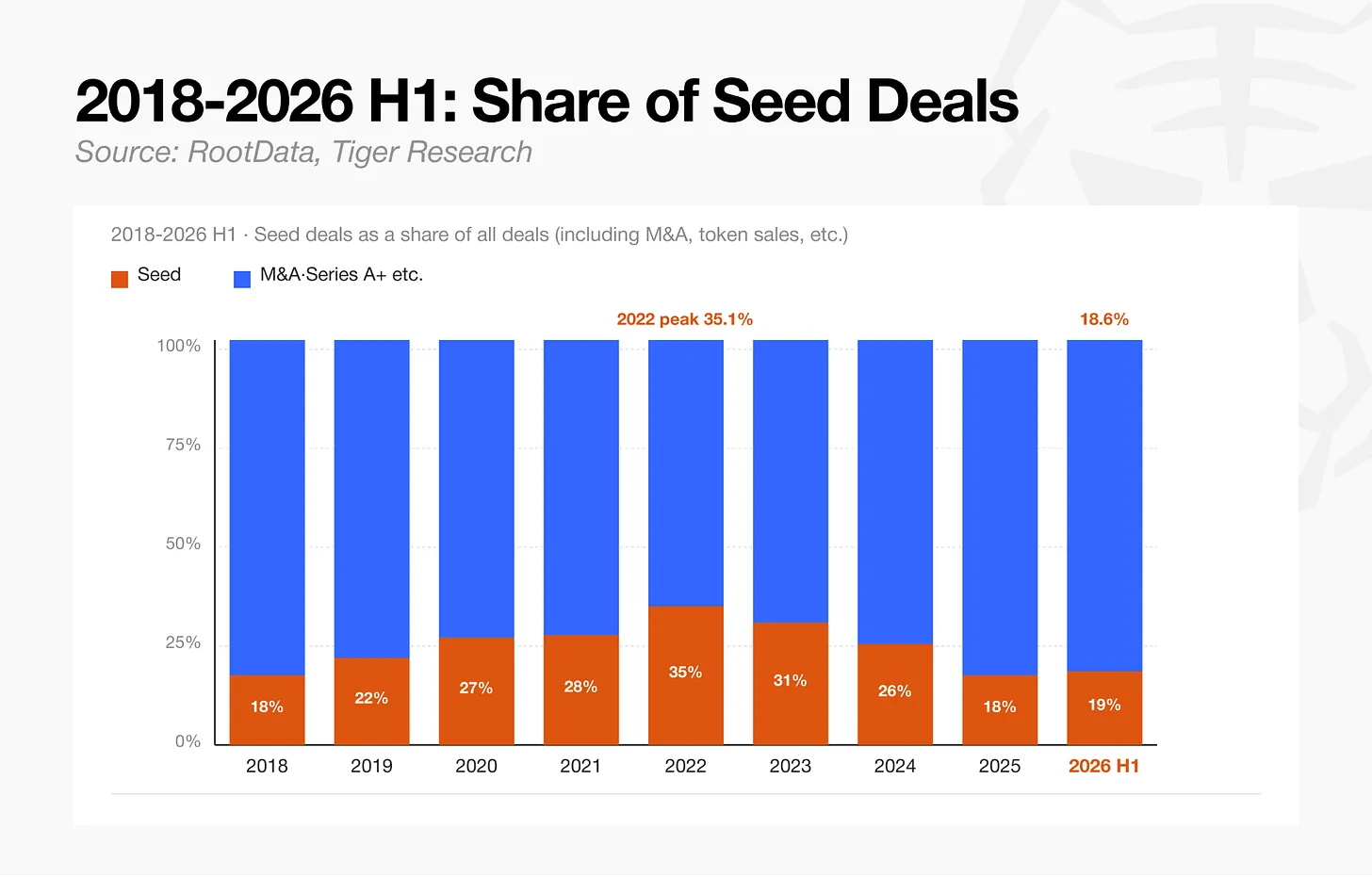
Seed stage transactions totaled 81 in the first half of 2026, down 88% from 694 in 2022. The market's aversion to early-stage projects with unverified business models and higher risks is evident. This decline is also reflected in the overall structure of funding rounds: seed rounds accounted for 35.3% of all transactions in 2022, a proportion that dropped to 18.7% by the first half of 2026.
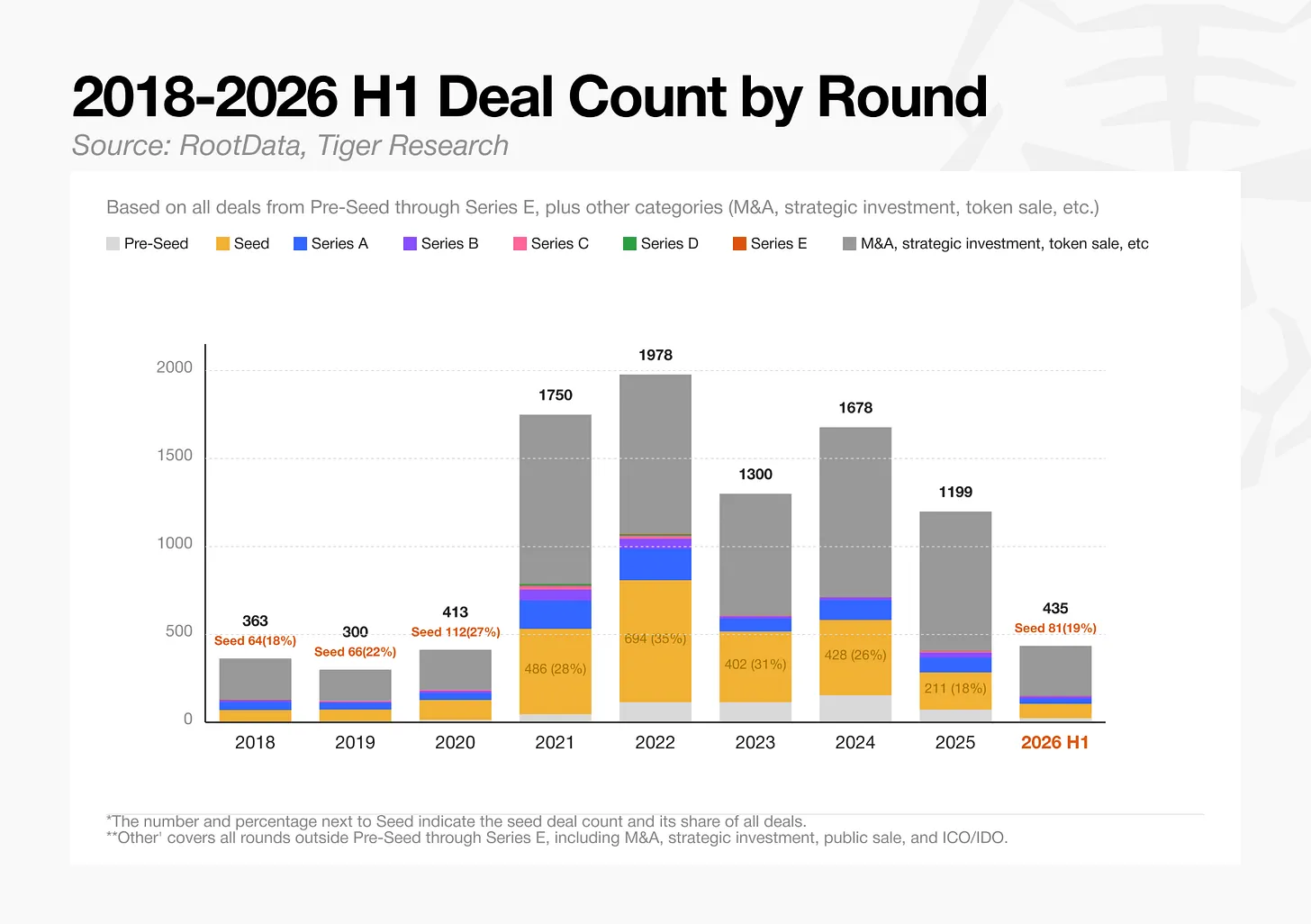
The decline in seed rounds can be interpreted as reflecting both investor aversion and a simple shortage of new early-stage projects seeking seed financing. This is an indicator that captures both market contraction and market maturity.
3.2. Capital Concentrated in Later Stages
Measured by capital allocation, later-stage rounds from Series A onwards now account for 75.2% of total investment. Seed stage investment briefly occupied the majority share during the 2023 bear market, but once the market entered recovery, capital was quickly reallocated to well-capitalized companies.
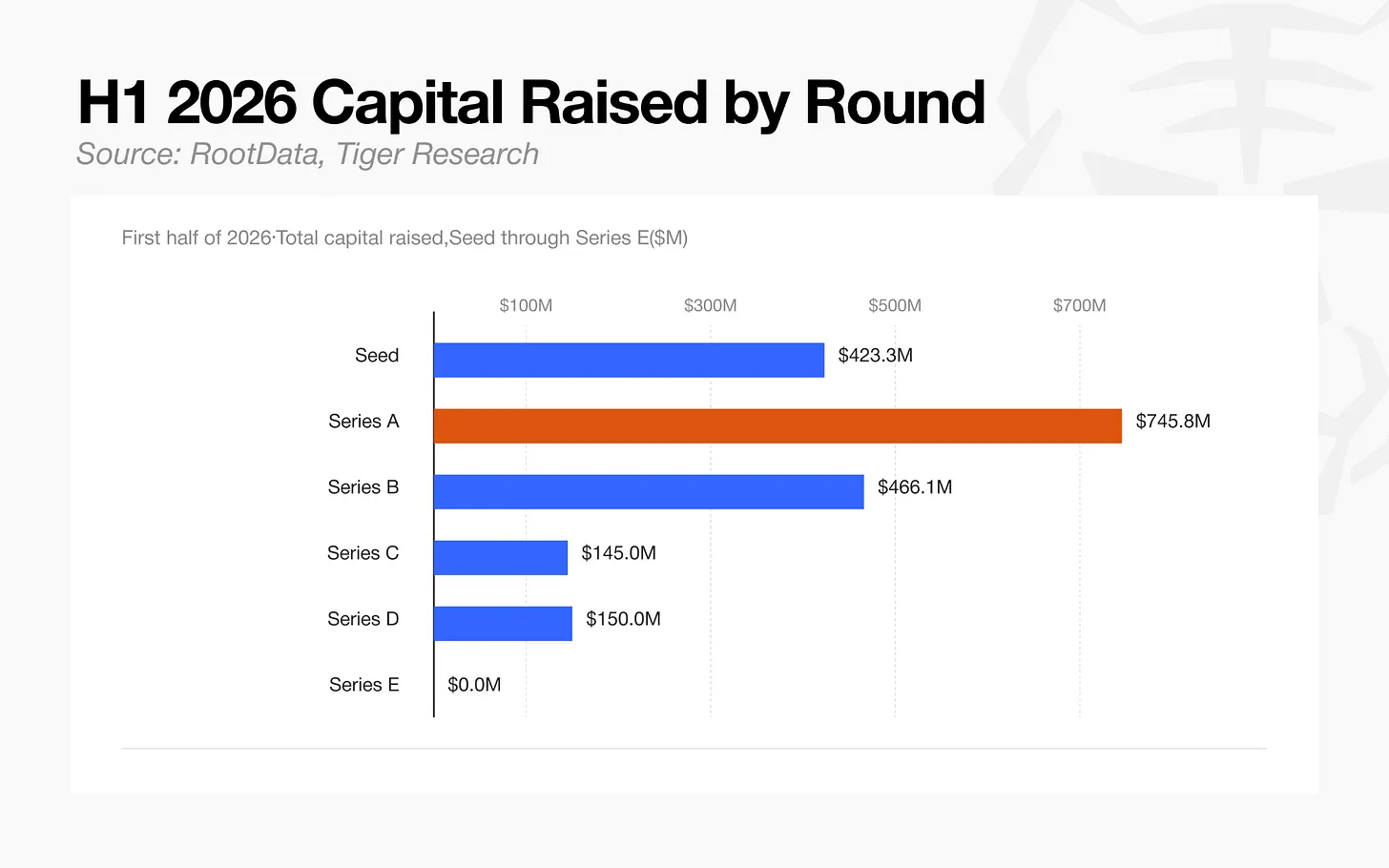
In the first half of 2026, total Series A funding ($745 million) exceeded capital raised in all seed stages ($423 million), making it the largest category of any round.
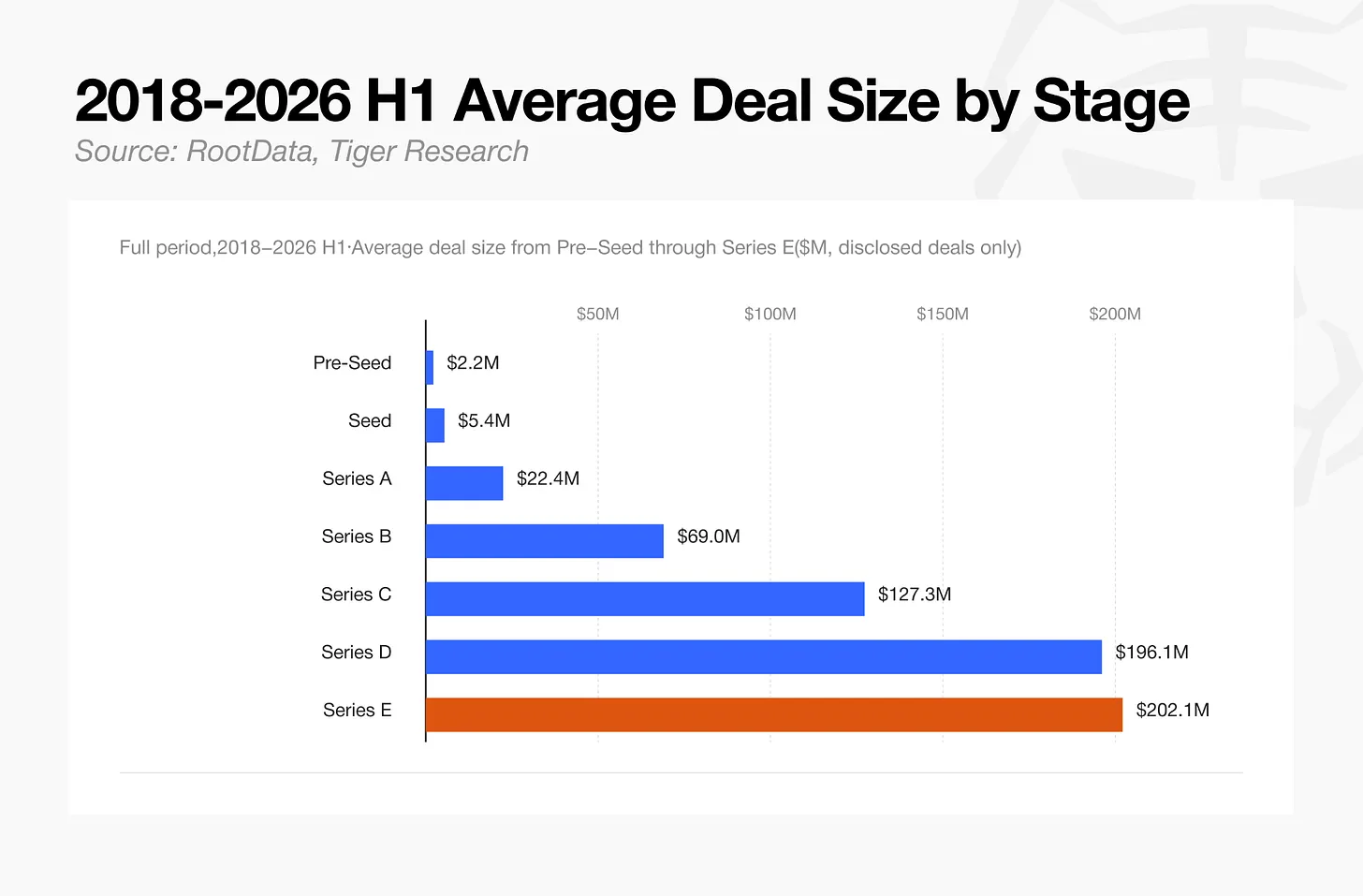
Average transaction size shows a clear step-wise increase from one stage to the next: Seed round $5.4 million, Series A $22.4 million, Series C $127 million, Series E $202 million. Sample size shrinks in later stages, but company revenue and valuations reaching these stages have increased, so the amount of capital involved per round is correspondingly larger.
4. Overall Market: Capital Concentration, Transaction Volume Decline
4.1. Divergence Between Capital and Transaction Volume
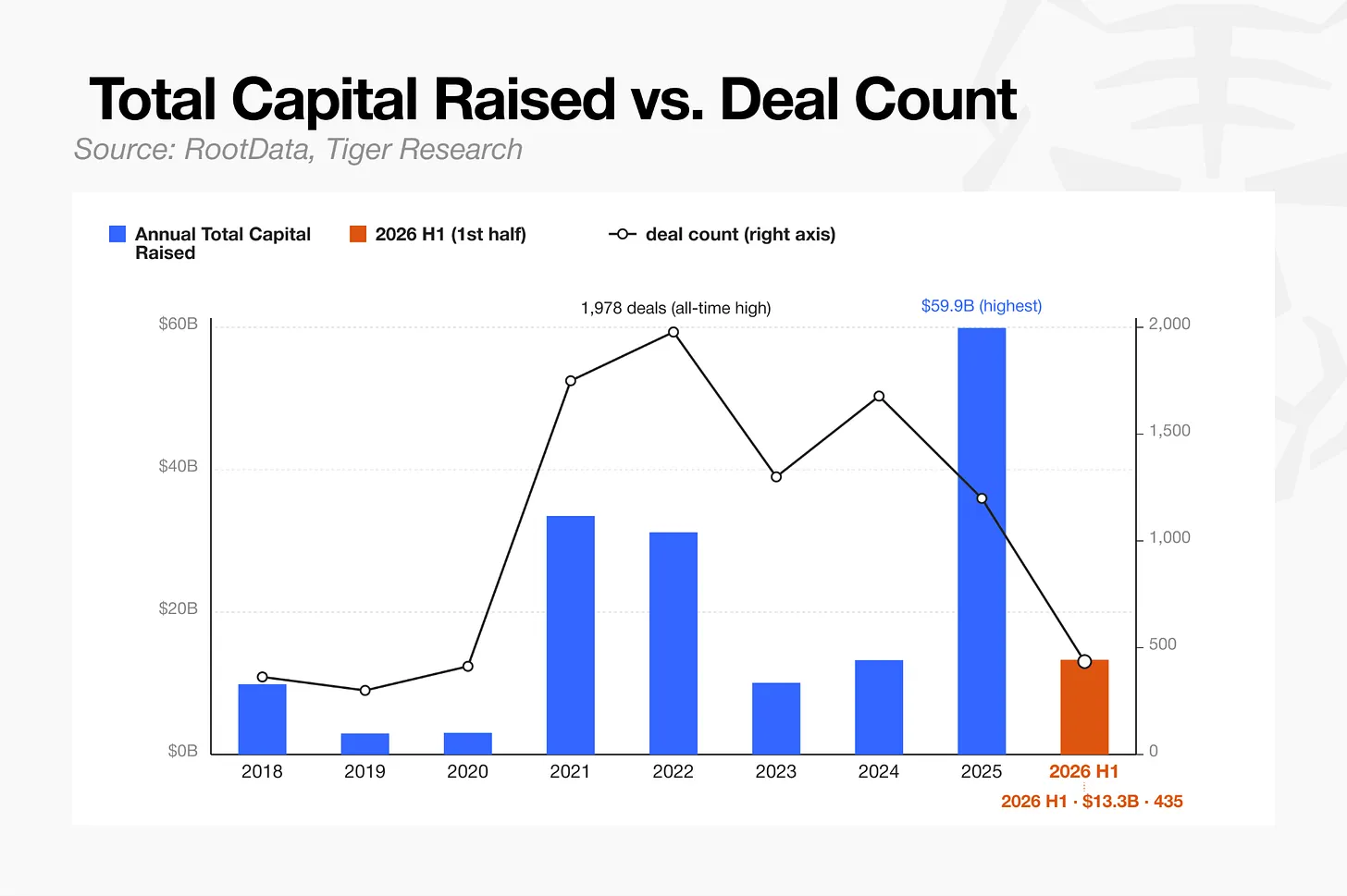
Total capital inflows reached $13.3 billion in the first half of 2026, while the total number of transactions, 435, is equivalent to only 22% of the 1,978 recorded in 2022 (the year with the highest annual transaction volume). From 2024 to 2026, capital volume remained flat or rose, even as it concentrated into fewer transactions.
Small diversified bets by VCs chasing short-term returns around token liquidity events have declined, while large direct investments from traditional financial institutions have increased. Institutions adopt stricter standards, evaluating not token listing timelines or market narratives, but whether companies have auditable revenue structures and necessary regulatory licenses.
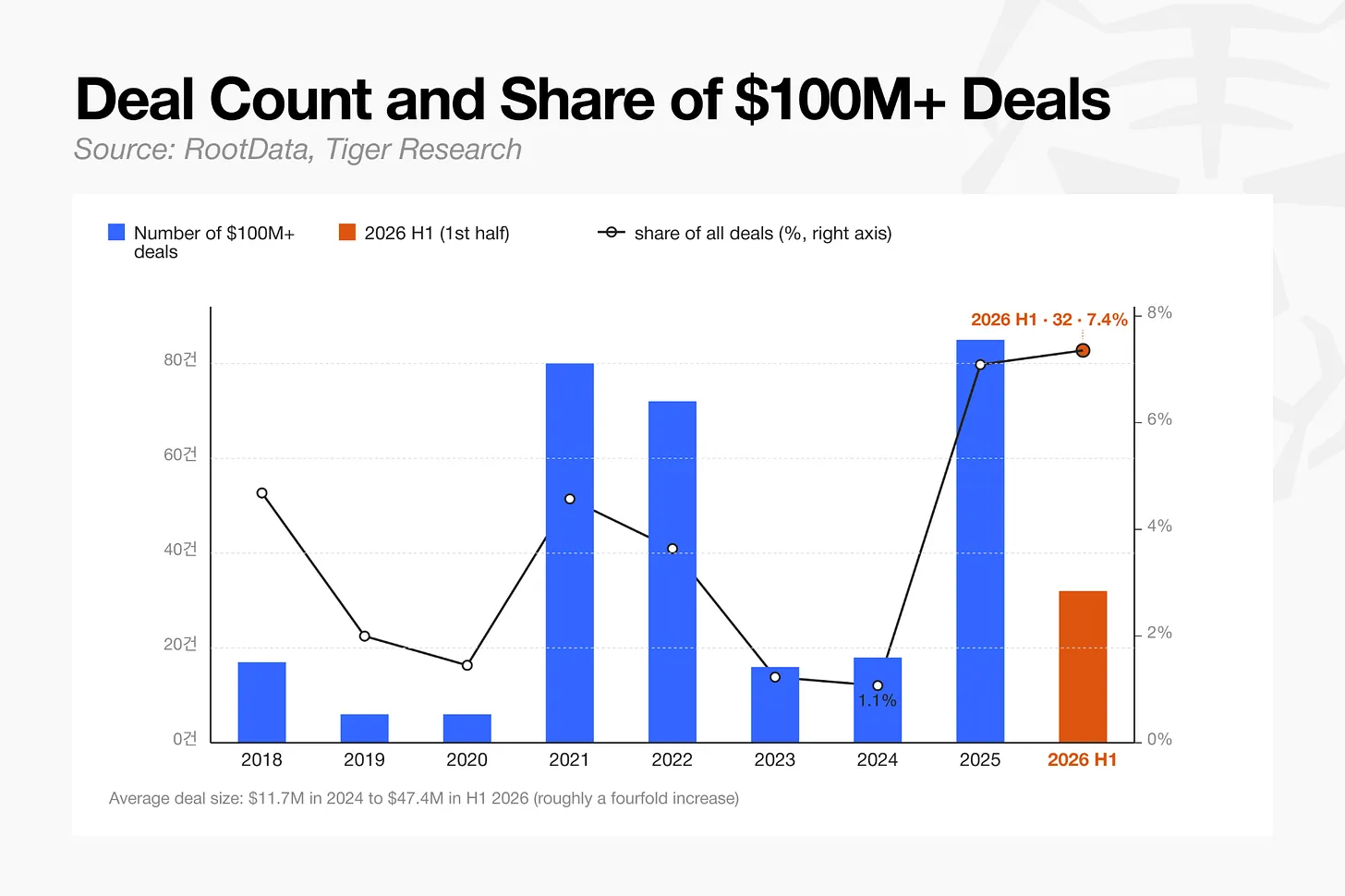
Transactions of $100 million or more in the first half of 2026 totaled 32, accounting for 7.4% of all transactions, a significant increase from 1.1% in 2024. During the same period, the average transaction size roughly quadrupled, increasing from $11.7 million in 2024 to $47.4 million in the first half of 2026.
This share increase comes from two directions. The number of large transactions itself increased, while the total number of transactions declined due to the disappearance of small transactions including seed rounds. A small batch of surviving projects began to dominate the market, and as small transactions disappeared, the already limited pool of large transactions also occupied a larger relative share.
4.2. Direct Participation in Venture Capital Rounds
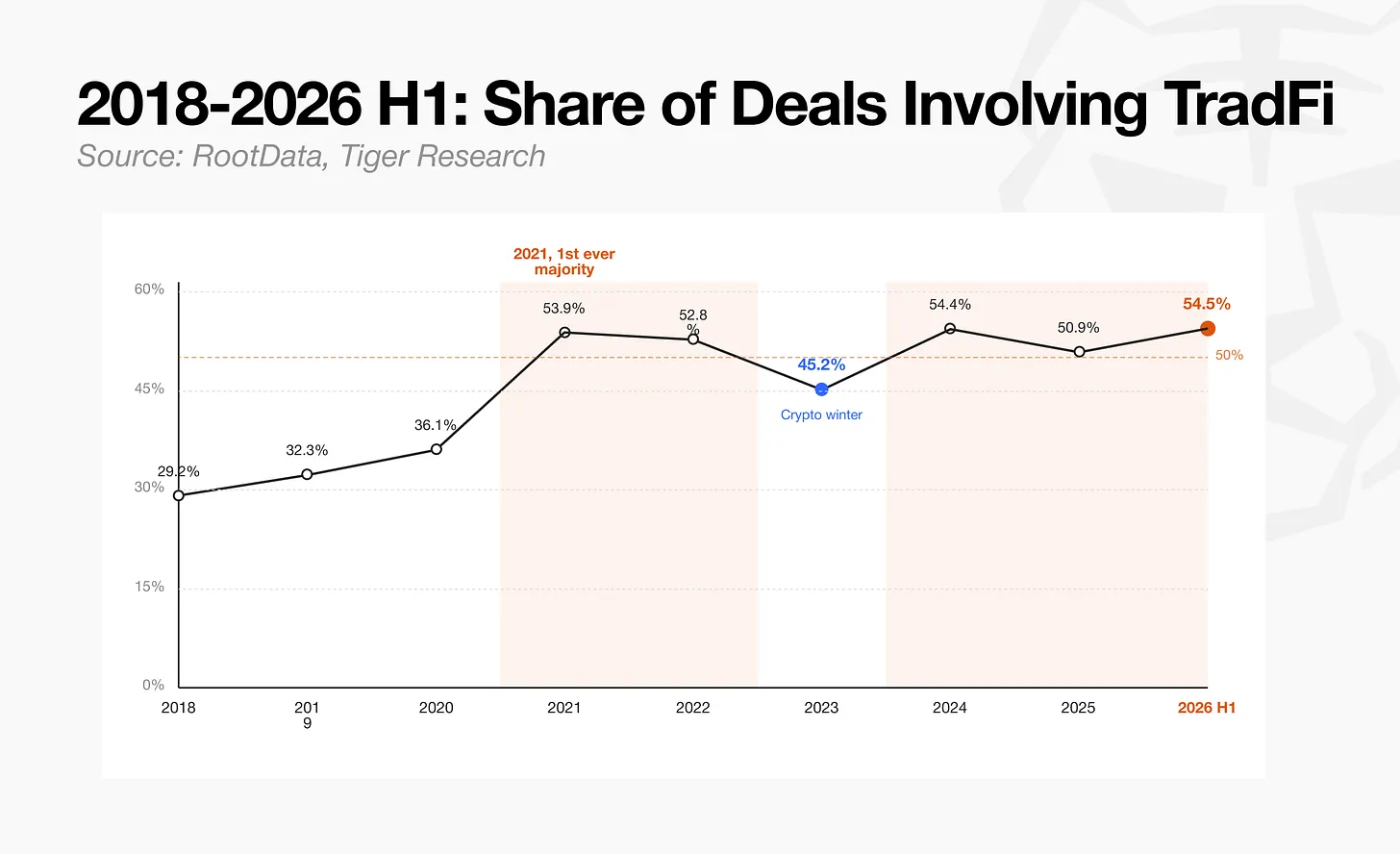
The proportion of investment transactions participated in by traditional financial institutions rose from 29.2% in 2018 and exceeded the majority for the first time in 2021, reaching 53.9%. Their participation dropped to 45.2% during the last downturn in 2023, rebounded to 54.4% in 2024 as regulation became clearer, fell back to 50.9% in 2025, and reached 54.5% in the first half of 2026. Since exceeding the majority for the first time in 2021, participation has remained near high levels.
For example, a16z led the $355 million funding round for Canton Network developer Digital Asset, but core institutional participants included BNP Paribas, HSBC, S&P Global, and Hanwha Investment & Securities, which invested directly rather than through VC subsidiaries.
Investment once mainly went into the earliest stages, but the growth of crypto VC firms and the entry of traditional investors have shifted more capital towards companies that have reached a certain level of maturity.
5. Sectors: Surviving in a Changing Environment
2024 was the year when Bitcoin spot ETF approval met a more favorable regulatory environment, producing clear sector-level capital flows for the first time since the bear market; this analysis uses it as the baseline year for sector comparison.
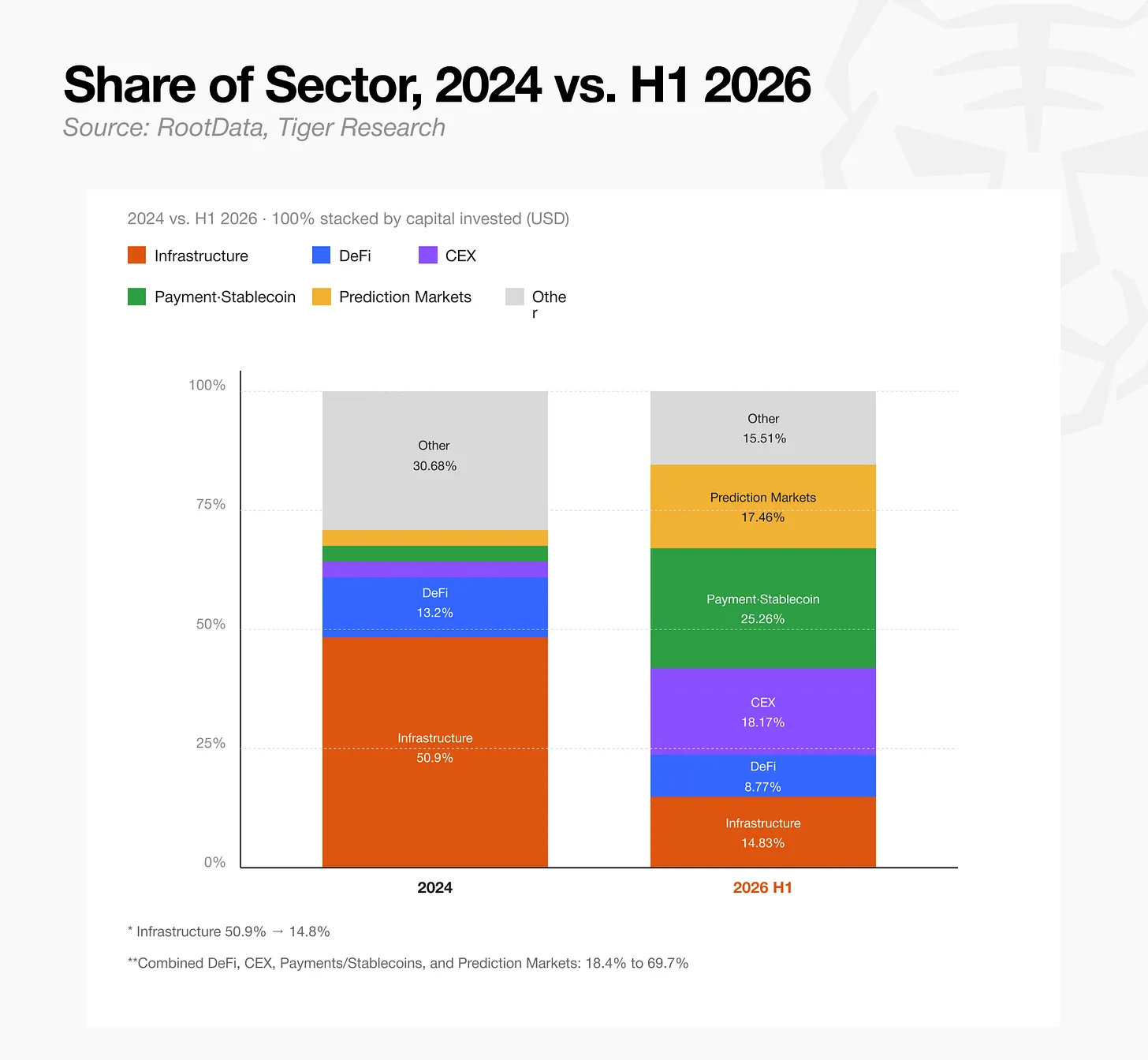
In 2024, the year Bitcoin ETFs were approved, the infrastructure sector occupied the majority share of total investment capital, at 50.9%. By the first half of 2026, this share had dropped sharply to 14.8%. Payments and stablecoins (25.3%), centralized exchanges (18.2%), and prediction markets (17.5%) took the lead instead, completely reshaping the sector landscape.
This shift indicates that the nature of blockchain infrastructure has changed, from independent investment targets to practical platforms actually used by institutional business. Representative cases include Robinhood running its own layer on Arbitrum, and Securitize adopting Solana and Avalanche as settlement layers before and after listing on the New York Stock Exchange. In other words, the core demand of the current capital market has shifted from building new protocol infrastructure from scratch to actually operating real-world financial services on top of existing infrastructure layers.
5.1. Laggards: Gaming, NFT, and Social
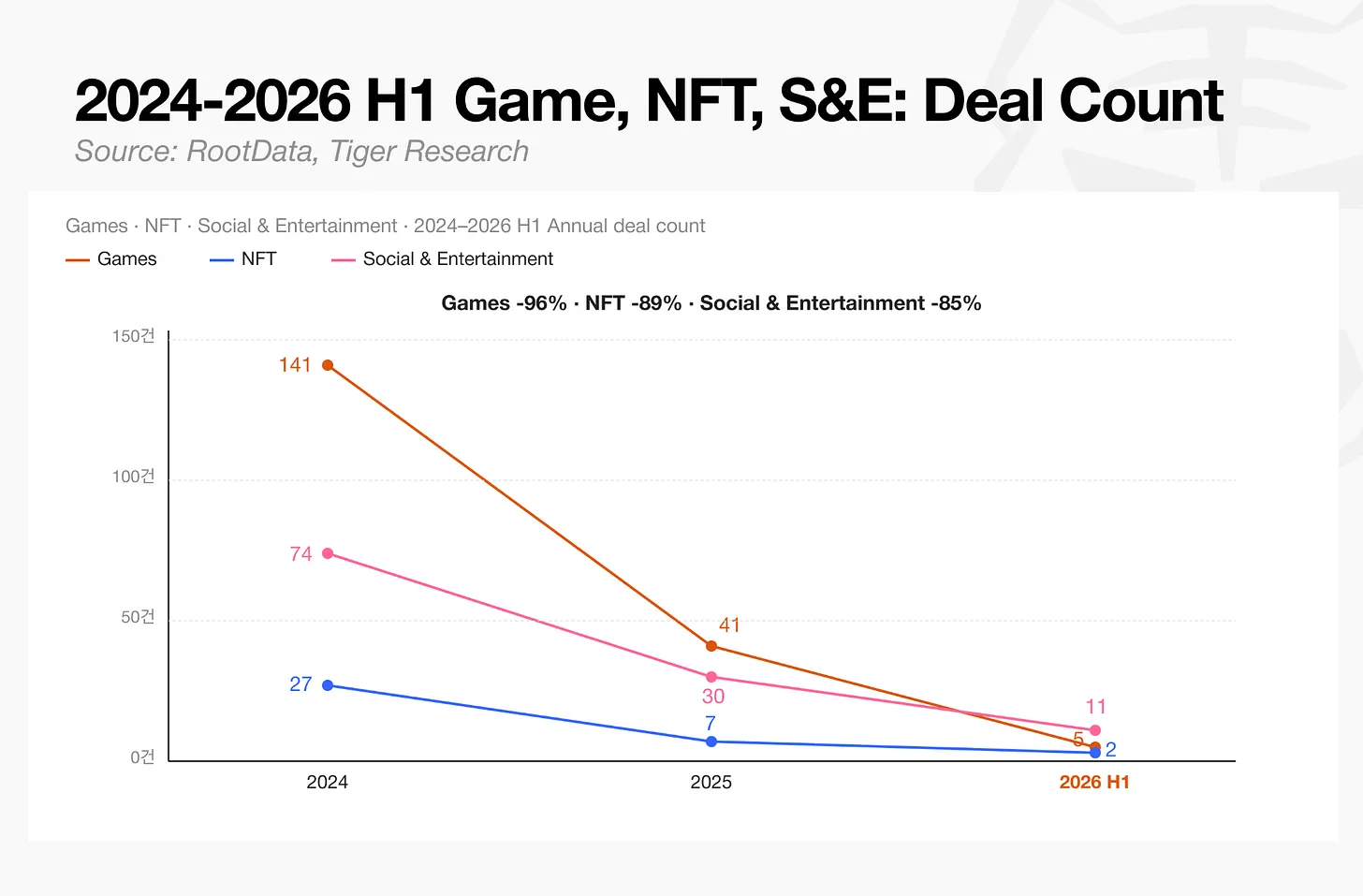
The number of transactions in these three fields all dropped significantly. Gaming dropped from 141 to 5, NFT from 27 to 2, and Social and Entertainment from 74 to 11.
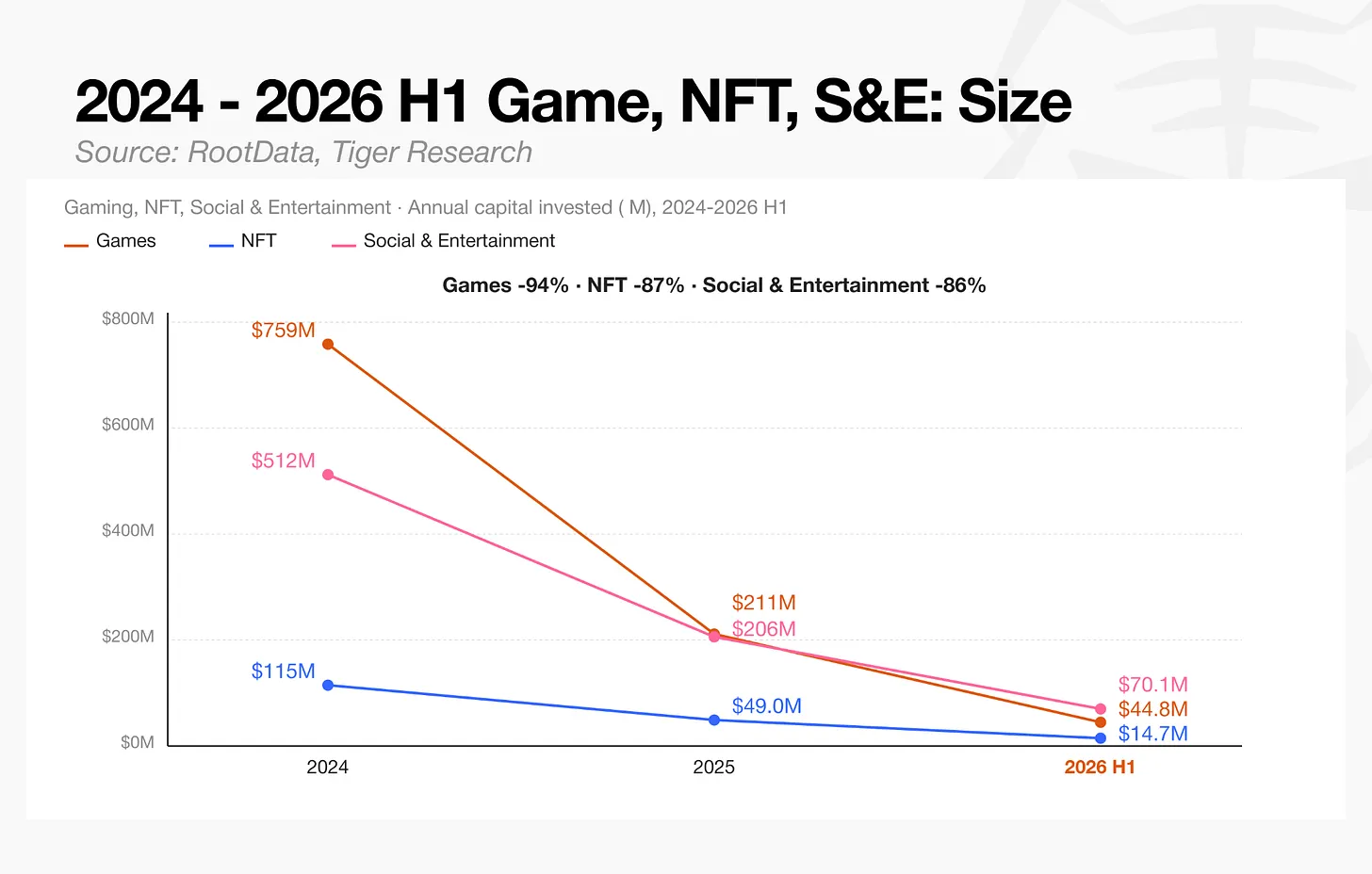
Capital inflows in these three fields all followed the same downward path. Gaming capital dropped from $758.6 million to $44.8 million, NFT capital from $114.9 million to $14.7 million, and Social and Entertainment capital from $512.1 million to $70.1 million.
The decline in the gaming field was the largest of the three. Early GameFi models combined games with token rewards, often relying excessively on token issuance to obtain financial returns rather than building sustainable gameplay. Once new user growth slowed, this model fell into the so-called death spiral, a structural cycle where token value decline and user churn reinforce each other, and never found a way out. As a result, user traffic data, which was once a key indicator for due diligence, lost reliability, and capital inflows into the field were effectively cut off.
5.2. DeFi: Calm but Stable
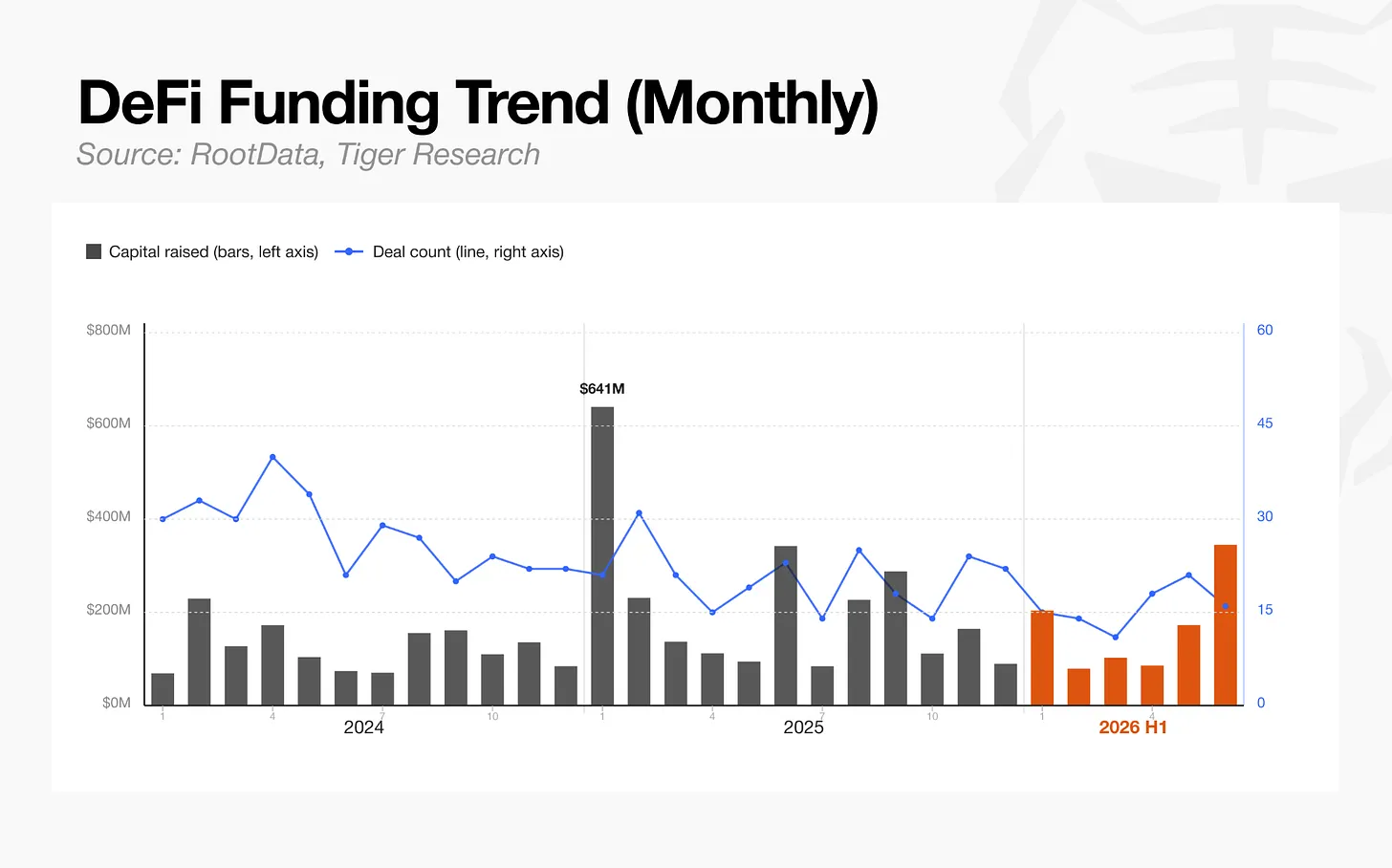
The number of transactions in the Decentralized Finance (DeFi) field dropped 71%, but total investment dropped only about 34%. Average transaction size actually increased, from $4.5 million in 2024 to $10.4 million in the first half of 2026, indicating that as overall transaction volume contracted, capital concentrated in a few large transactions.
The main driver of this concentration was the token sale round by lending protocol Morpho targeting institutions and investment companies. Morpho, using its modular lending protocol to open DeFi vault markets to institutions and redefine DeFi risk standards, raised $175 million in a token round led by a16z crypto, Paradigm, and Ribbit Capital on June 9, 2026. This single round accounted for 17.7% of all DeFi investment in the first half of 2026, clearly reflecting the degree of market concentration.
In other words, the DeFi field has moved away from broad ecosystem growth, and capital has shifted to flow to the few protocols already validated by the market.
5.3. Payments and Stablecoins: Fastest Growing Sector
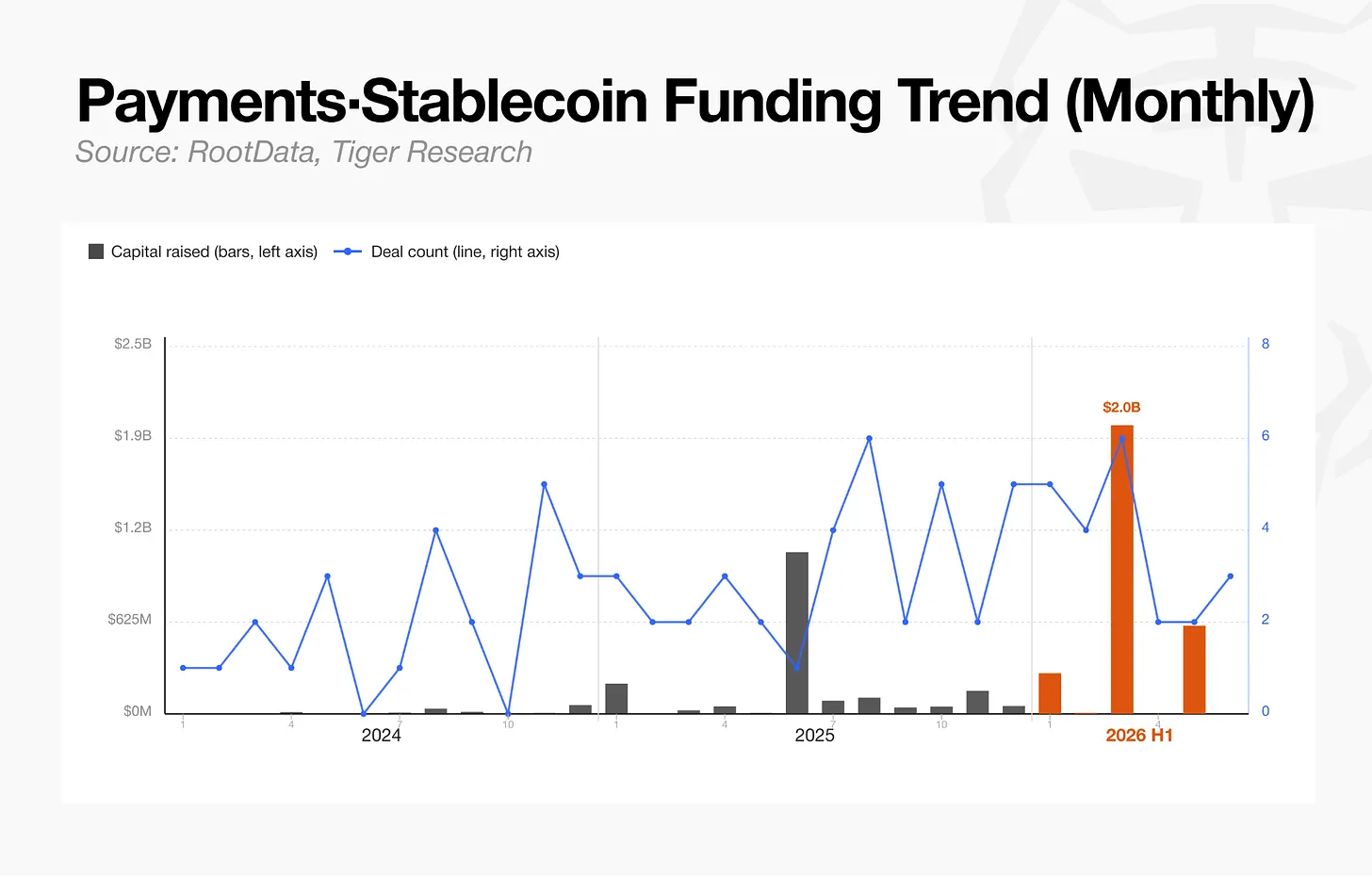
The number of transactions in the payments and stablecoins field continued to accelerate on a monthly average basis. Total investment during the same period surged about twenty-fold from $143.9 million to $2.85 billion in the first half of 2026. However, this growth is largely attributable to a few large M&A transactions.
The largest transaction in the first half of 2026 was Mastercard's acquisition of BVNK for $1.8 billion in March, followed by Payward (Kraken's parent company) acquiring Reap for $600 million in May. These two transactions alone accounted for about 84% of total investment in the field in the first half of 2026. Cross-border payments and crypto card issuers including Rain ($250 million) and KAST ($80 million) also continued to raise funds, supporting growth in the field.
These recent large-scale M&A transactions indicate that traditional payment companies and major Web3 institutions have surpassed simple business partnerships and are now acquiring and directly controlling stablecoin infrastructure. Stripe provides the clearest example of this ecosystem standard race, starting with the acquisition of Bridge in October 2024.
After acquiring Bridge, Stripe collaborated with Paradigm to build Tempo, a blockchain dedicated to stablecoin payments, and successfully launched the mainnet in March 2026. In June of that year, Bridge co-founder Zach Abrams became the interim head of the entity operating Open USD (OUSD), a global coalition stablecoin project with over 140 participating companies.
The OUSD project has adopted Bridge, which Stripe acquired and continues to develop, and Tempo, which Stripe is building, as its core initial infrastructure. The technology and talent Stripe acquired through acquisition now control two pillars simultaneously: its own proprietary platform and an industry coalition aimed at setting standards. This indicates that competition for stablecoin infrastructure has completely surpassed company-level acquisitions and entered a race to set global standards for the entire market.
5.4. CEX: Venture Capital No Longer Needed
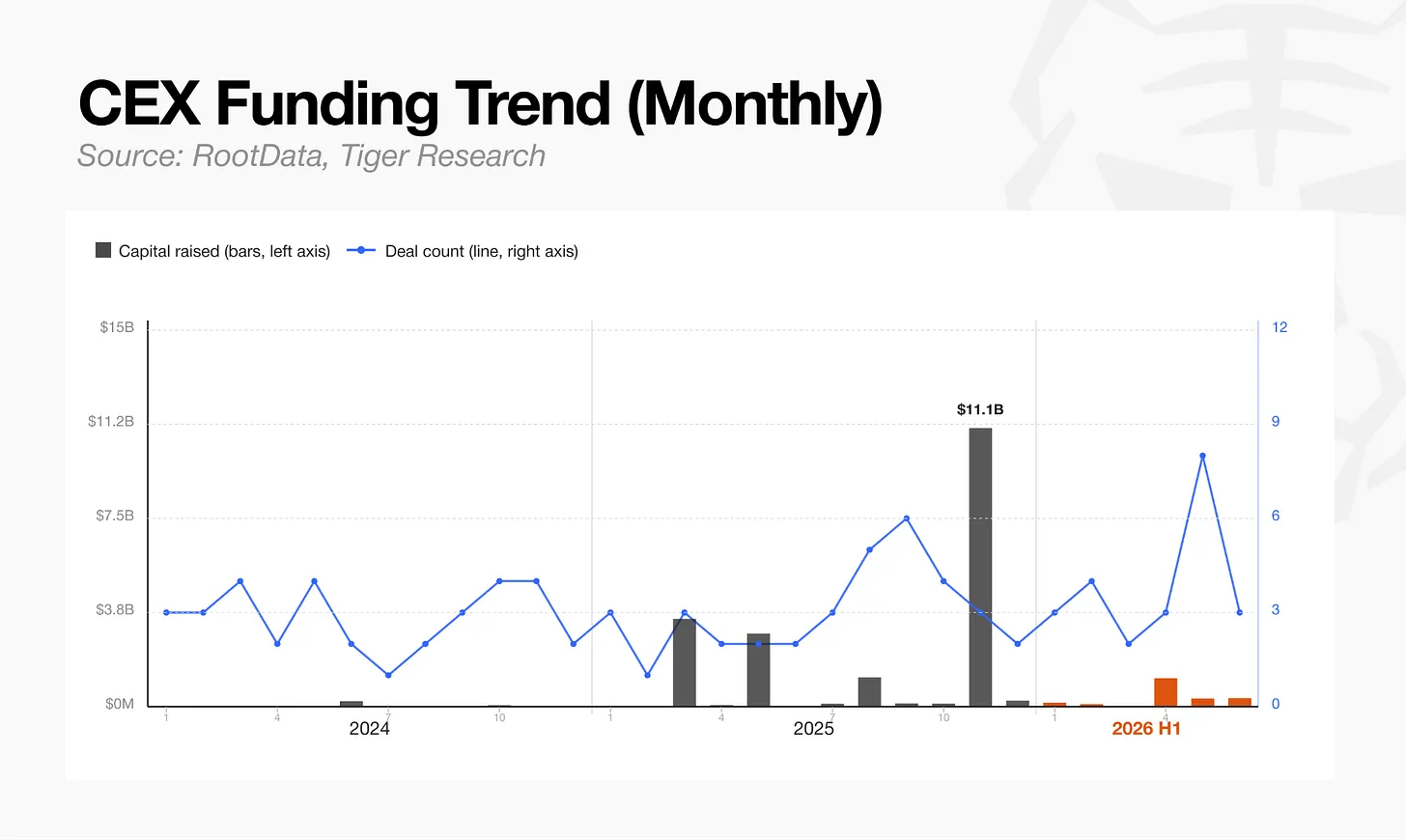
The share of the Centralized Exchange (CEX) field in total investment jumped from 3.0% in 2024 to 18.2% in the first half of 2026. However, this growth is difficult to interpret as expansion of traditional venture capital into new exchanges, because M&A alone accounted for 75.5% of all CEX field investment recorded from 2024 to the first half of 2026. This share climbed from 58.8% in 2024 to 78.9% in 2025, reflecting an overwhelming degree of concentration.
Overall capital inflows declined compared to the $19.4 billion peak when large M&A transactions concentrated the previous year, but are still more than six times the 2024 level of $340 million. Transaction volume also did not slow down, maintaining a steady pace on a semi-annual basis. The 23 transactions recorded in the first half of 2026 averaged 3.8 per month, faster than the rate of 2.8 per month in 2024 and 3.0 per month in 2025.
In other words, what the CEX investment market is showing is a reshuffling centered on a few large operators. Naver's acquisition of Dunamu shares is still under regulatory review, but it is the largest transaction announced during the period, followed by Coinbase's acquisition of Deribit for $2.9 billion and Kraken's acquisition of NinjaTrader for $1.5 billion.
Abu Dhabi sovereign wealth fund MGX's $2 billion strategic investment in Binance fits the same pattern. Meanwhile, VC arms of existing large exchanges, such as OKX Ventures and HashKey Capital, are participating more actively in their own investment rounds and acquisitions. Therefore, CEX participants are increasingly playing a dual role, both as investment targets and strategic investors.
5.5. Prediction Markets: Emerging Field
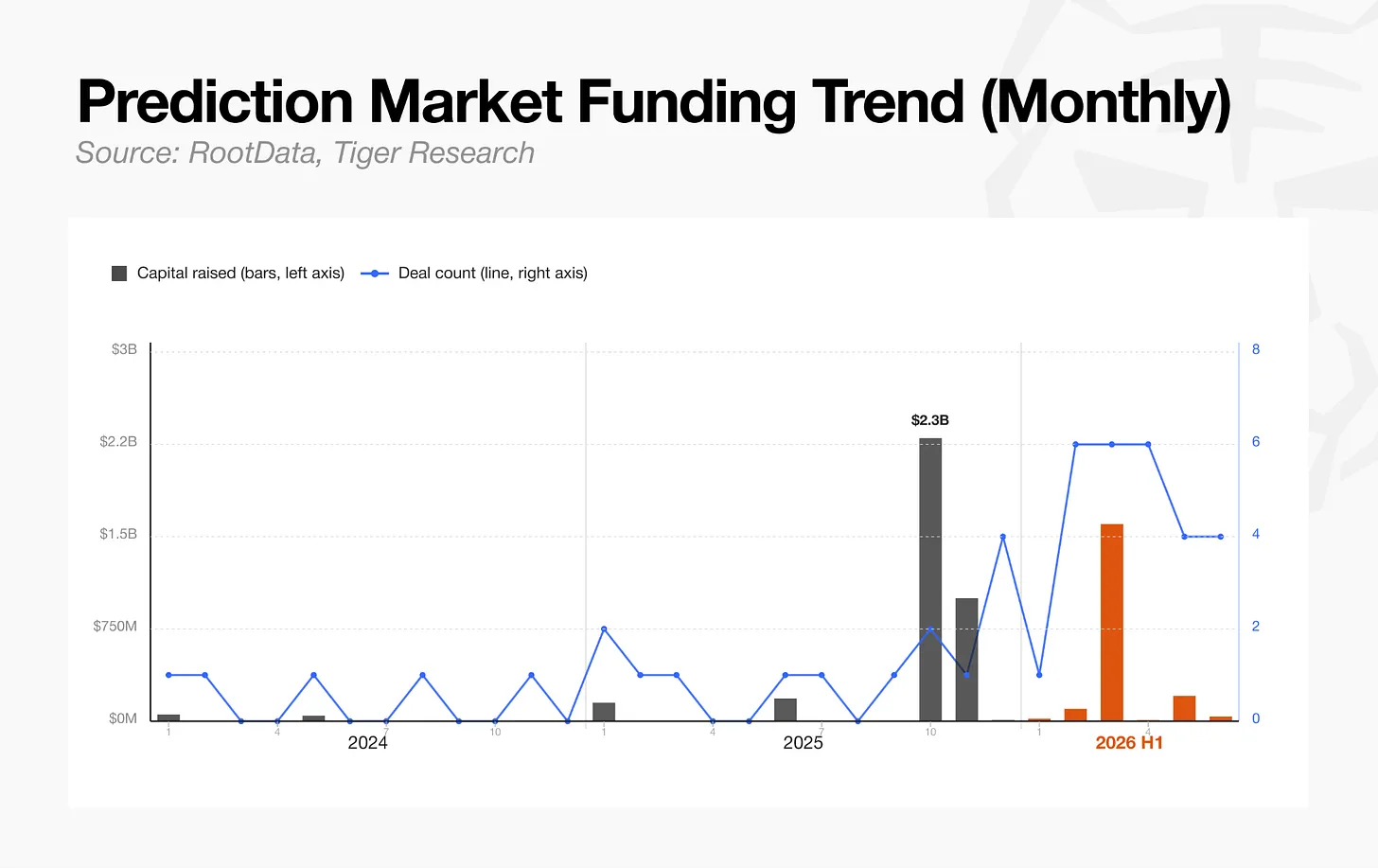
Prediction markets have become a field providing liquidity for real-world macro indicators such as economic data, elections, and policy decisions. The trigger for growth in this field was the formal regulatory approval by the Commodity Futures Trading Commission (CFTC) in May 2025, which opened the door for large-scale capital inflows from hedge funds and asset management companies, and the field entered the regulated mainstream.
Kalshi cumulative trading volume exceeded $100 billion in June 2026. It had already raised $1 billion in a round led by Paradigm in December 2025, followed by another $1 billion led by Coatue.
Polymarket raised funds from major traditional exchange operator Intercontinental Exchange (ICE). In October 2025, ICE committed to investing up to $2 billion, actually deployed $1 billion, and added another $600 million in March 2026, with cumulative investment of about $1.6 billion.
The prediction market field is not a field of many competitive new projects, but is forming a structure where traditional financial institutions and top institutional capital repeatedly inject large rounds into the two participants who first obtain regulatory approval.
5.6. Custody: Calm but Powerful
The custody field grew fifteen-fold, from $20.4 million in 2024 to $317.1 million in the first half of 2026. In the first half of 2026, Anchorage raised $100 million in strategic investment, meaning Anchorage alone accounted for about one-third of all field investment during the period.
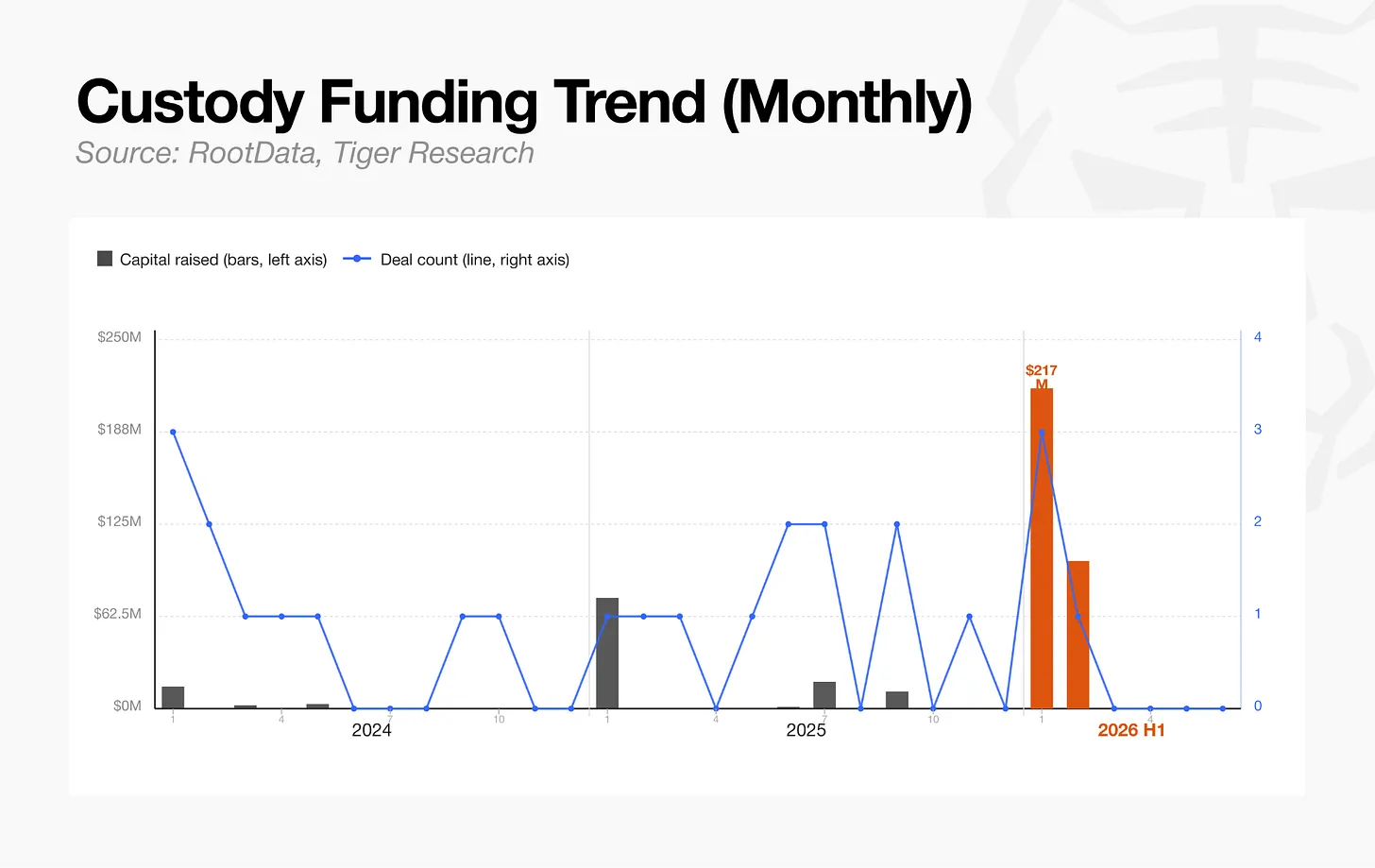
For institutional asset management companies to directly hold crypto assets, custody infrastructure meeting regulatory requirements is crucial. The field grows with the growth of institutional demand for asset management and crypto custody services.
The fields discussed above have one thing in common: each field maintained a stable capital flow foundation through the funding rounds described here; in each case, this infrastructure demand was created by the demand for institutional entry into the market.
6. New Standards for Crypto Capital: From Betting to Control
Overall, the focus of crypto investment has shifted from sowing short-term seeds to owning shares of infrastructure and protocols.
Before Bitcoin ETF approval and the improved regulatory environment in 2024, the crypto market was an undifferentiated betting field, dominated by small narrative-driven investments scattered across many projects. This strategy ultimately led to the collapse of the gaming and NFT fields, and the elimination of VCs that continued to pursue this strategy.
In contrast, today's capital goal is not short-term betting, but obtaining long-term control over investment targets and on-chain infrastructure. It concentrates large sums of capital on a few targets that have obtained auditable revenue structures and regulatory licenses, or directly acquires equity to control the infrastructure itself.
In the past, investment in early-stage projects was a signal sent by VCs to the market. Investment behavior was interpreted as the entry of smart money, thereby driving up token prices or attracting retail participation early on. Structural capital that directly acquires infrastructure and obtains licenses today does not send such signals for retail to follow.
Retail investors no longer react strongly to news of VC investment; the fundamental reason is that market capital itself has undergone this structural change. Retail investors now also need to weigh potential investments with the same caution that VCs now apply. The old betting strategy no longer serves retail investors or VCs.
About RootData
RootData is a Web3 asset data platform launched in early 2022, providing systematic investment and financing databases for crypto investors and founders. It now processes over 3.4 million search queries per month and is used by over 2 million crypto users. RootData's data and research have been cited by major media and institutions, including The Wall Street Journal, Cointelegraph, Binance Research, and The Block. The platform builds the information needed for investor decisions, from discovering crypto projects to tracking financing and analyzing investors.
Join TechFlow official community to stay tuned
Telegram:https://t.me/TechFlowDaily
X (Twitter):https://x.com/TechFlowPost
X (Twitter) EN:https://x.com/BlockFlow_News
 @tiger_research