








Understanding ASM: A New Paradigm in NFT Evolution
TechFlow Selected TechFlow Selected
Understanding ASM: A New Paradigm in NFT Evolution
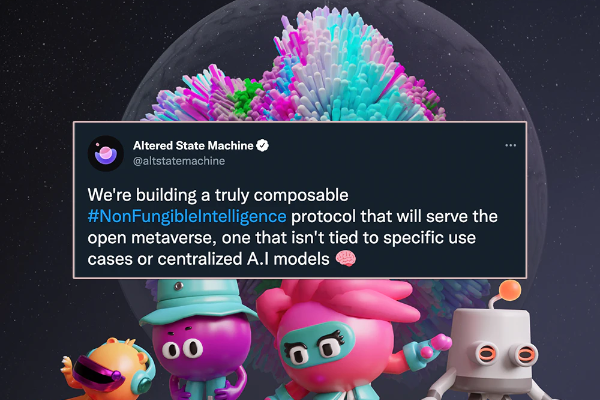
ASM is an innovative project that combines NFT, artificial intelligence, and machine learning.
 Navigating Web3 tides with focused insights
Author: Pickle
Translation: TechFlow intern
ASM is an innovative project combining NFTs, artificial intelligence, and machine learning.
What is Altered State Machine (ASM)?
Altered State Machine is an NFT platform aiming to expand the potential of NFTs by integrating artificial intelligence and machine learning, with the goal of unlocking a vast world of possibilities.
The resulting "artificial intelligence agents" will generate countless use cases.

They recently launched a series of promotions for the ASTO token release, but many sharp observers have been tracking their progress for some time. They've also established clear connections and partnerships with some of the most prominent and valuable NFT collections ever released.
Altered State Machine's vision is to become the protocol enabling ownership and monetization of AI using NFT technology.
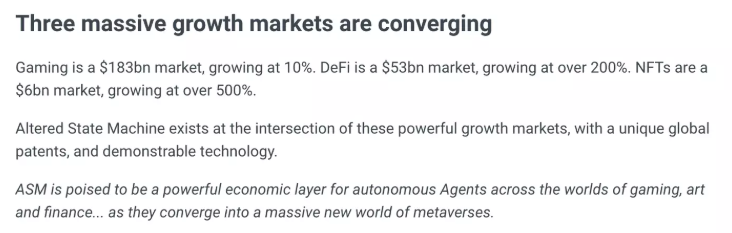
Given its novelty, the knowledge barrier to understanding it, and its early-stage development—there are likely substantial untapped advantages and Alpha opportunities here, potentially offering significant upside for those willing to take on some risk.
Since certain aspects of this project can be difficult to grasp, I'll try to break it down for you.
Before I begin, I want to mention a technology patent they're currently applying for. While some may see this as contrary to Web3's open-source ethos, sometimes it's necessary—to build a moat. Projects like this require network effects to gain momentum, and patents can often prevent "big companies" from consuming smaller projects like this one.

What Are Artificial Intelligence Agents?
There are three components: Brain, Memory, and Form.
Brain
The brain consists of the core starting attributes of an AI agent, known as the "Genomic Matrix."
Values in the Genomic Matrix correspond to statistics such as strength, speed, and size (in gaming) or risk tolerance and randomness (in finance).
Notably, through AI/ML training, required attributes in specific domains (e.g., gaming, robotics) can still be learned even if the brain isn't initially strong in that area—though it may take longer and happen differently. Similar to humans with different innate abilities targeting the same outcome.
Brains were part of the Genesis Box launch (4 characters + 1 brain {Gen1}) in October 2021, within AIFA (the football NFT game developed by the ASM team to showcase their tech).
Now you can buy brains on Opensea and check their rarity on Alpha Farm.
In Q2, you'll be able to stake ASTO to mint new brains (Gen2). The more you stake, the higher your success rate. Details on the staking mechanism are still unclear.
Gen2 brains won't have breeding capabilities nor qualify for future airdrops. Gen1 brains will.
Memory
Memory refers to the results of AI machine learning via the "Gym," where agents undergo "training."
Gyms will be powered by GPU miners acting as Gym Hosts, providing training services to those seeking to train their agents, paid in ASTO tokens. Each agent’s training outcome is unique.
The machine learning "memory" creates an output that is minted as a separate NFT, which can then be attached to your brain. Essentially, this "upgrades" the brain’s skills, abilities, etc.
An example is Strange Clan, where training your NFT character in the Passage Metaverse improves their stats, enhancing their combat performance.
Owners of these worlds will have the ability to incentivize Gym Hosts to help upgrade these AI agents.
Form
This primarily refers to visual skin/appearance. This will vary depending on the agent’s function. For instance, if the agent is a trading bot, appearance might not matter, but if it's a fighting game character, their size or look could be important.
You can think of existing traditional NFTs (e.g., Punks, Bored Apes, or Azukis) as the "form."
Combining these three NFT elements creates a fully functional "AI Agent."
As mentioned above, "memory" is minted as a separate NFT, so an agent can have multiple memory NFTs, while only having one brain and one form.

All agents require a brain and can be used across different projects (games, metaverses, DeFi), though some may be better suited for specific DApps than others.

Memory and form may have some cross-compatibility between similar projects—for example, two games within the same metaverse or similar games across different metaverses. This interoperability will evolve as more projects adopt ASM.
AIFA(Artificial Intelligence Football Association) – Proof-of-Concept Game
AIFA is the first game built using NFT agents, created by ASM. The game isn’t live yet, but it will essentially be a football game. Various aspects of a character’s form (appearance) will be customizable, training will improve performance, and additional variables will be introduced over time.

ASTO
The token powering the ASM ecosystem is called ASTO, with a total supply of 2,384,000,000.

Utility:
Governance;
Purchasing training time for AI agents;
Minting (via staking) new agents/new brains;
P2E;
Liquidity mining/incentives;
In-game/ecosystem transactions (skill points, instant upgrades, items, skins);
Further utilities to be included in the DAO;


How to Obtain ASTO
1. Holding a Gen1 brain qualifies you for an airdrop;
2. AIFA characters will eventually gain some ability to claim or earn ASTO. The exact mechanism is unclear, but you can also purchase ASTO directly on Opensea;

3. Contribute funds to the Discovery auction, ending at 23:00 GMT on June 4. ASM has published a helpful FAQ explaining how it works. At this stage, ASTO in the pool is locked, and only USDC can be added until the auction ends. Contributions are locked for 12 weeks, but during that time, you earn ASTO rewards.
4. Buy after the auction. The Uniswap pool will transition to ASTO-USDC.
Why Am I Excited About All This?
I believe NFTs will be used across multiple pathways and rapidly evolve over the next decade, with everything becoming digitized. Currently, the most valuable NFTs are profile picture (PFP) collections, which effectively coordinate art and social dynamics to build strong communities—such as Bored Ape Yacht Club, CryptoPunks, and more recently, Azuki.
Such PFP NFT series will likely "stay in their lane" and continue achieving success, but given how BAYC surpassed the Punks, it's clear that being first, historic, or pioneering doesn't guarantee long-term dominance.
BAYC may have won by granting IP rights of their Apes to owners. While they’re now preparing to expand into physical spaces, they recognized that success in the digital Web3 world must come first—hence their recent announcement of a metaverse.
I suspect that in the future, many holders of these projects will want their NFTs to have opportunities for upgrading and further development—while still preserving their original form.
Currently, ASM’s largest publicly confirmed partner is Fluf.world, including their developing metaverse featuring Flufs, Party Bears, Seekers, and Thingies.
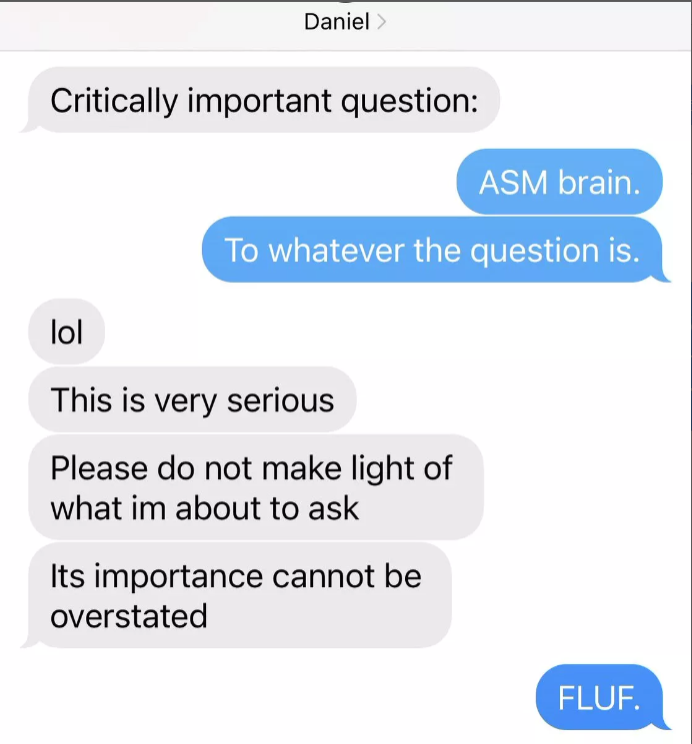
Through tweets, whitepapers, and Discord hints, it's heavily implied that specific NFT series such as BAYC, Punks, and Meebits may also be considering using ASM functionality to turn their NFTs ("forms") into AI agents (by adding brains and "memories"), allowing them to evolve and become something more.

Essentially, I view this project as NFT infrastructure/gaming middleware. Regardless of which NFT PFP collection dominates, which Web3 game gains traction first, or whether a metaverse succeeds, ASM could become a critical backbone. For all of them, integrating AI and machine learning is a natural step—and right now,no one else is doing it quite like the ASM team.
Companies like Delphi Digital have also been actively discussing and promoting this project, and investing in it personally.

How to Get Involved?
Broadly speaking, there are currently only three ways to participate in ASM:
Buy a brain;
Buy an AIFA character;
Buy ASTO (either by staking and earning ASTO yield through the ongoing auction, or buying on the Uniswap public market after the auction ends);
After the ASTO airdrop, brain prices dropped from a peak of 6–7 ETH to around 3 ETH.
I believe Gen1 brains are the "safest" bet at this moment simply because they’ll be in high demand when the ecosystem takes off. Due to their utility, distinct features, advantages over Gen2 brains, and status as the first ASM NFTs, they hold inherent value.
AIFA characters are much cheaper, starting at 0.14 ETH. Their airdrop and claim process remains unclear. I find them harder to justify for long-term value, but they could perform well in the short term, especially once the full version of AIFA launches.
At launch, ASTO will have a circulating supply of 55 million.
Given the project’s scope, its position as a pioneer in this space, its technological moat, its role as broad NFT infrastructure, and the strength of its team and backing, investors should decide for themselves what price is fair.
Join TechFlow official community to stay tuned
Telegram:https://t.me/TechFlowDaily
X (Twitter):https://x.com/TechFlowPost
X (Twitter) EN:https://x.com/BlockFlow_News






