








Deep Dive into Realmverse: A Playable and Economically Rewarding On-Chain Game in the Loot Ecosystem
TechFlow Selected TechFlow Selected
Deep Dive into Realmverse: A Playable and Economically Rewarding On-Chain Game in the Loot Ecosystem
For Loot holders, after experiencing how Loot revolutionized people's perception of NFTs and minting several useless, zero-value Loot derivatives, they have finally迎来了 the first on-chain game with actual gameplay and economic rewards.
 Navigating Web3 tides with focused insights
As a derivative project of the Loot ecosystem, D1 Ventures believes that Realms has the potential to become the next big game on chain, thanks to its team's strong game development and problem-solving capabilities, the community potential from widespread adoption by third-party independent developers, a well-designed in-game circular economy system, and mechanisms to lower entry barriers and expand participation among ordinary players.
On the other hand, judging by the NFT assets released so far and the market capitalization of its released token LORDS, D1 Ventures considers the project to be currently undervalued. With key delivery milestones approaching soon, Realms has the potential to emerge as the most influential (if not the only) metaverse gaming project within the Loot ecosystem.
After all, for Loot holders who have experienced how Loot revolutionized perceptions of NFTs—followed by minting numerous useless, zero-value derivative projects—Realms finally brings the first playable on-chain game with real economic returns.
Introduction to Realms
The Realms team originated from a hackathon, initially aiming only to create a data visualization dashboard for the Loot ecosystem (Loot and its derivative assets). Later, the Bibliotheca team joined, expanding the vision into "helping build an interactive, meta-gaming-based on-chain hyperverse on Layer 2."
As a derivative of Loot bags, Realms' initial offering consists of 8,000 Realm NFT plots—each representing a unique city-state kingdom. Each Realm NFT features distinct geographical characteristics: some are cities or regions, some border rivers or water bodies, others lie near ports. Each Realm produces different mineral resources, with 22 possible combinations of Resources, each varying in quantity and scarcity. Additionally, 50 of these Realm NFTs possess one of 50 Mythic Wonders (Wonders-enabled Realms can tax other Realms), such as the Chaotic Pantheon, Azure Reliquary, and Altar of Providence.
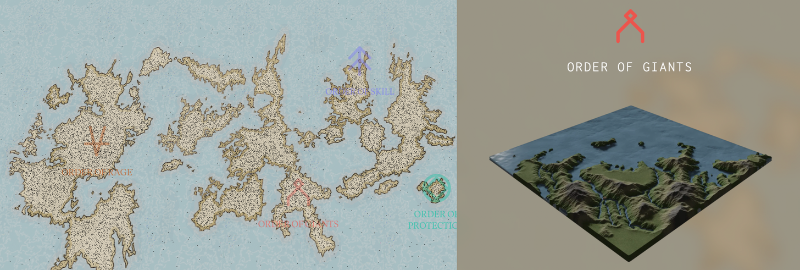
Game Screenshot
These 8,000 Realms will serve as the primary arenas where future gameplay in the Lootverse unfolds and act as the main productive assets injecting liquidity into this ever-expanding universe. The Lords of Realms (holders of Realm NFTs, also known as Lords & Ladies) aim to develop their territories, form alliances, and harvest Resources. At the same time, they must build armies to defend their lands against raids and prevent resource theft by foreign powers.
Realms In-Game Asset Cycle
For any game to operate sustainably, it requires a well-designed economic system. By analyzing four critical aspects—production, accumulation, trading, and consumption—we can assess whether there is demand for in-game item transactions, whether asset supply and consumption reach dynamic equilibrium, and whether the system can scale and attract more participants.
We see such potential in Realms.
There are two main types of assets in Realms: LORDS and Resources. The former is the native token, serving governance functions and primarily acting as the medium of exchange for various in-game items, tools, and equipment. The latter refers collectively to fungible resource tokens used across different gameplay scenarios. Initially, 22 distinct Resources were introduced, each with unique applications. Players must manage their existing resources through market exchanges and trades to maximize productivity output.
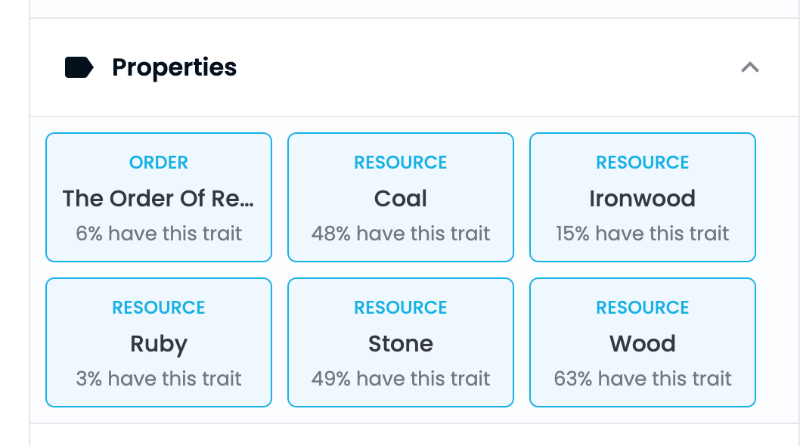
Once "Settled" is completed (to be launched after Realms settles on StarkNet mainnet in Q2 2022), Realm NFTs will begin producing various mineral resources across their territory at a rate of 100 units per day. For example, a multi-resource Realm NFT (as shown below) could mine 100 coal, 100 ironwood, 100 rubies, 100 stone, and 100 wood daily. If your Realm NFT only has one resource type like wood, you’d produce just 100 wood per day.
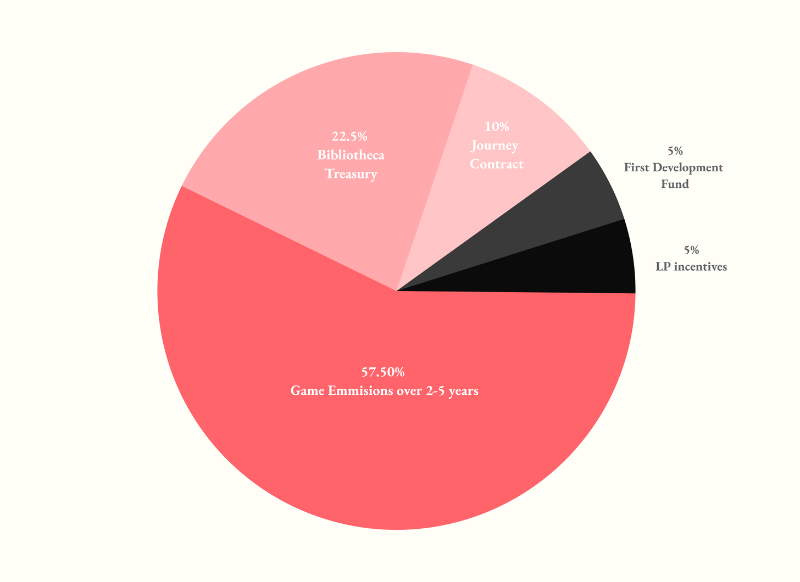
LORDS tokens are also distributed via Realm NFT staking (during The Journey phase) and later through in-game mechanics. Staking releases 10% of the total supply and serves as the primary source of early circulating tokens. During the first 10 Epochs, each Realm earned 625 $LORDS weekly, decreasing over time. Currently in Epoch 14, each Realm earns 350 $LORDS weekly.
Later in-game release mechanisms account for 57.5% of total supply, to be distributed over 2–5 years, with specifics adjusted based on future supply-demand dynamics. Other allocations include Bibliotheca Treasury (22.5%), LP incentives (5%), and developer funds (5%).
LORDS has a market cap of $15.49 million, FDV of $152 million, max supply of 500 million, with around 10% currently in circulation mainly from staking rewards and liquidity mining. The 24-hour trading volume remains low at just $208,000.
Considering the project is still in its early stages and the token currently lacks utility, we have reason to expect value discovery as several major features and products go live in the near term.
Resource Production and Consumption
Resources play a central role in the Lootverse’s in-game economy as both production inputs and consumables. Resources are ERC-1155 tokens required for nation-building and improving productivity (mining speed).
Each Resource starts with a daily production rate of 100 units—the primary supply mechanism. To increase mining speed, upgrades are needed. Different levels of upgrade require specific quantities/types of Resources. Higher-level upgrades may involve additional steps, such as obtaining rare NFT loot from completing special expeditions—opportunities accessible even to regular players.
While upgrading mining tools to boost efficiency might seem straightforward, building and governing a nation presents a far greater challenge. It demands significant Resource expenditure and requires Lords to balance infrastructure spending, directly impacting productivity within their Realm.
In this strategy game, each Lord (Realm holder) constructs various infrastructures within their territory to influence population structure, productivity, military strength, and happiness—thereby altering these core metrics.
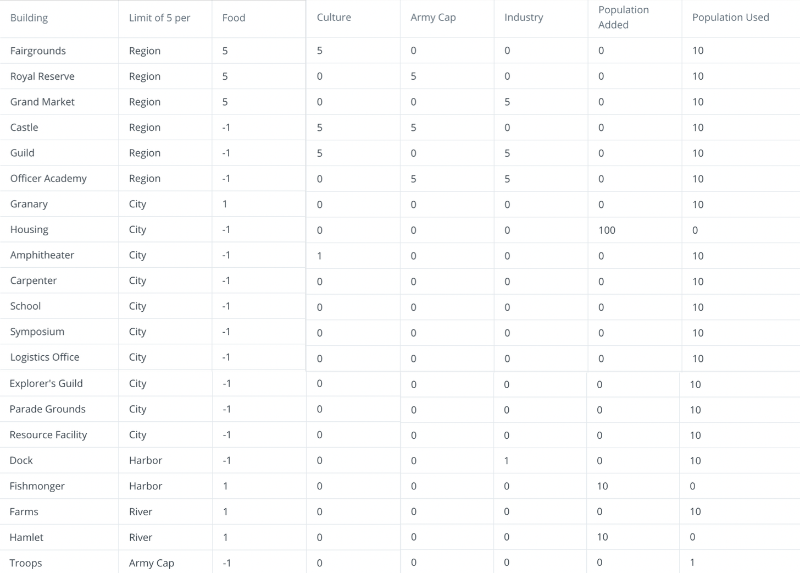
For Lords, every new building constructed impacts these dimensions:
Building a Royal Reserve adds +5 food and +5 army units but consumes 10 population; military construction enhances defense capability, boosting competitiveness, protecting domestic resources, and enabling plundering of foreign ones. However, armies consume large amounts of food—about 100 times more than regular population.
Constructing one housing unit increases population by 100. Population acts as labor force, increasing national productivity. But 100 people consume 1 unit of food, and populations require food and cultural goods. Lack of supply reduces national happiness, thereby lowering productivity.
Population size reflects available labor—for creating armies or constructing infrastructure—and directly affects productivity. Food and culture are essential needs: every 100 people require 1 unit of food and 1 unit of culture. Shortages reduce happiness and hurt productivity.
Happiness is crucial for national productivity and is influenced by food and culture availability. Both armies and civilians need food. If food is lacking, happiness drops. For every 100 people facing food or cultural shortages, happiness decreases by 1%. Conversely, a wealthy nation sees rising happiness. Happiness ranges from a minimum of 50 to a maximum of 150. Thus, Lords cannot blindly expand population—they must provide sufficient food and cultural facilities (like playgrounds and theaters) to maintain balanced development and maximize overall productivity.
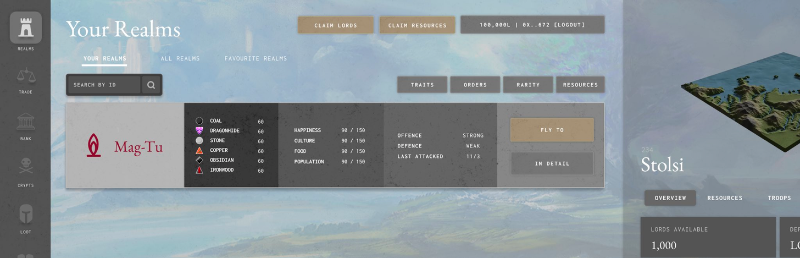
Sneak peek of visual design
Military infrastructure is essential for raiding, defending, and launching expeditions. After the Settling phase begins, staked Realms will produce Resources at 100 units/day, claimable once per week—but only 75% can be withdrawn immediately, while the remaining 25% goes into a Vault. This stored portion becomes a key target during inter-nation warfare.
Lords can strengthen their military by building more military structures. Stronger militaries enable greater plundering power, allowing acquisition of wealth from other nations. Even non-aggressive players must cultivate defenses to protect their 25% vaulted resources. While developing military boosts combat effectiveness and accelerates wealth accumulation, armies consume 100x more food than civilians, crowding out labor and limiting resource extraction capacity.
As a core in-game asset, nearly all activities and gameplay in Realms revolve around Resources—whether building nations, strengthening defense, or boosting productivity—all require substantial consumption of various Resources. Since each nation’s internal Resources are limited, Lords must carefully balance expenditures across construction, productivity, and defense to optimize economic outcomes.
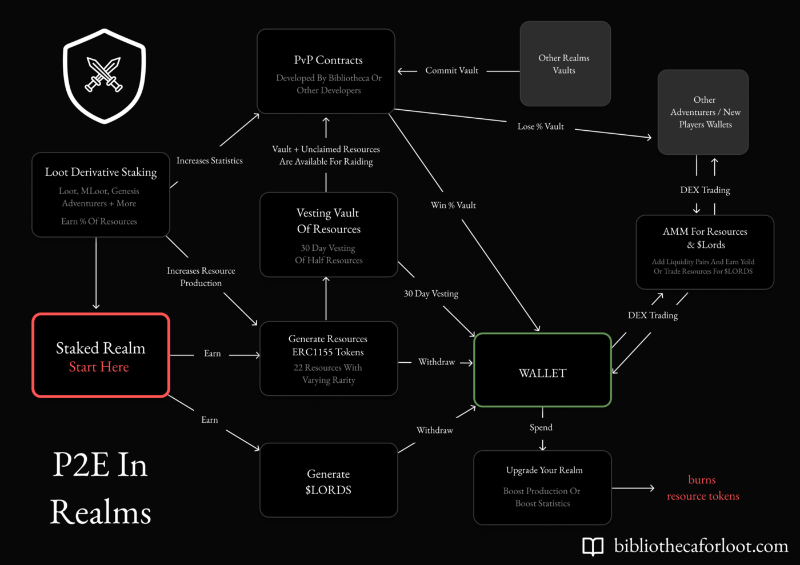
Asset circulation within the Realms ecosystem
Here are some official strategies for reference:
1)Allocate available Resources toward mining upgrades and defensive measures to maintain military readiness and production capacity;
2)Maintain high happiness levels to maximize current asset productivity;
3)Sacrifice population happiness (and production) to build structures that increase army caps for plundering foreign resources;
4)Maintain labor force size and ensure adequate food, housing, and cultural supply to increase usable workforce.
Native Token LORDS
There are 22 different rare Resources in Realms. Depending on attributes, each Realm contains different distributions—from common materials like stone, coal, and wood to rarer ones like gems, mithril, and dragonhide.
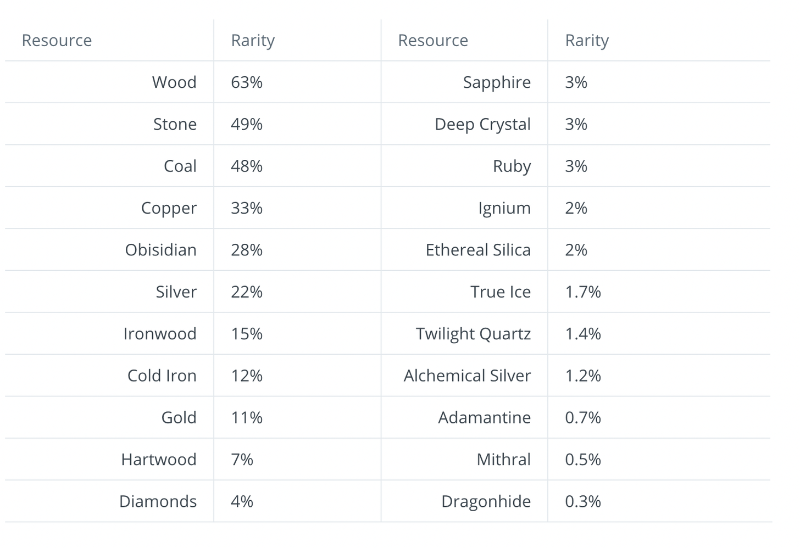
For Lords, upgrading tools or building nations requires various quantities of diverse Resources. Typically, each Realm produces only one or two region-specific mineral Resources, creating massive demand for inter-Realm trade.
To meet player transaction needs, the team built an AMM DEX using StarkNet’s Layer 2 solution. Its ultra-low transaction costs solve frequent in-game trading use cases and allow regular players instant exit opportunities. As the native governance token, LORDS also serves as the trading medium for Resources. Any player can sell obtained Resources on this DEX for LORDS, gaining immediate liquidity.
According to official plans, an LP rewards program will launch in the future, distributing token incentives to liquidity providers for pairs like Wood & $LORDS, Mithral & $LORDS, etc.
Additional uses for LORDS include: serving as the trading currency on the NFT marketplace, minting Lords and Ladies PFPs, extracting items from Loot bags, and acting as access threshold (players must hold a certain amount of LORDS to enter the game).
Key Advantages of Realms
As a derivative project of the Loot ecosystem, D1 Ventures believes that Realms has the potential to become the next big game on chain, due to its team’s strong game development and practical problem-solving skills, vast community potential fueled by third-party developers, a well-designed in-game circular economy, and mechanisms to lower entry barriers for mainstream players.
Core Development Team
The Realms core developers started from a hackathon, later joined by the Bibliotheca team. The core now includes multiple active contributors across communities such as lordOfAFew, RedBeard, LevelsOfDescription, and MikeN.
As one of the most influential developer communities in the Loot ecosystem, the project naturally gained support from Loot creator dom and The Genesis Project (for Loot) developer TimshelXYZ. Both dom and Tim Shel actively support Loot ecosystem growth, frequently sharing related content. Notably, Tim Shel’s own project, The Genesis Project (for Loot), will integrate into the Realms ecosystem.
Realms initially adopted Arbitrum’s Layer 2 scaling solution (deploying Alpha on Arbitrum). After testing, the team found it reduced transaction costs but wasn’t optimal for high-frequency in-game asset trading. StarkNet offered even lower fees without the 7-day withdrawal delay.
In February, the Realms team received support from StarkNet, including a 5 ETH grant from StarkWare to develop an ERC1155 AMM. Louis Guthmann, Head of StarkWare’s Ecosystem, has participated in multiple discussions exploring possibilities for developing Lootverse games on StarkNet.
Community and Expandable Developer Ecosystem
Realms’ Discord server currently has 6,600 members—not only asset holders but also many gaming enthusiasts and indie developers. Channels are highly active, with many gameplay ideas originating directly from community discussions.
Realms is an open on-chain metaverse game. Third-party developers with innovative ideas can directly issue new gameplay elements as NFTs and receive direct financial rewards. This embodies Web3 gaming’s core advantage: monetizing creations to expand gameplay. This gives developers strong economic incentives to innovate, which in turn drives greater demand for the game’s ecosystem token. It naturally addresses the innovator’s dilemma, fostering continuously evolving, long-lasting games.
New assets function like DLC expansion packs, enriching gameplay. For instance, developers can issue NFTs for exploration or character progression—players buy and equip them. Creator rights—a hallmark of open metaverses—unlock infinite possibilities. Players aren't confined to designer-prescribed paths; they can forge their own survival strategies, craft custom items, freely trade via decentralized finance systems, and even reshape maps using advanced physics engines. Indeed, beyond the core team, Realms’ future potential hinges entirely on the imagination of its third-party developer community.
A notable case is Crypts & Caverns. Initially launched as a Loot derivative map with poor sales, it sold out quickly after integrating into Realms, with floor prices surging. Crypts & Caverns NFTs provide: unique coordinates for player exploration and navigation; visibility of Realm locations and neighbors; cave distribution across land and sea; and access to high-fidelity Realms maps. The heightmaps used are CC0 licensed and freely downloadable.
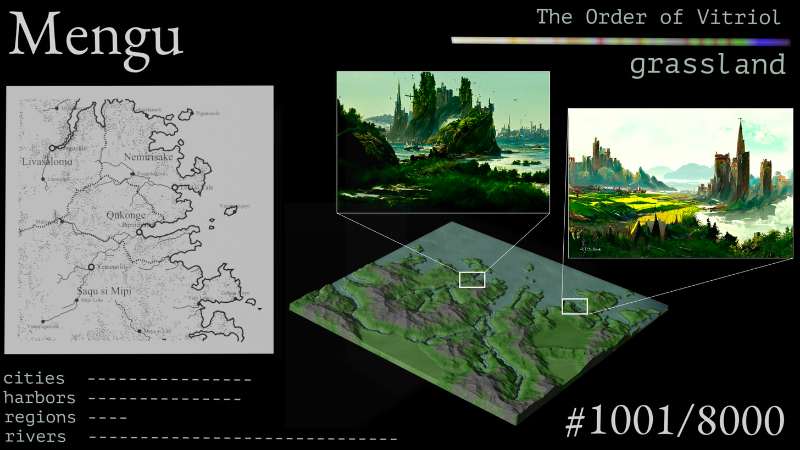
While Realms began with 8,000 low-fidelity territory maps (left: black-and-white), future possibilities depend on the creativity of developers and players (bottom-right: high-fidelity map by Crypts & Caverns; top-right: AI-generated images from keyword input).
Revenue from The Bibliotheca DAO will fund maintenance and expansion of the developer community. The DAO aims to guide development of Realms—an open-source, knight-themed MMOCCG (Massive Multiplayer On-Chain Composable Game) built on ZK-STARKS (StarkNet). Through LORDS grants, the DAO incentivizes ecosystem contributions. Revenue sources include:
1)A fee (denominated in LORDS) charged each time a Loot bag item is extracted, flowing into the DAO for contract upkeep and upgrades;
2)The native Realms NFT marketplace charges a 5% commission on all transactions (priced in LORDS), funding further network development;
3)A portion of Resources won in successful plundering raids will be transferred to the DAO.
NFT Marketplace and AMM DEX Built on StarkNet Layer 2
At the technical level, Realms solves the longstanding problem of high transaction costs for gaming assets on Ethereum.
By leveraging StarkNet’s Layer 2 solution, Realms built a native NFT marketplace and an AMM DEX for in-game Resources (ERC1155 tokens), satisfying both asset trading needs and the high-frequency transaction demands of gaming environments—all enabled by StarkNet’s extremely low fees.
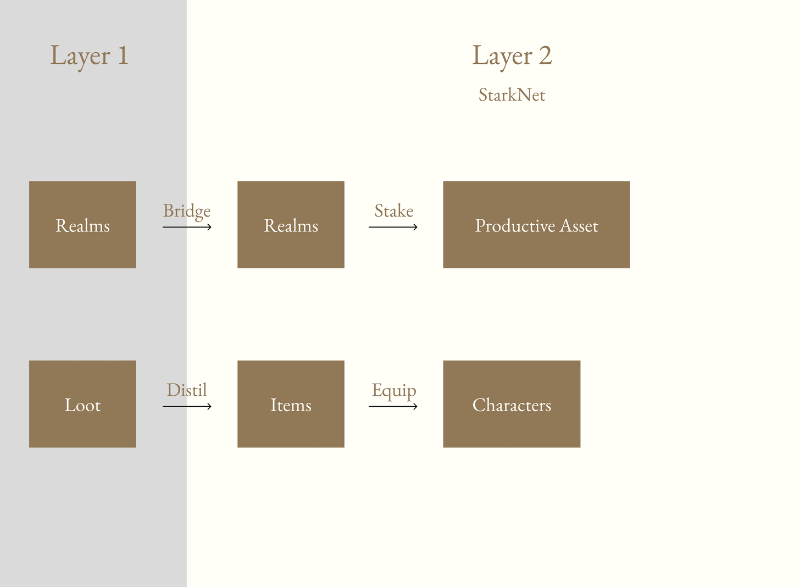
The NFT Marketplace serves as the game’s native platform for trading in-game NFTs such as Loot, C&Cs, Genesis Adventurers, and Mana. The AMM DEX facilitates trading of ERC1155 Resource tokens, enabling players to exchange Resources and gain instant liquidity.
Unlocking Loot Bag Assets
According to official plans, once live on Starknet, Realms will support refining Loot Bag NFTs. Each refinement will cost 25 LORDS. A Loot Bag can thus be broken down into individual ERC721 utility tokens, usable as in-game items, character equipment, or tradable assets on the marketplace.
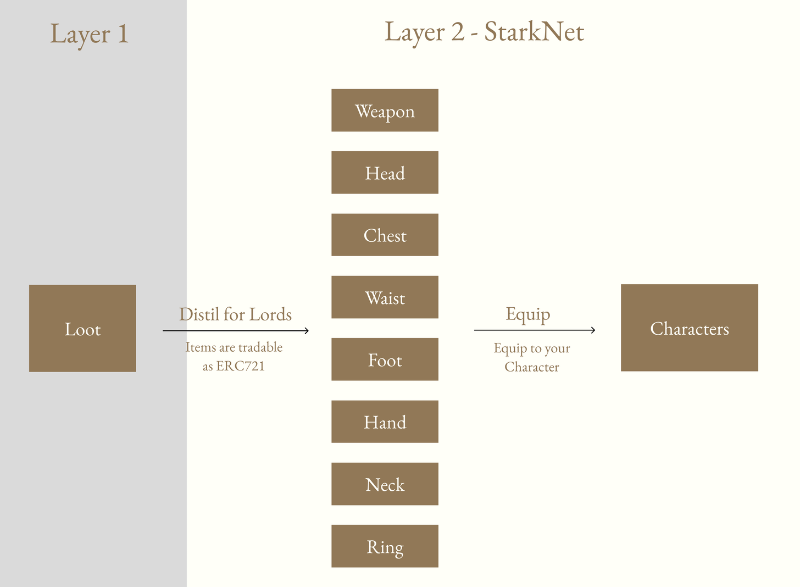
As the most complete and strongest metaverse project in the Loot ecosystem to date, Realms provides practical utility for Loot bag holders. Extracted items can serve as powerful gear, game consumables, or simply be sold on the native NFT marketplace for profit—even if players aren’t interested in playing.
This Loot Bag unlocking feature will bring the game its first wave of passionate early adopters, fueling cold-start momentum.
Expanding Access for Ordinary Players
Cold-start dynamics are crucial for new projects, but long-term success depends on attracting broader audiences and sustaining user growth.
Owners of Loot bags or Realm NFTs may eagerly join due to first-mover advantages and better Resource access. However, a game unable to onboard casual players cannot survive long-term. Great games must continually enhance playability and engagement.
What does it cost for an average player to participate? What roles can they play in Realms?
Realms lowers the barrier drastically: anyone holding proof of LORDS ownership (note: holding, not spending) can mint a character for free at minimal gas cost. Players choose race and gender—parameters permanently recorded on-chain.
With a character, players can undertake exploration quests, collect Resources and special items, then craft composite assets. This crafting process ("craft") involves burning other items/resources to create rare, hard-to-obtain assets with special benefits for Realm owners. These can be sold on the market for profit.
Realms aims to reach a wide audience, targeting 1 million gamers.
Key Milestones
Since launching last September, Realms has passed key development phases. Currently in Epoch 14 of The Journey, the coming months mark a critical stage. The quality of deliverables will directly impact player experience and—crucially for on-chain games—provide real utility for in-game tokens. Key upcoming milestones to watch:
1)Desiege launch: StarkNet’s first mini-game, expected within weeks;
2)Mint Lords & Ladies PFPs: Realm holders can mint king/queen avatars by burning LORDS;
3)Settling Game on StarkNet: Expected late Q2, initiating Resource mining and inter-nation competition over plunder and protection;
4)Launch of NFT Marketplace for trading Realms, Crypts, Loot, and other NFTs;
5)AMM DEX launch for trading in-game Resources;
More information about Realms:
1)Twitter
2)Opensea
Join TechFlow official community to stay tuned
Telegram:https://t.me/TechFlowDaily
X (Twitter):https://x.com/TechFlowPost
X (Twitter) EN:https://x.com/BlockFlow_News
 D1 Ventures






