








Opinion | ETH Merge: Prosperity Amid Risks
TechFlow Selected TechFlow Selected
Opinion | ETH Merge: Prosperity Amid Risks
If Ethereum is to thrive over a long period of time in the future, it must still address an existential issue.
 Navigating Web3 tides with focused insights
Author: Aylo, Alpha Please
Translation: TechFlow intern
For everyone involved in cryptocurrency, the Ethereum Merge is an incredibly exciting moment. However, it's clear that if Ethereum is to thrive for a long time into the future, it still must address one existential issue.
First, let’s review why the Merge is a catalyst for Ethereum:
• Ethereum’s daily issuance is set to decrease by 90%.
• Expected annual inflation will drop from around 4.3% to approximately 0.43%.
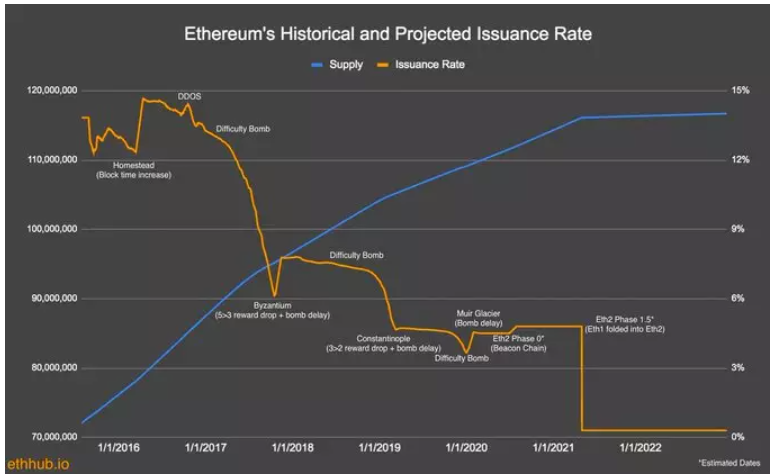
• This is equivalent to three Bitcoin halvings.
• Bitcoin would take 12 years to achieve what Ethereum is doing in just 3 months.
• Energy consumption has dropped by 99.5%, which is critically important for any individual, company, or institution concerned with carbon neutrality.
• PoS validators are likely to see ETH rewards exceeding 10% annually.
• This is an extremely attractive yield for a hard asset like Ethereum, potentially leading to a surge in staking interest.
• Since the launch of EIP-1559, over $2,000,000 worth of ETH has been burned.
• Simulations using Ultrasound.money show clearly that Ethereum is very likely to become deflationary post-Merge.
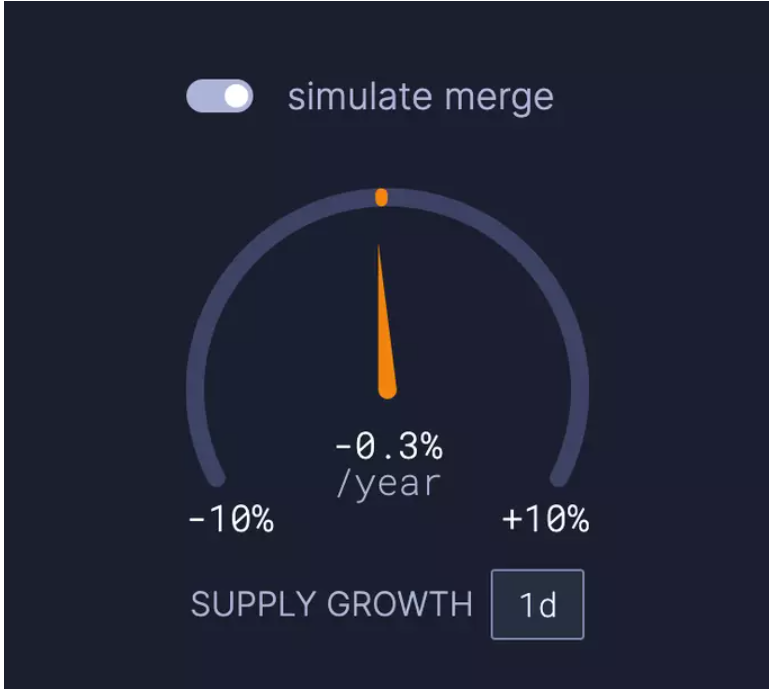
If you combine the Merge with the emergence of real scaling solutions over the past six months—Arbitrum, Optimism, ZkSync, StarkNet, and others—it’s impossible not to be excited about Ethereum’s near-term future. Alright, so everything sounds great—we’re all going to make a lot of money. But now, back to this existential issue...

Execution risk has always been on my mind. I associate this with Ethereum’s core developers attempting to upgrade infrastructure while keeping all funds secure.
It’s not an easy task, but rather a truly remarkable engineering feat—and so far, the developers have pulled it off. With the recent successful Kiln testnet merge, it appears most of the risks associated with the Merge are rapidly dissipating.
Then Péter Szilágyi, team lead among Ethereum’s core developers, brought up this topic—an honest, refreshing, and thought-provoking perspective on just how complex the situation is for Ethereum’s core developers.
TLDR:
• The Ethereum protocol needs to prioritize reducing complexity.
• Complexity leads to unintended consequences and system failures.
• Fewer developers may be willing to take on the burden of such a complex system.
I deeply respect Péter and his willingness to publish this post. I think it speaks volumes about the team building Ethereum and the spirit of Ethereum’s core contributors. The intention here is to spark a conversation and recognize that this is a problem needing to be overcome for Ethereum to achieve long-term sustainability. If the leaders of the Ethereum team don’t currently have answers, then neither will I pretend to. Every blockchain faces its own challenges, so regardless of which chain you support, this should be a topic of interest to everyone.
From an investment standpoint, I remain highly bullish on post-Merge Ethereum and on the community’s ability to solve big, difficult problems. Ethereum has developed a habit of solving every challenge it has faced so far. However, you should not turn a blind eye to the risks posed by an increasingly complex system.

This is also part of why L1 alts have performed so well—it’s not just about cheaper fees. Understanding the technology that will ultimately allow blockchains to scale to millions of daily active users goes beyond the comprehension of 99% of retail investors. As a result, most people tend to allocate across a basket of L1s, weighted by risk.
Although I might have my own views on which public chain is most likely to scale successfully, I can’t deny that this is a sensible approach.
Join TechFlow official community to stay tuned
Telegram:https://t.me/TechFlowDaily
X (Twitter):https://x.com/TechFlowPost
X (Twitter) EN:https://x.com/BlockFlow_News
 alpha please






