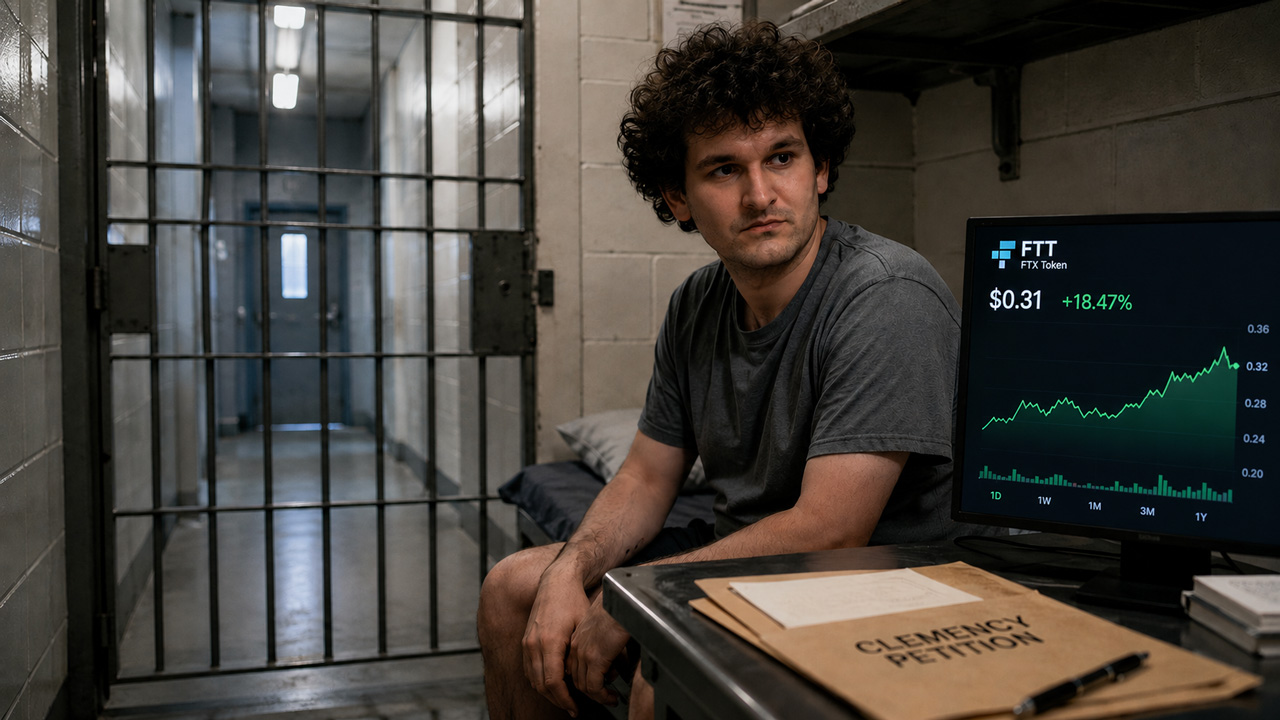
SBF Applies for Presidential Pardon; FTT Sparks Political Speculation Rally
TechFlow Selected TechFlow Selected
SBF Applies for Presidential Pardon; FTT Sparks Political Speculation Rally
Trump has repeatedly refused to pardon SBF, and Polymarket gives SBF only an 8% chance of receiving a pardon before the end of the year.
 Navigating Web3 tides with focused insights
By Oluwapelumi Adejumo
Translated by Chopper, Foresight News
TL;DR
- Sam Bankman-Fried (SBF) has formally applied for a presidential pardon; the FTT token surged over 50% within 24 hours.
- The surge bears no relation to the token’s intrinsic value—it is purely speculative trading driven by market anticipation of the pardon application.
- Donald Trump has repeatedly rejected any pardon for SBF; prediction markets currently assign only an 8% probability of approval by year-end, indicating extremely high trading risk.
Sam Bankman-Fried (SBF), founder of the disgraced cryptocurrency exchange FTX—and convicted of orchestrating one of the largest financial frauds in U.S. history—is currently serving a 25-year federal prison sentence. Yet crypto speculators are betting that a newly filed presidential pardon application could reverse his fate.

SBF Seeks Pardon from Trump
This week, SBF officially submitted an executive clemency application via the U.S. Department of Justice Office of the Pardon Attorney’s website. This move marks a formal escalation of months-long, behind-the-scenes lobbying efforts by his family and legal team—a maneuver that defies conventional legal norms and bypasses the standard five-year waiting period required after sentencing before applying for clemency.
However, the likelihood of approval remains vanishingly small, as President Trump has repeatedly refused to grant SBF any form of pardon. Notably, traders on the blockchain-based prediction market Polymarket currently assign only an 8% probability that Bankman-Fried will receive a presidential pardon before year-end.
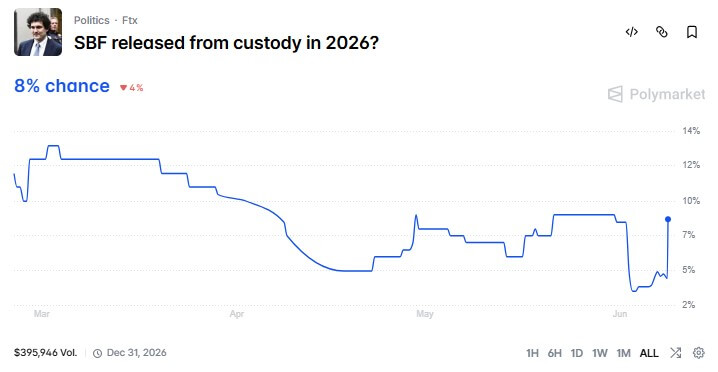
Probability of SBF Receiving a Pardon Before Year-End on Polymarket
Speculative Rally of a “Ghost Token”
Despite near-universal skepticism among political analysts and prediction markets regarding the slim odds of pardon approval, the mere announcement of the application was enough to trigger a speculative frenzy across digital asset exchanges.
According to CryptoSlate data, SBF’s legal action directly benefited FTT—the native token of the now-defunct FTX exchange. Today’s FTT is effectively a “ghost asset”: since FTX’s collapse and bankruptcy filing in November 2022, the token has had no real-world utility, no active development team, and no underlying business operations supporting it.
Yet crypto markets have long been driven by sentiment, narratives of distress, and algorithmic behavior. Following news of the pardon application, FTT surged over 50% in 24 hours, peaking at $0.35—marking a sharp rebound from its prior all-time low of $0.2141. Meanwhile, CoinMarketCap data shows trading volume for this bankrupt token spiked over 600%, exceeding $16 million.
Market data indicates approximately 30% of this speculative trading occurred on Binance—a competitor that, in late 2022, triggered FTX’s bank run by dumping its entire FTT holdings.
This latest rally suggests some market participants view FTT as a political “option” on SBF’s fate. Traders believe that if the pardon were granted, investor interest in FTX-related assets might briefly reignite—making FTT a direct instrument for such speculation.
It must be emphasized that these trades bear no relationship to legal proceedings or bankruptcy recovery efforts. A presidential pardon would neither restore FTX’s operations, nor reactivate FTT’s original functionality, nor alter creditor claims structures—it would affect only SBF’s personal liberty and political narrative.
SBF’s Defense
In March 2024, a jury found SBF guilty of two counts of wire fraud, two counts of conspiracy to commit wire fraud, and additional conspiracy charges related to securities fraud, commodities fraud, and money laundering. Federal prosecutors alleged he misappropriated billions of dollars in customer funds from FTX, defrauded exchange investors, and misled lenders to Alameda Research.
Ultimately, U.S. District Judge Lewis Kaplan sentenced him to 25 years in prison, three years of supervised release, and forfeiture of over $11 billion in assets.
Nonetheless, SBF continues to reject the core characterization of FTX’s collapse. In interviews and online statements, he claims the exchange faced a liquidity crisis—not insolvency—and argues that post-bankruptcy asset recoveries demonstrate that customer funds could have been fully repaid.
His central argument hinges on FTX’s residual assets and venture capital valuations, asserting that at the time of bankruptcy, assets exceeded liabilities—and that control of the company should not have been handed over to external restructuring advisors. This claim directly contradicts evidence presented by prosecutors at trial.
Government evidence showed FTX customer deposits were secretly transferred to Alameda to cover trading losses, make investments, purchase real estate, fund political donations, and repay debts. Multiple former FTX executives testified against SBF. Ryne Miller, FTX’s former General Counsel, publicly refuted SBF’s “solvency” claim, stating that at the time of the November 2022 collapse, the company’s assets fell far short of its liabilities—and internal staff were scrambling to compile asset lists and raise emergency funds.
Trump Grants Clemency to Crypto Peers—but Makes an Exception for SBF
Despite aggressive lobbying, SBF faces a harsh political reality. In a January 2026 interview with The New York Times, Trump explicitly ruled out pardoning SBF—and the White House has since maintained that position.
While Trump has frequently exercised his clemency powers—including pardoning Binance founder Changpeng Zhao in October 2025, and previously commuting sentences for Silk Road founder Ross Ulbricht and BitMEX executive Arthur Hayes—the nature of the SBF case is fundamentally different. Prior pardons have largely been interpreted as correcting regulatory overreach, anti-money laundering technicalities, or advancing criminal justice reform.
By contrast, the SBF case is widely regarded as a brazen, multi-billion-dollar embezzlement scheme that devastated millions of ordinary retail investors. Even among Republican lawmakers supportive of crypto, proposals to pardon SBF have drawn strong opposition. Senator Bernie Moreno stated bluntly: “This person shouldn’t be pardoned—he should rot in jail.”
Many industry professionals share this view: “Pardoning SBF isn’t about freeing a con artist—it’s about enabling thousands more. It sends a dangerous signal: embezzle billions, repackage yourself as a MAGA figure while behind bars, and walk free.”
Join TechFlow official community to stay tuned
Telegram:https://t.me/TechFlowDaily
X (Twitter):https://x.com/TechFlowPost
X (Twitter) EN:https://x.com/BlockFlow_News
 @CryptoSlate