








A Comprehensive Overview of NFT Marketplaces: Who Are OpenSea's Strongest Competitors?
TechFlow Selected TechFlow Selected
A Comprehensive Overview of NFT Marketplaces: Who Are OpenSea's Strongest Competitors?
NFT started strong in 2022. This article reviews 38 NFT marketplaces across various blockchains, exchanges, and traditional institutions.
 Navigating Web3 tides with focused insights
By angelilu, Foresight News
Although the crypto market started the year under pressure from Bitcoin’s continuous price decline, the NFT market has remained hot. In January alone, NFT market trading volume surpassed $5 billion, setting a new record high. OpenSea, which holds over 90% market share, saw its valuation soar to $13.3 billion following a Series C funding round at the beginning of this year. However, the massive traffic fueling OpenSea’s rapid expansion has also become a serious challenge it must now confront.
Recently, OpenSea was once again thrust into the spotlight due to security issues—listing bugs and phishing attacks led to user fund losses. Combined with last September’s scandal involving a former executive using insider knowledge for personal gain, these incidents have prompted Web3 pioneers to reevaluate the drawbacks of centralized NFT marketplaces. Meanwhile, decentralized NFT markets and other emerging platforms now have a rare opportunity to capture a slice of OpenSea’s market share.
This article provides an overview of existing NFT marketplaces across various blockchains, as well as those launched by major exchanges and traditional giants entering the NFT space. We analyze the status of 38 NFT marketplaces and compile publicly available data on transaction fees and royalties.
Well-known mainstream NFT marketplaces such as Rarible, SuperRare, and Foundation are already familiar to users. Their transaction fees and royalty structures are illustrated below, with additional details provided in the text:
Recommended reading: Recommended for Saving | A Comprehensive Guide to Royalties and Service Fees Across Major NFT Platforms
NFT Markets on Public Blockchains
The current NFT wave has spurred the creation of more NFT marketplaces. Some leading platforms may only support their native tokens or ETH for transactions. To foster NFT ecosystems, various public blockchains have launched their own NFT marketplaces. For these platforms, future growth potential is closely tied to the development prospects of their underlying blockchain. (Note: Listed in order of blockchain market cap and marketplace name alphabetically)

Cardano
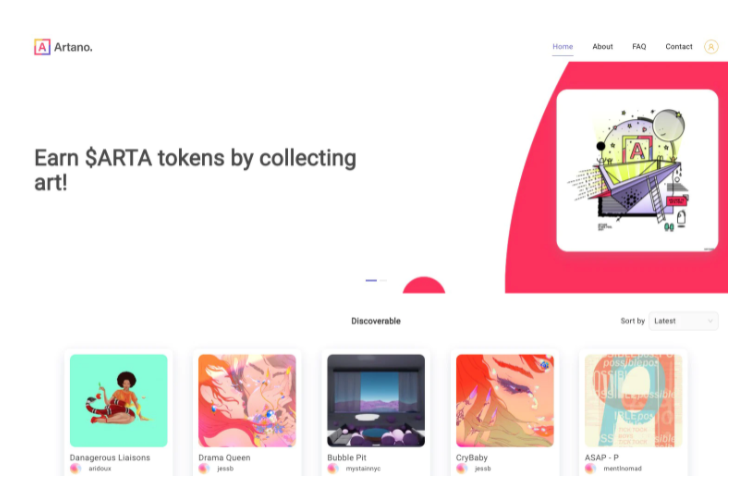
Artano
Artano is a community-driven NFT marketplace that formed a committee of artists and curators, aiming to eventually let users guide the platform's application and artistic direction. Artano implements two types of royalties: a universal royalty and an Artano-specific royalty. The universal royalty applies when users sell their NFTs outside Artano on markets supporting the CIP standard. Artists minting on Artano can set their own royalty percentage, but if the Artano royalty exceeds the universal rate, resellers might opt to list elsewhere.
For primary sales, Artano charges a 5% service fee, with artists receiving 95% of proceeds. For secondary sales, Artano takes 2.5%, leaving sellers with 97.5% minus the artist-set royalty. Curators who assist in exhibitions receive commissions agreed upon with artists.
CNFT.IO
CNFT.IO is a Cardano-based NFT marketplace launched in July 2021 by a decentralized global team. The site displays rankings by NFT trading volume, 24-hour and 7-day volumes, and ranks NFTs by volume, floor price, and other metrics. Notable features include email login, smooth browsing experience, and direct purchase via connected Cardano wallets. CNFT charges a 2.5% market fee (minimum 1 ADA) and a 2.5% royalty (minimum 1 ADA).
Tokhun
Tokhun is an NFT marketplace built on the Cardano blockchain, established in March 2021 after the Mary hard fork. Originally designed as an NFT minting platform, it evolved into a smart contract-powered marketplace with data structures based on the CIP-25 standard, highly customizable. Tokhun charges a 2.5% sales commission (minimum 2.00 ₳DA). Minting fees use a tiered pricing model: 2 ₳DA for the first NFT, 1.5 ₳DA for the 2nd to 20th. Users can log in via Google account and create a wallet within the platform.
Solana
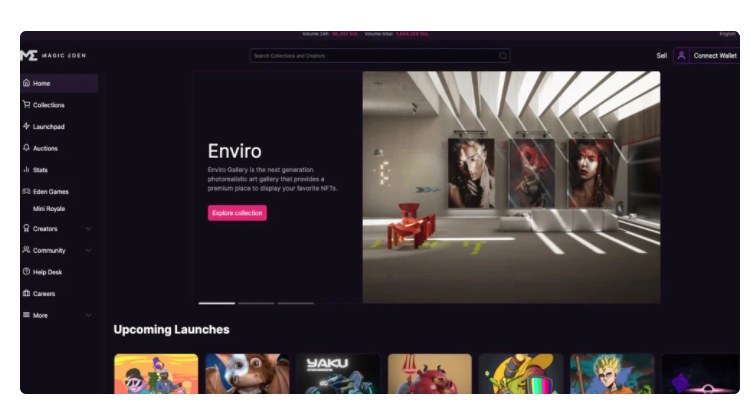
Magic Eden
Magic Eden is an NFT marketplace on Solana offering NFT launchpad and auction services. Its homepage displays key stats like floor prices, trading volumes, and average prices across projects, along with 24-hour and total trading volume for the platform. Magic Eden has zero listing fees, charges 2% on all transactions, and allows creators to set royalties embedded in metadata, viewable on each project’s detail page. According to Dune Analytics, Magic Eden is currently the highest-volume NFT marketplace on Solana.
Solanart
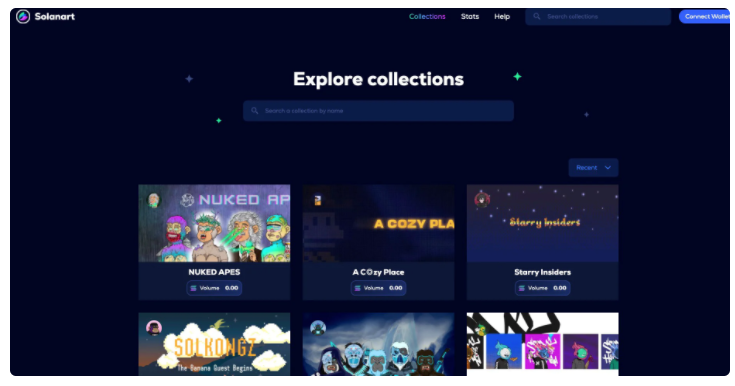
Solanart is an NFT marketplace on Solana that charges a 3% market fee per transaction, with royalties set by creators. On February 17, Solanart launched its V2 version, upgrading wallet management, analytics, and attribute previews for specific collections.
Terra
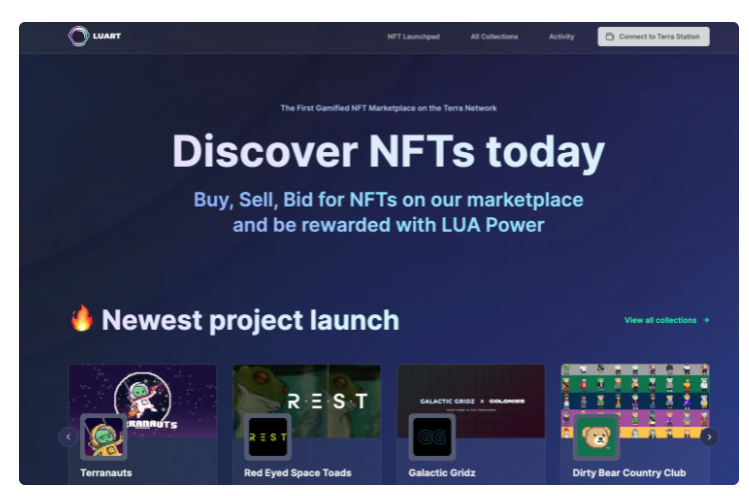
Luart
Luart is an integrated NFT platform built on Terra, featuring an NFT marketplace, launchpad, blind boxes, and staking LUART tokens to earn NFTs. In its secondary NFT market, Luart charges a 6% fee per transaction: 3.5% goes to the project team, 1.5% to LUA Power, and 1% to Luart itself.
Polkadot
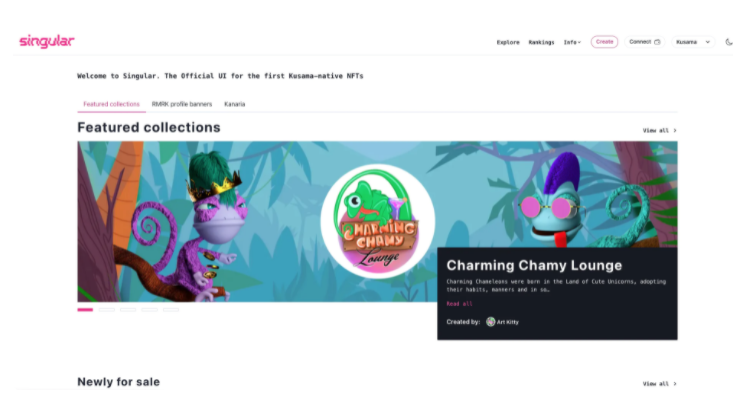
RMRK
RMRK is a set of standards on Polkadot’s canary network Kusama, composed of five “NFT Lego” primitives. Users can build NFT systems of arbitrary complexity using these building blocks. Singular is a Kusama-native NFT marketplace based on RMRK 1.0, though it currently does not support royalties.
Fantom
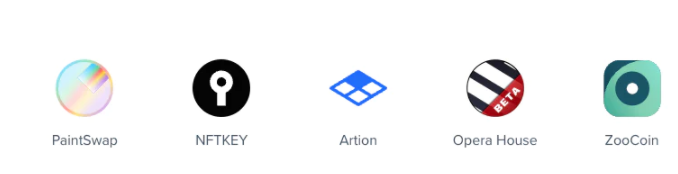
Image source: Fantom Foundation ecosystem map
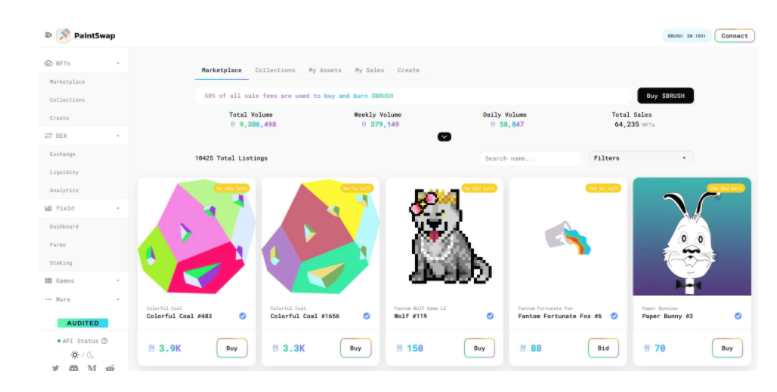
PaintSwap
PaintSwap is a decentralized platform on the Fantom Opera network, offering liquidity mining, staking, and an NFT marketplace. Its secondary market launched in September last year, reaching over 1 million FTM in trading volume within a month. Version 2 has since been released, switching the primary currency from BRUSH to FTM. Each sale incurs a 2.5% commission, with 50% used to buy and burn BRUSH tokens and the remaining 50% sent to the DAO treasury to support further development around BRUSH and the marketplace. PaintSwap supports two royalty types: ERC2981 and PaintSwap-curated collection royalties, both capped at 7.5%.
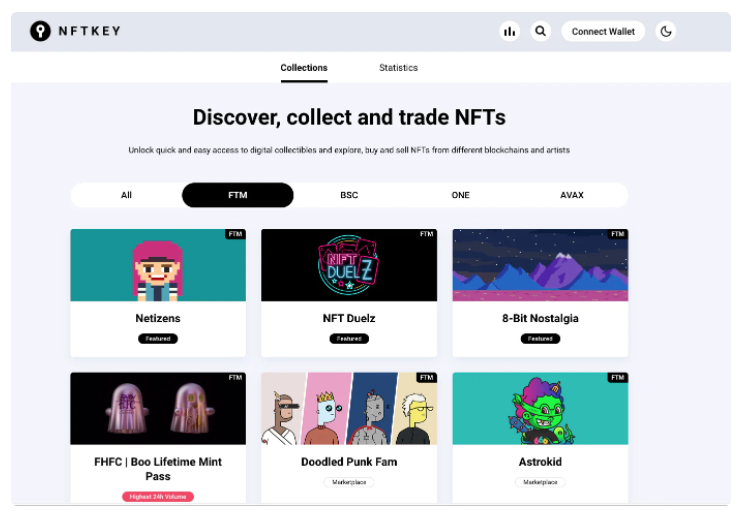
NFTKEY
NFTKEY is a decentralized, non-custodial NFT marketplace launched on March 26, 2021. It supports listing, auctioning, and trading NFTs on Ethereum, Binance Smart Chain, Fantom, Avalanche, and Harmony. NFTKEY charges a 2% transaction fee. The default creator royalty is 2%, but creators can set rates between 0% and 8%.
Artion
The Fantom Foundation launched the NFT marketplace Artion, whose V2 version went live on February 9. The interface closely resembles OpenSea. The Fantom Foundation stated that Artion will eventually be handed over to the community.
Artion highlights its platform advantages:
1. Fast transactions, typically confirmed in 1–2 seconds;
2. Low fees, usually costing just a few cents to create or trade NFTs;
3. Zero platform fees—no charges for auctions or direct offers on Artion.
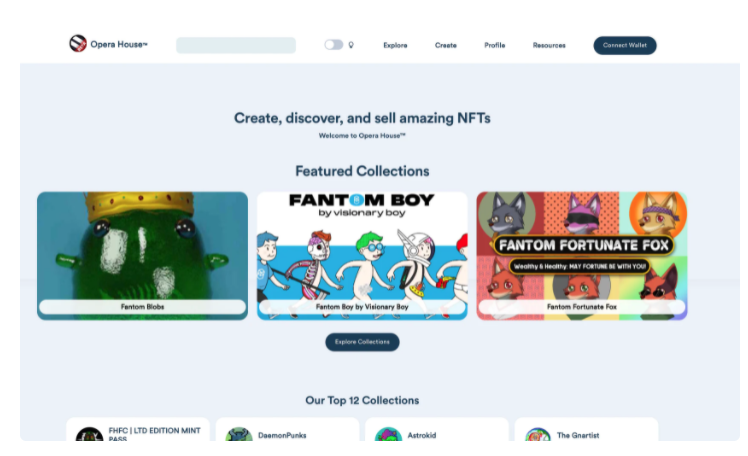
Opera House
Opera House is a community-built NFT marketplace for the Fantom Opera network, currently in testing phase with technical support from Nova Network. It charges a 1% transaction fee, while creators set their own royalties (up to 15%). Currently supporting ERC-721, it plans to add support for ERC-1155 and ERC-2981 in the future.
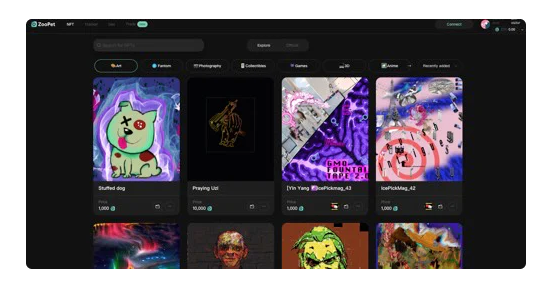
ZooPet
Zoo is a decentralized application ecosystem built on Fantom, including ZooTrade (exchange aggregator), ZooDEX (decentralized exchange), ZooTracker (trading and asset management tool), and the NFT marketplace ZooPet. ZooPet supports NFT minting and trading across categories such as original art, photography, and collectibles. It enables tipping artists and viewing transaction histories for individual NFTs.
Dfinity
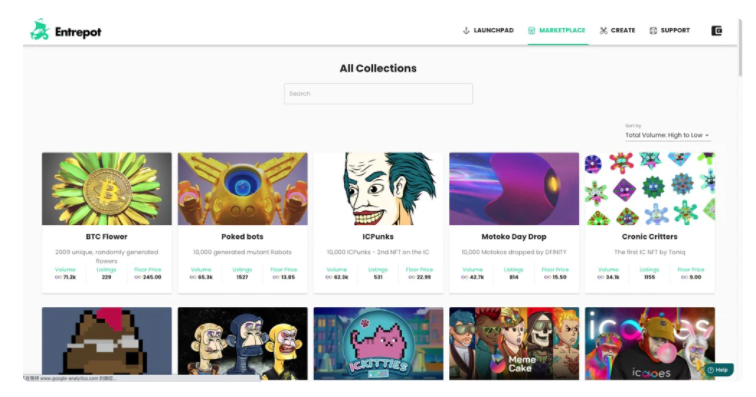
Entropot
Entropot is an NFT marketplace in the Dfinity ecosystem, featuring an NFT launchpad and secondary market. The secondary market charges a 1% transaction fee, with creators able to claim up to 10% in royalties. Supported wallets include Stoic Wallet and Plug Wallet.
Tezos
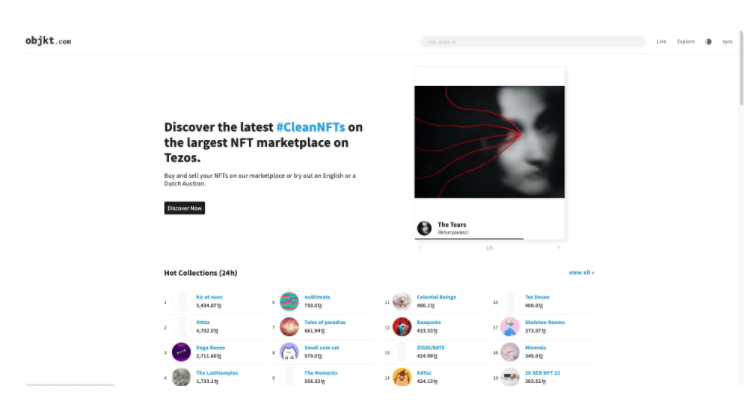
Objkt
HEN was originally the first NFT marketplace on Tezos, launched in March 2021 by Brazilian Rafael Lima, aiming to help South American artists without Western media exposure showcase their NFTs. It gained popularity among independent artists globally. However, after a hack due to a smart contract vulnerability, the third-party auction tool Objkt rapidly improved its functionality, positioning itself as a comprehensive NFT aggregation platform for Tezos where all artworks can be traded. HEN officially shut down on November 11. NFTs on Tezos resemble traditional art exhibitions brought on-chain, emphasizing cultural value over speculation. Transactions incur a 2.5% fee, with royalties set by the artists themselves.
Flow
BloctoBay
BloctoBay is a non-custodial NFT marketplace built into Blocto, a multi-chain smart contract wallet. Blocto also includes a developer-friendly SDK, a built-in DEX called BloctoSwap, and Blocto Launchpad.

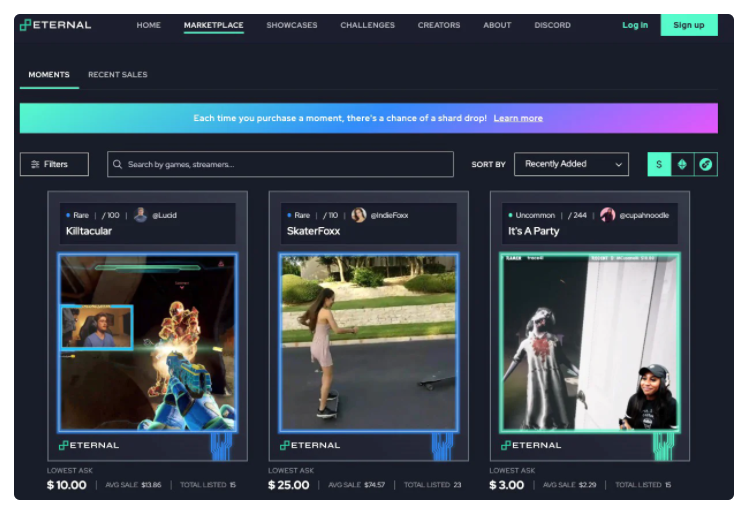
Eternal
Eternal is a video and gaming NFT marketplace on the Flow network. Eternal partners with creators and esports players to turn live streams and gameplay clips into collectible moments for fans. Eternal raised $4.5 million last September, with participation from Mark Cuban. In its secondary NFT market, 5% of fees go to Eternal for network and operational costs, while 10% go to creators.
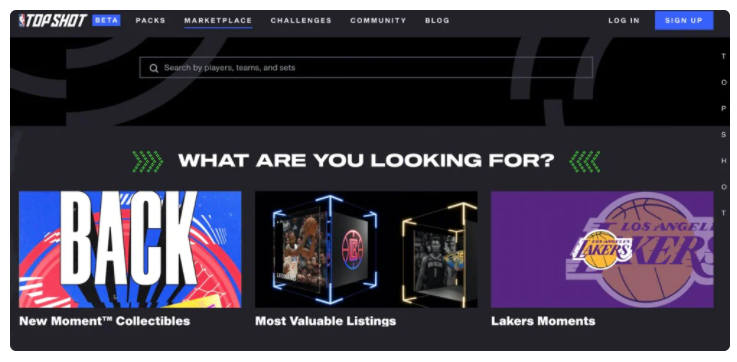
NBA Top Shot Marketplace
NBA Top Shot represents the National Basketball Association and Women’s National Basketball Association’s foray into the NFT world. On this marketplace, users can purchase collectible basketball moments (video highlights and game clips) and artwork from top-tier leagues.
This marketplace is built by Dapper Labs on the Flow blockchain.
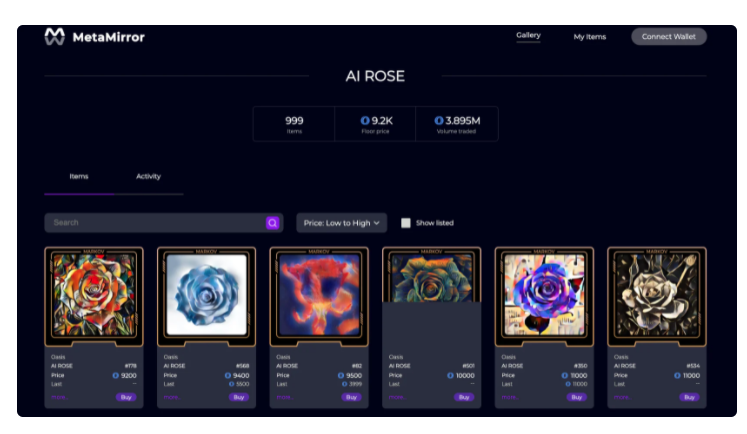
Oasis
Oasis created 999 AI Roses for community members to claim as part of their metaverse identity MBuddy stored on the Oasis network. These NFTs can be traded on the dedicated marketplace Metamirror. The current floor price is approximately 3,800 ROSE, with total trading volume reaching 1.05 million ROSE.
Arbitrum
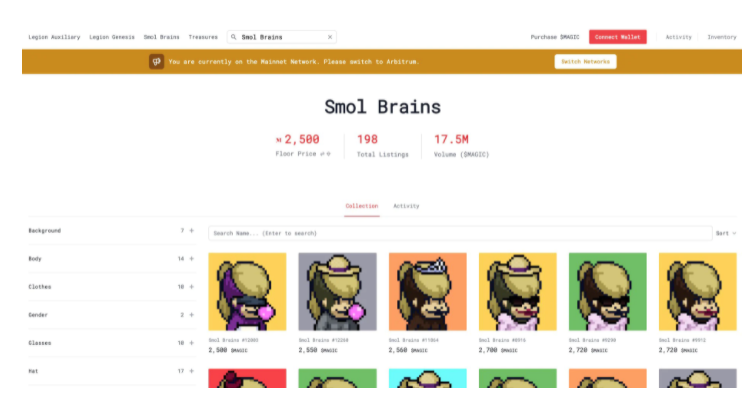
Treasure DAO
Treasure DAO is a decentralized NFT ecosystem on Arbitrum designed for metaverse projects, consisting of GameFi games, NFTs, and the MAGIC token. Initially, users could stake Loot NFTs to earn MAGIC. Now, MAGIC can be used to purchase NFTs on its marketplace, where a 5% royalty applies. At least 2.5% is redistributed to Treasure DAO, with the remainder going to creators.
Multi-Chain NFT Markets
SuperFarm
SuperFarm is a cross-chain NFT platform that has launched an NFT launchpad and NFT farming (mining). According to its roadmap, it will introduce NFT generation tools, a marketplace, and trading platform. Using a multi-chain strategy, SuperFarm supports Ethereum, Binance Smart Chain, Polygon, and plans to release exclusive NFTs and launch NFT farming on Fantom in April. The NFT Launchpad is powered by Immutable X, enabling fast, gas-free NFT transactions.
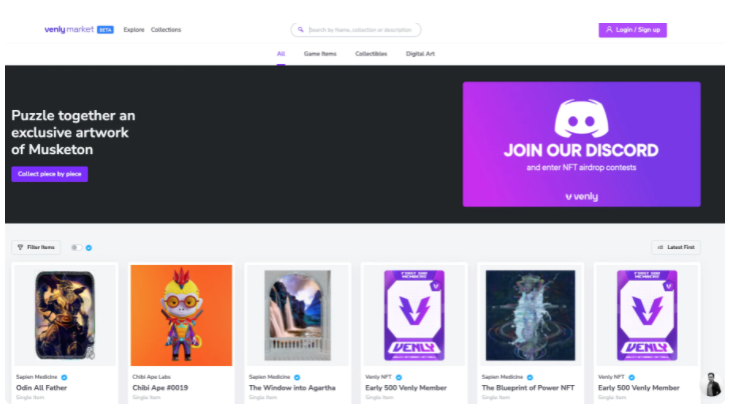
Venly
Venly (formerly Arkane Network) is a multi-chain NFT platform supporting Polygon, Binance Smart Chain, and Avalanche, currently in BETA. Venly charges a 2% fee on every successful sale, while NFT creators collect an additional 10%. Venly categorizes NFTs into in-game items, collectibles, and digital art.
NFT Markets Launching Vampire Attacks on OpenSea
Infinity: One of the earliest protocols to launch a vampire attack on OpenSea, Infinity announced token airdrops to OpenSea users as early as October last year. Community-driven, it charges a 1.5% transaction fee on each sale, directing all revenue into a community-controlled treasury.
LooksRare: On January 10, LooksRare distributed LOOKS tokens to OpenSea users. Compared to OpenSea’s 2.5% fee, LooksRare charges only 2%, with 100% of fees earned by LOOKS stakers. It also uses trading incentives to encourage NFT activity.
X2Y2: X2Y2 also conducted an airdrop to OpenSea users, charging a 2% transaction fee, with proceeds used to reward token stakers. Additionally, X2Y2 incentivizes listing—users earn more than double the staking rewards for listing NFTs.
For more on X2Y2, read: Quick Look at OpenSea Challenger X2Y2: Incentivizing Listings to Solve Supply-Demand Imbalance
Exchanges Launching NFT Markets
While decentralized NFT markets across various chains struggle to attract users, centralized exchanges—with their large existing user bases—are aggressively entering the NFT space. Centralized exchanges hold significant advantages in custody, branding, distribution, partnerships, and intellectual property. While NFT markets may not become their core business, they are becoming an essential component of comprehensive exchange offerings.
Binance launched its NFT marketplace in June last year, among the first major crypto exchanges to do so. Users’ exchange accounts automatically link to their NFT accounts, enabling seamless access. Bidding works similarly to other platforms. Buyers can use ETH, BNB, or BUSD depending on what the creator accepts.
Gemini, a cryptocurrency trading platform, acquired the NFT marketplace Nifty Gateway, which facilitated NFT sales for digital artist Beeple and musician Grimes.
FTX US launched its FTX NFT marketplace in October last year, initially focusing on Solana and adding Ethereum support in December.
Bybit launched its Bybit NFT Marketplace in January this year. Bybit users don’t need to connect personal wallet addresses—they can buy, sell, and trade NFTs directly using their Bybit spot accounts on the Ethereum ERC-721 standard.
Coinbase, the exchange giant, has announced plans to launch an NFT marketplace. With its massive user base and regulatory compliance edge, although not yet officially launched, over 3.7 million users are already on the whitelist waiting to join.
Kraken, another major crypto exchange, plans to roll out an NFT marketplace allowing users to use NFTs as loan collateral. The platform will offer custodial services, and the exchange is studying how to determine liquidation values for deposited NFTs.
Backyoung Heo, CEO of South Korean exchange Bithumb, said in an interview that Bithumb will launch an NFT platform this year through its subsidiary, potentially resembling OpenSea.
Traditional Giants Entering NFT Markets
If exchange entries reflect industry players recognizing NFT sector rotation, then traditional giants' involvement signals NFT’s breakout into the mainstream.
Meta (formerly Facebook) plans to launch an NFT marketplace, allowing users to create and display NFTs on their profiles, and is exploring prototype token-minting features. Meta’s entry could significantly increase NFT visibility among general users.
The National Football League (NFL) partnered with Dapper Labs, the company behind NBA Top Shot, to launch NFL All Day, an NFT marketplace on the Flow blockchain.
Social giant LINE plans to launch its LINE NFT marketplace "DOSI" in Q1 2022, developed by its blockchain and NFT subsidiary LINE NEXT, marking its entry into the metaverse.
The New York Stock Exchange filed trademarks related to virtual goods and NFTs, planning to build an NFT marketplace with functionality similar to OpenSea.
Conclusion
Whether native crypto protocols, centralized exchanges, or traditional enterprises, all are developing NFT marketplaces modeled after OpenSea—proof that OpenSea, despite its current dominance, cannot remain unchallenged forever. OpenSea’s recurring issues serve as a security wake-up call for emerging and newly deployed NFT platforms: only those prioritizing user asset protection will continue attracting users. Meanwhile, innovative newcomers like LooksRare and X2Y2, built on OpenSea’s foundation, must prove their long-term viability. Given the current flourishing trend in NFTs, multiple marketplaces will continue evolving alongside OpenSea, ultimately consolidating into a few strongest survivors.
Join TechFlow official community to stay tuned
Telegram:https://t.me/TechFlowDaily
X (Twitter):https://x.com/TechFlowPost
X (Twitter) EN:https://x.com/BlockFlow_News
 Foresight News






