Understanding Jambo: Africa's WEB3 Super Portal Backed by All-Star Institutions
TechFlow Selected TechFlow Selected
Understanding Jambo: Africa's WEB3 Super Portal Backed by All-Star Institutions
Jambo, a Congo-based startup building Africa's Web3 gateway through crypto-powered income opportunities via "learn, play, earn," has raised $7.5 million in seed funding.
 Navigating Web3 tides with focused insights
Written and compiled by: TechFlow Intern
Sources referenced: TechCrunch, Hashed, MapleLeafCap, Santiago
Africa is opening the curtain on Web3.
Jambo, a startup headquartered in Congo, is building a Web3 gateway for Africa by offering crypto-based income opportunities through "learn, play, earn." It has raised $7.5 million in seed funding.
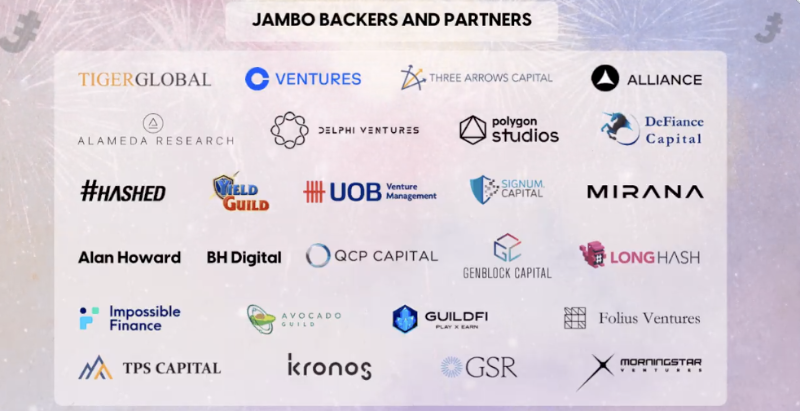
Investors include Coinbase Ventures, Three Arrows Capital (3AC), Alameda Research, Tiger Global, Delphi Ventures, AllianceDAO, DeFiance Capital, Yield Guild Games, and Polygon Studios, along with several angel investors from the Web3 ecosystem, such as Sandeep Nailwal, co-founder and CEO of Polygon; Santiago R Santos, former partner at ParaFi; Do Kwon, co-founder and CEO of Terraform Labs; Piers Kicks, partner at Delphi Digital; and Wu Jihan, co-founder of Bitmain, who also supports the project.
Southeast Asia has become one of the best-case markets for Web3, and Africa appears poised to enter Web3 in a similar fashion, home to startups like Axie Infinity and Yield Guild Games.
Positive factors such as rapid population growth (the youngest demographic globally), solid smartphone penetration, and rising cryptocurrency adoption—alongside negative ones like low per capita GDP and high unemployment—are turning Africa into the next hotbed for Web3.
Jambo is preparing for an explosion of Web3 in the African market. According to its co-founder and CEO James Zhang, Jambo aims to lead millions of African users into the Web3 world through its app. After recognizing an opportunity to replicate the success of Southeast Asian Web3 projects across Africa, he founded the company in November 2021 together with his sister—a Chinese national born in Congo.
While Axie Infinity and other guilds only allow users to earn income when playing under revenue-sharing models, Jambo takes a two-way approach, enabling users to earn while participating in both Web2 and Web3 activities.
For example, users can save on data costs when using Jambo. Zhang explains that Jambo partners with telecom providers to obtain nearly 70% discounts and then sells directly to users at 50% below original cost. “This is one of our core user acquisition strategies—we want to double every African’s call time and data,” he said.
Secondly, Jambo is partnering with social media companies so users can earn tokens by watching content within the app (which they can convert into income). “We’re able to do this because, through partnerships with these companies, we tokenize part of their advertising budgets and distribute them directly to end users,” he said. “Customer acquisition costs for many existing Web2 businesses—and even Web3 users—are between $100–200, so we can drastically reduce those costs by directly incentivizing end users.”
The final piece is P2E gaming. Currently, there are no widely adopted Web3 P2E games originating from Africa due to the lack of infrastructure built via guilds. Zhang says Jambo wants to build exactly that. However, unlike well-known guilds whose business model involves taking a cut of user earnings, his company does not plan to take any share of user income. Instead, Jambo’s revenue will come from Web2 models—charging fees and commissions from selling call time and data, as well as advertising revenue.
As an “Africa Web3 gateway,” how does Zhang expect the project to succeed in a region where most people know little or nothing about how Web3 works?
“Education is central to what we do. I believe there’s no shortcut in Africa—you must educate the user base first before thinking about monetization or user acquisition. That’s why we’re launching full-fledged courses on Web3. We plan to roll out this service at over five universities across Africa by the end of Q1,” he said.
Since the beginning of this year, Jambo has enrolled more than 12,000 students across 14 countries—Morocco, Nigeria, Ethiopia, Equatorial Guinea, Kenya, Congo, Uganda, Rwanda, Democratic Republic of Congo, Tanzania, Zambia, Namibia, Madagascar, and South Africa—in curated Web3 courses.
The company says these 10-week programs give students the chance to explore gaming and decentralized finance (DeFi), hosted in collaboration with universities and over 600 partner entities, with hundreds of ambassadors registering students on-site.
With nearly 60% of Africa’s population under the age of 24 and close to 50% of university graduates unemployed, Jambo believes educating users about P2E gaming and DeFi models can “bring financial prosperity to Africans in ways previously impossible.”
Why Invest in Jambo?
MapleLeafCap @FoliusVentures, a partner at Folius Ventures, shared his rationale for investing in Jambo on Twitter:
Africa’s landmass (three times that of the U.S.), demographic profile (median age <20), internet penetration (50%), and urban diversity (more nations than Europe) make it a uniquely different market highly conducive to Web3 growth.
For a continent representing over 15% of the world’s population, the potential upside may be the greatest—especially by leveraging Web3 networks to build domain expertise. Onboarding is also a form of hyper-local business development requiring deep cultural understanding of user behaviors. The ultimate winner of the Web3 gateway (who I believe will enjoy massive returns) is unlikely to be a typical Silicon Valley-based startup, but rather a team rooted locally, capable of localizing global offerings.
Still, significant challenges remain, with user acquisition being the biggest hurdle. I admit I don’t fully understand Africa, but I believe Africans need more than just a MetaMask-style Web3 wallet. Narrowing down use cases and meeting core user needs will be another key focus area. It could be content delivery, mobile data purchases, or fiat OTC services—whatever it is, the team must truly dig deep and discover what local users actually need.
Ultimately, users still need a compelling reason to choose Jambo (given they already have access to services like M-Pesa). The entry point will likely be earning money through P2E games—an effective hook to draw users deeper into the broader Web3 ecosystem. Jambo must iterate quickly to align with Africa’s current realities. I believe Jambo has both the capability and determination to capture opportunities beyond existing African Web2 solutions and become Africa’s killer Web3 application.
Web3 investor and former ParaFi partner Santiago R Santos believes Jambo has the potential to become a super app for the African continent, akin to WeChat. “Just as WeChat became China’s everything app, Jambo can become the go-to platform for Africans seeking access to a wide range of Web3-powered services and opportunities—it starts with education and expands into DeFi, gaming, and beyond.”
South Korea-based investment firm Hashed also sees Jambo building a Web3 “super app” delivering banking, education, and entertainment services across the continent.
Hashed notes that Africa is one of the fastest-growing, tech-savvy Gen Z markets—75% of Africans are under 35, and 60% are under 25. They live amid恶性 inflation, instability, and high unemployment.
Jambo’s vision is ambitious, yet execution thoughtful:
a. Focus on localization by creating content relevant to end users
b. Build a widespread ambassador network across cities
c. Establish influence in major hubs and expand into smaller regions
d. Educate, teach, demonstrate
Jambo’s mission is to provide Africans with new tools, top-tier games, and financial applications. Starting with gamified finance, allowing users to participate in P2E, followed by access to DeFi services such as currency exchange, remittances, yield-generating assets, and more.
Africa Embraces Web3
Educating young Africans about Web3 and decentralization seems to be a common theme among Africa’s emerging Web3 players. For instance, Nigeria-based Nestcoin raised $6.4 million to expand its Web3 initiatives, including Breach, a media platform producing informative crypto content for its users.
The two companies have different business models—Nestcoin operates a gaming guild called Metaverse Magna (MVM), whereas Jambo does not. Yet both are building a new Web3 vertical in Africa, distinct from more established platforms like cryptocurrency exchanges.
For Zhang, the fundamental difference lies in the fact that while traditional platforms help Africans save and send money, the new wave is focused on increasing users’ income and wealth potential. “I think in Africa, there’s no money to save because you have 1% ultra-rich and 99% poor. So for us, we’ve taken a different approach—helping ordinary people earn money.”
“That’s why every component in our final app is designed to help regular people earn—from playing games to earning, from watching videos to earning, and saving on data costs. Ideally, within three to six months of launching our app, an average person could earn $50 monthly playing Axie Infinity, another $20 from watching videos, and save an extra $10 on their monthly expenses. That’s the ideal scenario where our app becomes useful to everyone.”
Jambo expects to release its beta version in Q2 and launch officially in Q3. The 60-person team is distributed across sub-Saharan Africa, Santa Clara, and Shenzhen.
Good luck!
Join TechFlow official community to stay tuned
Telegram:https://t.me/TechFlowDaily
X (Twitter):https://x.com/TechFlowPost
X (Twitter) EN:https://x.com/BlockFlow_News