








Dialogue Cmasq: How an NFT about the history of blockchain was born?
TechFlow Selected TechFlow Selected
Dialogue Cmasq: How an NFT about the history of blockchain was born?
Cmasq wants to use NFTs as a unique medium to document the turbulent decade-plus history of the blockchain industry, creating stories and corresponding NFTs based on key milestones in blockchain history.
 Navigating Web3 tides with focused insights
Interview: 0xbb
Last week, all 15 NFTs from the first auction of "Cmasq" sold out on OpenSea, with Cmasq#0 selling for 20 times its starting price.
Cmasq is an NFT series inspired by major events in blockchain history, aiming to use NFTs to record a complete chronicle of blockchain. Each NFT represents real people and stories behind significant moments—this sounds quite mission-driven. To gain deeper insights, TechFlow spoke with 0x6a, Cofounder of Cmasq. The full interview follows:
1. Please introduce the Blockchain Chronicle NFT project Cmasq—what it is, the origin of its name, and its current development status.
The name Cmasq comes from “Crypto Masquerade.” This requires mentioning CLT, Cmasq’s designer. CLT is a unique artist with over 100,000 Twitter followers, known for his black-and-white silhouettes and themes centered around "masks" or non-human figures. Drawn to the vision of blockchain, he created the Cmasq series. The name Cmasq, short for Crypto Masquerade, symbolizes a grand masquerade ball in the crypto world. No one knows who lies behind the masks—this reflects both CLT's artistic style and the essence of blockchain’s “anonymity.”
2. You mentioned earlier that the community holds this artist in high regard. Could you briefly introduce him, his artistic style, and how it aligns with your project’s core values?
CLT is a fascinating person. Despite having many fans online, when I asked him about their demographics, he was clueless—he doesn’t even know why he became popular. He simply focuses on doing his own thing.
We find this very similar to Bitcoin’s early days. No one knew the whitepaper would spark such a revolution or give rise to such a massive industry. Perhaps Bitcoin was just Satoshi Nakamoto’s great experiment.
Viewing history as being shaped by “accidents” makes things interesting. I shared many blockchain stories and ongoing changes with CLT—how NFT innovation protects creators like him. He was deeply inspired by this vision.
3. That’s intriguing. Looking back, what was your original motivation for creating a historical NFT series? What was the journey like from idea to the recent first auction?
Nowadays, many celebrities or brands leverage their influence or IPs to launch NFTs. The NFT market has seen ups and downs but continues to grow.
We felt there was a lack of truly crypto-native projects. So we wanted to use NFTs—a unique medium—to document over a decade of turbulent blockchain history. We aim to create stories and corresponding NFTs based on key milestones in blockchain history.
From initial concept to auction, the process took us about four months. We discussed our ideas with many friends and refined them over time. Creating this series took roughly two months, primarily because all characters were originally designed by CLT.
4. What story does the first batch of NFTs tell? Which characters are featured, and which one is your personal favorite?
Our first release, titled “The Night the Whitepaper Was Born,” captures the historic moment when Satoshi created the Bitcoin whitepaper—a revolutionary act against traditional finance. Future installments will include the birth of smart contracts, the emergence of specialized mining hardware and exchanges, the rise of stablecoins, and more.
In this first chapter, we introduced over ten characters, each with their own backstory. Hidden within these figures are various Easter eggs paying tribute to notable blockchain projects and individuals.
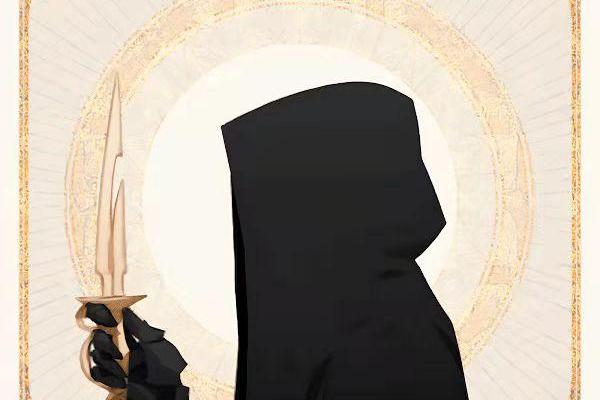
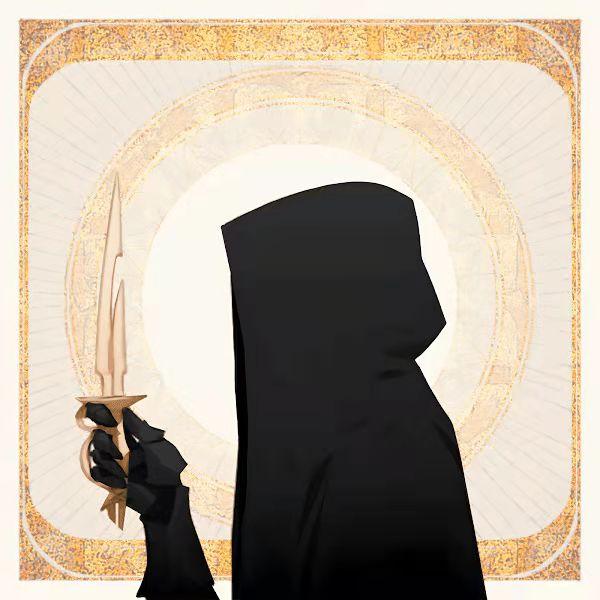
My favorite character from this set is the Black Knight. He’s a tribute to Satoshi Nakamoto. No one truly knows who he is—he always wears a crisp knight’s uniform and a wide black cloak, his face concealed behind a mask.
Perhaps he’s a scholar, given the brilliance of the whitepaper and its sharp critique of existing systems; or perhaps a nobleman, so familiar with the inner workings of power. Under his call, a secret gathering begins. The night of the masquerade marks the dawn of change.
5. The story sounds compelling, but launching NFTs at such a volatile and uncertain time—could this affect popularity or traction?
Actually, I don’t think the market direction is uncertain at all. Yes, NFT markets fluctuate, but the overall trajectory is clearly forward, and the total market size keeps expanding. It’s like looking at Netflix’s stock chart—not focusing on a few days, but at its entire history. Those short-term swings are just noise. The long-term upward trend is undeniable.
Moreover, Cmasq aims to become a blockchain chronicle, so we’re not concerned with market volatility. Bear markets are also part of the history we want to record. Our focus remains firmly on documentation and creation itself.
6. An interesting question: beyond commercial value, artistry, and cultural depth, what other values do you think are overlooked in NFTs? Where does Cmasq’s value lie, and what sets it apart from mainstream NFTs?
You’ve covered most aspects already.
One additional aspect is emotional value—NFTs should give users a sense of participation in history. That’s what Cmasq strives for. Whether they own a Cmasq NFT or not, we want everyone aware of Cmasq to feel the emotions of that moment in history.
I think NFTs aren’t that complicated—people buy them either as investments to make money or as collectibles for fun. With Cmasq, we lean more toward the latter. People buy and collect because they认同 the core idea of a “Blockchain Chronicle,” much like owning a rare Bearbrick—valuing it and preserving it.
There are many differences between Cmasq and mainstream NFTs, but the most important are supply curve and launch mechanism.
Most NFT projects mint thousands or even tens of thousands of units, releasing them all at once. This approach builds large communities quickly, but also floods the market with supply. Before strong consensus forms, such models are highly prone to failing post-launch. One-time mints also make long-term team commitment unpredictable—since teams often earn substantial sums upfront, continued dedication depends entirely on their own initiative.
Cmasq has a fixed supply of 3,333, but these won’t all enter the secondary market immediately. Instead, they’ll be released gradually in batches. Since Cmasq aims to chronicle blockchain history, new stories and NFTs will emerge alongside key developments in crypto history.
Traditional NFTs usually launch via public mint or whitelist. But we believe these methods lack fairness—the whitelist system excludes many, while public mints are often dominated by bots.
Given the limited quantity per Cmasq drop, we chose OpenSea auctions with a 24-hour bidding window. We set low starting prices so everyone has a fair chance to bid on and acquire the NFT they love.
7. Very thoughtful. Shifting to Web3—a space deeply rooted in community culture—narrative and operational capabilities are crucial for cultivating community. What are your thoughts and plans in these areas?
My answer might seem off-topic, but we plan to innovate upon existing NFT community culture. Aligned with the theme of a masquerade ball and secret revolution, we intend to launch a private invitation-only club. More details remain under wraps—for now, stay tuned.
8. Exciting! Many current NFTs follow Bored Ape’s roadmap model, yet I heard Cmasq has no roadmap. Why is that? What are your next steps?
Roadmaps are almost mystical. BAYC’s success wasn’t due to its roadmap. Our project is fundamentally free-form—we prefer the philosophy of planting a seed and letting it grow wild.
That said, our central theme is “recording history.” We’ll keep creating new stories. As previously mentioned, upcoming narratives will cover the invention of smart contracts, the rise of exchanges, and the emergence of mining giants, each accompanied by new NFT characters.
9. Currently, meme culture is essential for any NFT’s success. How do you view memes, and how does Cmasq plan to become a global meme?
We believe memes can’t be forced. As a project capturing historical sentiment, we trust that when crypto-natives resonate with the emotions we document, our own meme will naturally emerge.
10. I heard Cmasq is an anonymous project. There are many anonymous crypto projects—how do the founders’ values or ideologies shape the project?
Besides CLT, our team includes many veterans of the blockchain space—some of China’s earliest miners, developers who transitioned from Web2 to Web3, or pioneers who built DEXs back in 2017. We’re all deeply grateful for the industry’s growth and have personally witnessed these transformations. This project is largely passion-driven. We hope those joining us, especially early contributors, share our vision and values.
11. Sounds quite mission-oriented. Final question: what is the most important message the Cmasq team wants to convey through this interview?
Great art deserves recognition. We hope to bring wider awareness through NFTs. The artist is eager to collaborate with community contributors to document blockchain history together.
Join TechFlow official community to stay tuned
Telegram:https://t.me/TechFlowDaily
X (Twitter):https://x.com/TechFlowPost
X (Twitter) EN:https://x.com/BlockFlow_News






