








Will music NFTs be the next big trend in the NFT space?
TechFlow Selected TechFlow Selected
Will music NFTs be the next big trend in the NFT space?
In the current evolution, this is what NFTs represent: a direct connection between creators and fans, thereby establishing a closer relationship between value creation and value capture.
 Navigating Web3 tides with focused insights
Written by: Coopahtroopa, Creator Economy Operator & Lucas Campbell, Bankless Editor
Translated by: Alex, TechFlow Friends
Dear Bankless Nation,
In 2021, it felt like the world was flooded with art NFTs.
Creators realized they could directly connect with their most passionate fans instead of relying on intermediaries that extract massive value from their hard work.
In its current evolution, this is what NFTs represent: a direct connection between creators and fans, creating a tighter relationship between value creation and value capture.
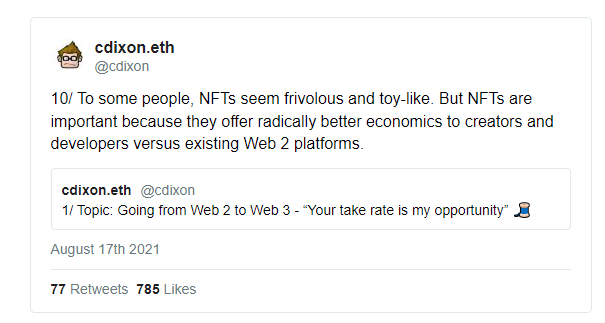
But we've only seen NFTs explode in the art world. Creators exist everywhere—writers, musicians, filmmakers, designers, artists, and more.
All of them stand to benefit from digital ownership and NFTs.
We’ve already seen some platforms take off—like Mirror Protocol for writers—but much of this potential remains untapped.
Today, Lucas and Cooper give us a behind-the-scenes look at one of these unexplored creator verticals—the world of music NFTs.
Music NFTs Could Be the Next Big Trend
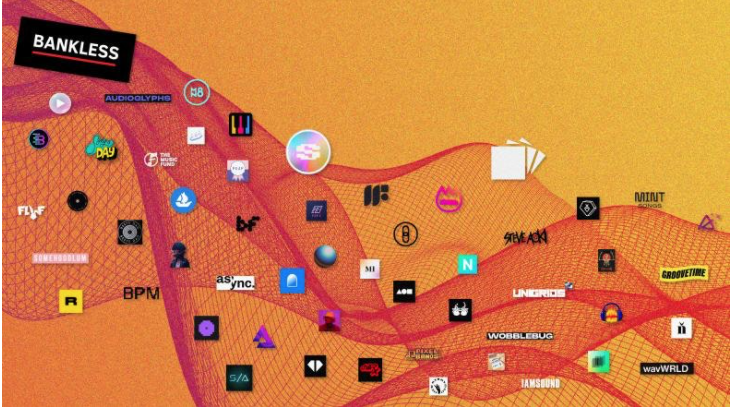
Source: Logan Craig
A new frontier has emerged in the NFT space—one with perhaps the greatest potential for mainstream adoption.
Music NFTs are collectible audio files.
They give fans the opportunity to own their favorite songs, now made possible through web3 and the concept of digital scarcity.
Collecting music isn’t new—but collecting music online is.
Just as we collect vinyl records, burn CDs, or curate playlists, music NFTs offer a new medium to showcase your taste while engaging directly with creative works and their creators. In the traditional world, music collectibles represent a $5 billion market. In the digital world, the sky’s the limit.
In this article, we’ll explore the rising trend of music NFTs and examine this new model for the next generation of independent artists.
A New Monetization Model
Music NFTs are a new monetization model for artists.
At their core, music NFTs are simple digital collectibles. They don’t confer inherent ownership rights but exist as assets that collectors can buy and sell.
In a world dominated by streaming and touring, music NFTs empower artists by building a community of superfans eager to collect rare digital items.
Platforms like Royal are exploring royalty-based music NFTs, but in this article, we focus on music NFTs as collectibles.
Collectibles offer the most straightforward and simplest monetization mechanism, especially when artists retain full rights—eliminating regulatory hurdles.
For lesser-known artists, traditional streaming platforms like Spotify pay around $3,700 per million streams.
In contrast, music NFTs have sold for thousands of dollars—strong evidence that building a community in web3 offers greater advantages than playing numbers games on Spotify.
While music NFT sales largely depend on the macro crypto environment, the benefits of having a dedicated base of collector superfans are real in any market condition. This is a direct path to monetizing the “100 true fans” principle.
You don’t need to be a superstar to make a living—just a few loyal fans. Music NFTs maximize your income potential. They form the foundation of creator DAOs and mark the first step toward micro-economies in music.
I dive deep into music NFTs in this article and summarize the current landscape for those unfamiliar.
Overview of Music NFT Projects
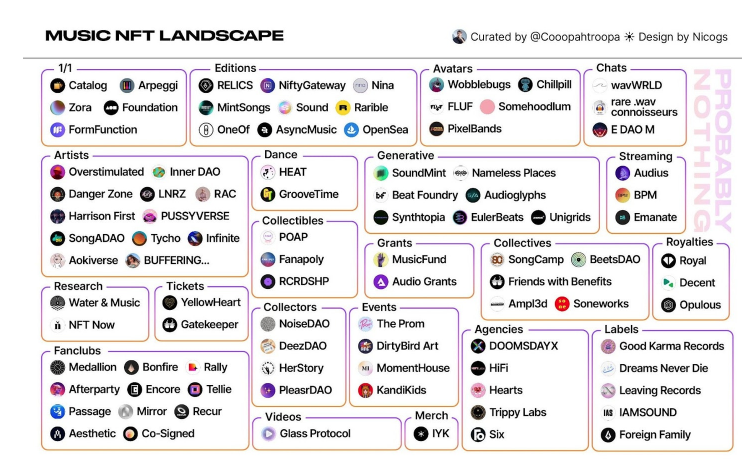
Let’s zoom in on several leading platforms shaping the music NFT movement.
These platforms show some of the first real-world examples of how crypto is uplifting the music industry.
Catalog
Catalog is a 1/1 music NFT marketplace.
Similar to SuperRare or Foundation, all NFTs are unique 1/1 pieces—meaning no other copies of that song will ever be minted (in theory). Built on the Zora protocol, Catalog is the first marketplace designed specifically for collecting audio.
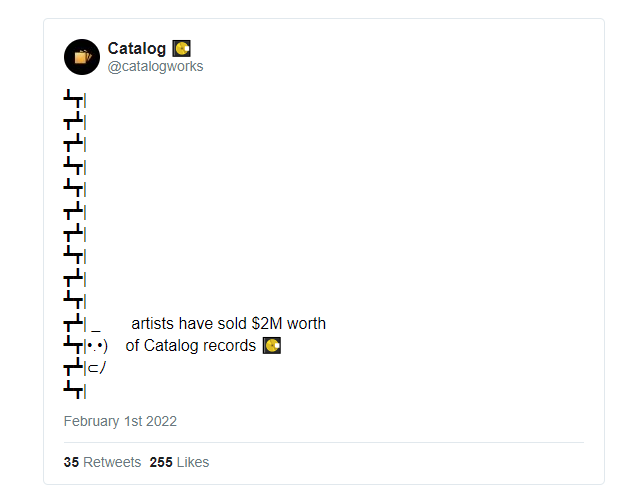
To date, Catalog has generated over $2 million in sales, with an average sale price of $3,707.
Below are the top-selling artists on Catalog, compared with estimated Spotify earnings based on $3,700 per million streams (or $0.0037 per stream).
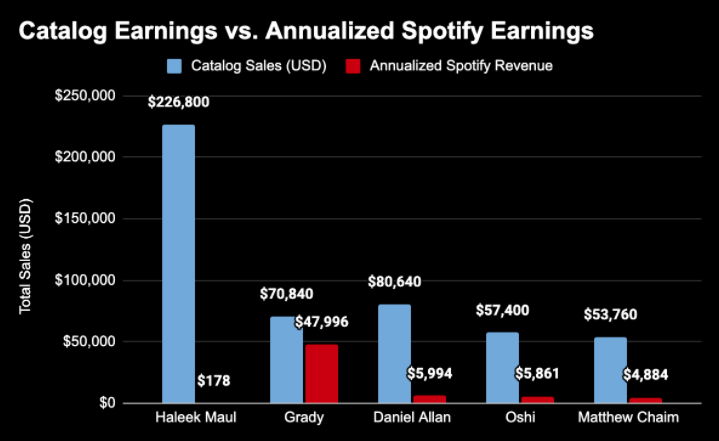
Spotify revenue calculated at $0.0037 per stream, ETH priced at $2,800
On average, top web3 artists earn 7.5 times more from selling music NFTs than they would expect annually from Spotify streaming.
This clearly shows that independent artists can earn more from music NFTs than from streaming. Crucially, this income is entirely additive—selling music NFTs does not affect your streaming revenue.
Broadly speaking, the average Catalog sale translates to about one million streams on Spotify. With no platform fees, 100% of the sale goes straight to the creator.
And these sales are just beginning. Catalog is starting to experience hockey-stick growth, with monthly sales entering six figures, and average sale prices trending upward. Compared to SuperRare’s eight-figure revenues in the 1/1 art market, Catalog and 1/1 music NFTs still have significant room to grow.
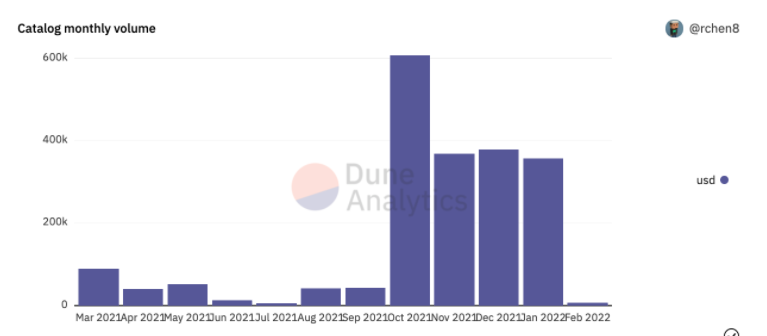
Source: analytics.catalog.works
Sound
Sound is a music NFT marketplace offering multiple editions rather than 1/1s.
Each edition includes a listening party where collectors can hear the full track before minting the NFT and leaving comments on the song.
Collectors appear on a “listeners” tab—putting them in the spotlight and giving them early access privileges. When a Sound NFT is resold on the secondary market, the commenting rights transfer with it.
After 30 consecutive sales, all Sound NFTs are priced at a base of 0.1 ETH. This means each Sound NFT equals roughly 75,000 Spotify streams, and each sale represents more value than 1.8 million standard streams across 25 editions combined.
Notably, Daniel Allan launched 100 editions for his EP *Overstimulated*, which sold out within a minute, generating 10 ETH in revenue. For reference, the newly released EP has so far earned an estimated $444 on Spotify.
The lower price point leaves more room for secondary market activity, revealing for the first time why drops become Schelling points for new collectors.
Beyond primary sales, secondary volume continues to rise, generating increasing income for each artist. On average, a drop on Sound.xyz generates royalties equivalent to approximately 420,000 streams.
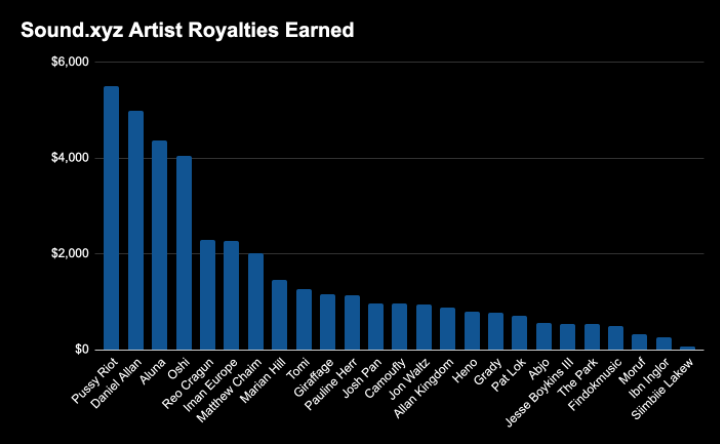
Source: https://dune.xyz/0xnative/Sound-Music-NFTs
Key Takeaways
The value of a single music NFT collector is nearly 100 times that of a monthly listener on Spotify. On average:
1 Catalog NFT = 1,000,000+ streams
1 Sound NFT = 2,500,000+ streams
This highlights the leverage music NFTs provide as a monetization model for independent artists. It allows collectors to value work today, rather than waiting for a hit song or slow streaming payouts. If it’s good music, collectors will pay what they believe it's worth.
The number of music NFT releases is increasing, along with the number of unique artists minting NFTs and unique collectors. Yet, relative to other parts of the NFT market, it remains negligible.
Music NFTs are poised for a breakout.
Last month, combined primary and secondary sales on Catalog and Sound totaled less than $1 million—just 0.015% of OpenSea’s NFT trading volume.
You decide whether this variable is worth acting on.
Dual Livelihood
For artists releasing music NFTs, you must balance two worlds.
While financial success in web3 is promising, maintaining a growing presence in web2 remains equally important.
Web3 helps you focus on fan quality. Web2 helps you focus on fan quantity.
The ability to convert a new web2 fan into a new web3 collector is the biggest opportunity available to independent artists today.
Over time, we expect more artists to explore native web3 expression, releasing tracks exclusively as music NFTs without distributing to Spotify or Apple Music.
What to Watch
For those closely following music NFTs, here are key platforms to watch in the coming weeks.
1) Royal sells their first drop in collaboration with Nas.
2) Monstercat launches their new music NFT project—Relics—on February 4.
3) Arpeggi Season 1 mint price set at 0.6 ETH.
4) DoomsdayX releases a 200 ETH music NFT producer pass in collaboration with Haleek Maul.
5) Glass Protocol partners with artists to release music videos as collectible NFTs.
6) Omgkirby sells genesis NFTs for their community-led LoFi project.
Keep an eye on *Water & Music* and *NFTNow* to stay updated on trends and research in this new era of music.
Here’s an excellent research report on music NFTs, including a recap of key moments in 2021.
Looking Ahead
Imagine being able to bet on your favorite artist early in their career.
With music NFTs, that future is closer than you think.
While today we’re exploring ways to collect music, this cycle will inevitably lead to mature DAO economies, where artists allocate a percentage of all sales to community-led treasuries.
If you haven't noticed, community treasuries often generate tokens.
Take Daniel Allan and his *Overstimulated* EP as an example—we should expect to see many more artist DAOs in the near future.
Until then, let the music NFTs fly—and start collecting.
The wealth-building secret in this space is right in front of you.
Original link:
https://newsletter.banklesshq.com/p/the-next-big-trend-in-nfts
Join TechFlow official community to stay tuned
Telegram:https://t.me/TechFlowDaily
X (Twitter):https://x.com/TechFlowPost
X (Twitter) EN:https://x.com/BlockFlow_News






