Beware of Crypto Populism: Crypto VCs Aren't as Evil as You Think
TechFlow Selected TechFlow Selected
Beware of Crypto Populism: Crypto VCs Aren't as Evil as You Think
"Populism" has become so popular that it has turned into an effective marketing and community-building tool for crypto projects.
 Navigating Web3 tides with focused insights
Author: Cobie
Translation: Linqi, ChainCatcher
For over a year now, there has been an overwhelming sentiment in the market that "evil VCs have unfair advantages and are constantly dumping tokens on us." This sentiment became so popular that it evolved into an effective marketing and community-building tool for crypto projects.
It's hard to blame retail investors for resonating with this populist rhetoric. It feels a bit like VCs have cheat codes. First of all, of course, VCs get access to the best deals—making money is easy for them. And some VCs have different cheat codes—they simply show up at the right place and time, armed with enough audacity or nerve. Finally, the SEC has handed every VC the biggest cheat code of all: they've scared founders into only raising funds from professional investors.
Ordinary retail investors can only buy into overpriced IDOs or purchase on secondary markets. That’s how most of the market works.
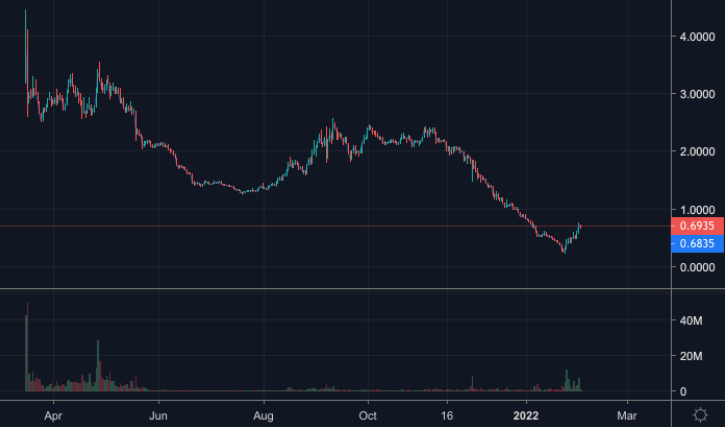
There is enough data showing that retail investors’ chances of winning are close to zero. Clearly, some aspect of this “game” system is rigged against ordinary people.
They don’t even bother hiding it—proudly showcasing their portfolios on their websites, boasting about achieving 100x returns from investing in certain tokens, without realizing the data shows a downward trend and that insiders are ultimately the ones cashing out.
But in many ways, retail traders of frog nation share the same motivations as crypto VCs, just as crypto YouTubers do: they want to make money. Their goal in buying is to later sell to others at a profit. Crypto VCs, anonymous Twitter personalities, frog retail traders—these are all agents operating in adversarial markets, driven by similar incentives.
Venture Capital Firms
Crypto VCs fall into two extremes. The first type consists of legitimate co-builders and crypto-native long-term thinkers—those who continue building alongside their portfolio companies and keep builders alive through bear markets.
At the other extreme are firms that only thrive under bubbly bull market conditions. They lack theory, vision, or conviction. They fund short-term startups purely to flip quickly for profit during bull runs. They invest in things like "Polkamon." They back technically unsound projects to cultivate relationships with key market players.
This is a spectrum, so it’s somewhat blurry—sometimes funds or VCs shift along this range. In my view, the latter type is made up of demonic entities composed of sociopaths. The first type is genuinely rare.
Thanks to blockchain’s excellent transparency, you can see the position sizes held by VCs. For example, many so-called “reputable” VCs dumped their competing L1 token holdings too early. Some diamond-handed long-term VCs still hold 100% of positions established years ago—an investment approach detached from price entirely.
Of course, you can also observe which VCs funded projects that were either technically flawed or fundamentally worthless. Some prominent VCs backed projects that strike me more as jokes than investments because they knew they’d profit once these projects listed on Binance. Others choose to invest only in those they believe have long-term value and can advance the industry.
The key difference in incentive structures between these two VC extremes lies in investment horizon.
If you aim to maximize returns over a 20-year timeframe, you need consistent access to top 1% quality deals for at least the next 15 years. That means your standing in the eyes of founders must be extremely important.
Since everyone can see in real-time which funds are selling, a VC’s “conviction” becomes a measurable metric for retail investors. And since retail investors are also core users of crypto protocols, a VC’s reputation among founders is indirectly influenced by what retail investors think.
If a VC gains a reputation for frequently dumping tokens, retail investors will grow skeptical of projects backed by such investors.
However, if a VC aims to maximize returns within two years, reputation matters far less. There’s no need to secure top 1% deals over two decades. Founders’ opinions become irrelevant, and you won’t really care whether retail knows you’ll dump your entire unlocked allocation onto them in a single market sale.
Thus, it’s no surprise that newer entrants tend to belong more to the latter category. These get-rich-quick VCs entered the space after seeing others reap massive profits. They lack long-term belief in the industry and therefore don’t need a long-term reputation.
Fraud Origins: Fundraising
During bull markets, founders can almost guarantee profits for VC investors by creating predatory tokenomics that heavily favor early supporters.
Visionary, conviction-driven investors are willing to take on long-term risks: they accept extended return timelines and provide generous funding to founders and projects they believe are crucial to shaping the future. Gaining support from such investors is usually difficult.
But raising capital from purely profit-driven investors is much easier. A project has multiple levers available. If a founder wants to raise $5 million, all they need the next day is a launchpad—nothing else required.
Consider this:
Imagine you have the chance to invest in a project valued at $250 million, with your tokens locked for four years. They plan large-scale airdrops, distributing significant supply for free, which will be used as incentives over the first decade. Compared to the project valuation, your investment might offer 20x upside. But you’re taking on huge risk: no one knows what the market will look like in four years, whether the team can deliver, whether airdrop recipients will just sell immediately, and a $250 million valuation is quite high for a pre-product concept.
Now imagine you can invest in a project valued at $10 million. Most of your tokens are locked for three months, but you receive 20% on day one. By comparison, a $10 million market cap is tiny. In fact, you only need a fully diluted valuation of $50 million on day one to sell that 20% and recoup your initial investment.
Moreover, the project will conduct an IDO on a popular YouTuber’s launchpad at a 20x premium. That’s a pretty sweet deal. Not to mention, the project also appears in an ad video on another popular YouTube channel, and three of the most influential figures are participating in the seed round! The risk seems lower because predicting market conditions three months out is easier than forecasting four years ahead, and everyone holding the token has a higher cost basis than you.
In the first scenario, you need strong conviction that the team can execute their mission and that their product truly matters.
In the second case, it feels like “free money.” All you need is sufficient liquidity to offload your 20%, lock in risk-free profits, and there’s no need to deeply believe in anything.
Founders can offer these “risk-free profits” to guarantee fundraising success. Team and project quality convey zero information to the market. Investors simply run basic math and conclude their odds are good enough.
Retail Investors
Therefore, it’s no surprise that populist rhetoric begins to resonate with market participants. Now, projects can attract disillusioned investors to effectively build a community. Come join us. Screw lawyers, VCs, banks, and exchanges—the whole system is rigged. You can make money with us.
Community, users, and attention are the most critical components in building crypto projects. Founders have discovered their own cheat codes.
But because the incentives are identical, you can apply the same extreme psychological models used for VCs to any other market participant. They’re all just people trying to make money, differing only in their time horizons.
Projects using anti-VC rhetoric as a community growth mechanism aren’t immune to the adversarial incentive structures of the market. You shouldn’t be surprised when your favorite anonymous Twitter figure tells you to go f*** the “suits.”
And you shouldn’t be surprised when your favorite YouTuber doesn’t have your best interests at heart. Of course, they won’t take symmetric risk in the market for the tokens they’re promoting to you. It’s free for them—you’re the product.
Incentive Structures
Explaining the incentive structures behind financial products and complex crypto schemes is a foresighted superpower in a market full of retail investors and increasingly opaque token economics.
“Show me the incentives, and I’ll show you the outcome”—Charlie Munger
Most crypto projects, regardless of sector or marketing style, can be reduced to variables useful for your market decisions. If you understand other market participants and their incentives, nothing should come as a surprise.
Yet, crypto market participants seem to implicitly embrace a rather (3,3) mentality. This is the only financial market where someone exercising their right to sell assets is seen as a betrayal to the community.
Perhaps it stems from the same place as “wagmi” or “hodl.” Or maybe its roots lie in why we originally entered these markets: a shared desire to escape the tyranny of old power structures that bound us.
It enables bad actors to exploit these ideals—funding seed rounds for “let them eat cake” tokens while tweeting “wagmi,” despite not actually believing in them, knowing full well the tokenomics will let them profit regardless.
There’s a reason “don’t trust, verify” became a Bitcoin mantra. I believe many market participants would benefit from adopting this mindset.
If you're making decisions without understanding the economic incentives of other investors operating in the same arena as you, I hope your bets don’t exceed what you can afford to lose.
Original link: https://cobie.substack.com/p/33
Join TechFlow official community to stay tuned
Telegram:https://t.me/TechFlowDaily
X (Twitter):https://x.com/TechFlowPost
X (Twitter) EN:https://x.com/BlockFlow_News
 @cobie