








Social media giants such as YouTube, TikTok, and Twitter are joining the "NFT" race.
TechFlow Selected TechFlow Selected
Social media giants such as YouTube, TikTok, and Twitter are joining the "NFT" race.
Competition in the NFT space is heating up, with social media giants at the forefront.
 Navigating Web3 tides with focused insights
By Heimi, Baize Research Institute
Over the past year, NFTs have surged in popularity, capturing the attention of individuals, businesses, and organizations across nearly every industry. NFTs are rapidly becoming a mainstream phenomenon that the public wants to be part of.
YouTube Moves Toward NFTs
Yesterday, Susan Wojcicki, CEO of online video platform YouTube, released her annual letter to creators, announcing that advancing the creator economy would be a top priority for 2022 and outlining the company’s commitment to expanding the "YouTube ecosystem" by helping creators leverage emerging technologies, including NFTs.
In the letter, Wojcicki described Web3 as an “inspiration” for innovation at YouTube. She wrote: “We’re also looking ahead and closely watching everything happening in Web3 as a source of inspiration for continued innovation on YouTube. Over the past year, developments in cryptocurrency, NFTs, and even decentralized autonomous organizations (DAOs) have highlighted previously unimaginable opportunities to strengthen connections between creators and their fans. We remain focused on expanding the YouTube ecosystem to help creators take advantage of emerging technologies like NFTs, while continuing to enhance and elevate the experience for both creators and fans on YouTube.”
Wojcicki indicated that NFTs could become another revenue stream for creators, though she did not provide further details or timelines.
Colin Fitzpatrick, CEO of Animal Concerts—a startup focused on virtual concerts—described YouTube’s potential integration of NFTs as “a great way for creators to monetize their channels without relying on ad revenue.” Fitzpatrick believes, “If YouTube plans to facilitate NFTs on its platform, their advertising partners might pressure content creators to monetize. Introducing NFTs could be a way for them to bypass corporate interests and offer users alternative income-generating methods.”
Social Media Giants Embrace NFTs En Masse
Competition in the NFT space is heating up, with social media giants leading the charge.
TikTok
As one of the world's most popular short-video apps, TikTok launched its first creator-led NFT collection—TikTok Top Moments—back in October last year. The series highlights influential creators in entertainment, culture, and community, turning their viral videos into NFTs. Proceeds primarily go directly to the featured creators and NFT artists, aiming to give fans and NFT enthusiasts a new way to support their favorite creators. These NFTs were issued on Ethereum and powered by Immutable X, a Layer 2 scaling solution.
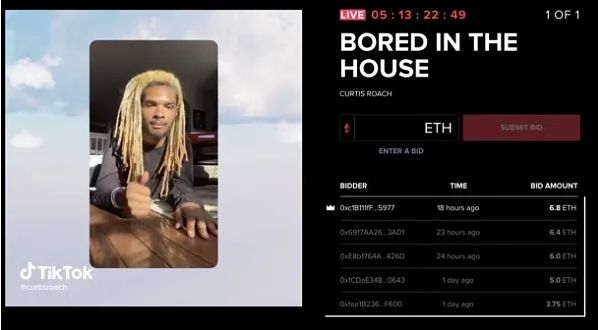
Nick Tran, TikTok’s global head of marketing, said: “The creativity that happens on TikTok helps drive culture and spark trends beyond our platform. As the creator economy continues to grow, we’re constantly exploring new and differentiated ways to support our creators. Now, fans can own a moment that helped shape the internet—and simultaneously support some of their favorite creators. We’re excited to see how our communities engage with some of the internet’s most iconic cultural milestones through NFTs.”
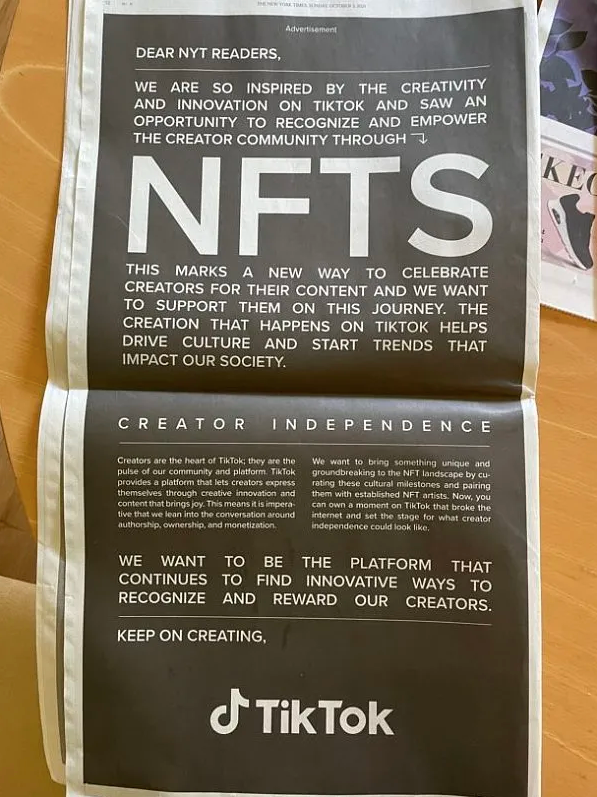
To promote the launch, TikTok took out a full-page ad in The New York Times. The final line of the ad hints at the company’s next steps in rewarding short-form video creation: “We aim to be a platform that continuously seeks innovative ways to recognize and reward our creators.”
Back in September last year, social media giant Twitter first announced its NFT plans, stating it was exploring ways to allow creators to better showcase their work through verification on the platform.
Last week, Twitter officially rolled out the new feature, allowing users to display their NFTs. iOS users who subscribe to Twitter Blue can now connect their Ethereum-based crypto wallets to their accounts and set their NFTs as profile pictures. The feature will soon be extended to Android users. While only iOS users can currently set NFTs as profile images, everyone on Twitter can view them.
Twitter uses third-party APIs from the OpenSea marketplace to verify users’ NFT ownership. If there are any issues with a user’s NFT data on OpenSea, Twitter cannot verify the authenticity of the NFT.

Twitter Blue is not yet available globally, which limits adoption of the NFT profile picture feature to markets where the service is already live—namely the United States, Canada, Australia, and New Zealand.
Earlier, the company hinted at broader NFT adoption, as discussions around NFTs, blockchain, and crypto have become increasingly prominent on the platform. As expected, Twitter is positioning itself as “a social network for discovery, conversation, and education around NFTs, blockchain, and crypto technology.”
This rollout follows Twitter’s expressed interest in integrating decentralized technologies into its platform, including enabling Bitcoin tipping. The company has also experimented with minting its own NFTs and distributing them for free to users.
A Twitter spokesperson told reporters: “Twitter is where people talk about what matters to them—often the place where they first encounter cryptocurrency and NFTs. Now we’re seeing people use NFTs as a form of identity and as a way to join thriving crypto communities.”
Meta
As early as August last year, David Marcus, head of Facebook’s financial division, said the company was “definitely considering” NFTs, marking Facebook’s first major signal of entering the NFT market.
“When you design products meant to face the future, thinking of the metaverse as a fully digital environment is actually very useful. When I look at what the metaverse needs, it’s truly seamless value flow. For that, we need new infrastructure—interoperability—because you’ll need multiple wallets to participate in a single metaverse. And I believe programmable currencies and smart contracts built on blockchain will be transformative for the metaverse. Because if you’re a creator, if you’re making NFTs, you might want to rent out or sell your NFTs—you can imagine all kinds of new business models that aren’t possible under today’s payment infrastructure and smart contract limitations.”
Shortly after Twitter began allowing iOS users to display NFTs as profile pictures, Meta also started embracing the space.
According to the Financial Times, Meta (formerly Facebook) is discussing the possibility of building an NFT marketplace and exploring features that would allow users to mint and sell NFTs. Additionally, Meta plans to enable users to display NFTs on Facebook and Instagram.
However, compared to earlier movers, Meta hasn't had a smooth start—its efforts haven't won over artists in the NFT space.
Serwah Attafuah, an Australian artist known for creating Afrofuturist abstract NFTs, once had 20,000 followers on Instagram, a Meta subsidiary. But due to rampant scams, data privacy concerns, and copyright infringement on Instagram, her engagement on the platform has dropped significantly recently.
Itzel Yard, the world’s best-selling female NFT artist, said imitators are everywhere on Instagram: “Someone scraped my entire Instagram feed, took all my artwork, uploaded it to OpenSea, and started trying to sell it.”
Some NFT experts and artists remain cautious about Meta’s strategy for various reasons.
Melanie Ozal, blockchain expert and fintech professor at Rutgers Business School, believes decentralized art sales “don’t resonate well with companies like Facebook.”
Dan Kelly, co-founder and president of Nonfungible, a platform tracking NFT transactions, expressed “cautious skepticism” toward Meta’s entry into NFTs. However, he acknowledged the dual nature of such moves—while risky, Meta’s involvement could further mainstream the Web3 community and boost broader public acceptance.
The NFT Wave Continues
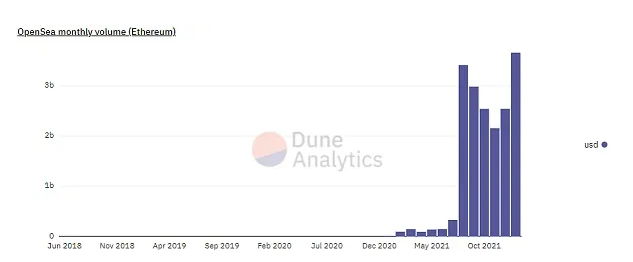
Despite the crypto market losing over $500 billion since the beginning of this year, the NFT market appears largely unaffected.
On January 17, OpenSea, the largest NFT marketplace, reported a record-breaking monthly trading volume of $3.5 billion in Ethereum.
Beyond social media giants, celebrities such as Tom Brady, Paris Hilton, Jimmy Fallon, and Post Malone have also joined the NFT wave—some launching their own NFT platforms, others purchasing top-tier digital artworks like Bored Ape Yacht Club and CryptoPunks. Additionally, global auction houses and financial institutions are rushing into the space.
Now, with YouTube joining TikTok, Twitter, Instagram, and Facebook in the NFT race, the future of digital collectibles looks promising—its potential may extend far beyond what we can currently imagine.
Join TechFlow official community to stay tuned
Telegram:https://t.me/TechFlowDaily
X (Twitter):https://x.com/TechFlowPost
X (Twitter) EN:https://x.com/BlockFlow_News
 Baize Research






