








Understanding the NFT Valuation Framework CACAU: A Breakdown Through Culture, Aesthetics, Community, Assets, and Utility
TechFlow Selected TechFlow Selected
Understanding the NFT Valuation Framework CACAU: A Breakdown Through Culture, Aesthetics, Community, Assets, and Utility
What makes each NFT different? What drives the narrative and value of NFTs, and what is a simple ontological framework for NFTs?
 Navigating Web3 tides with focused insights
Author: 0xPrismatic, Researcher at Delphi Digital
Translation: Alex, TechFlow
2021 marked the rise of NFTs—what a year it was! In just this short span, we witnessed explosive growth in artistic creativity, technological innovation, and capital inflows within this space.
I’m thrilled to see many developers, innovators, and artists experimenting with this technology as a new medium for their creations. Every project that leverages NFTs in an interesting new way gives me chills.
One key factor driving this rapid growth is that NFTs enable the financialization of global culture. Culture is the embodiment of our daily lives. The barrier to entry for ordinary people to participate in NFTs is relatively low, unlike DeFi, which requires minimum technical and financial knowledge. Buying an Axie to play a Pokémon-style card battle game is 100 times more intuitive than purchasing and depositing USDC into a Curve pool to generate governance tokens.
An increasing number of mainstream celebrities such as Jay-Z, Snoop Dogg, Stephen Curry, Paris Hilton, and Steve Aoki have adopted NFTs as their digital identity, igniting millions of fans’ desires to follow suit, further accelerating this trend.
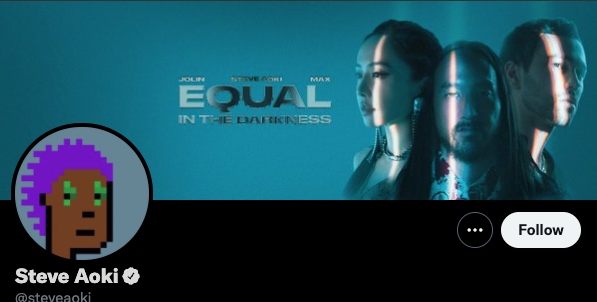
Steve Aoki loves his CryptoPunks
NFT Mania
In recent months, we’ve seen rampant speculation, with some NFT prices rising 10 to 100 times in weeks, only to crash by 90%.
The reasons behind NFT price volatility and difficulty in valuation:
1) NFTs are relatively illiquid. Marginal transactions rapidly alter floor prices.
2) They remain in constant price discovery due to limited price history.
3) Many intrinsic values of NFTs (e.g., culture) are intangible and hard to quantify.
4) There’s no consistent valuation framework adopted.
5) NFTs are highly narrative-driven. (The most important point—I’ll elaborate later)
My first NFT purchase was a Non-Fungible Ape in January 2021—a pixel art series metaphorically depicting various characters as “apes.” I stumbled upon its Discord during their first stealth airdrop, but I had no idea what I was doing. Browsing every image on OpenSea sparked a strong desire in me to buy and collect apes with the rarest traits. Today, they’re worth $0—with no buyers. This experience taught me a profound lesson.
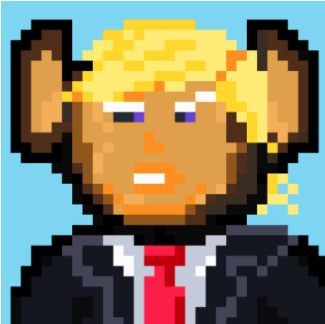
Donald Trump Non-Fungible Ape, a rare ape worth 0.7 ETH
In hindsight, I should have anticipated this—the market was purely speculative: no historical value, an anonymous artist new to Twitter, a small community, zero utility, mediocre art. It failed to establish a compelling narrative in any of the five NFT domains I’ll outline later.
Yet other NFTs have soared to dizzying heights. A CryptoPunk bought for just $35 in 2017 could today be worth up to $9.5 million.
Consider Board Ape Yacht Club, Fidenzas, XCOPY, Mystic Axies, and more. What makes them so valuable now? How can we spot such value opportunities early?
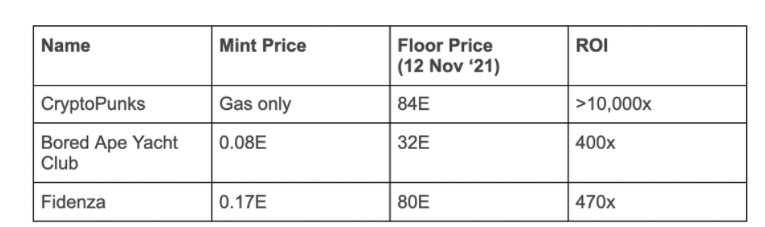
No wonder we all keep asking, 'wen next fidenza'?
Why Are NFTs Different?
I’m fascinated by NFTs because they inherently represent a unique complex layer absent in fungible tokens. This layer includes both intangible (e.g., culture) and tangible elements, making it an intriguing intellectual exercise.
At the highest level, NFTs exist and share the same foundational layer as all other crypto applications—blockchain infrastructure, with Ethereum being the most commonly used. This includes NFT-specific application chains and L2 solutions like Flow and Immutable X.
The next layer—the platform layer—provides financial services for NFTs: think exchanges, liquidity provision, lending, fractionalization, etc. These are platforms because they typically serve multiple different tokens rather than a single one.
Unlike fungible tokens, NFTs add another layer where a standalone “application” is packaged directly into the token itself. NFT standards (typically ERC-721) allow tokens to link via metadata to on-chain or off-chain assets while preserving blockchain provenance, immutability, and network security.
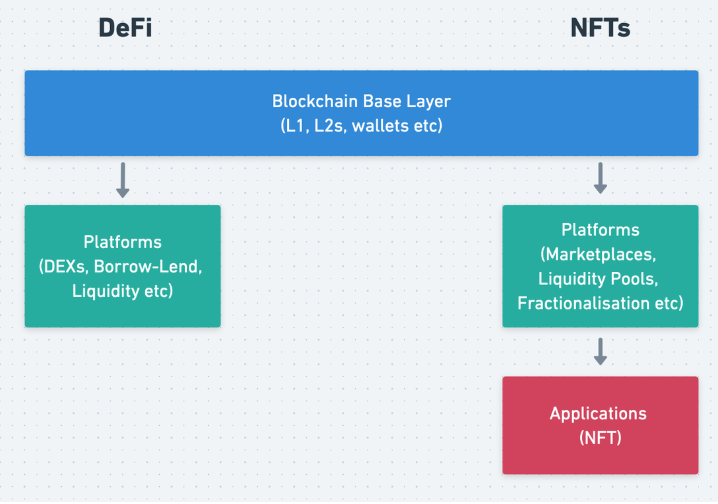
Let me simplify with a Web2 analogy:
(Level 1) Underlying blockchain = Internet + smartphone.
Example: TCP/IP, iPhone. Broadly and publicly available.
(Level 2) Application/Infrastructure = Internet platforms.
Example: Apple App Store.
(Level 3) NFTs = Individual mobile apps.
Example: Facebook app.
Platforms are powerful, capturing immense value through network effects and broad market reach. Good platforms take significant time to build, grow, and reach high-speed adoption curves. Individual apps often represent the layer with the highest diversity, innovation, and creative input—because now anyone with an idea can fairly easily create and launch a (basic) mobile app. The Web3 equivalent here is NFTs.
To illustrate further, consider Aave (platform) vs. CryptoPunks (NFT):
1) AAVE’s value is tied to the overall success of the Aave application/protocol: total value locked (mostly various LP tokens), generated revenue, user growth.
2) One CryptoPunk’s value is… how cool it looks, how rare it is, and how many people truly want it. Independent of any external application.
A Simple Ontological Framework for NFTs
So I began exploring a framework for thinking about NFTs:
1) How do you identify NFTs with narratives that might go viral?
2) How do you determine whether an NFT is undervalued or overvalued?
The goal isn’t to quantify a specific fair value for NFTs—there’s no discounted cash flow model for NFTs. Instead, I created a dynamic framework for NFT creators and investors to make better decisions.
I dissected the factors that give NFTs value and distilled them into five main areas. This differs from typical NFT classifications we’re familiar with—collectibles, generative art, virtual land, gaming, etc.—because these categories often overlap significantly. These five areas apply to all NFTs, though their relative importance varies by project.
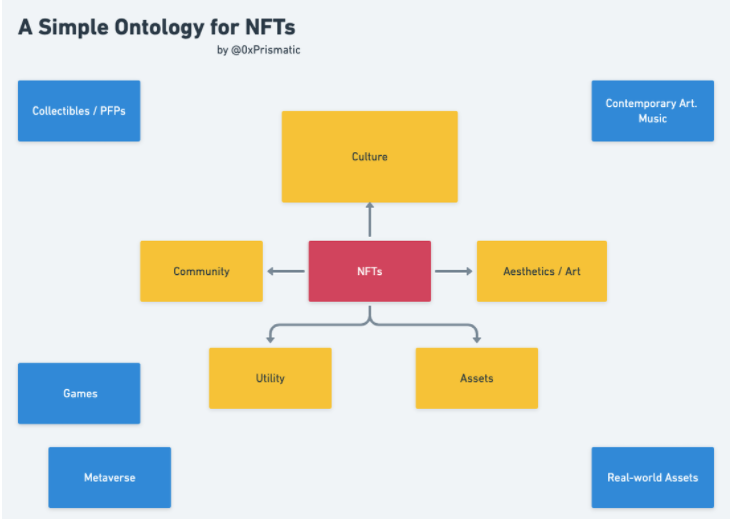
Compared to their fungible counterparts, NFTs possess cultural and aesthetic advantages. Across the spectrum from intangible to tangible, these five areas are:
1. Culture (Intangible)
1) The most fascinating—and hardest to value—aspect of NFTs.
2) Culture is broad, encompassing shared experiences, perceptions, and beliefs of a society.
3) Cultural components include but aren't limited to:
Brand value
Historical significance
Mimetic desire: We desire what others desire because we imitate their desires
Signaling value: Am I perceived as displaying wealth, culture, and class?
2. Aesthetics (Intangible)
1) Refers to the aesthetic appeal of media associated with the NFT (e.g., artwork, music).
2) Do you like it? How many others, especially tastemakers, like it?
3) Does ownership signal good taste in aesthetics?
3. Community (Tangible-Intangible)
1) Refers to the sum of existing owners of an NFT collection.
2) As with most things in Web3, community is everything.
3) What are the demographics, psychology, wealth, and vision of the holders? Are they more likely diamond hands or paper hands? Are they loud and crude, or quiet and sophisticated?
4) Measurable metrics: Is the community growing, stagnant, or declining? How many contributors are there?
4. Utility (Tangible)
1) Refers to direct benefits obtained from owning an NFT—private membership groups, early mint access, token farming, physical goods.
2) Key component for gaming and Metaverse NFTs: e.g., Axies, Sandbox Land, Star Atlas spaceships, Ember Sword badges. In play-to-earn games, these can also generate income.
3) NFTfi (NFT + DeFi) is particularly interesting.
5. Assets (Tangible)
1) Refers to digital or real-world assets that NFT owners have rights to beyond the NFT itself.
2) Examples: Project treasury, other NFTs, intellectual property, real estate.
In upcoming articles, I will explore each of these five areas in greater depth with examples.
In short, NFT = Culture + Aesthetics + Community + Assets + Utility
(NFT = Culture + Aesthetics + Community + Assets + Utility, CACAU)
This is a summation (+) equation: meaning all NFT projects aiming to maximize value and become investable assets should evaluate their performance across these five domains. Even if they primarily focus on just one area.
Example:
A generative artist with the talent to create algorithms producing artworks the world needs should also consider:
How can he/she engage collectors and build a positive community instead of disappearing completely saying “just working on my art”?
How can he/she enhance ownership utility through memberships, early access to new works, etc.?
Although aesthetics may be the primary domain here, aesthetics can be hard to judge, while community and utility are easier to measure.
Notes
Several blockchain-related factors are not captured in this framework but may contribute to an NFT’s narrative and value:
1. NFT’s Base Chain
Ethereum is currently the preferred network for NFTs, especially high-value ones, partly due to its security guarantees.
NFTs on chains or L2 rollups outside Ethereum (e.g., Polygon, Solana, Avax, Arbitrum) are heavily discounted in today’s market, though this may change in the future.
2. Permanence of Underlying Data
Arweave > IPFS > centralized websites
3. (Gen Art) On-chain vs Off-chain
Art stored fully on-chain appears advantageous compared to art stored off-chain. Blockspace is extremely expensive, making on-chain storage often impractical.
Example: Autoglyphs as the oldest on-chain generative art project.
4. Derivatives vs Originals
Successful projects will be cloned and forked repeatedly—this is crypto law. As we've seen many times, derivative prices may spike sharply in the short term due to speculation, but long-term value usually reverts to the original.
Examples: Cryptopunks ← Phunks, Fast Food Punks, Picasso Punks, Bastard Gan Punks…
Conclusion
Why bother with this? Shouldn’t NFTs be simple—just buy if you like it? Yes, that works too.
I developed this framework to help me better understand and systematically identify factors that drive NFT value—and avoid FOMO on projects with weak or temporary narratives. I hope it proves useful to you as well.
I believe for NFTs to become mainstream as genuinely investable assets, we need to start thinking and speaking the same language as traditional investment worlds—frameworks that non-crypto natives can understand and demystify crypto technologies and concepts.
A "value investing"-like approach would involve:
1) What does culture mean in the context of NFTs?
2) How do we identify substantive cultural narratives worth paying attention to?
3) Can we assign value to different components of culture?
4) How should artists (original artists, photographers, musicians, etc.) price their work?
5) CryptoPunks vs Bored Apes: A case study.
Join TechFlow official community to stay tuned
Telegram:https://t.me/TechFlowDaily
X (Twitter):https://x.com/TechFlowPost
X (Twitter) EN:https://x.com/BlockFlow_News
 Delphi Digital






