








Interview with Christy, Former Investment Director at Binance Labs: After 500x Returns in 4 Years, Now Building a Playground for the Web3 Community
TechFlow Selected TechFlow Selected
Interview with Christy, Former Investment Director at Binance Labs: After 500x Returns in 4 Years, Now Building a Playground for the Web3 Community
Binance Labs has been enormously successful overall and is likely the best-performing fund in world history. In four years, it achieved over a 500x return—something that has never existed before in the world.
 Navigating Web3 tides with focused insights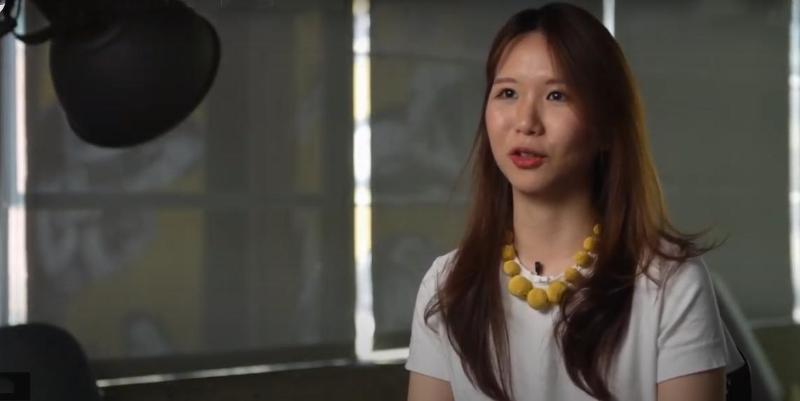
Interviewee: Christy Choi, Former Investment Director at Binance Labs
Translation: Linqi, ChainCatcher
Main Takeaways:
1) Binance Labs has been enormously successful overall and may be the best-performing fund in world history—over 500x returns in four years. Nothing like this has ever existed before.
2) We’ve seen many communities emerge through models like DeFi, NFTs, and DAOs, but they are all fragmented. We want people to come together, bringing their existing identities beyond community boundaries, to a shared space where they can play. We use gaming as a metaphor for how this will unfold.
3) I still don’t believe any project has truly solved the problem of donation, because what really drives innovation isn’t technology itself, but our intentions and how we design incentive mechanisms.
Background + Binance
C@S: What year did you join GSB (Stanford Graduate School of Business)?
Christy: I started at GSB in September 2021, currently in my first year of the MBA program.
C@S: Where are you originally from?
Christy: I’m from Seoul, South Korea, but I grew up moving around a lot—kind of a wanderer. I first came to the U.S. when I was five, then went back to Korea for high school and university, so I consider myself quite Korean by upbringing.
C@S: How did you become interested in crypto?
Christy: I say I'm a wanderer because my great-grandparents were North Korean refugees, and my family built hospitals and schools for refugees. So I've always deeply cared about refugees and immigrants. My sister and brother-in-law and I founded a nonprofit organization—they work on it full-time, while I previously ran an education platform alongside my day job.
At the same time, I was working on a project for Samsung envisioning what the world might look like in 30 years and how disruptive technologies would shape it—one being blockchain. I heard the slogan: “Blockchain will make donations transparent.” Obviously, one of the biggest concerns for donors is knowing where their contributions go after they're given. Yes—that’s what initially drew me into crypto.
But clearly, it didn’t take long for me to realize that was nonsense. I still don’t believe any project has solved the donation problem, because true innovation isn’t driven by technology itself, but by our intentions and how we create incentive mechanisms. That experience was around 2016/17, when the crypto industry was very small. When I reached out to founders, almost all responded in some way.
C@S: How did you go from Seoul to GSB?
Christy: It's a long story. Through connecting with crypto founders, I met CZ, CEO of Binance. This was right after Binance’s ICO launch, when all Chinese crypto exchanges were banned but Binance survived, leaving him with hundreds of millions. For three days straight, we discussed the meaning of crypto and our roles within it. That’s when I decided to join and set up Binance’s investment arm.
That was early 2018, during the ICO frenzy—money pouring in based on whitepapers alone. Binance had no real reason to participate. Clearly, these projects hadn’t thought through product-market fit at all, so we aimed to help solve that and support them in building communities. That’s how we launched the Binance Labs incubation program. Essentially, writing the first check to smart people trying to solve big problems in crypto—projects like Polygon, Injective Protocol, NYM, etc.
We were passionate about solving big crypto challenges, but Binance itself was undergoing massive changes. For example, Binance served users globally, but as different countries developed their own regulations, we had to create separate platforms across jurisdictions. We essentially had to build distinct fiat gateways and compliant payment channels so users could access Binance, complete KYC, and transact legally.
Around that time, I moved into M&A at Binance and oversaw market expansion. My role shifted toward being a crypto investor and ecosystem builder managing the exchange. In hindsight, that wasn’t truly my passion. What I really enjoyed was working with founders and building communities. I realized I needed to return to where I started—my mission of empowering people with crypto—which led me to leave Binance.
A few people who profoundly impacted my life happened to be from GSB. After sharing my journey with them, they said, “It feels like it’s your time at GSB.” We reflected deeply on what we wanted to do and what drove us. My GSB application essay was “What matters most to you and why?” For me, it was almost therapeutic. I worked hard to understand what motivates me, what’s most important in life, and what I should do next. Life is short. That’s how I ended up at GSB.
C@S: So, what’s the answer? What matters most to you and why?
Christy: The most important thing in my life is loving others—deeply, intensely, even excessively. So the focus is on creating impact.
Going back to my family story: growing up, my biggest struggle was that my parents and grandparents were social entrepreneurs. But I was passionate about tech, so I constantly questioned: Why am I drawn to nonprofits? Through crypto, I discovered ways to create greater global impact using technology and finance. That’s when I realized this was what I truly loved.
But what drives me now is different. I believe simply being in crypto with good intentions allows us to have a huge human impact. Binance Labs was hugely successful—possibly the best-performing fund in history—with over 500x returns in four years. Nothing like that has ever existed. Yet we couldn’t sustain it because we all left. I feel we never won a collective victory as a team.
That’s a big regret for me. Personally, everyone did amazing and found their own paths afterward. But I want to achieve something as a team, not just as individuals.
C@S: 500x—wow. What was your strategy for evaluating projects at Binance?
Christy: It really depends on the stage, but for writing the first check, alpha comes from early bets—and at that stage, it’s definitely about the people. I really value teams with strong synergy, visionary thinking, enough rationality to stay focused on what they’re building, and relentless perseverance.
C@S: Can you give an example?
Christy: Two examples—starting with Terra. Do Kwon is from Stanford. Terra was the hardest investment decision I ever made because many at Binance were skeptical of algorithmic stablecoins. Back then, it was Do and Dan—the other co-founder. I thought they were a perfect pair. Dan was extremely business-savvy, while Do was a technically deep, research-driven founder. Ironically, Do has since become one of crypto’s top business minds.
Do has a unique personality and strong leadership. But initially, our conviction came from their combination. They had a grand vision—they boldly said, “We’re going to build a financial system for crypto.”
Another example is Injective, created by Albert Chon and Eric Chen, both from Stanford. They were just students when I first met them, with only a whitepaper. But they were genuinely passionate about what they were building. And they were honest about what kind of help they needed.
C@S: What interests you most about crypto today, both personally and as an investor?
Christy: Honestly, I think crypto is crossing the chasm—so everything in crypto is fascinating. I define crypto as building a massive incentive system where we can reward people timely, globally, and fairly. I see this as a large-scale social experiment on how such incentive systems function—especially starting from digital lives. How we design and scale these systems might be the most interesting thing I’ve seen.
Christy’s Current Project: Building a Recreation Ground for Web3
C@S: Can you tell us what you’re currently working on?
Christy: The company is called AO, and we’re developing Spacebar—a playground for Web3 communities. We’ve seen many communities form via DeFi, NFTs, DAOs, etc., but they’re all fragmented. We want people to gather, bringing their existing identities beyond community limits, to a shared place where they can play together. We use gaming as a metaphor for how this happens.
C@S: Can you explain how the platform actually works?
Christy: We’re building a game as a metaphor. Assuming infrastructure supporting the metaverse will eventually exist, we want to start building the infrastructure that enables its creation. In our digital lives, we’re gamifying everything. At its core, an incentive system is about gamifying interactions and objects.
To create the gamified world we envision, I believe we should start by making a game. Our game brings communities together and lets them own the game modularly. The core team builds initial components, but communities can plug in different tools. These tools could be built by our team, existing DAO tools, DeFi products, or creations from developers in our ecosystem.
The game is a space-themed experience rich with metaphors. Imagine a space bar where everyone seems happy but has different goals and missions—all centered on discovering the true meaning of life. The metaphor: if you’re on a spaceship launching into space, you’ll encounter different stars along your journey—each representing major life events. Whether to mint it as an NFT is your choice—just like deciding whether to assign meaning to that event. Users collect and mint NFTs; whoever collects the most wins the round. This is the alpha version.
For some, winning may not be the ultimate goal—just like in life, some chase money or status, while others find different meanings. There are other concepts too. In the initial game, you win rewards as an individual, but players can transform their identity into a spaceship—represented by their existing NFTs.
In this way, users holding PFP NFTs initially join as a community. Later, we’ll introduce a team system—users forming groups to win prizes collectively. The most obvious way to form initial teams may depend on the NFTs held. But as the game evolves, users might team up with those holding different NFTs.
This team system is also our attempt to address fair price discovery for NFT games—a major current industry issue. We’ll have a fixed prize pool, a set number of players, and a finite number of stars in the universe. Applying this model, we can assign a price to each star NFT.
Initially, we create the stars ourselves, but over time, users will design different shapes and colors. We might add planets or space modules—I’m not sure yet. But by adding identity layers, new meta-games emerge: leaderboards, rankings, NFTs, plus DeFi and DEXs. I believe we’re building foundational blocks for the metaverse through these elements.
C@S: Who are you working with on this project?
Christy: The team consists mostly of people from Stanford. One co-founder isn’t from Stanford but was among the first to talk about blockchain gaming since 2017. I met him while diving deeper into blockchain games and NFTs. He comes from the mobile gaming industry and now wants to transition into crypto gaming.
Our CTO graduated from Stanford and is currently a senior engineering manager at Meta. He’s an amazing person and one of my closest friends. I always thought if I were to start a company, he’d be my CTO. So these two were the first I reached out to.
We also have a talented art director who’s worked at Disney, Take-Two Interactive, Tencent America, etc. He’s incredibly gifted and designed one of the most successful games in Korean history.
C@S: What do you expect to be the biggest challenge in this project?
Christy: Definitely the community. For every crypto project, the key is building the initial community. Because the community powers us, and we exist for them—how do we inspire and incentivize early members to get excited from day one? That will be the biggest challenge, and it will remain a constant one—even if the project becomes highly successful.
The Current State of Crypto
C@S: What does Web3 mean to you?
Christy: Web3 is about collaboration. When I say collaboration, I believe WAGMI (“We All Gonna Make It”) *is* Web3. In Web2, nearly all value was captured by giant tech platforms. By definition, the few who built Web2 set rules favoring themselves, making user ownership extremely difficult.
In Web3, we’re finally creating a truly open-source economy, turning passive users into active stakeholders (token holders). To me, we’re still in an experimental phase—we haven’t fully proven it yet. But this is clearly the direction the world is moving. I believe crypto is becoming the payment and incentive layer of Web3. Actually, I don’t think it should even be called Web3—I believe blockchain itself is a new web. We need a new name.
C@S: When people think of NFTs today, they usually mean JPEGs you can buy and trade. Do you see these JPEGs as just an early version of NFTs, or will JPEG NFTs continue to play a role as the metaverse evolves?
Christy: Certainly not in JPEG form—but honestly, that’s how they’re presented now. I don’t think we need overly advanced things right now. I see many projects launching NFTs with fancy visuals, even 3D effects, but currently, NFT use cases remain very limited. That’s one of the problems Spacebar aims to solve.
I think we’ll keep mimicking existing assets and converting them into NFTs, but when moving real-world elements into the digital realm, I believe differentiation is necessary. Right now, we’re arbitrarily imposing scarcity onto digital life, despite having infinite resources. That’s an interesting contradiction. Many try to create NFTs representing real-life things. To some extent, I think that’ll be part of the next wave of NFTs—but I believe the real excitement comes when we create NFTs purely for our digital lives. I think there will be a tipping point when our digital lives matter more than our physical ones.
C@S: Are you excited about that tipping point?
Christy: I’m extremely excited. That tipping point may or may not arrive soon. To reach it, we need to solve many real-world issues—energy, computing, storage, scalability. All these technical hurdles must be overcome. Long-term, I think people will laugh at today’s NFT market and the idea of JPEGs.
Quickfire Round
C@S: If crypto grows to 100x its current size—or reaches its ultimate potential—what would that future look like to you?
Christy: I don’t think crypto has an endgame. It will simply embed into daily life. I believe everyone in my generation and younger will be crypto-native, born with the ability to interact with crypto just as naturally as we use apps or the internet today.
C@S: What advice do you have for newcomers entering crypto?
Christy: I recommend starting with Twitter.
C@S: Which top Twitter accounts should we follow?
Christy: Just one for now—Qiao Wang from DeFi Alliance. He’s the only person whose tweets I allow notifications for. I really admire him—he tweets thoughts I’m already having, but distills them in an incredibly simple way. He’s excellent at capturing what’s happening in crypto and explaining it insightfully. Simple words, deep insights. One of the people I respect most in crypto.
C@S: Would you recommend business school?
Christy: It depends on your background and goals. I wouldn’t recommend business school to everyone. Especially for Web3, I strongly advise against getting an MBA.
Join TechFlow official community to stay tuned
Telegram:https://t.me/TechFlowDaily
X (Twitter):https://x.com/TechFlowPost
X (Twitter) EN:https://x.com/BlockFlow_News






