








Why You Should Pay Attention to a16z's New Partner Jon (Including Tencent's Game Investment Methodology)
TechFlow Selected TechFlow Selected
Why You Should Pay Attention to a16z's New Partner Jon (Including Tencent's Game Investment Methodology)
a16z has announced two new GPs, Jonathan Lai and James Gwertzman, who will join as the latest general partners on the consumer investment team to support the next generation of gaming startups and cross-vertical areas (social, web3).
 Navigating Web3 tides with focused insights
By: min
On November 16, a16z announced two new GPs, Jonathan Lai and James Gwertzman, who will join as the latest general partners on its consumer investment team to support the next generation of gaming startups and cross-vertical domains (social, web3).
Among them, James is a serial entrepreneur who founded PlayFab, providing cloud backends for some of the world’s most iconic games, such as Minecraft, Roblox, Doom Eternal… After being successfully acquired by Microsoft, PlayFab became part of Azure and now supports billions of player accounts across thousands of games.
However, I want everyone to pay more attention to Jonathan Lai—one of the sexiest minds in gaming today.
In 2012, Jonathan Lai joined Riot Games as a product manager and participated in the development of League of Legends. In 2015, Jon moved to Tencent as a senior director, leading the North American investment team and spearheading the launch of the WeGame platform.
During his time in North America, he worked closely with companies like Epic Games, Discord, Klei, and Proletariat.
a16z’s consumer sector partner Andrew Chen recalls that when he first met Jon, they were competitors, both submitting rival term sheets for a game studio based in Los Angeles.
"Once I got to know Jon, I was struck by his encyclopedic knowledge of the gaming industry and sharp investment instincts—I immediately recruited him to a16z."
Andrew Chen’s praise isn’t exaggerated. Currently, Jon serves on the boards of companies such as Mountaintop, Raid Base, and Singularity 6.
But what impresses me most is that his understanding of gaming in the Web3 era is ahead of its time and operates at a higher intellectual level.
Previously, he proposed a thought-provoking idea: "The best apps today are disguised games," which was truly eye-opening.
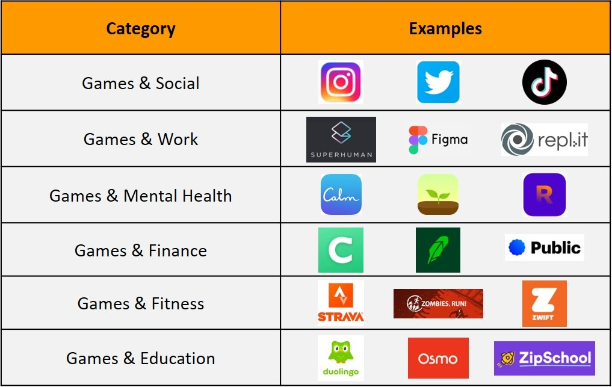
Moreover, Jon once clearly articulated Tencent’s investment philosophy in the gaming space.
1/ Product is king. The first thing we look for is product innovation—something that allows a game to break through and become top one or two in its category. This could be a new mechanic, like @Dots Squares; a new system, like @PUBG’s battle royale mode; or new technology enabling these innovations.
- 1a/ Although it seems obvious in hindsight, "innovation" is hard to identify during development unless you deeply understand the problems within that category. That’s why nearly everyone in Tencent’s senior management is a core gamer with thousands of hours of experience.
2/ Look for teams focused on a core customer base. This focus enables them to build the best product for a group of early adopters and evangelists. @Riotgames was a team of "core players" focused on building products for DOTA’s core audience.
- 2a/ As app stores become increasingly crowded (@Steam released about 8,000 games last year, iOS has around 1 million), having a passionate core group of early adopters who love your game and spread it widely helps organically build an initial audience; from there, expand to less hardcore users.
- 2b/ As gaming TAM expands, it’s tempting to build games "for everyone," but these often fail to stand out. Such games end up being suboptimal for anyone, and in a world of scarce attention, no one ends up playing them.
3/ Choose the right battlefield. Market and timing can outweigh even the best team’s efforts. Due to network effects in multiplayer games, chasing genres dominated by 800-pound gorillas is usually not worthwhile (e.g., @FortniteGame/Battle Royale; @LeagueOfLegends/MOBA).
- 3a/ However, first-mover advantage doesn’t guarantee success: post-launch execution and live operations matter. Both League of Legends and Fortnite won against earlier released games. The mobile space has even more examples of fast followers overtaking slower pioneers.
- 3b/ Platform shifts can be an exception where speed beats execution: in the early days of social and mobile gaming, due to network effects and platforms favoring publishers with the largest audiences, the first game to scale on a platform often emerged victorious (e.g., Jamdat, @zynga).
4/ Let great teams be. After the hard work of finding and investing in an excellent team building innovative products in a blue ocean market, leave them alone. While you can add value in hiring, business development, marketing, etc., don’t micromanage product development.
- 4a/ For all publishers/investors boasting "product value-add," yes, there are cases where great publishers corrected a flawed product—but these are vastly outnumbered by cases where interference caused harm.
5/ Finally, don’t be cheap—neither gaming nor venture capital is a value investing business. Only a few exceptional teams with innovative ideas emerge every decade, creating the majority of value. Don’t nickel-and-dime founders—give them what they deserve!
Shortly after the GP announcement, Jonathan Lai shared his gaming journey on Twitter.
"Why gaming?
Gaming has been my lifelong passion. Growing up in a rural town, games were where I found friends, status, and greater opportunities.
In 2012, I was fortunate enough to land a job as a product manager at Riot Games in the gaming industry—and I’ve never looked back.
Gaming is largely misunderstood by investors. Most see it as entertainment, but it has evolved into much more.
Today’s games are social networks like Fortnite, creator economies like Roblox, employment platforms like Axie Infinity—they’re components of the metaverse.
One challenge is that games aren’t easily understood by outsiders. As alchemy between art and technology, "finding fun" in games is just as critical as building scalable backends or virtual economies.
That’s why I’m excited to partner with Gwertz, who is a serial entrepreneur behind two iconic gaming companies—AzurePlayFab and Popcap.
We’ve spent hours discussing our favorite games and the challenges facing gaming startups. I know founders will love working with him too.
With new technologies and business models emerging, this is a magical moment for gaming. a16z’s gaming team is ready—we’re thrilled to serve the next generation of founders."
This journey will continue—for gaming, for a16z, and for Jon—all worthy of long-term attention from anyone who cares about gaming and web3.
TechFlow is a deep-content platform focused on alternative asset investments. Follow our official account for more insights, or add WeChat TechFlow01 to join the TechFlow community and participate in discussions.

Join TechFlow official community to stay tuned
Telegram:https://t.me/TechFlowDaily
X (Twitter):https://x.com/TechFlowPost
X (Twitter) EN:https://x.com/BlockFlow_News






