








a16z Partner: What Will Be the Next Wave of Blockchain Killer Apps?
TechFlow Selected TechFlow Selected
a16z Partner: What Will Be the Next Wave of Blockchain Killer Apps?
What will be the next wave of blockchain killer applications? Computer trends are difficult to predict, but there are some interesting emerging categories.
 Navigating Web3 tides with focused insights
Source: Chris DixonTwitter, a16z founder
Compiled by: ChainCatcher
If you were an ambitious, risk-taking founder during the golden age of mobile around 2009–2012, you built a new mobile app. That was when Uber, WhatsApp, Instagram, Venmo, Snapchat, and many other top apps were born.
Since then, mobile adoption has followed an S-shaped curve. Excellent mobile apps will still be built, but the low-hanging fruit have already been picked. The computing frontier of this decade is building applications on programmable blockchains like Ethereum.
Blockchains are virtual computers that run on networks of physical machines. They possess new properties and capabilities not seen in previous types of computers.
We say a blockchain is programmable when it has a highly expressive, near-Turing-complete programming language. The most popular programmable blockchain is Ethereum.
We saw this last year during "DeFi Summer," when the first wave of crypto/blockchain killer apps exploded: Uniswap, Aave, Compound, Maker, and others.
DeFi demonstrated that it's possible to build inclusive, fair, transparent, and composable financial services.
In Wall Street, value flows toward institutions at the center.
In DeFi, value flows outward to people at the edges.
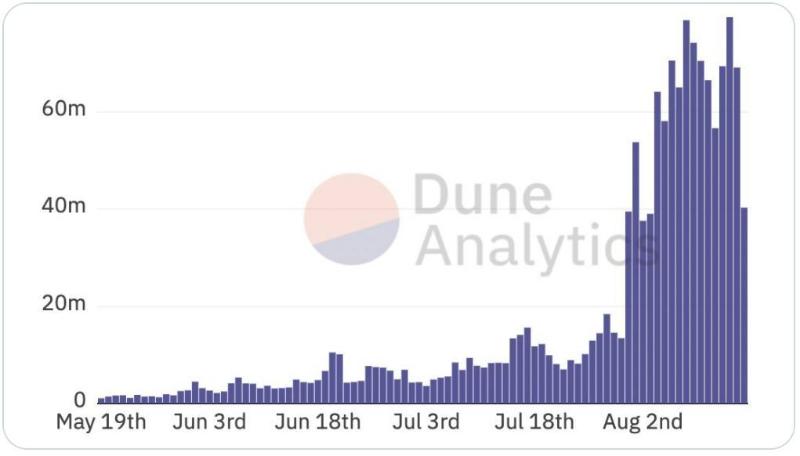
This year, NFTs and gaming represent the next wave of breakout blockchain applications: NBA Top Shot, CryptoPunks, Axie Infinity, and others. You can see this reflected in the rapid growth of total sales volume on OpenSea, the largest NFT marketplace:
To some, NFTs may seem frivolous or toy-like. But NFTs matter because they offer better economic models for creators and developers compared to existing Web2 platforms.
What will be the next wave of blockchain killer apps? Computing waves are hard to predict, but there are some promising emerging categories.
DAOs (decentralized autonomous organizations) are internet-native global collectives that share resources, build products, and work together toward common goals.
Social tokens are a new way for creators to earn money online. They eliminate rent-seeking intermediaries and foster the development of micro-economies that grow alongside fan communities.
Blockchain-based social networks make strong commitments to users and developers, allowing them to build on solid foundations without worrying about changes to APIs or economic terms.
Crypto-powered 3D worlds and metaverse experiences let people socialize, earn money, and build mini-worlds, with guarantees of interoperability and true ownership.
These are just a few ideas, but entrepreneurs are far better at creating the future than people like me are at predicting it. The best ideas are likely either not yet conceived or seem strange to us today.
If you work in crypto, you’re used to outsiders looking at you curiously or thinking what you're doing is silly or a scam. Often, we don’t even have names yet for what people are working on—because it’s too new.
That’s what it feels like to work at the beginning of an S-curve. Programmable blockchains are the computing frontier, just like personal computers in the 1980s, the internet in the 1990s, and mobile devices over the past decade.
We look back today at classic moments in computing history and wonder what it felt like to be there.
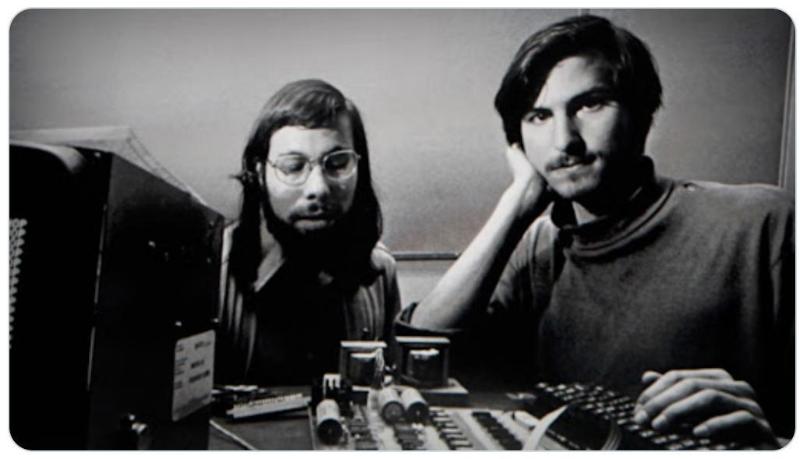
But you’re there now! The Homebrew Computer Club of 2021 is a DAO or a Discord server—but the pattern is the same. Enthusiasts share ideas with each other. Tinkerers hack on weekends and evenings. These are all the good old days—the edge life.
Join TechFlow official community to stay tuned
Telegram:https://t.me/TechFlowDaily
X (Twitter):https://x.com/TechFlowPost
X (Twitter) EN:https://x.com/BlockFlow_News
 a16z
a16z






