








TechFlow: Two decades of gold farming in games, the Trojan horse of blockchain "invading" traditional finance
TechFlow Selected TechFlow Selected
TechFlow: Two decades of gold farming in games, the Trojan horse of blockchain "invading" traditional finance
The next generation of crypto assets will maximize financial attributes, playability, and meme traits simultaneously.
 Navigating Web3 tides with focused insights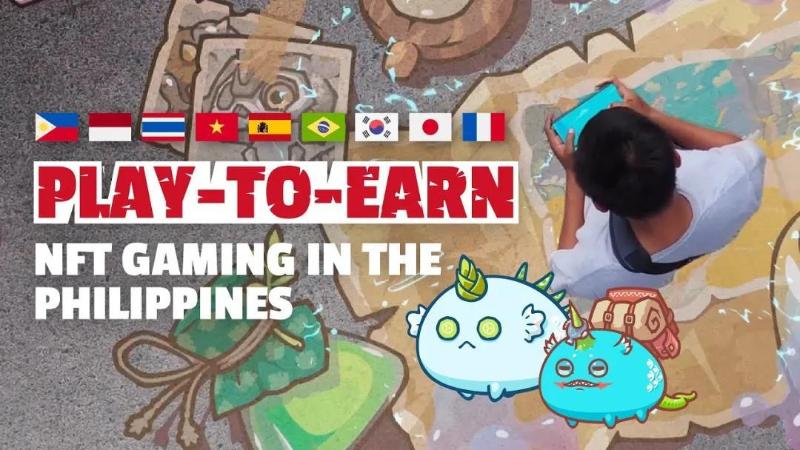
By Ge Jin
A long-time researcher on games and virtual economies, director of the world’s first documentary on game gold farming, "Gold Farmers," currently serving as general manager of a U.S.-listed tech company's Chinese subsidiary and a technology partner of Epic Games.
In 2005, I made a documentary about virtual economies in online games. At that time, tens of thousands of young people in China were making a living inside games like World of Warcraft, earning virtual currencies and equipment exchanged for U.S. dollars from foreign players. This practice is known in gaming circles as “gold farming,” and these players are called “Gold Farmers.”
Today, the same phenomenon is happening again in blockchain games—most notably in Axie Infinity, a pet-battling game where hundreds of thousands across Southeast Asia now breed virtual creatures called Axies and compete in battles to earn income.
What’s remarkable this time is that thanks to blockchain, “play-to-earn” players enjoy far more rights than the earlier generation of “gold farmers” and can share more directly in the success of the games they help build. The most successful play-to-earn guild today, Yield Guild Games (YGG), has recruited over 4,000 full-time players and even launched its own token, YGG.
This time, the “play-to-earn” model isn’t just transforming gaming—it’s rapidly bringing blockchain into everyday life and accelerating the integration of game mechanics into DeFi (decentralized finance) and NFT (non-fungible token) ecosystems. A clear trend is emerging: the next generation of crypto assets will maximize financial utility, playability, and meme-driven virality all at once.
From the Fringes to the Center: The Rise of the Gold Farmer
I’ve followed blockchain games like Decentraland, Sandbox, and Axie Infinity with interest, but until two months ago when my Filipina housekeeper mentioned her relatives were playing Axie Infinity to earn money, I hadn’t fully grasped how powerfully games could bring blockchain into mainstream lives.
My research shows that since early 2021, Axie Infinity has spread rapidly in the Philippines. The pandemic devastated local job markets—many who once worked abroad couldn't leave, and tourism-related jobs vanished. When a few discovered they could earn real income through Axie, the game went viral.
A YouTube documentary titled “Play-to-Earn” vividly captures how Axie Infinity has become a lifeline for ordinary Filipinos—including single mothers, unemployed graduates, and elderly couples running small convenience stores.
Without games, it’s hard to imagine these people becoming part of the blockchain economy. Today, Filipino players earn an average of over $300 per month from Axie—more than the local average income.
The Chinese “gold farmers” I met 15 years ago shared many similarities with these Filipino players—they would have otherwise worked as laborers or service staff, but found that gold farming paid just as well, if not better. And crucially, they genuinely enjoyed gaming, gaining a sense of achievement rarely available in their offline lives.
Yet, the way players earn money in blockchain games differs fundamentally from traditional games:
1. In traditional games, publishers are absolute gods—their control over in-game assets is total. In blockchain games, ownership of virtual assets is recorded via NFTs on the blockchain, meaning players no longer fear losing them to game companies or arbitrary decisions.
2. Virtual economies in traditional games operate in closed loops. While third-party exchanges exist to trade game items for fiat, these markets remain small and illiquid.
In contrast, assets in blockchain games are part of the broader $2 trillion crypto market. For example, Axie Infinity’s tokens AXS and SLP are traded on all major crypto exchanges, accessible to tens of millions of global crypto investors—not just niche gaming communities—offering vastly superior liquidity and scale.
3. In traditional games, revenue flows overwhelmingly from players to publishers, with little influence given back to users.
In blockchain games, players share in the game’s success. Tokens earned through gameplay function similarly to equity. In Axie Infinity, players earn governance token AXS by completing tasks. Holding AXS allows staking for yield and voting rights over treasury funds and major game upgrades.
4. Gold farming in traditional games exists in a gray zone—often banned and actively suppressed by game companies. “Gold farmers” are frequently stigmatized by other players.
Back in 2005, I interviewed American and South Korean players who despised “Chinese gold farmers,” some even launching in-game wars against them. But today, “play-to-earn” is the core design principle of blockchain games. Players aiming to earn money aren’t outliers—they’re the core user base.
Gold Farming Guilds Achieve Unicorn Valuations
Fifteen years ago, booming gold farming gave rise to countless farming studios.
I visited over a dozen such operations—from small teams of ten to large ones with hundreds—all providing housing, operating 24-hour shifts in World of Warcraft. With low wages and an 8:1 CNY-USD exchange rate, selling virtual goods or leveling services for dollars was highly profitable.
Yet these studios were fragile. I witnessed two collapse overnight—players returning in the morning to find computers gone, along with their unpaid wages and the studio owner.
Today, blockchain games offer fertile ground for professional teams. Yield Guild Games (YGG), born in the Philippines, has evolved into a global organization, claiming to be managed as an advanced DAO and achieving “securitization” through token issuance.
Like old-school studios, YGG organizes people to play games for profit—but now spanning the Philippines, India, Indonesia, Venezuela, and Brazil. It calls its players “Scholars” and frames payments as “scholarships.”
To start playing Axie, one needs three Axie creatures. As the game grew, the entry cost rose to over $700—prohibitively high for many in developing countries.
YGG trains Scholars and “rents out” Axies and other NFT assets so they can generate maximum value in-game.
Compared to past studios, YGG treats its Scholars far more generously. According to its whitepaper, 70% of earnings go directly to Scholars. Moreover, because blockchain game assets are unique NFTs, YGG classifies them as productive fixed assets, building a business model around renting or selling these digital assets for returns.
As of July, YGG had over 4,000 Scholars and issued 1 billion YGG tokens. By August 15, YGG traded around $6, giving it a market cap of $6 billion.
Each Scholar unknowingly supports a $1.5 million valuation—an unprecedented myth made possible only in the crypto world.
The “play-to-earn” model in blockchain games shares a foundational principle with the original gold farming economy: differences in time value. Axie and YGG thrive in low-income countries like the Philippines because there’s strong demand from wealthy Western players who’d rather pay than spend time grinding, while supply comes from workers in developing nations willing to trade time for rewards.
The difference is that blockchain gaming creates a low-barrier, open, global market—one uniquely accessible for low-income individuals to leverage time-value arbitrage for income.
Many Filipinos endure decades away from families working overseas to exploit this time-value gap. But virtual economies like Axie now allow some to earn a living without leaving home.
The Trojan Horse Inside Traditional Finance
From early June to mid-August, Axie Infinity’s daily active users surged from around 100,000 to over 1 million. By August 15, Axie generated over $300 million in profit over the last 30 days—surpassing all DeFi protocols combined and even Ethereum’s $120 million.
This level of growth and profitability is a wake-up call for the entire DeFi ecosystem.
Kain, founder of DeFi synthetic asset platform Synthetix, tweeted: “DeFi belongs to the realm of finance—finance impacts the world greatly, but games and art NFTs will capture people’s attention more than finance ever will.”
DeFi platforms are already adopting game mechanics to drive growth. Aave, a leading DeFi lending protocol, supports Aavegotchi—a pet game designed to create playful NFTs. These digital pets increase in value and rarity through gear upgrades and mini-games, while also supporting DeFi functions like staking and yield farming.
We’ll likely see more such integrations between DeFi, gaming, and NFTs. The key to winning users in next-gen crypto assets will be: financial functionality (easy trading, collateralization, derivatives), game-like fun and virality, and NFT-driven identity and collectibility.
For my Filipina housekeeper, blockchain gaming led her to download MetaMask, a crypto wallet. She’s now exploring how to use it to send money home—currently reliant on expensive, slow intermediaries. Through gaming, blockchain enters her life, quietly replacing traditional financial institutions.
Games may be the Trojan horse through which blockchain infiltrates the traditional financial world.
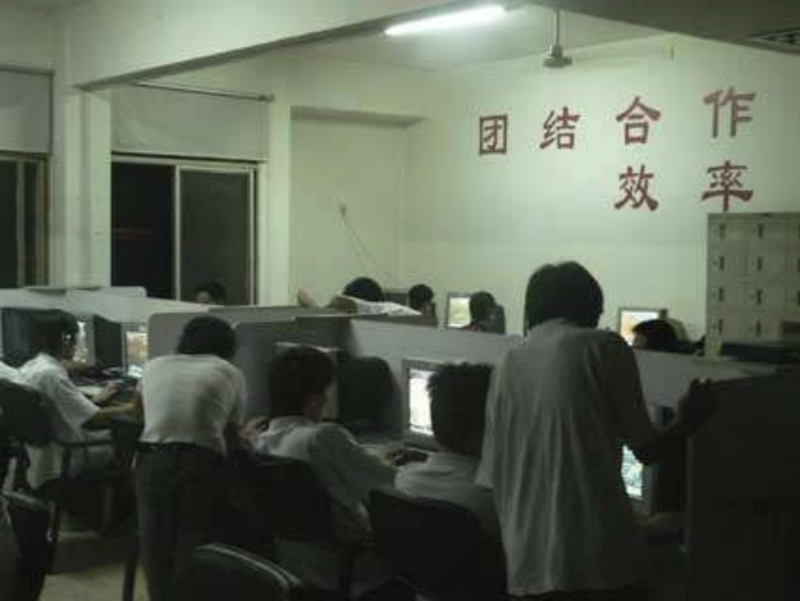
Chinese gold farming studios in 2005
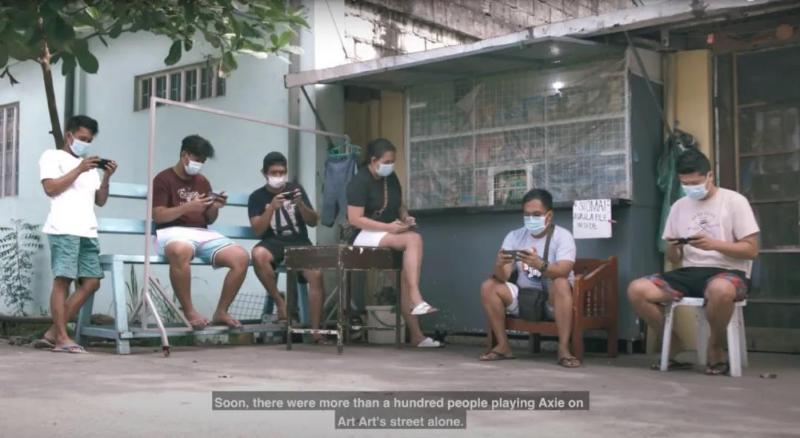
Gold farming in the Philippines in 2021
Documentary: "Gold Farmers"
https://www.mtv.com/news/1545919/documentary-reaps-truth-about-games-controversial-gold-farming;
Appendix:
“China’s ‘Gold Farmers’ in the Gaming World”—an article written by the author in 2006 during his studies at UC San Diego.
At the time, China was still in the early stages of joining the WTO, flooding factories with cheap labor to export garments, toys, and other light industrial goods for U.S. dollars.
Similarly, within the gaming supply chain, legions of young people crammed into dim, cramped rooms, grinding for hours to sell gear to Western players for dollars.
In the parallel universe of virtual gaming, China remained the “world’s factory,” complete with exploitative “gold farming sweatshops.”
Fifteen years later, the world has changed dramatically. China has transitioned from low-end manufacturing reliant on cheap labor to a focus on mid-to-high-end industries. In gaming, too, China is no longer just a consumer nation but a major exporter, with titles like Honor of Kings and Genshin Impact securing global success.
Mirroring the shift in global manufacturing, Southeast Asia has now become the epicenter of gold farming. They are fortunate—arriving in an era where blockchain and gaming converge, enabling greater rewards. Technological progress in virtual worlds is tangibly impacting real lives—perhaps the very “blending of real and virtual” often cited in discussions of the metaverse.
Revisiting this 2006 article today brings new insights and reflections.
China’s ‘Gold Farmers’ in the Gaming World
In China, a new kind of factory has emerged—employing young people to play online games like World of Warcraft and Lineage day and night. Workers produce in-game currency, equipment, spells, and even full characters, selling them to players from the U.S., Europe, South Korea, and Japan who want to instantly boost their status in virtual worlds.
Players engaging in real-money transactions within games are known as “gold farmers.” Since gamers often refer to Chinese workers as “Chinese gold farmers” and their workplaces as “gold farms,” I adopt this terminology.
Between August 2005 and January 2006, I conducted fieldwork at four Chinese gold farms, studying how managers bridge the virtual and real worlds to organize production and distribution of virtual goods. I also sought to understand what this hybrid work-play experience means for gold farmers and what it feels like to live at this unique intersection of reality and simulation.
China is currently the factory floor for virtual goods. While gold farms exist in Romania, Indonesia, and Tijuana, none match the scale and scope of China’s operations.
Large Chinese gold farms operate hundreds of computers and employees, concentrated in Sichuan, Fujian, and Northeast China. Countless smaller farms run 3 to 10 machines. In Lishui, a small city in Zhejiang, I found hundreds of such micro-operations.
It’s nearly impossible to pinpoint when China’s first gold farm appeared. The most experienced farmer I met started in 2001, working on a farm serving Korean and Japanese players.
In 2003, Lineage II launched servers in the U.S., quickly gaining popularity. This suddenly expanded the market for virtual goods, spawning thousands of gold farms across China. The industry has grown so large that the government is now exploring taxation and regulation.
One farm I visited, “Donghua,” is officially registered as a business with local government in a small Zhejiang town and pays taxes. Authorities struggled to classify such enterprises—eventually categorizing Donghua under “communications and information services.”
Jinhua also hosts a new game services company: 5173.com. One of China’s largest domestic brokers of virtual goods, 5173.com reportedly received direct investment from local government aiming to stimulate the regional economy.
The largest international brokers include IGE.com and Virdaq.com. IGE operates like Walmart for virtual goods—customers can buy in-game items using international credit cards. Headquartered in Hong Kong, IGE sources most of its virtual inventory from Chinese farms, according to several farm operators.
Most gold farms lack direct access to foreign customers and rely on international brokers. Some, however, have foreign partners who provide eBay accounts, PayPal, and overseas bank accounts to enable direct transactions.
Transactions occur within the game world: after payment confirmation and sharing of buyer avatar details, a seller-controlled character meets the buyer’s avatar to hand over items “in person.”
Larger farms typically provide room and board, requiring farmers to live on-site. Shifts last 12 hours with short breaks. The number of workers is usually double the number of computers, ensuring 24/7 operation. Wages range from $40 to $200 per month. Some farmers even work for free—so long as they get food and shelter and can play games.
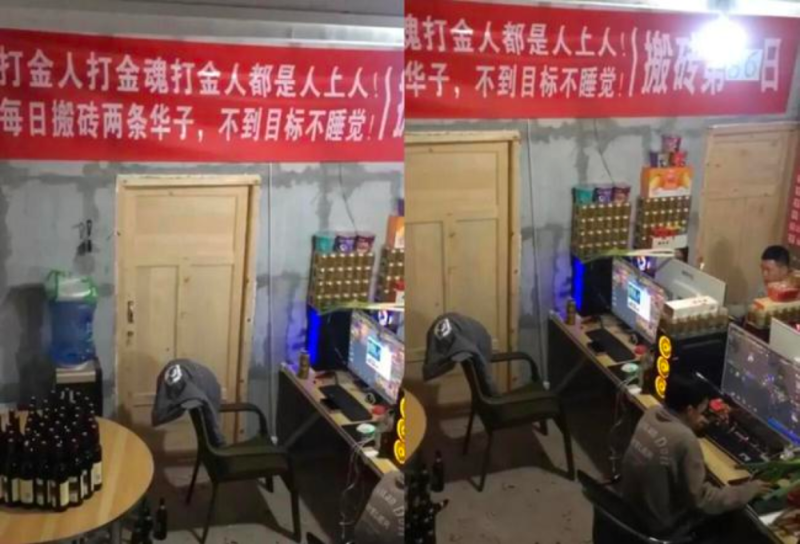
Chinese gold farmers are sometimes labeled “game sweatshops.” This term captures certain realities of Chinese gold farms.
Gold farms reflect China’s role in the global economy—as a primary source of cheap labor. Farmers are exploited by both farm owners and international brokers. Workdays are long. Sitting at a computer killing monsters for 10 hours daily may harm health. Yet “game sweatshop” is an oversimplification, masking deeper complexities.
Most farmers I spoke with genuinely enjoyed their work. Passion is visible on their faces—rare in traditional sweatshops. Many had no better alternatives.
All the farmers I met were male, mostly in their early twenties—either unemployed or previously underemployed. Many were already hardcore gamers before turning professional.
In a sense, they’re monetizing their hobby—a dream unattainable for most. More importantly, the game world becomes a space of empowerment and compensation. Compared to their impoverished real lives, their virtual existence offers power, status, and wealth unimaginable offline.
This helps explain their deep engagement. Here lies a paradox the term “sweatshop” fails to convey: exploitation and empowerment are intertwined; productivity and pleasure coexist.
Yet the virtual life of gold farmers isn’t perfect. Many players harbor hostility toward them. For purists, games should be immersive and fair.
Eric Anderson, founder of NoGold, told me that gold farming causes inflation and inequality in game worlds and spawns real-world sweatshops.
NoGold aims to limit exposure by persuading fan sites and forums not to display gold-selling ads, reducing purchase likelihood.
While NoGold doesn’t blame farmers personally, many players view them as destroyers and invaders of their game worlds.
Nick Yee, founder of the Daedalus Project (a survey of MMORPG players), noted that many players assume all gold farmers are Chinese, calling them “rats,” “plagues,” or “commie peasants.” Some gamer groups systematically harass and kill suspected Chinese gold farmers in-game.
Many Chinese farmers feel troubled by these conflicts. Language, cultural, and social barriers prevent them from integrating into player communities on foreign servers. Proud of their in-game achievements, they’re also sensitive about serving wealthier players.
In virtual worlds, they are simultaneously masters and servants. Power dynamics transcend the virtual-real divide. In a way, Chinese gold farmers represent a new form of migrant labor—disembodied via the internet, re-embodied abroad as mysterious warriors, mages, or priests—earning survival income through digital avatars.
I’ve briefly summarized observations from my fieldwork. My study of how virtual economies impact real life remains in its infancy. Current research questions—by nature interdisciplinary—include:
First, how should we understand real-money transactions in game worlds?
Is this a new virtual economy? Should it be allowed to grow—or banned to preserve pure gaming experiences?
Second, how do we assess the labor contribution of gold farmers? What does it mean when labor can move so seamlessly across borders and function globally?
Third, how does living at the intersection of work and play, virtual and real, shape identity and worldview?
Join TechFlow official community to stay tuned
Telegram:https://t.me/TechFlowDaily
X (Twitter):https://x.com/TechFlowPost
X (Twitter) EN:https://x.com/BlockFlow_News






