In reality, Bitcoin is causing prices in a popular game to skyrocket
TechFlow Selected TechFlow Selected
In reality, Bitcoin is causing prices in a popular game to skyrocket
Either way, Bitcoin tied to real-world value has become one of Escape from Tarkov's defining gameplay features. While everyone knows that delinking it would be the simplest solution to all market issues, this team of Russian developers likely won't give up easily.
 Navigating Web3 tides with focused insights
Last year, the Russian shooting game Escape from Tarkov had a moment of popularity on live streaming platforms.
Players know that compared to other multiplayer shooters, the game's biggest distinguishing feature is its intricate and unique economic system.
But few realize that Escape from Tarkov is also one of the rare games to incorporate Bitcoin. In Tarkov, Bitcoin is represented by an item called "physical Bitcoin," whose value is tied to real-world prices—one physical Bitcoin equals 0.2 Bitcoins in reality.
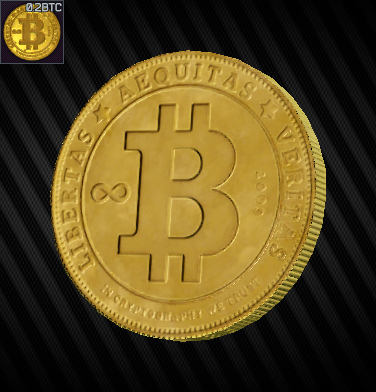
Players can sell a Tetris console they find to a specific NPC in exchange for physical Bitcoin. With extremely good luck, they might even directly loot physical Bitcoin during raids.

Image source: Tarkov Market, a third-party market price tracking website
However, the primary way to obtain Bitcoin in-game remains mining. With help from NPCs, players can set up mining rigs in their hideout and fill them with scavenged graphics cards, then sit back and profit.
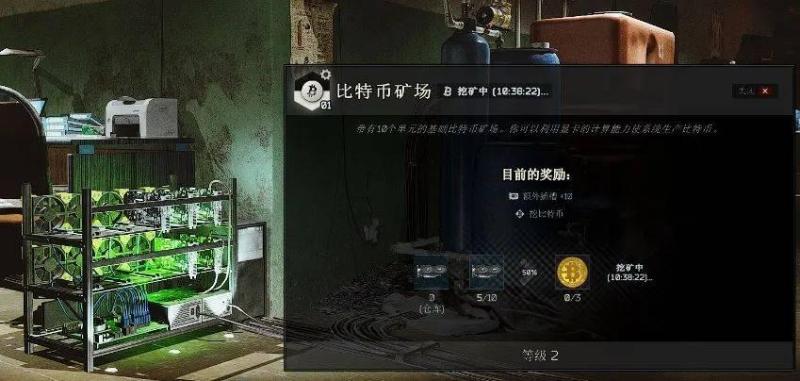
For ease of calculation, the output of mining rigs is also physical Bitcoin
The development team introduced this real-world-linked Bitcoin mechanism three years ago—whatever Bitcoin's real-world price was, players could sell physical Bitcoin at that same price in-game, which remained under 150,000 rubles for a long time.
By 2020, the price of physical Bitcoin closely followed real-world trends, skyrocketing like a rocket—surpassing 200,000 rubles in November, breaking 300,000 in December, then rapidly climbing to 400,000, 500,000, 600,000... in 2021.
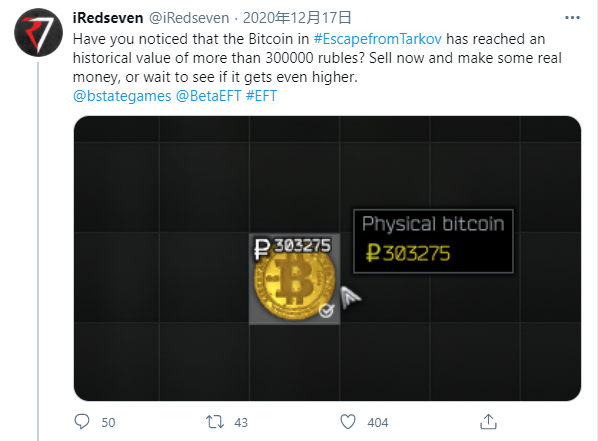
As of February 22, Bitcoin prices surged to 780,000 rubles, having multiplied several times over previous levels.
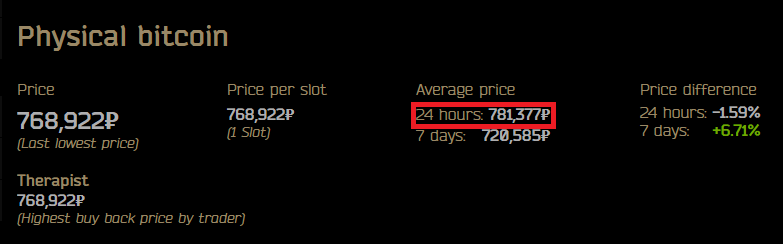
Image source: Tarkov Market
Escape from Tarkov is still in open testing. To test updates, player profiles are periodically wiped—most recently during last Christmas, precisely when Bitcoin prices were steadily rising.
Mercenaries in Tarkov face constant danger, so most avoid long-term investments. Instead, they immediately sell Bitcoin for rubles—the main in-game currency—to buy weapons and gear. When a mercenary dies, they lose nearly all weapons and looted items. While recovery methods exist, having more income options means greater survival chances.
After each wipe, setting up a mining rig as early as possible has become common knowledge for securing wealth. Due to work commitments, I don't have much time to play Tarkov and am quite bad—I die constantly. Yet simply by building a mining rig, I earn a steady, high income every day, allowing me to thrive comfortably in this hardcore game.
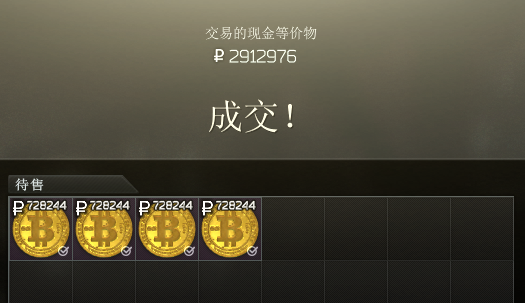
However, Bitcoin’s fluctuating price has triggered ripple effects, shaking the entire market order of Tarkov.
First, mining rigs now generate more rubles from Bitcoin sales. Players with rigs achieve "financial freedom" faster than before, spending freely on better guns and ammunition. High-end firearms and ammo became scarce, leading to sharp price increases.
Second, demand for electronics surged, driving up prices. Graphics cards used for mining go without saying—setting up rigs requires large quantities of power supplies, capacitors, CPU fans, and other electronic components, all of which saw rising prices, just like real-world shortages during Bitcoin booms.
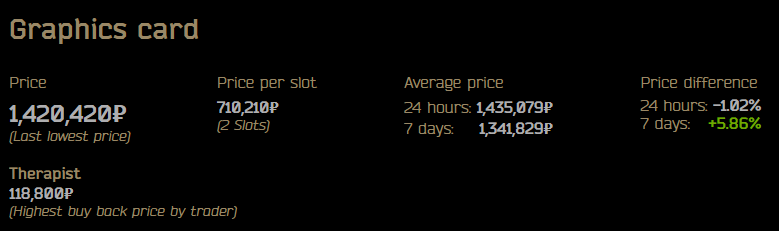
In-game, a single graphics card costs nearly two physical Bitcoins—worth hundreds of thousands of RMB
Third, fuel prices were also affected. This differs from reality—in the game, fuel is a scarce resource. Players must continuously refuel generators to keep mining rigs running. As more players acquired rigs, fuel grew increasingly scarce, keeping prices high.
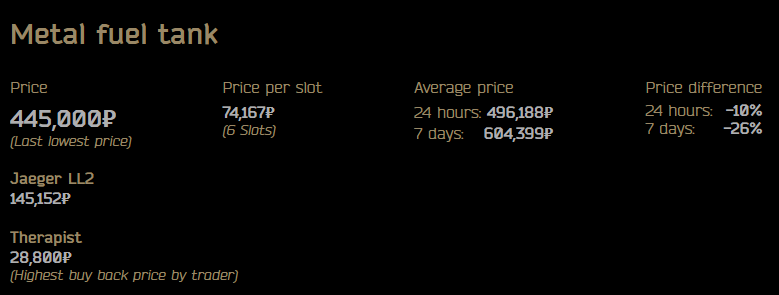
Fuel prices fluctuate frequently, sometimes approaching the value of one physical Bitcoin
Taken together, these factors reveal that as Bitcoin prices rise, the economic gap between new and veteran players continues to widen. Veterans with mining rigs roam freely, while newcomers without rigs struggle to make progress.
Soaring prices for electronics and fuel mean beginners need more rubles to acquire them, making it harder to build a mining rig. To avoid being exploited by others, new players must enter raids to compete for resources—but high-end gear has become expensive, and opponents have already armed themselves using Bitcoin profits. Newcomers stand little chance, and their odds of surviving and extracting loot have diminished.
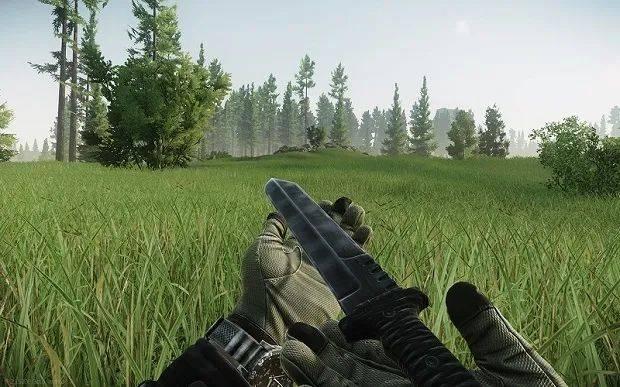
Can't fight with guns? Then carrying a knife is all you can do to get by
Even the developers of Escape from Tarkov probably never expected that real-world Bitcoin trends would one day have such a massive impact on the entire game environment.
Recently, the team rolled out several updates, including reducing mining efficiency and increasing the amount of materials required to build rigs and other electronic equipment. These changes seem less about preventing new players from quitting and more about delaying everyone’s path to “graduation,” artificially extending gameplay duration.

Sounds absurd, but players can literally craft graphics cards by hand. Recent updates modified the recipe, requiring more materials.
The Tarkov development team, hailing from Russia, are action-oriented—they rarely consult players or issue announcements before making sweeping changes, inevitably drawing criticism. However, due to the lagging nature of market dynamics, the team needs time to assess the effects of each update; this save file will eventually be deleted too, giving them another chance to implement further changes and fundamentally address the cycle of the rich getting richer and the poor poorer.
Regardless, Bitcoin tied to the real world has become one of Tarkov’s defining features. While everyone knows decoupling would instantly solve all market issues, these Russian developers likely won’t give up easily.
From the perspective of an ordinary Tarkov player, although I’ve personally benefited from the trend, I actually hope the real-world Bitcoin bubble bursts soon—game-wise, restoring Tarkov’s economic balance would help attract new players; in real life, my friends could finally upgrade their hardware and suffer alongside me in this hardcore game, no longer agonizing over GPU budget on PC builds.
Please note, this is purely personal wishful thinking. I hold no bias against Bitcoin, make no predictions about mining crashes, and offer no investment advice—neither for Escape from Tarkov nor the real world.
Join TechFlow official community to stay tuned
Telegram:https://t.me/TechFlowDaily
X (Twitter):https://x.com/TechFlowPost
X (Twitter) EN:https://x.com/BlockFlow_News