The Truth Behind the U.S. OCC's Easing of Stablecoin Usage: Permissioned Chains with Strict Regulation
TechFlow Selected TechFlow Selected
The Truth Behind the U.S. OCC's Easing of Stablecoin Usage: Permissioned Chains with Strict Regulation
The public blockchain referred to by OCC is not a decentralized, permissionless open-source blockchain like Bitcoin or Ethereum, but rather a permissioned blockchain that requires all participants to comply with all applicable legal requirements.
 Navigating Web3 tides with focused insights
Author|Wang Yongli, Former Deputy Governor of Bank of China
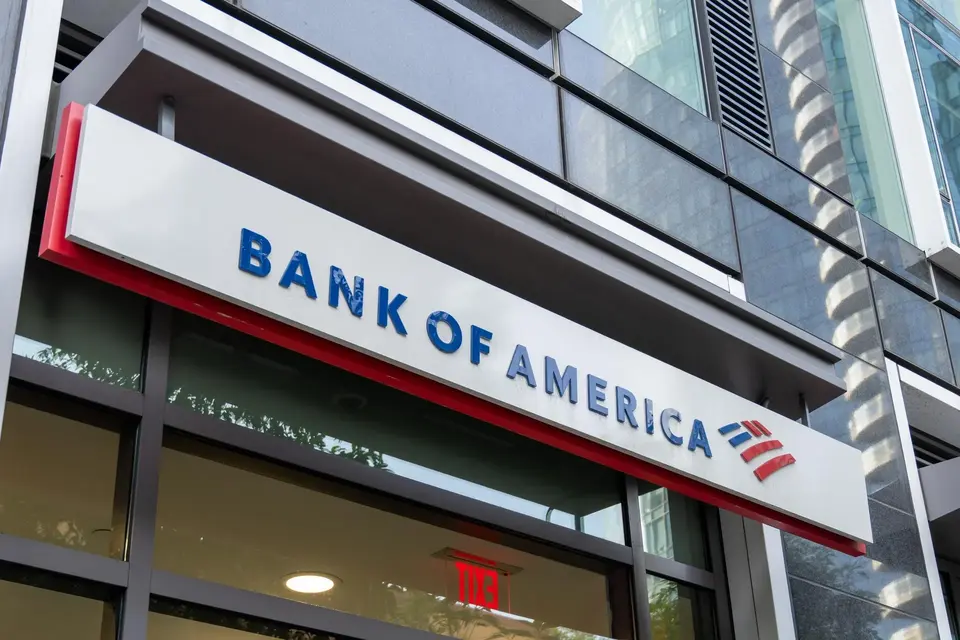
On January 4, the U.S. Office of the Comptroller of the Currency (OCC) released an interpretive letter stating that national banks and federal savings associations may serve as nodes on blockchain networks for stablecoins and use associated stablecoins in "permissible payment activities." The OCC views blockchain-based stablecoin networks as a way to enable "cheaper, faster, and more efficient" payments, reducing the cost of cross-border transactions. As such, it authorizes banks to convert between fiat currency and blockchain-based stablecoins during remittance services. If they choose, banks may also issue their own stablecoins (for example, JPMorgan Chase has proposed launching its own dollar-backed stablecoin, JPM Coin).
Some believe this marks a major victory for the crypto industry and public blockchains—allowing banks to treat public blockchains like financial infrastructure such as SWIFT or Fedwire, and viewing stablecoins (such as USDC) as new forms of electronic stored value. This could position the United States as a leader in embracing public blockchains and stablecoins, promote dollar-denominated digital stablecoins as mainstream payment and settlement instruments, and further strengthen the global influence of the U.S. dollar.
2021 will be a pivotal year for public blockchains and stablecoins entering the mass market—an era is quietly beginning. The game has started.
How should we interpret this move by the OCC?
First, the stablecoins referenced in the OCC’s statement are not arbitrary—they must be those approved by regulators and subject to ongoing regulatory oversight. Currently, these include USDC, GUSD, PAX, among others.
Stablecoins not yet approved by regulators—such as USDT—despite having been operational for years and possessing significant market influence, remain outside the scope of this authorization due to lack of formal regulatory approval.
More importantly, the stablecoins referred to by the OCC are solely those pegged one-to-one to the U.S. dollar (in effect, digital tokens representing dollars), not stablecoins pegged to other national currencies, nor those structurally linked to a basket of currencies including the dollar—so-called “supranational” stablecoins (even if the dollar holds the largest weight in such a basket, it still differs fundamentally from pure dollar-pegged stablecoins). Furthermore, this does not include fully endogenous cryptocurrencies generated through “mining,” such as Bitcoin or Ether, which have no direct link to the dollar and thus cannot contribute to enhancing the international status of the U.S. dollar.
Accordingly, the public blockchains mentioned by the OCC are not decentralized, permissionless open-source blockchains like Bitcoin or Ethereum, but rather permissioned blockchains requiring all participants to comply with applicable laws and regulations—including know-your-customer (KYC), anti-money laundering (AML), anti-terrorism financing, and consumer protection rules. Therefore, this statement does not represent a victory for permissionless public blockchains.
Second, the OCC's action reflects U.S. regulators’ support for innovation in blockchain and stablecoin technologies, aiming to gain leadership in blockchain-based payment and settlement systems while strengthening the international role of the U.S. dollar. At the same time, it underscores the necessity of placing stablecoins under strict regulatory supervision. Financial innovation in money and credit must occur within the framework of macroprudential regulation and legal compliance.
Third, while the OCC’s decision is feasible within the United States, extending dollar-backed stablecoins into cross-border payment and settlement requires broader international consensus and the establishment of globally accepted rules.
Even if the U.S. allows free conversion between dollars and stablecoins, this does not imply that other countries will permit similar conversions between these stablecoins and their domestic currencies, which would inevitably create complications.
Moreover, just as the U.S. can launch a dollar-based stablecoin system, other nations could develop euro-, renminbi-, or yen-denominated stablecoin systems, potentially leading to competing frameworks. Ultimately, the international influence of different currency-backed stablecoins will depend on the issuing country’s overall national strength and global standing, as well as the efficiency and security of each stablecoin’s underlying infrastructure.
From the perspective of maximizing global interests, the coexistence of multiple cross-border payment and clearing systems entails substantial investment and operational costs, making it suboptimal. Cross-border payment and clearing systems are, in essence, financial infrastructure—ideally unified and centralized in both operation and governance.
An important insight worth noting:
We must clearly distinguish between money itself and its forms of representation and modes of operation.
With the emergence and evolution of Bitcoin, the concept of “digital currency” has gained increasing attention. Endogenous decentralized cryptocurrencies, single-fiat-pegged stablecoins, supranational stablecoins tied to baskets of currencies, and central bank digital currencies (CBDCs) have sparked intense global debate over the nature, origin, functions, forms, operational mechanisms, monetary policy, and control of money.
Yet much of this debate conflates money with its forms and operational methods, failing to draw clear distinctions.
Money emerged and evolved to meet the needs of exchanging social wealth, serving core functions as a unit of account and medium of exchange. Its development has progressed through natural commodity money (items highly valued by communities, such as special shells, bones, feathers), standardized metallic money (gold, silver, copper coins minted under specific standards), metallic standard paper money (paper substitutes circulating alongside metal coins), and ultimately to purely fiat credit money detached from physical commodities.
Today, all countries operate under credit-based monetary systems, marking a historic transition from commodity-backed to credit-based money. But why was this shift inevitable? Whose “credit” backs credit money?
As economies developed, it became evident that monetary stability—neither excessive issuance nor insufficient supply—was crucial for economic health. Maintaining stable value and effective function as a measure and medium of exchange became a critical socioeconomic challenge.
Through experience with paper money under metallic standards, people gradually realized that money need not be tied to rare physical commodities. Instead, money could become a pure unit or symbol of value. In theory, to maintain price stability, a nation’s total money supply should correspond to the total value of tradable wealth within its jurisdiction protected by law—and adjust dynamically as the scale of wealth changes.
Thus, gold, silver, and other natural commodities previously used as money had to exit the monetary stage and return to being ordinary forms of social wealth, whose values would now be priced in terms of new money. Money itself had to detach from tangible assets and become a symbolic representation of societal value—no longer possessing intrinsic physical worth, yet accepted because its total supply is backed by the full faith and credit of the state, supported by national sovereignty and legal enforcement. Hence, modern non-commodity money is called credit money, sovereign money, or legal tender.
Therefore, any currency not anchored to wealth protected by sovereign authority and law cannot ensure value stability and cannot truly function as credit money. In a world where national sovereignty persists and global governance remains fragmented, attempts to revert to gold or any physical commodity as money—or to create decentralized cryptocurrencies with strictly capped supplies modeled after gold—are regressive and unworkable.
However, even credit money continues to evolve in form and operation due to technological advances—from cash (physical notes and coins, transferred via direct handover), to deposit money (bank deposits, accessed via withdrawal slips or paper transfers), to electronic money (deposits at payment institutions, using digital media and electronic bookkeeping), and now to digital currency (increasingly digitized form, operating via networked and intelligent systems). While the essence of money remains unchanged, its form and mode of operation continue evolving to improve efficiency, reduce costs, strengthen compliance and risk controls, and maintain monetary and financial stability.
Based on the above analysis, the following conclusions are clear:
Cryptocurrencies like Bitcoin violate the logic of monetary development and cannot become true transactional currencies; they can only exist as a new type of asset (virtual asset) suitable for speculation, albeit with high volatility and significant risks;
Supranational stablecoins pegged to a basket of fiat currencies sound appealing in theory, but are impractical without global unified governance—largely utopian;
Single-fiat-pegged stablecoins are essentially new types of digital tokens. As long as they meet regulatory requirements, they can legitimately exist—but they cannot replace or disrupt fiat currencies; they merely transform money’s form and mode of operation;
The dematerialization and digitization of fiat currency remains an inevitable trend, though implementation paths may differ—centralized versus decentralized approaches.
In fact, under unified oversight by central banks and regulators, stablecoins issued by various social organizations and pegged one-to-one to a single fiat currency represent a decentralized model of fiat digitization.
Judging from the OCC’s statement, the U.S. appears to favor the decentralized model and may leverage its global commercial networks to advance international adoption of its digital currency.
Alternatively, central banks themselves can directly lead the development of CBDC systems. For instance, China’s central bank promoting digital RMB exemplifies the centralized model of fiat digitization.
The centralized approach may minimize redundant investments and concentrate resources to enhance development and deployment efficiency.
Nevertheless, while domestic implementation of fiat digitization is relatively straightforward, applying digital currency systems to cross-border payments and settlements requires coordination among nations and international organizations—it cannot succeed unilaterally, even for dollar-backed digital stablecoins.
Join TechFlow official community to stay tuned
Telegram:https://t.me/TechFlowDaily
X (Twitter):https://x.com/TechFlowPost
X (Twitter) EN:https://x.com/BlockFlow_News