USDT Gray Industry Investigation: Drug Trafficking, Online Gambling, Money Laundering
TechFlow Selected TechFlow Selected
USDT Gray Industry Investigation: Drug Trafficking, Online Gambling, Money Laundering
Bitcoin was born with the mission of deleveraging and serving as hard currency, while USDT is currently the source of high leverage on exchanges. It's theoretically beneficial when a currency gains more users, but if its uses are limited to illicit activities and speculation, shouldn't we reconsider the original purpose of cryptocurrencies?
 Navigating Web3 tides with focused insights
Cryptocurrencies such as USDT are becoming a "green channel" for collecting drug proceeds.
"Compared to WeChat or Alipay transfers, cryptocurrency transactions leave no verifiable information trail. Both buyer and seller stay safe," wrote an individual involved in drug activities on a self-hosted blog.
Cryptocurrency—a great experiment in financial history—originated in 2009 with a paper titled "Bitcoin: A Peer-to-Peer Electronic Cash System" authored by someone using the pseudonym "Satoshi Nakamoto." Born with the mission of decentralization and hard currency, it also planted a time bomb—its anonymity has increasingly made it a favorite among criminals, particularly USDT (Tether).
Beyond drug trade, USDT is now widely used in online gambling, money laundering, and capital flight—key components of the underground economy.
TechFlow interviewed participants along the cryptocurrency underground supply chain to uncover the hidden corners of USDT.
Buying Marijuana with USDT
"Compared to WeChat or Alipay transfers, cryptocurrency transactions leave no verifiable information trail. Both buyer and seller stay safe," wrote Zhou Xiao (pseudonym) on his personal blog.
Zhou Xiao explained that because Bitcoin is involved, buyers don't need to worry about being tracked. Purchasing Bitcoin on exchanges requires real-name verification, but this only proves investment activity—not where the Bitcoin went or why. "Unless you voluntarily disclose it, no one knows," he said.
"You can just say you're investing in Bitcoin due to its strong performance this year, then claim you transferred it to another Bitcoin wallet. I wrote down the password on paper, but lost it—still searching for it these days," he added.
Zhou Xiao operates an online drug marketplace, primarily facilitating purchases of marijuana, LSD, and other new psychoactive substances for domestic users.
Many others like Zhou Xiao use cryptocurrencies to trade drugs and "risk their lives for profit."
According to JusticeNet, a couple in Changchun used Bitcoin addresses to receive and transfer drug proceeds.
The wife, Liu, gave her Bitcoin account to her husband Ma. Ma used it to collect drug payments and cash out into Liu’s bank card, transferring over 100,000 yuan in total.
Prosecutors determined that Liu, knowing full well Ma was trafficking drugs, still provided her Bitcoin account for receiving funds and her bank card for transferring them—meeting the legal criteria for money laundering.
On January 20 this year, the court accepted the prosecution's sentencing recommendation: Ma was sentenced to three years and two months in prison for drug trafficking; Liu received six months for money laundering.
Zhou Xiao remains at large because his Bitcoin address is difficult to trace. He claims his Bitcoin addresses are batch-generated offline via elliptic curve encryption, allowing unlimited random generation of addresses and private keys.
Zhou Xiao has used three cryptocurrencies for transactions: Bitcoin, USDT, and E-RMB—a token he issued himself.
Initially, he used Bitcoin, but during a bear market when BTC prices dropped, sellers demanded stable-value transactions, prompting him to switch to the stablecoin USDT.
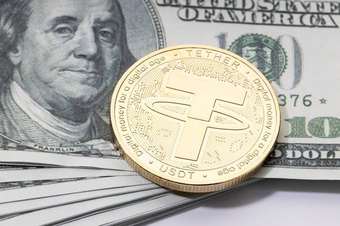
USDT is a cryptocurrency issued by Tether tied to the U.S. dollar—one USDT equals one USD. For every USDT token issued, there should be one dollar held in reserve.
Recently, he plans to launch an electronic RMB (E-RMB). He describes it as highly secure and private, pegged 1:1 to the Chinese yuan, and available exclusively to returning customers.
People like Zhou Xiao—who master cryptocurrencies and exploit them flexibly—are increasingly common in the gray economy. Operating on the edge of legality, they “risk their lives for profit” under the cover of crypto anonymity.
The Gray World of Cryptocurrency
"I have 900,000 USDT in my account," said Ai Ba (pseudonym), who runs a physical casino in Mong La, Myanmar. He told us he must convert cash into foreign currency or USDT daily.
Chainalysis data shows that from July 2019 to June 2020, over $50 billion in cryptocurrency moved from East Asian addresses overseas, with more than $18 billion in USDT.
Cryptocurrencies serve three main roles in the underground economy: drug trafficking, online gambling, and capital flight. This forms a secretive gray industry ecosystem, chaotic and complex.
Take cross-border remittances: In 2016, a Zhihu user described their method—buy Bitcoin on a domestic exchange, transfer it to Bitfinex, complete identity verification (submitting ID, passport, proof of address), then withdraw. The platform charges a 0.1% fee (minimum $20). That completes the international Bitcoin transfer.
An insider told TechFlow this method works—they've personally transferred from a Chinese address to a U.S. exchange, converted to USD, and deposited into a U.S. account—but "this is just an exception."
If such methods were once limited to individual experimentation involving personal risk, today a full-fledged cross-border remittance industry based on cryptocurrency exists.
"We handle USD and AUD," said Ji Nan (pseudonym), offering services to accept USDT and deliver fiat currency. "Just tell us your receiving bank details—personal or corporate account, which bank, registered region—and funds arrive within one business day." For individual accounts, transactions are labeled as loans or debts; for corporate accounts, as service fees.
Ji Nan noted that compared to traditional wire transfers—which take weeks and charge up to 5% fees—USDT transfers have near-zero fees and instant settlement.
"Minimum 5,000 USDT, no upper limit. For single transactions over 1 million USDT, just notify me in advance," Ji Nan said. Clients typically use the service for U.S. stock trading, property purchases, or immigration.
More sophisticated and covert than these straightforward remittance operations are professional cryptocurrency "money muling" gangs.
"Money muling" originally referred to benchmarking device performance, but in payments, it has taken on a new meaning.
Previously, online gambling platforms bought large numbers of bank cards to collect payments. But this was costly—hundreds or thousands per card—and if cards got frozen, the money was lost.
Since 2018, money muling platforms emerged, drastically reducing laundering costs through crowdsourcing. These platforms advertise: "Just upload a QR code and earn money from home."
Mulers deposit a bond (e.g., 10,000 yuan) and upload WeChat/Alipay QR codes. Players deposit funds via integrated payment systems until the muler collects 10,000 yuan, completing the cycle. The platform pays a commission and forwards the bonded amount to the gambling site.
"It's like Uber for moving money—Uber moves people, we move cash," said a muler. The gambling platform stays out of direct fund flows, turning mulers into laundering tools.
USDT money muling is a newer model using digital currencies. Traditional muling handles RMB; USDT muling handles—unsurprisingly—USDT.
A muler explained that USDT’s biggest advantage is decentralized trading: "Transactions happen directly between clients and our drivers (exchangers), with no central fund pool—preventing mass freezes. With USDT acting as a buffer, all transactions are untraceable. Our transaction volume is massive and highly dispersed."
"We provide deposit and withdrawal services for gambling platforms," said another muler on QQ, using USDT: "Earn commissions using your principal—one settlement per order, 150–200 yuan per 10,000 yuan principal, paid directly to your bank card."
TechFlow found such muling groups promote themselves on QQ groups, Baidu Tieba, Xianyu, etc., discuss transaction details via secure messaging apps like Beifeng (Bat), Telegram, and Paper Plane, buy crypto on exchanges, and deposit coins into muling platforms—most commonly USDT.
"There are people doing USDT muling, converting USDT to RMB—but very few. Over 90% are scam projects or Ponzi schemes," said Ai Ba. Even face-to-face trades carry risks of disappearing counterparties.
Justice may be slow, but it never fails. A crackdown on cryptocurrency-based money laundering is underway.
Crackdown Underway
"We can't be as reckless as before," said Ai Ba. With increased scrutiny, he stopped accepting USDT and switched to cash-for-foreign-currency exchanges at a 100:105 ratio.
On September 24, at the 9th China Payment and Clearing Forum in Beijing, Liao Jinrong, Director of the Ministry of Public Security’s International Cooperation Bureau, stated that over one trillion yuan in gambling-related funds flow out of China annually—and specifically called out cryptocurrency’s role in moving gambling proceeds.
"In recent cases, we’ve found some gambling groups using virtual currencies to collect and transfer funds—even running online gambling operations under the guise of 'virtual currency investments' in parts of Myanmar. These new digital currency channels are non-freezable, anonymous, and hard to trace, posing major challenges to our enforcement efforts."
This year, nationwide anti-money laundering and "Card-Cutting" campaigns have intensified.
On October 10, the State Council's inter-ministerial task force on combating telecom and internet fraud launched a nationwide "Card-Cutting" operation targeting illegal production and sale of phone and bank cards.
Cryptocurrency is clearly a key target. Some OTC traders have been affected—facing frozen accounts or investigations.
Under China's criminal law, providing a "funding account" for money laundering can lead to prosecution, with maximum penalties of five to ten years in prison and fines of 5% to 20% of the laundered amount.
On June 8, Huizhou police dismantled a criminal gang operating a fourth-party payment platform using USDT. They arrested 76 suspects, shut down four online payment studios, and dismantled two online gambling rings.
This case marked the first nationwide breakthrough involving USDT being used to provide payment services for illegal activities. Preliminary investigations revealed the platform operated for nearly 15 months, processing settlements for 120 overseas gambling websites and 70 investment scams, involving 120 million yuan.
TechFlow found that due to its stability and anonymity, USDT is increasingly favored by criminals. Whether for drug deals, online gambling, or cross-border transfers—the common denominator is always USDT.
Is USDT the Culprit?
Contrary to popular belief, the most popular cryptocurrency among Chinese users isn't Bitcoin—it's USDT.
According to Chainalysis, USDT surpassed Bitcoin in June to become the most popular cryptocurrency in East Asia—with China leading adoption. The report states: "Tether has become a de facto fiat substitute for Chinese crypto users and the primary gateway to Bitcoin and other standard cryptocurrencies."
Currently, USDT’s total market cap exceeds $19.1 billion—up from around $100 million in 2017. In just three years, USDT’s market value grew 191-fold.
Where are these rapidly issued USDT tokens being used?
As early as July 2019, CoinDesk reported USDT being used in Russian cross-border trade: "20% of sales in Bitcoin, 80% in USDT," said a Russian OTC trader. "Chinese companies buy USDT daily in volumes reaching $10–30 million."
Indeed, USDT has become the most "mainstream" cryptocurrency—and the one most closely tied to illicit activities. Crimes involving USDT are escalating. According to China Procuratorial Network, there have already been 85 USDT-related criminal cases this year—compared to just five before 2020.
Regulators worldwide are taking notice, and legislation is closing in.
In September, the EU formally proposed a regulatory framework for crypto assets and stablecoins, aiming to bring all crypto assets not covered by existing financial laws under supervision.
Recently, the UK Treasury announced it is drafting regulations for private stablecoins and studying the potential of central bank digital currencies as alternatives to cash.
Back in China, Article 22 of the draft revision of the "People's Bank of China Law," released on October 23, 2020, states: "No entity or individual shall manufacture or issue token coupons or digital tokens to replace RMB in circulation."
As shown above, USDT has already replaced RMB as a de facto currency in areas like cross-border transfers and underground economies—and is effectively serving as a fiat substitute for Chinese crypto users.
Will USDT collapse? When will it happen? That’s likely the question hanging over every crypto user’s head.
To some tech enthusiasts, technology is neutral—only misused by bad actors. But the growing number of crypto-related crimes reminds us that technology cannot fully absolve itself from human malice.
"The Genie is out of the bottle." Ted Rogers, CEO of Bitcoin wallet company Xapo, used this phrase to describe the BCH fork war. From the tale of Aladdin in *One Thousand and One Nights*, it means once a genie escapes, its impact becomes irreversible. Today, the same applies to USDT and other cryptocurrencies.
"Bitcoin was born with the mission of de-leveraging and hard currency; USDT fuels high leverage across exchanges. It's theoretically good when more people adopt a currency—but if its uses are limited to black markets and speculation, shouldn't we re-examine the original intent behind cryptocurrencies?" commented Pan Chao, Head of MakerDAO China.
(Names Zhou Xiao, Ai Ba, and Ji Nan are pseudonyms per interviewee requests.)
*TechFlow提醒 investors to beware of speculative risks. The views expressed herein do not constitute investment advice.
Join TechFlow official community to stay tuned
Telegram:https://t.me/TechFlowDaily
X (Twitter):https://x.com/TechFlowPost
X (Twitter) EN:https://x.com/BlockFlow_News