Chaos is the ladder. Bitcoin doesn't care about the U.S. election.
TechFlow Selected TechFlow Selected
Chaos is the ladder. Bitcoin doesn't care about the U.S. election.
How will this election impact Bitcoin, and where is the crypto world headed?
 Navigating Web3 tides with focused insights
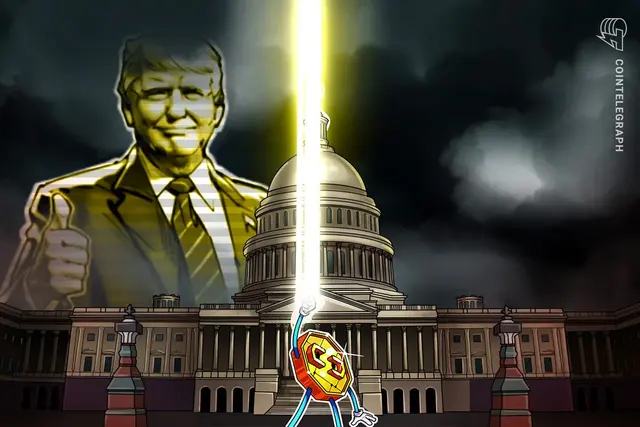
At 4 p.m. Beijing time on November 4, the U.S. presidential election entered its final tense phase. Although Biden held a slight lead, the yet-to-be-counted swing states were trending red, tilting the balance in favor of Trump.
The U.S. election carries significant implications for both the real world and the cryptocurrency space.
Against a backdrop of global economic downturn, inflation, and currency devaluation, Bitcoin has proven to be one of the few inflation-resistant, supranational assets. An increasing number of companies and corporations are embracing Bitcoin, while U.S. dollar-denominated capital appears to have taken control of Bitcoin’s pricing power.
How will this election impact Bitcoin, and where is the crypto world headed?
U.S. Presidential Candidates Are Not Fans of Bitcoin
Prior to this campaign, neither Trump nor Biden had much interaction with Bitcoin. In fact, it could be said that Bitcoin has not left a favorable impression on either candidate.
Trump tweeted on July 12 last year: “I am not a fan of Bitcoin and other cryptocurrencies, they are not money, their value fluctuates wildly, and they’re built on thin air. Unregulated crypto assets encourage illegal activities, including drug trafficking and other illicit acts…”
Trump also showed no interest in Libra—the “domestically produced” digital currency led by Facebook.
Likewise, Facebook’s Libra “virtual currency” will have no standing or credibility. If Facebook and other companies want to become banks, they must seek new banking charters and be subject to all banking regulations like other banks (both national and international).
We have only one true currency in the United States—and it is stronger than ever before, reliable and solid. It is currently the dominant currency in the world, and it will always remain so. It's called the dollar!
Donald Trump
Moreover, in his new book, Trump’s former National Security Advisor John Bolton revealed that in May 2018, Trump first told Treasury Secretary Steven Mnuchin: “Don’t be a trade negotiator… chasing Bitcoin is fraudulent.”
Apparently, Trump—whose slogan is "Make America Great Again"—has no intention of embracing Bitcoin or other cryptocurrencies. In fact, he shows equal disdain for other sovereign currencies.
"He hates Bitcoin, and he'll never understand it because he doesn't want to," commented Chico Crypto, a cryptocurrency video blogger.
In February, Mnuchin also publicly stated: “We need to ensure technological advancement, but at the same time, we must ensure that cryptocurrencies aren’t used like secret Swiss bank accounts.”
On October 8, the U.S. Department of Justice released the “Cryptocurrency Enforcement Framework,” with Sujit Raman, chair of the DOJ’s Cyber and Digital Task Force, stating that the use of cryptocurrency by terrorists is just beginning and may challenge the ability of the U.S. and its allies to disrupt financial resources, enabling terrorist organizations to carry out deadly missions more successfully or expand their influence. This likely reflects Trump’s stance toward cryptocurrencies.
There is little available information regarding Biden’s views on Bitcoin.
In July, Twitter suffered an epic hack, compromising high-profile accounts including those of Obama, Biden, and Buffett. Hackers claimed users who sent funds to a certain Bitcoin address would receive double the amount in return.
Biden later clarified: “I don’t own any Bitcoin, and I won’t ask you to send me any. If you’d like to donate to support our campaign, please do so through our official website.”
Beyond this, there is little online evidence of opinions from the 78-year-old former vice president on Bitcoin or cryptocurrencies. However, his running mate, Vice Presidential candidate Kamala Harris, has a team that includes Ryan Montoya, former CTO of the NBA’s Sacramento Kings.
The Sacramento Kings are among the most innovative and Bitcoin-friendly sports teams. Last year, they announced blockchain-based tokens for fans, began cryptocurrency mining in 2018, and auctioned jerseys on Ethereum. Additionally, the Kings started accepting Bitcoin payments in 2014, becoming the first NBA team to do so.
During Montoya’s nearly six-year tenure as CTO, the team was named “Most Innovative Company in Sports” by business magazine *Fast Company* in 2017.
Montoya is also no stranger to politics. During the Obama administration—with Biden as vice president—he served as an assistant in the White House Office.
Additionally, former Democratic candidate Andrew Yang, who endorsed Biden after his own campaign failed, frequently discussed and promoted crypto technology and even launched a Data Dividend Project. Industry insiders suggest that if Yang takes an economic role in a Biden administration, it could be positive news for Bitcoin and blockchain.
Among some cryptocurrency supporters, “Biden supports globalization and change, and cryptocurrencies represent progressive monetary policy—they are borderless.”
The Crypto World Prefers Trump
Despite Trump’s clear expression of “dislike” for Bitcoin, people in the crypto world seem to prefer him.
Whether in Twitter polls initiated by FTX founder or Coingecko, results indicate that people believe a Trump victory would be better for Bitcoin.
Ideologically, this seems understandable.
Generally speaking, the left pursues fair outcomes, the right fair procedures; the left protects equality, the right protects freedom; the left defends labor, the right enterprise; the left supports vulnerable groups, the right free competition; the left believes the world should be fair and works to eliminate all unfairness, while the right believes the world cannot be fair and instead focuses on maintaining fair institutions.
The Democratic Party leans left, advocating for big government and stricter financial regulation; the Republican Party leans right, supporting small government, large markets, and deregulation.
Therefore, if the Democrats win, the U.S. government may tighten regulations on cryptocurrencies.
Electo, co-founder of Theblockledger, once thought Biden was preferable because Trump only cheered for the dollar and stocks. But later, he realized Biden might push harsher crypto legislation.
On tax policy—affecting everyone—Trump advocates tax cuts, while Biden emphasizes raising taxes, particularly on the wealthy.
Biden previously outlined plans to reform the U.S. tax system: individuals earning over $400,000 annually would see rates restored to 39.6%, whereas Trump proposed maintaining the top rate at 37% and offering a 10% tax reduction for middle-income taxpayers.
Crypto investors are especially concerned about capital gains tax—the tax on profits from selling assets such as stocks or bonds above their purchase price. The current capital gains tax rate is as high as 20%. If Trump wins re-election, this rate is likely to continue.
Under Biden’s plan, preferential treatment for capital gains and dividends exceeding $1 million would be eliminated. Long-term capital gains (held over one year) would be taxed at the same rate as wage and bonus income—rising to 37%.
“People who break the economy are better for BTC,” said Andy, a crypto supporter on Twitter.
In 2018, Venezuela launched the cryptocurrency “Petro” backed by oil, gas, gold, and diamond reserves after its local fiat currency collapsed. Recently, reports suggest Iran is injecting mined Bitcoin into its treasury to fund imports.
These cases illustrate how cryptocurrency systems can develop amid economic collapse (often under U.S. sanctions). In today’s uncertain era of unprecedented global transformation, holding Bitcoin serves as a hedge against future financial risks of sovereign nations.
As Littlefinger said in *Game of Thrones*, “Chaos is a ladder.” Bitcoin emerged from the chaos of the financial crisis—an offspring of resistance to order.
Undoubtedly, dollar depreciation and inflation drive Bitcoin’s growth. After the pandemic, massive fiscal stimulus in the U.S. became a catalyst for inflation, and another round of stimulus looms post-election.
Compared to Biden, Trump’s monetary policy is more aggressive—even pressuring the Federal Reserve to implement negative interest rates. It is foreseeable that the U.S. will remain in a low-interest-rate environment for years to come, benefiting Bitcoin.
Bitcoin Doesn’t Care About the Election
To many Bitcoin purists, the U.S. election is irrelevant to Bitcoin’s future.
Whether the Democrats sweep under Biden or Trump secures re-election, Bitcoin will thrive. Industry executives including Barry Silbert, CEO of Grayscale, say that either candidate’s victory will revitalize Bitcoin.
Wall Street veteran Max Keiser recently said in an interview: “A Biden victory means victory for corruption and the deep state, so I expect Bitcoin’s price to skyrocket, as people panic-buy non-confiscatable Bitcoin before Biden’s socialist, thuggish regime starts seizing everything—it’s like a replay of Kristallnacht in 1938. With Trump, the U.S. has a chance for a more orderly transition toward accepting Bitcoin, with slower price growth. Regardless of who becomes president, Bitcoin keeps moving forward.”
To date, 23 global companies hold approximately $10.5 billion worth of BTC—about 3.74% of Bitcoin’s total supply—including 15 public companies, 3 private firms, and 5 ETF-based entities. Among them are Nasdaq-listed MicroStrategy and payment company Square, which believe Bitcoin offers greater return potential than U.S. dollar cash.
Bitcoin seems an unstoppable trend, infiltrating global economic activity. To radical Bitcoin purists, Bitcoin doesn’t need governments—because it was born for anarchism.
“If crypto truly decentralizes from governments, then it doesn’t matter who wins or loses. Remember, during the last U.S. election, Bitcoin was priced at $701.”
Perhaps, no longer caring about the U.S. election is the sign of Bitcoin’s maturity.
*TechFlow reminds investors to beware of high-risk speculation. The views expressed herein do not constitute investment advice.
Join TechFlow official community to stay tuned
Telegram:https://t.me/TechFlowDaily
X (Twitter):https://x.com/TechFlowPost
X (Twitter) EN:https://x.com/BlockFlow_News