The Slot Machine of the Crypto World: The Rise and Fall of Uniswap
TechFlow Selected TechFlow Selected
The Slot Machine of the Crypto World: The Rise and Fall of Uniswap
In this Russian roulette game, ETH is the bullet—pulling the trigger of a Uniswap revolver, shooting for massive wealth or bankruptcy.
 Navigating Web3 tides with focused insights
Warning! The crypto slot machine has started.
No registration, no KYC, free to enter and exit anytime—just connect an ETH wallet and the Uniswap roulette begins immediately.
10x, 100x, 1000x, -50%, -90%... In this game of Russian roulette, ETH is the bullet. Pull the trigger on Uniswap’s gun—get rich or go bankrupt. This is heaven; this is also hell.
Fully fair, absolutely transparent—Uniswap issues no tokens and charges no listing fees. It's affectionately called "the fairest platform in the crypto world" by investors.
At the time of writing, over $165 million in liquidity was locked on Uniswap. Recently, Uniswap V2 has seen daily trading volumes consistently surpassing $100 million, exceeding the combined volume of Gemini, Poloniex, and Binance US. Just over half a year ago, that figure was merely $1.5 million.
Crypto enthusiasts who believe in Hayek's free market theory and Satoshi Nakamoto’s decentralization ideals are now enacting the most primitive, wild stories in their self-built utopia.
The Crypto Slot Machine
What is Uniswap?
Launched at the end of 2018, Uniswap is an Ethereum-based decentralized exchange protocol—in simple terms, a decentralized exchange (DEX) deployed on the Ethereum network.
Starting in July this year, Uniswap experienced explosive growth in both trading volume and user numbers.
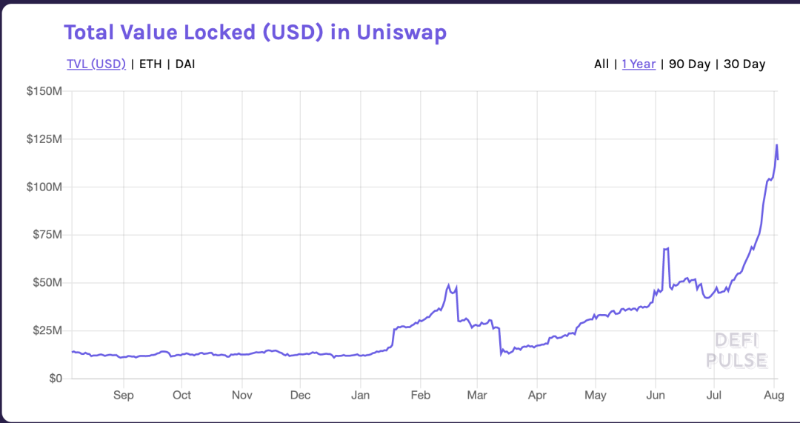
In less than a month, Uniswap reached its peak.
"Previously, Uniswap saw fewer than one new token per day. Now, dozens of new projects emerge daily," said investor Niu Yun.
"Uniswap has brought the crypto world back to the raw slot-machine state of 2016," she added.
Unlike ICOs, there's no need for whitepapers, marketing, celebrity endorsements, or teams from top schools or companies.
Anyone can launch a token—rules are simple, direct, and aggressive. To get rich, all you need is to keep promoting your token and find someone to take it off your hands.
A new project on Uniswap may only last from launch to liquidity collapse in just a few days. Currently, there are 3,390 smart contracts on Uniswap—that means 3,390 different tokens.
"Either become rich overnight, or drop to zero." Such slogans flood Uniswap communities. Every investor seems bloodthirsty, cheering passionately for each new project.
Uniswap uses an automated market maker (AMM) model based on the formula X * Y = K, where X is the amount of an ERC20 token and Y is the amount of ETH, with K being a constant. As X and Y move inversely, when someone buys ETH from the pool, the quantity of X increases accordingly.
This pricing mechanism means that whichever side sees more buying activity will experience a price increase.
There are two main ways to invest on Uniswap: first, swap ETH for project tokens and wait for appreciation; second, provide liquidity by depositing assets into Uniswap pools and earn a share of transaction fees.
"A bull market in crypto needs two things: 1. Low barriers to entry; 2. Sustainable gameplay." A veteran player in a Uniswap community commented: "Uniswap is the starter motor for a bull run."
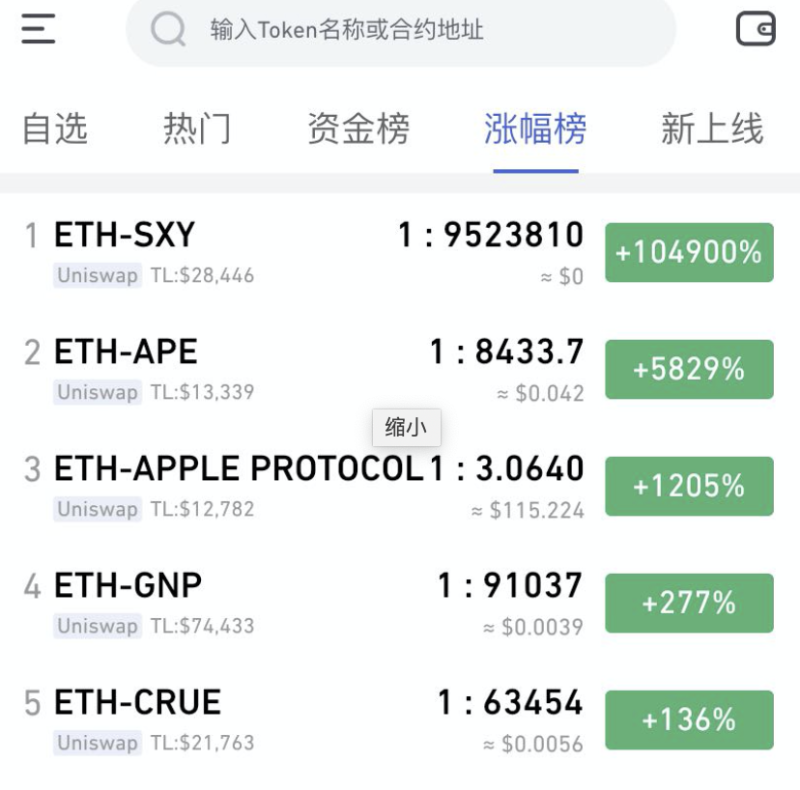
"A paradise for adventurers, a hell for retail investors." One investor summarized: "Uniswap is undoubtedly the ultimate crypto slot machine."
Decentralized Pyramid Schemes
Compared to gains of hundreds or even thousands of times, trading volumes on Uniswap are often low—sometimes just tens of thousands of dollars.
With such low volume, hundred- or thousand-fold surges are nothing but illusory mirages.
"Today’s Uniswap is like previous pyramid schemes—only decentralized," said Niu Yun. "It’s the same old trick: rely on recruiting others to take over your position."
Hence, Uniswap is also known as a “community-driven mutual slashing” business. "The more people buy, the higher the returns. No project team, no listing fee—everything depends entirely on the power of retail investors," Niu Yun revealed.
New projects every six hours leave investors overwhelmed—one hasn’t finished learning the name before the next one starts.
Unlike the centralized world, where projects rely on teams, Tokenfunds, exchanges, and market makers, in the Uniswap ecosystem, communities are the strongest force.
A group called "Happy Sea" reportedly filled up within a day of creation. Its first recommended project, SXY, surged as high as 700x—but at the time of writing, SXY had already dropped 50% from its peak, with 24-hour trading volume down 92%.
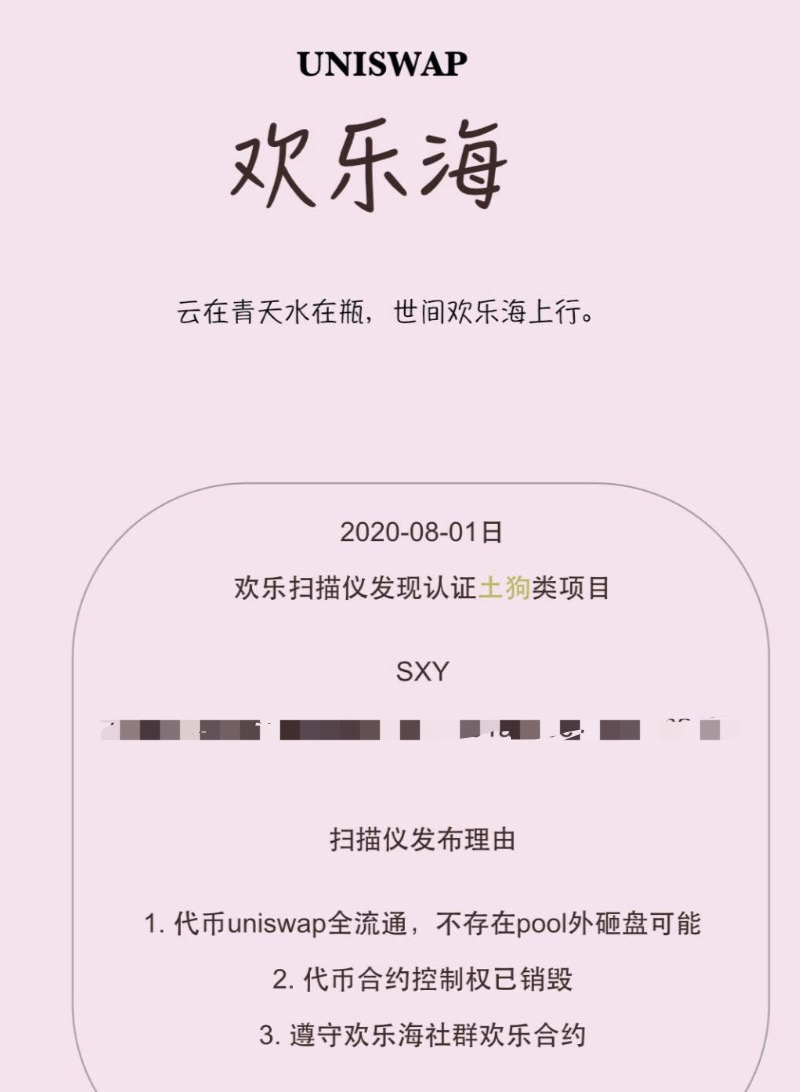
"Whether a project succeeds doesn't depend solely on the team—it hinges more on how many retail investors are willing to buy in," said player Jiang You proudly, seeing this as proof that retail investors have awakened and taken control of the镰刀 themselves.
He cited Dogecoin as an example: "It has nothing going for it, yet still soared during the bull market." According to Jiang You, the reason was simply because the community remained strong.
"It directly lowers the barrier to launching and participating in projects to 'anyone can do it.' Unlike Fomo3D, trading mining, or IEOs, which fall apart without a central team or exchange, this model works independently," Jiang You explained. "Previously, collusions between project teams and exchanges to fake data were common, but now such manipulation is harder—and wash trading is meaningless."
In fact, since 2020, signal-following trades and Uniswap pump-and-dumps have quietly shifted toward community-driven models. Whoever controls the community controls the source of crypto traffic.
Beneath the DeFi-led wave of decentralization, the landscape of the crypto world has quietly transformed.
Killing the CEX
In the centralized crypto world, exchanges reign supreme. But change has already begun.
As previously reported by TechFlow, besides charging listing fees from projects and transaction fees from users, centralized exchanges (CEXs) also profit from opaque practices—such as selling fake coins via insider trading, manipulating prices to trigger liquidations, and profiting from customer losses.
In early 2018, there was a bizarre phenomenon of over ten thousand crypto exchanges appearing simultaneously.
With the emergence of DeFi and Uniswap, governance power in the crypto space has quietly shifted. Everything—from token issuance and listings to liquidity trading—is being disrupted.
On the morning of July 31, former Messari head Ryan Watkins tweeted that Uniswap’s 24-hour trading volume had reached $126 million—equivalent to one-third of Coinbase’s volume.
The era of exchanges passively earning massive profits from listing and trading fees is over.
"Previously, projects begged exchanges for listings. Now, they list on decentralized exchanges first. Once they gain traction, they force centralized exchanges to follow suit," Jiang You explained. "Decentralized exchanges are the future."
Amid the DeFi boom, major exchanges like Hoo, HotBit, MXC, and BKEX have rushed to list popular Uniswap tokens. For these centralized platforms, traffic and attention equal money.
Will centralized exchanges decline? According to TechFlow analyst Li Feng, decentralized exchanges currently impact mainly smaller exchanges, while large centralized ones still hold significant advantages.
"Uniswap is only suitable for small transactions. It suffers from poor depth, high fees, and slow settlements. It won’t threaten top-tier exchanges like OKEx or Huobi in the short term—not to mention CEXs offer fiat gateways," Li Feng said.
Yet this revival of decentralization driven by DeFi raises deeper questions: After these chaotic, speculative tales, will the last shred of value in crypto be drained—or is this the beginning of a true bull market?
Meanwhile, an even more urgent question looms: How long can Uniswap stay hot?
How Long Can the Hype Last?
In the past week, Uniswap’s popularity has sharply declined—with noticeable drops in user count, trading volume, and transaction numbers.
Due to easy listing and lack of oversight, scams and counterfeit tokens are rampant on Uniswap. Investors refer to these locally launched new tokens as "shitcoins" or "local dogs."
An investor told TechFlow that after getting stuck with 2 ETH in a Uniswap project, he had no choice but to lower his pride and start promoting it across various groups to attract buyers.
A day later, he discovered the project’s liquidity had been completely drained—the founder had withdrawn all ETH and tokens from the liquidity pool.
"Before, a project might last a few days. Now, scammers can vanish in just hours," investor Wen Feng remarked.
One analysis found that within just two days, 95% of new token projects had already disappeared.
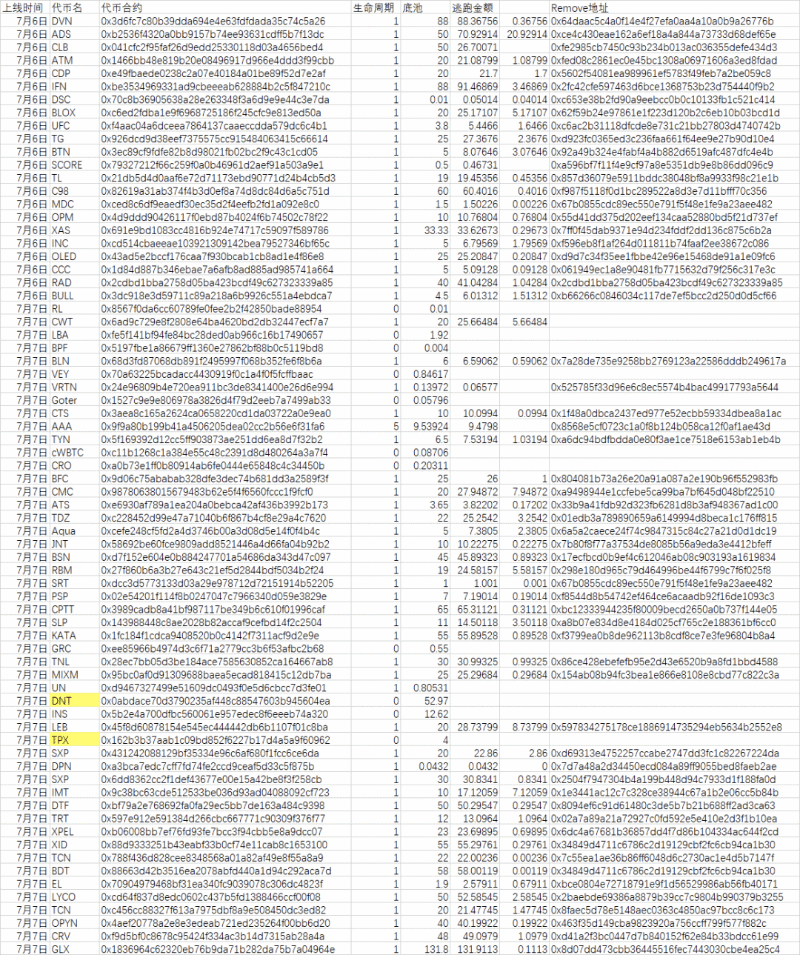
95% of projects have already rug-pulled
Scams emerging hourly are starting to scare investors away. After repeated losses, some begin blaming the "pump leaders" in their groups.
Has the Uniswap slot machine reached its endgame?
Li Feng believes that as long as liquidity and human greed persist, the mutual slashing game on Uniswap won’t stop. However, as mainstream cryptocurrencies like Bitcoin and Ethereum rise, Uniswap’s热度 will inevitably cool down.
Who will ultimately benefit from this surge?
"Isn’t grabbing tokens on Uniswap just about bidding the highest gas fee?" Niu Yun mused. Ultimately, this frenzy benefits miners the most.
To gain an edge, Uniswap investors often max out their gas fees—all of which go straight into the pockets of Ethereum miners.
Glassnode data shows that in July, transaction fees accounted for 22.2% of Ethereum miners’ income—a record high.
An Ethereum miner told TechFlow that since setting up mining rigs in April, he had already recovered his costs through mined ETH and selling used GPUs. "Everything beyond this point is pure profit."
Meanwhile, the carnage on Uniswap continues. "Uniswap’s greatest function is enabling legal wealth transfer within communities," one investor noted.
The truly profitable players have already cashed out, while those left behind continue slashing each other. Throughout history, such wild frontier stories always end the same way.
*TechFlow reminds all investors to beware of high-risk speculation. The views expressed in this article do not constitute investment advice.
Join TechFlow official community to stay tuned
Telegram:https://t.me/TechFlowDaily
X (Twitter):https://x.com/TechFlowPost
X (Twitter) EN:https://x.com/BlockFlow_News